

Winter Safety Tips and Cold Weather Guide for Japan
Essential winter safety guide for foreigners in Japan: heating safety, hypothermia prevention, heat shock risks, layering tips, and emergency preparedness for cold weather.
Read more →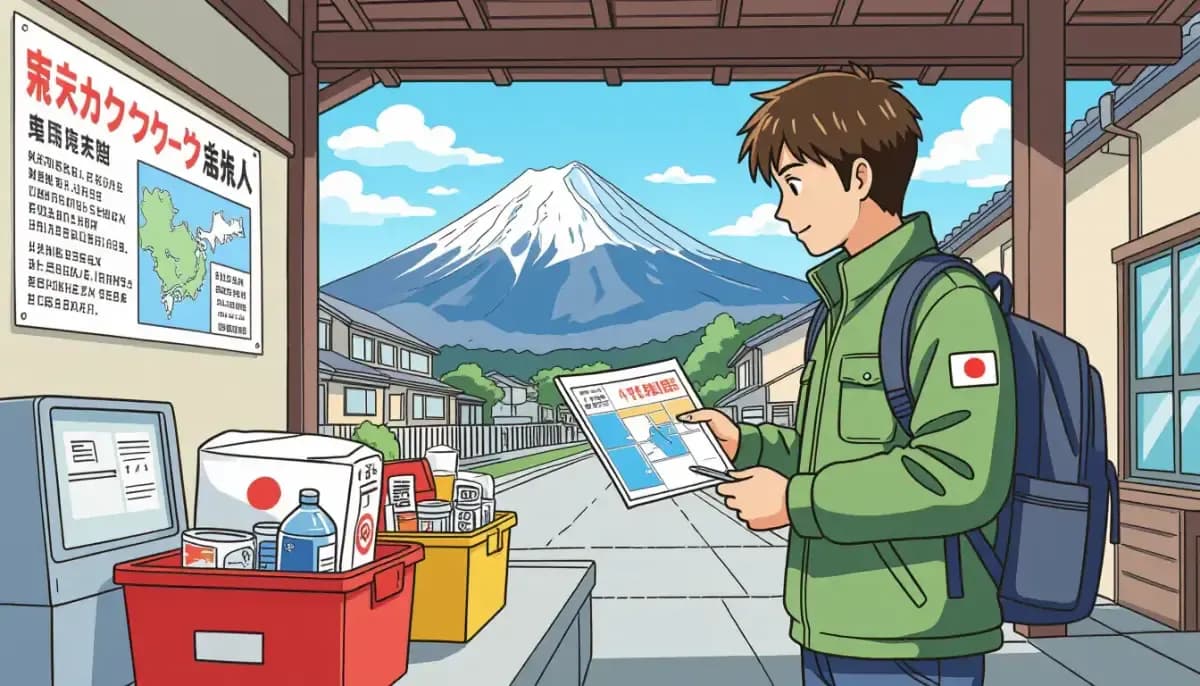
Everything foreigners need to know about safety and emergency preparedness in Japan: earthquake kits, typhoon protocols, disaster alert apps, evacuation procedures, and more.
Japan is one of the safest countries in the world when it comes to crime, but it also sits at the intersection of four major tectonic plates, making it one of the most disaster-prone nations on Earth. For foreigners living in or relocating to Japan, understanding the country's unique safety landscape—from earthquake drills to typhoon protocols—is not optional. It could save your life.
This comprehensive guide covers everything you need to know about safety and emergency preparedness in Japan, from building your disaster kit to navigating Japan's five-level alert system. Whether you've just arrived or have lived here for years, being prepared makes all the difference.
Japan experiences approximately 2,000 earthquakes annually, though most are too small to feel. In 2024 alone, the Japan Meteorological Agency (JMA) recorded 1,563 earthquakes at magnitude 4 or higher. The 2024 Noto Peninsula earthquake (magnitude 7.5) was the deadliest since 2011, claiming 703 lives—a reminder that Japan's seismic risk is ever-present.
Beyond earthquakes, Japan faces a range of natural hazards:
| Disaster Type | Frequency / Risk Level | Most Affected Regions |
|---|---|---|
| Earthquakes | ~2,000/year; High | All of Japan |
| Tsunamis | Follows major quakes | Coastal areas nationwide |
| Typhoons | 7–10 per year (Jun–Nov) | Okinawa, Kyushu, Pacific Coast |
| Volcanic Eruptions | 111 active volcanoes | Kyushu, Tohoku, Hokkaido |
| Flooding / Landslides | Rainy season (Jun–Sep) | Western Japan, mountainous areas |
| Heavy Snowfall | Nov–Mar | Hokkaido, Tohoku, Hokuriku |
The Nankai Trough threat: Japan's Cabinet Office estimates a 70–80% probability that a magnitude 8–9 earthquake will strike the Nankai Trough (off the Pacific coast) within the next 30 years. This could trigger massive tsunamis affecting millions of people across multiple prefectures.
Understanding your specific risk depends heavily on where you live. Always consult your local municipality's hazard map (ハザードマップ, hazard mappu) to understand flood zones, tsunami inundation areas, and landslide-prone slopes near your home.
Japanese emergency management guidance recommends maintaining supplies for 3 to 7 days of self-sufficiency. The 1995 Hanshin-Awaji earthquake highlighted that 80% of casualties resulted from falling objects or structural collapse—so preparation before disaster strikes is critical.
Your emergency kit (非常用持ち出し袋, hijō-yō mochidashi bukuro) should include:
This is crucial and often overlooked by expats. Keep copies (or secure digital backups) of:
Store these in a waterproof bag or folder within your emergency kit.
For more information on healthcare access during emergencies, see our guide on healthcare in Japan for foreigners.
Japan uses a standardized five-level evacuation warning system that applies to all municipalities. Understanding these levels is essential for knowing when to act:
| Level | Name | Action Required |
|---|---|---|
| Level 1 | Disaster Risk Information | Stay alert; monitor NHK/local alerts |
| Level 2 | Evacuation Site Open | Elderly and vulnerable persons should evacuate |
| Level 3 | Evacuation Warning (High Risk) | Vulnerable persons must evacuate |
| Level 4 | Evacuation Order | ALL residents must evacuate immediately |
| Level 5 | Emergency Alert | Disaster already occurring; save your life now |
Level 4 is the critical threshold. If you receive a Level 4 alert for your area, stop what you are doing and evacuate to your designated shelter. Do not wait for Level 5.
These alerts are broadcast through:
One of the biggest challenges for foreigners in Japan is receiving and understanding emergency information in real time. Fortunately, Japan offers excellent multilingual resources.
Safety Tips (free) Developed by the Japan Tourism Agency, this app sends push notifications in 14 languages for Earthquake Early Warnings, tsunami warnings, and severe weather alerts. It mirrors Japan's J-Alert system. Download it the moment you arrive in Japan.
NHK World NHK's international service provides English-language breaking news, earthquake alerts, and typhoon tracking. Stream it live during any emergency.
Yahoo! Bosai (Yahoo! 防災速報) A popular Japanese disaster alert app with detailed local warnings. Useful if you read Japanese or want granular local data.
Disaster Search (Google) Search "earthquake Japan" on Google for real-time JMA earthquake data, including magnitude and depth.
For a deep dive into disaster preparedness for foreigners specifically, Living in Nihon's comprehensive disaster guide is an excellent resource covering everything from emergency kits to evacuation procedures.
Japan's earthquake response protocol is well-established. Follow the Drop-Cover-Hold-On method:
Follow posted evacuation routes to your designated evacuation shelter (指定避難場所, shitei hinanbasho). Check your municipality's website to confirm your nearest shelter before disaster strikes. Many city offices provide multilingual hazard maps on request.
If you're new to Japan and still navigating daily life essentials, our guide on daily life in Japan for foreigners covers how to access local government services, including registering for municipal emergency notifications.
Typhoon season runs from June through November, with peak activity in August and September. Okinawa typically faces 7–8 typhoon approaches per year. Even Tokyo experiences direct hits and near-miss storms regularly.
For more on navigating housing-related issues in Japan, including what landlords are responsible for during disasters, see our guide on finding housing in Japan.
Japan's building codes have improved dramatically since the 1981 revision (新耐震基準, shin taishin kijun) and again after the 1995 Hanshin earthquake. Buildings constructed after 1981—and especially after 2000—are significantly safer. However, what's inside your home can still kill you.
Hardware stores like Cainz (カインズ) and Tokyu Hands carry earthquake safety products. Your ward office may also provide free L-brackets and anti-tip straps—check with your local municipality.
For additional guidance on setting up your home safely in Japan, For Work in Japan's living resources offer practical advice for foreign workers navigating everyday life.
Memorize or save these numbers in your phone now—not after a disaster:
| Service | Number | Notes |
|---|---|---|
| Police | 110 | Crime, traffic accidents |
| Fire / Ambulance | 119 | Medical emergencies, fires |
| Japan Coast Guard | 118 | Maritime emergencies |
| Non-emergency Police | #9110 | General inquiries |
| Disaster Message Board | 171 | Record/retrieve messages for family |
| Tokyo English Police Hotline | 03-3501-0110 | 24/7 English support (Tokyo) |
During major disasters, phone lines become overloaded. Use:
Register with your home country's embassy in Japan before a disaster occurs. Most embassies have warden systems to check on citizens during emergencies. The U.S. Embassy's emergency preparedness page is an excellent model; other nations offer similar services.
Research consistently shows that foreign residents in Japan have significantly lower disaster preparedness rates than Japanese residents. A 2024 study found that approximately 50% of international students had never participated in a disaster drill, and only 15% had done so in Japan.
Your local 自治会 (jichikai) or neighborhood association holds regular disaster drills, often in September (National Disaster Preparedness Day is September 1). Participating even once will help you:
Contact your ward office or ask your landlord to connect you with your local jichikai. Most welcome foreign participation.
For building social connections that will serve you during emergencies and beyond, see our guide on making friends and social life in Japan.
Beyond the universal preparedness steps above, foreigners in Japan face unique challenges during emergencies:
Language barriers: Evacuation instructions and shelter announcements are primarily in Japanese. Download the Safety Tips app, enable J-Alert in English, and take a few hours to learn key disaster vocabulary:
Shelter registration: Some emergency shelters require advance registration, particularly for people with special needs. Contact your municipality's international affairs division to confirm procedures.
Visa and documentation concerns: During large-scale disasters, the Immigration Services Agency has historically issued special measures for foreigners whose documents were lost or whose visa status was affected. Keep copies of all documents in your emergency kit and in a secure cloud location.
Insurance: Standard renters' insurance in Japan (火災保険, kasai hoken) typically covers earthquake damage only as a separate rider (地震保険, jishin hoken). Review your policy. For more on financial planning in Japan, see our guide on banking and finance in Japan for foreigners.
For comprehensive resources tailored specifically to foreigners navigating Japan's systems, Ittenshoku's guides for foreign workers in Japan cover a wide range of practical living topics.
Use this checklist to assess your current readiness:
| Action Item | Done? |
|---|---|
| Downloaded Safety Tips app and enabled notifications | ☐ |
| Identified your nearest designated evacuation shelter | ☐ |
| Assembled emergency kit (water, food, documents, cash) | ☐ |
| Secured heavy furniture with L-brackets | ☐ |
| Applied window safety film | ☐ |
| Registered with your home country's embassy | ☐ |
| Located and confirmed gas shutoff valve | ☐ |
| Saved 110, 119, and 171 in your phone | ☐ |
| Learned basic Japanese disaster vocabulary | ☐ |
| Checked your local hazard map | ☐ |
| Participated in at least one local disaster drill | ☐ |
Japan's safety and emergency management systems are among the most sophisticated in the world. The country invests heavily in infrastructure, early warning technology, and public education—and those investments save lives. As a foreigner in Japan, your responsibility is to plug into these systems before a disaster strikes.
The time to prepare is now—not when the shaking starts or the typhoon alert sounds. Build your kit, download the apps, know your shelter, and participate in your community. Japan has learned hard lessons about disaster preparedness over centuries of earthquakes and storms, and that knowledge is available to you.
For more essential guides on living in Japan as a foreigner, explore our comprehensive resources on healthcare in Japan, daily life in Japan, and housing in Japan.
Sources and further reading: Japan Meteorological Agency | Japan Remotely – Natural Disaster Planning Guide | JNTO Safety Tips | US Embassy Japan Emergency Preparedness
Essential winter safety guide for foreigners in Japan: heating safety, hypothermia prevention, heat shock risks, layering tips, and emergency preparedness for cold weather.
Read more →
Learn essential fire safety tips for living in Japan — from emergency number 119 and smoke detector laws to apartment evacuation routes and fire insurance. A complete guide for foreigners.
Read more →
Everything foreigners need to know about Japan's J-Alert emergency alert system: how it works, what the sounds mean, why your foreign phone may not receive it, and which apps to install for English alerts.
Read more →
Everything foreigners need to know about flood and landslide safety in Japan: understanding the 5-level warning system, reading hazard maps, essential apps, evacuation steps, and building a disaster kit.
Read more →
Complete guide for foreigners on interacting with Japanese police: what ID to carry, your rights during stops, what happens if arrested, how to contact your embassy, and practical tips to stay safe in Japan.
Read more →
A complete guide to personal safety and crime in Japan for foreigners. Learn about crime statistics, common scams, nightlife risks, police resources, and essential legal rules for expats in Japan.
Read more →
Complete guide to Japan's tsunami warning system for foreigners and expats. Learn about J-Alert, evacuation procedures, essential apps, warning levels, and how to prepare before disaster strikes.
Read more →
Complete guide to Japan emergency phone numbers: 110 police, 119 ambulance/fire, 118 coast guard, JNTO hotline, English support lines, disaster apps, and key phrases for foreigners.
Read more →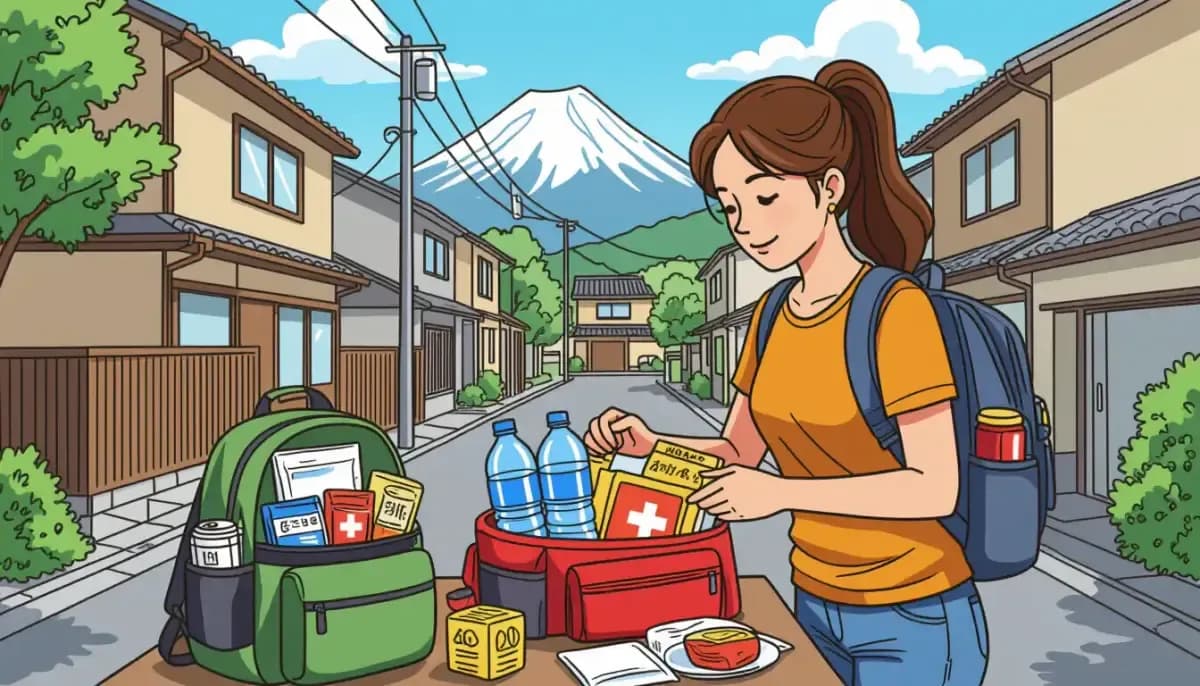
Build a complete emergency kit for Japan with this guide for foreigners. Covers essential items, water, food, documents, Japan-specific supplies, and where to buy everything.
Read more →
Everything foreigners need to know about Japan's typhoon season — when it happens, which regions are affected, how to prepare an emergency kit, understand warning systems, and stay safe during typhoons.
Read more →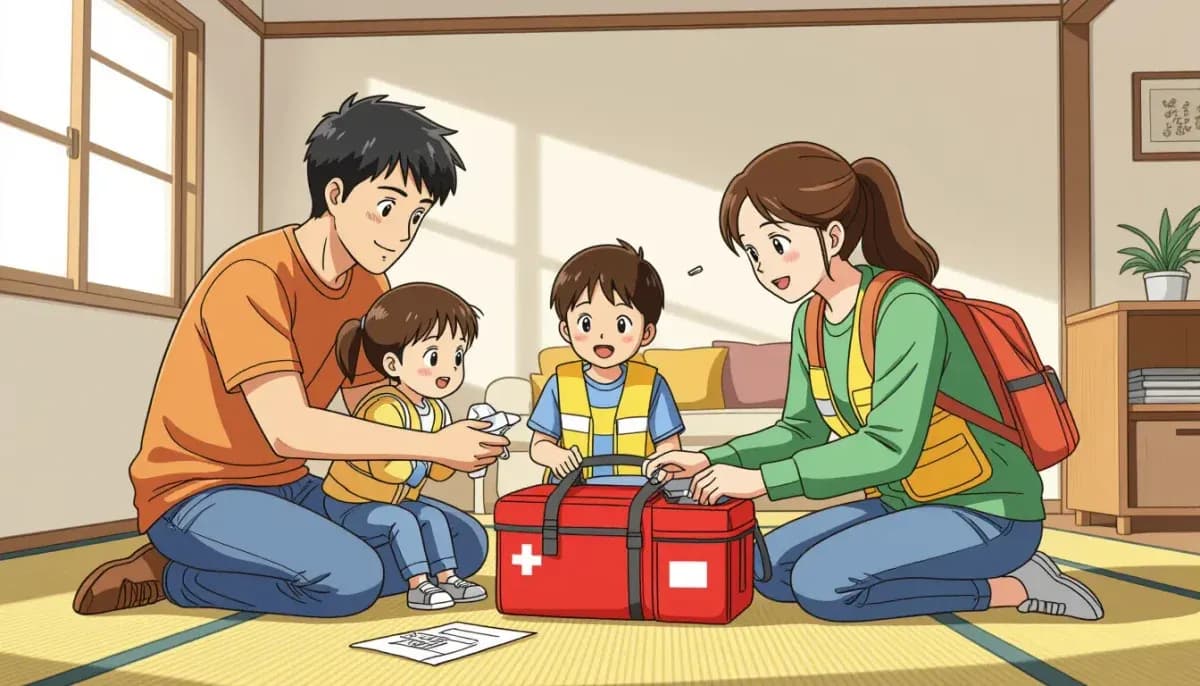
Everything foreigners need to know about earthquake preparedness in Japan: emergency kits, early warning systems, evacuation shelters, and what to do before, during, and after a quake.
Read more →
Learn how to prevent heat stroke in Japan's brutal summer heat and humidity. Essential tips on hydration, symptoms, emergency numbers (119, #7119), and Japanese-specific heat prevention strategies for foreigners.
Read more →
Complete guide for foreigners on volcanic eruption preparedness in Japan. Learn the JMA 5-level alert system, build your emergency kit, and know what to do during an eruption or ash fall.
Read more →
Complete guide to disaster evacuation in Japan for foreigners: learn J-Alert, evacuation shelters (避難所), emergency apps, language tips, and how to prepare your emergency kit as an expat.
Read more →