
Japan Tsunami Warning System and Safety Procedures

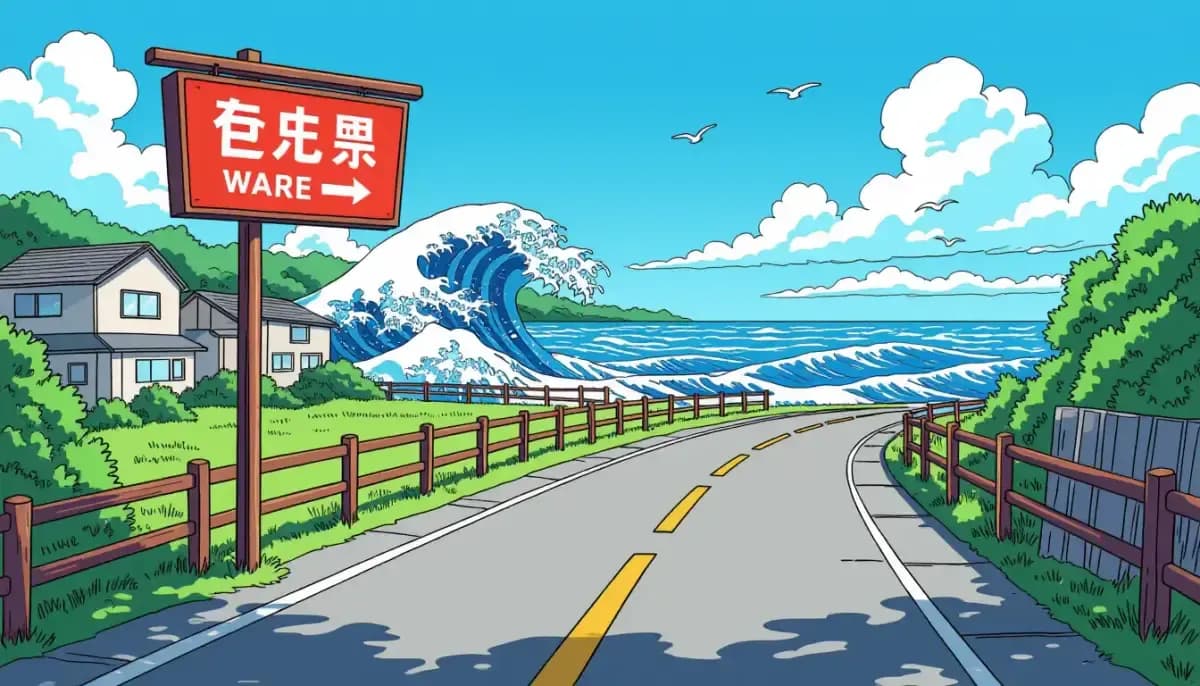
Complete guide to Japan's tsunami warning system for foreigners and expats. Learn about J-Alert, evacuation procedures, essential apps, warning levels, and how to prepare before disaster strikes.
Japan Tsunami Warning System and Safety Procedures: A Complete Guide for Foreigners
Living in Japan as a foreigner comes with many rewards — but it also means preparing for the country's natural hazards, including tsunamis. Japan sits on the Pacific "Ring of Fire" and has one of the most sophisticated tsunami warning systems in the world. Whether you're a new expat, a long-term resident, or planning an extended stay near Japan's coast, understanding how the tsunami warning system works and what to do when an alert sounds could save your life.
This guide covers everything you need to know: how Japan detects and warns about tsunamis, what the different warning levels mean, how to receive alerts as a foreigner, and what steps to take immediately when a warning is issued.
How Japan's Tsunami Warning System Works
Japan's tsunami warning infrastructure is managed by the Japan Meteorological Agency (JMA). When a significant earthquake occurs near or under the ocean, JMA's network of seismometers, offshore pressure sensors, and sea-level gauges immediately begins analyzing the event.
Within approximately 3 minutes of an earthquake, JMA can issue tsunami warnings for specific coastal regions. This rapid response is possible thanks to automated systems that calculate potential wave heights based on the earthquake's magnitude, depth, and epicenter location.
The system uses three types of alerts:
| Alert Level | Japanese | Expected Wave Height | Risk Level |
|---|---|---|---|
| Tsunami Advisory | 津波注意報 | Up to 1 meter | Low - some coastal damage possible |
| Tsunami Warning | 津波警報 | 1 to 3 meters | Moderate - dangerous flooding possible |
| Major Tsunami Warning | 大津波警報 | Over 3 meters | Extreme - widespread devastation |
As conditions develop and sea-level gauges confirm actual wave heights, JMA updates these warnings in real time. The system is designed to err on the side of caution — initial estimates are often conservative, meaning actual waves can exceed the predicted height in the warning.
For more context on Japan's overall disaster preparedness infrastructure, see our Complete Guide to Safety and Emergency Preparedness in Japan.
J-Alert: Japan's Emergency Broadcast System
The backbone of Japan's public warning system is J-Alert (全国瞬時警報システム, Zenkoku Shunji Keihō System), a satellite-based emergency broadcast network operated by the Ministry of Internal Affairs and Communications.
When JMA issues a Major Tsunami Warning, J-Alert transmits the alert simultaneously to:
- Outdoor loudspeakers in cities and towns across affected coastal areas
- Television and radio broadcasts (with automatic override of regular programming)
- Registered email addresses (via local municipal alert systems)
- Mobile phones — including foreign-registered devices with compatible SIM cards
The loudspeaker announcements are the most important to recognize. In a coastal area, you may hear sirens followed by spoken Japanese warnings. Even if you don't understand the words, sirens combined with a recent earthquake are a clear signal to evacuate immediately.
As a foreigner, make sure emergency alerts are enabled on your Japanese mobile phone or SIM. Most major carriers including NTT Docomo, SoftBank, and au support emergency alert delivery. If you're using a tourist SIM or eSIM, check whether it supports J-Alert notifications before traveling to coastal regions.
Essential Apps for Foreigners During Tsunami Warnings
Japan has several apps specifically designed to help non-Japanese speakers receive and understand emergency alerts. Installing at least one of these before you need it is strongly recommended.
| App | Language | Key Features |
|---|---|---|
| Safety Tips | English, 14 languages | Official Japan Tourism Agency app; earthquake/tsunami alerts, shelter maps |
| Nerv Disaster Prevention | English/Japanese | Real-time JMA data, detailed hazard maps |
| NHK World-Japan | English | News broadcasts during emergencies, official government updates |
| Yurekuru Call | Japanese/English | Real-time earthquake and tsunami push notifications |
| Yahoo! Bosai | Japanese | Highly detailed local warnings and hazard maps |
Safety Tips is particularly recommended for short-term visitors and newer residents — it was developed in coordination with the Japan Tourism Agency and provides alerts in 14 languages including English, Chinese, Korean, and Spanish.
These apps can supplement the J-Alert system, especially if you're indoors and can't hear the loudspeakers. For more on navigating daily life in Japan, including staying connected with local services, see our Complete Guide to Daily Life in Japan for Foreigners.
Understanding Tsunami Evacuation Zones and Signs
If you live in or visit a coastal area of Japan, you will notice specific signs and markings related to tsunami safety. Understanding these before an emergency occurs is essential.
Tsunami Hazard Zone Signs
Blue signs with wave imagery mark areas that fall within tsunami inundation zones — areas that could be flooded during a major tsunami. These zones are determined by local governments based on historical data and computer modeling. If you live in a marked zone, know your evacuation route before you need it.
Tsunami Evacuation Buildings (津波避難ビル)
In areas where reaching higher ground quickly is difficult, local governments designate specific buildings as Tsunami Hinan Biru (津波避難ビル) — vertical evacuation shelters. These buildings are structurally reinforced and marked with a distinctive sign showing a wave and a person climbing stairs. If a major tsunami warning is issued and you cannot reach higher ground, move to the nearest Tsunami Hinan Biru.
Evacuation Route Signs
Green or blue signs with directional arrows guide residents toward safe evacuation routes. These are installed throughout coastal neighborhoods, beach areas, and tourist destinations. Familiarize yourself with the nearest evacuation route when you arrive in any coastal area.
Japan's coastline spans over 5,000 km, and local governments maintain detailed hazard maps (hazard mappa / ハザードマップ) showing inundation zones, shelter locations, and evacuation routes. You can request a physical copy from your city or ward office, or access digital versions through your municipality's website.
For comprehensive information on disaster preparedness as a foreign resident, the team at Living in Nihon provides a practical overview of navigating Japan's emergency systems as a non-Japanese speaker.
What to Do When a Tsunami Warning Is Issued
When you hear sirens or receive an alert on your phone, time is critical. Follow these steps immediately:
Immediate Actions (0–5 minutes)
- Do not wait for visual confirmation. By the time you can see a tsunami wave, it is too late to escape. Evacuate immediately upon receiving any alert.
- Move to higher ground. Head uphill or to a designated evacuation shelter. Even a few meters of elevation can make a significant difference in survival odds.
- If in a building, go to upper floors. If you cannot reach higher ground before the wave arrives, move to the highest floor of a reinforced building.
- Do not use your car unless absolutely necessary. Traffic jams during evacuations have historically trapped people. On foot is often faster in congested areas.
- Avoid rivers and waterways. Tsunamis travel upstream through rivers — the 2011 Tohoku disaster saw tsunami water penetrate over 10 kilometers inland through river channels.
During a Tsunami (5–60+ minutes)
- Stay at your evacuation point. Tsunamis consist of multiple waves, and the first wave is not always the largest. Do not return to low-lying areas until all warnings are officially lifted.
- Listen to official broadcasts. NHK (Japan's public broadcaster) provides continuous updates in English during major disasters via NHK World-Japan.
- Do not enter floodwaters. Even shallow, fast-moving water is extremely dangerous. Just 15 centimeters of fast-moving water can knock an adult off their feet.
After a Tsunami Warning Is Lifted
- Wait for official clearance from authorities before returning to coastal areas.
- Be aware of secondary hazards: aftershocks, structural damage, contaminated water, and gas leaks.
- Check in with your local ward office or foreigner support center for assistance.
The Japan Tourism Organization provides detailed official guidance on tsunami safety at Safe Travel Japan - Tsunami Warning, which is worth bookmarking before your next coastal trip.
Historical Context: Why Japan Takes Tsunamis So Seriously
Japan's meticulous approach to tsunami preparedness is rooted in devastating historical experience.
The 1896 Meiji Sanriku Tsunami killed over 22,000 people, marking a turning point in Japanese tsunami science and policy. The 1933 Showa Sanriku Tsunami struck the same region again, prompting further investment in monitoring and warning systems.
The 2011 Great East Japan Earthquake and Tsunami — the most powerful earthquake ever recorded in Japan — generated waves reaching nearly 40 meters in parts of Iwate Prefecture and killed approximately 19,729 people. Despite an existing warning system, many fatalities occurred because people delayed evacuation, assumed seawalls would protect them, or returned to low-lying areas before warnings were lifted.
Research following the 2011 disaster revealed stark statistics: among coastal residents who evacuated immediately after the warning, only 5% were caught in the tsunami. Among those who did not evacuate immediately, the rate was 49%. This data fundamentally shaped Japan's current public education and preparedness programs.
The more recent 2024 Noto Peninsula Earthquake and Tsunami showed improvements in evacuation behavior: over 80% of residents evacuated, with many doing so within 2–6 minutes of the earthquake — a significant improvement from 2011.
For context on the broader safety environment in Japan as a foreign resident, including earthquake preparedness and emergency kit essentials, see our Complete Guide to Moving to Japan as a Foreigner.
Preparing Before Disaster Strikes: A Checklist for Foreign Residents
Preparation is the single most effective thing you can do to improve your safety. Use this checklist to get ready before a tsunami occurs.
| Preparation Task | Priority | Notes |
|---|---|---|
| Install Safety Tips or Nerv app | High | Enable push notifications |
| Enable J-Alert on your phone | High | Check with your carrier |
| Learn your nearest evacuation route | High | Walk it once before an emergency |
| Locate your nearest Tsunami Hinan Biru | High | Check your local hazard map |
| Register with your municipality | Medium | Many cities offer foreigner disaster alerts |
| Keep a 72-hour emergency kit | Medium | Water, food, medications, documents |
| Register with your home country's embassy | Medium | Consular assistance during disasters |
| Learn basic Japanese emergency phrases | Medium | 逃げて (nigete) = "Flee/Escape!" |
| Download offline maps of your area | Low | GPS works without internet |
Your local city or ward office is an excellent resource for localized hazard maps, evacuation drill schedules, and disaster preparedness guides. Many offices have foreign resident support desks with multilingual staff. For guidance on integrating with local services as a foreign resident, visit For Work in Japan for practical living guides.
Special Considerations for Different Regions
Japan's tsunami risk is not uniform across the country. Coastal areas face the highest risk, with certain regions historically more vulnerable:
- Tohoku Coast (Iwate, Miyagi, Fukushima): Site of the 2011 disaster. Extensive reconstruction has included new seawalls and elevated roads.
- Pacific Coast of Kochi, Wakayama, Mie (Tokai/Nankai region): Scientists predict a major "Nankai Trough" earthquake could generate significant tsunamis. Local governments run frequent drills.
- Hokkaido Coast: Affected by the 1993 Okushiri Island tsunami and 2018 Hokkaido earthquake.
- Okinawa and Island Prefectures: Remote location means warning times may be shorter for locally-generated tsunamis.
If you live or work near the coast, check your specific municipality's hazard map. Tokyo Bay and Osaka Bay face lower direct tsunami risk due to their geographic configurations, but are not immune. The Tokyo Metropolitan Government provides English-language disaster preparedness materials through the Tokyo Bousai initiative.
For detailed guidance on finding housing safely in Japan — including understanding local hazard maps when choosing your neighborhood — see our Complete Guide to Finding Housing in Japan.
Key Contacts and Resources
In addition to the apps listed above, keep these contacts accessible:
- Emergency: 110 (police), 119 (fire/ambulance)
- JMA Tsunami Information: www.jma.go.jp
- NHK World Emergency Broadcasts: Available via the NHK World-Japan app and website
- U.S. Embassy Emergency Line (Tokyo): +81-3-3224-5000
- JNTO Safety Tips App: Official multi-language travel safety app
For broader disaster preparedness guidance for foreigners in Japan, including earthquake kits, emergency drills, and how to communicate with Japanese emergency services, visit IT転職 (Ittenshoku) for more Japan living resources.
Final Thoughts
Japan's tsunami warning system is one of the most advanced in the world, but technology alone cannot guarantee safety. The critical element is your response — evacuating immediately, without waiting for visual confirmation, and not returning until officially cleared.
As a foreigner living in or visiting Japan, taking a few hours to understand the warning system, install the right apps, and walk your evacuation route can make a decisive difference. Japan's communities are extraordinarily well-organized for disaster response, and integrating yourself into that system — by registering with your municipality, participating in local drills, and building relationships with neighbors — will serve you well.
Stay prepared, stay informed, and trust the system when it activates. Your life may depend on it.
For more resources on navigating life in Japan as a foreigner, explore our complete guide series covering healthcare, transportation, and daily life essentials.

Originally from Vietnam, living in Japan for 16+ years. Graduated from Nagoya University, with 11 years of professional experience at Japanese and international companies. Sharing information about living in Japan for foreigners.
View Profile →Related Articles

Winter Safety Tips and Cold Weather Guide for Japan
Essential winter safety guide for foreigners in Japan: heating safety, hypothermia prevention, heat shock risks, layering tips, and emergency preparedness for cold weather.
Read more →
Heat Stroke Prevention in Japan Summer Safety Guide
Learn how to prevent heat stroke in Japan's brutal summer heat and humidity. Essential tips on hydration, symptoms, emergency numbers (119, #7119), and Japanese-specific heat prevention strategies for foreigners.
Read more →
How to Prepare for Volcanic Eruptions in Japan
Complete guide for foreigners on volcanic eruption preparedness in Japan. Learn the JMA 5-level alert system, build your emergency kit, and know what to do during an eruption or ash fall.
Read more →
Fire Safety and Prevention in Japan for Residents
Learn essential fire safety tips for living in Japan — from emergency number 119 and smoke detector laws to apartment evacuation routes and fire insurance. A complete guide for foreigners.
Read more →
Japan Emergency Alert System How It Works
Everything foreigners need to know about Japan's J-Alert emergency alert system: how it works, what the sounds mean, why your foreign phone may not receive it, and which apps to install for English alerts.
Read more →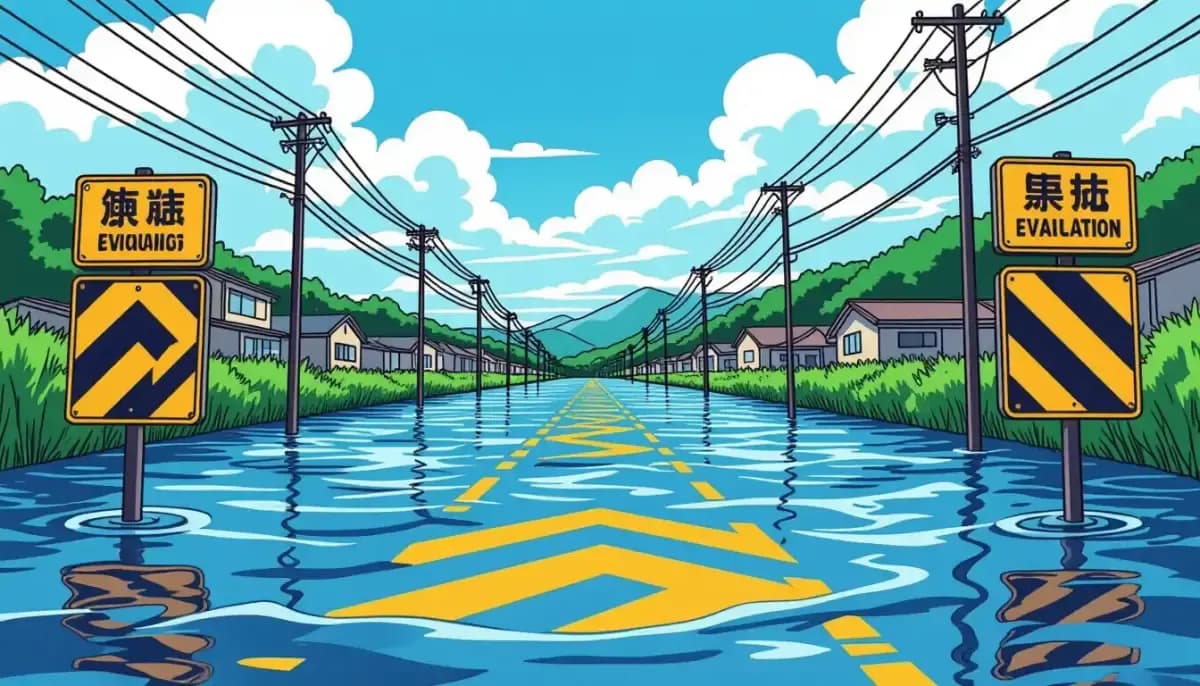
Flood and Landslide Safety in Japan Guide
Everything foreigners need to know about flood and landslide safety in Japan: understanding the 5-level warning system, reading hazard maps, essential apps, evacuation steps, and building a disaster kit.
Read more →