
How to Prepare for Volcanic Eruptions in Japan

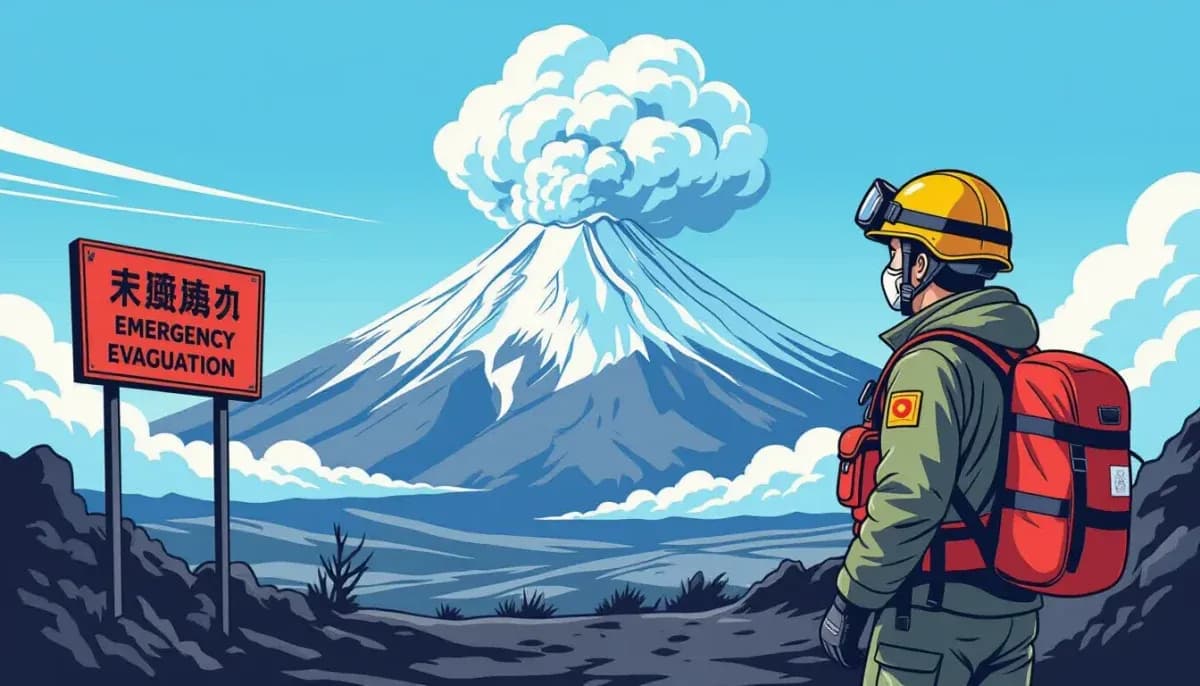
Complete guide for foreigners on volcanic eruption preparedness in Japan. Learn the JMA 5-level alert system, build your emergency kit, and know what to do during an eruption or ash fall.
How to Prepare for Volcanic Eruptions in Japan: A Complete Guide for Foreigners
Japan is one of the most volcanically active countries on Earth. With 110 active volcanoes spread across the archipelago — including iconic peaks like Mount Fuji, Sakurajima, and Aso — living in Japan means accepting that volcanic activity is a part of daily life. For foreigners, understanding how to prepare for and respond to volcanic eruptions is essential. This guide walks you through everything you need to know, from Japan's alert level system to building your emergency kit.
!Volcanic eruption preparedness Japan - ash cloud over mountain with emergency evacuation signs

Understanding Japan's Volcanic Alert Level System
The Japan Meteorological Agency (JMA) monitors volcanic activity 24 hours a day and issues Volcanic Alert Levels for 47 of Japan's most closely watched volcanoes. This five-tier system is the cornerstone of volcano safety in Japan.
| Alert Level | Name | Situation | Required Action |
|---|---|---|---|
| Level 1 | Normal | Calm volcanic activity | No action needed; normal activity |
| Level 2 | Near-Crater Caution | Small-scale eruption possible | Restricted access around crater |
| Level 3 | Entry Prohibited | Mountain entry restricted | Do not approach the mountain |
| Level 4 | Evacuation Preparation | Eruption risk for nearby communities | Prepare for possible evacuation |
| Level 5 | Immediate Evacuation | Massive eruption in progress | Evacuate immediately |
As of early 2026, no Japanese volcano is currently at Level 4 or 5, but Sakurajima in Kagoshima showed a significant increase in explosive activity in late 2025 and remains at Level 3. Always check the JMA volcano monitoring page for the latest status.
If you live near or visit an active volcanic area, bookmark the JMA website and consider downloading their monitoring app. For a broader overview of staying safe in Japan, see our guide on Safety and Emergency Preparedness in Japan.
How Japan Sends Volcano Alerts to Residents
One of Japan's strengths is its multi-channel emergency communication system. When a volcanic warning is upgraded, alerts reach you through multiple paths:
- Emergency Alert on your phone: A loud, unmistakable alarm sounds on all mobile phones registered in the affected area — you cannot miss it.
- Public address vehicles: Vehicles with loudspeakers are dispatched into danger zones broadcasting evacuation instructions in Japanese.
- TV and radio broadcasts: All major networks interrupt programming to display and announce warnings.
- Municipal website and apps: Local government websites update in real time. The "Safety tips" app by JNTO provides multilingual alerts.
For foreigners who don't speak Japanese: The Japan Tourism Agency provides multilingual communication cards in English, Korean, and Chinese with emergency phrases. Download them before you need them. If you cannot understand the announcements, look out the window — observe what your neighbors are doing and follow their lead. In Japan, community evacuation drills are common, so neighbors generally know what to do.
You can find multilingual emergency resources through Living in Nihon's disaster preparedness guide, which covers emergency response procedures specifically for foreigners in Japan.
Building Your Volcanic Eruption Emergency Kit
Every resident of Japan — foreigner or not — should have a 防災リュック (bousai rucksack), or disaster preparedness backpack. This bag should sustain you for a minimum of three days without outside assistance.
Pre-assembled kits are available at Don Quijote, Muji, or any home improvement store (ホームセンター) for approximately 6,000–10,000 JPY. You can also build your own.
Volcano-Specific Additions
Standard earthquake emergency bags need a few volcano-specific items:
- Helmet — volcanic rocks and debris can fall from the sky
- N95 or dust respirator mask — volcanic ash is microscopically sharp and damages lungs
- Safety goggles — ash causes severe eye irritation
- Wet towel or cloth — cover your mouth immediately if ash is falling before you can put on a mask
- Long-sleeved clothing and gloves — protect exposed skin from ash
Core Emergency Kit Checklist
| Category | Item | Notes |
|---|---|---|
| Water | 4 liters per person per day | Change supply every 3–5 months |
| Food | 3-day supply of canned/dried food | Choose no-cook options |
| Protection | Helmet, mask, goggles | Critical for volcanic events |
| Light | Flashlight + spare batteries | Check batteries every 6 months |
| Communication | Battery radio | Receive alerts if phones lose power |
| First Aid | Basic kit + personal medications | Include a 7-day supply |
| Documents | Copies of passport, residence card | Keep in a waterproof pouch |
| Cash | Small bills + coins | ATMs may not work after an eruption |
| Hygiene | Wet wipes, hand sanitizer, toilet paper | Essential for shelter use |
Store your bag near the front door for a quick grab-and-go exit. For a detailed guide on building an emergency kit in Japan, Japan Dev's emergency survival guide and GaijinPot's survival kit article are excellent resources.
What to Do During a Volcanic Eruption
If a volcanic eruption occurs near you, acting quickly and calmly is critical. Here are the immediate steps to take:
If You Are Near the Volcano
- Move away from the crater immediately — do not attempt to photograph or observe the eruption up close
- Put on your helmet before stepping outside
- Cover your mouth and nose with a wet towel, then switch to a mask and goggles as soon as possible
- Follow official evacuation routes — do not take shortcuts or unfamiliar roads
- Listen for official instructions via phone alerts, radio, and public address systems
If Volcanic Ash is Falling
Volcanic ash can travel hundreds of kilometers from the eruption site. Even if you are far from the volcano, ash falls can affect your area:
- Stay indoors with windows and doors closed
- Seal gaps in windows and doors with wet towels
- Do not drive if ash is falling — it reduces visibility and clogs engines
- Wear a mask and goggles if you must go outside
- After ash falls, do not allow children to play outside until authorities confirm it is safe
- Ash accumulation on roofs can be heavy — check for structural safety concerns
!Emergency volcanic ash preparedness kit Japan with mask helmet and goggles

Knowing Your Local Evacuation Plan
Japan's local governments prepare detailed volcanic hazard maps (ハザードマップ, hazard maps) that show evacuation routes, designated shelters, and risk zones for each volcano. These are available from your city or ward office, often in multiple languages.
Steps to Find Your Evacuation Plan
- Visit your local city hall (市役所) or ward office (区役所) and ask for the hazard map for your area
- Check the local government's website — many have downloadable PDF hazard maps
- Identify the designated evacuation shelter (指定避難所) nearest to your home
- Walk the evacuation route before an emergency so you know it by memory
- Register with your local foreigner support desk — they often provide disaster information in your language
For foreigners living and working in Japan, understanding your neighborhood's emergency infrastructure is part of settling in. The For Work in Japan housing and living guide covers practical aspects of daily life infrastructure for foreign residents.
Specific Volcanoes to Be Aware Of
If you live near or frequently visit these areas, pay special attention to local alerts:
| Volcano | Prefecture | Current Alert Level | Notable Risk |
|---|---|---|---|
| Sakurajima | Kagoshima | Level 3 | Frequent small eruptions, constant ash fall |
| Mount Aso | Kumamoto | Level 2 | Active crater open to visitors — check before hiking |
| Kirishima (Shinmoedake) | Miyazaki/Kagoshima | Level 1-2 | History of sudden eruptions |
| Mount Fuji | Shizuoka/Yamanashi | Level 1 | Under monitoring; last erupted in 1707 |
| Kusatsu-Shirane | Gunma | Level 2 | Surprise eruption in 2018 killed a hiker |
| Suwanosejima | Kagoshima | Level 3 | Ongoing activity |
Izanau's guide to volcanoes in Japan provides up-to-date information on active volcanoes and their current status, which is useful reading if you plan to hike near volcanic areas.
Staying Informed as a Foreigner in Japan
Preparedness is an ongoing process, not a one-time task. Here are ways to stay informed and ready:
- Download "Safety tips" app (by JNTO): Provides multilingual earthquake, tsunami, and volcanic eruption alerts
- Follow JMA on social media: Real-time updates in English are available on their official accounts
- Register with your country's embassy: The US Embassy Japan, for example, sends alert emails to registered American citizens
- Join local foreigner community groups: Online communities (Facebook groups, Line groups) often share emergency information quickly in multiple languages
- Attend community disaster drills: Most neighborhoods (自治会, jichikai) hold annual drills — participation helps you know your neighbors and practice evacuation routes
For a comprehensive view of safety in Japan beyond volcanoes — including earthquakes, typhoons, and tsunamis — see our Complete Guide to Safety and Emergency Preparedness in Japan. Understanding your overall safety environment helps put volcanic preparedness in context.
Also relevant: if you are still in the process of setting up your life in Japan, our Moving to Japan Guide and Daily Life in Japan Guide cover many practical aspects of getting settled and building the routines that include disaster preparedness.
For IT professionals and engineers considering working in Japan, Ittenshoku provides career transition resources and job guidance that can help you get established in Japan.
Summary: Key Volcanic Preparedness Steps for Foreigners
Living safely in Japan's volcanic landscape comes down to awareness and preparation. Here is a quick summary of the most important actions:
- Know the JMA 5-level alert system and check current levels for your area
- Download multilingual alert apps (Safety tips by JNTO) and the JMA app
- Build a bousai rucksack with volcano-specific items: helmet, N95 mask, goggles
- Find your local hazard map and walk the evacuation route to your designated shelter
- Prepare multilingual communication cards from the Japan Tourism Agency
- Register with your embassy so you receive alert notifications in your language
- Stay informed via JMA, local government websites, and expat community networks
Japan's systems for volcanic monitoring and emergency response are among the best in the world. By understanding how they work and preparing your own emergency kit, you can live confidently even in one of the world's most volcanically active countries.

Originally from Vietnam, living in Japan for 16+ years. Graduated from Nagoya University, with 11 years of professional experience at Japanese and international companies. Sharing information about living in Japan for foreigners.
View Profile →Related Articles

Winter Safety Tips and Cold Weather Guide for Japan
Essential winter safety guide for foreigners in Japan: heating safety, hypothermia prevention, heat shock risks, layering tips, and emergency preparedness for cold weather.
Read more →
Heat Stroke Prevention in Japan Summer Safety Guide
Learn how to prevent heat stroke in Japan's brutal summer heat and humidity. Essential tips on hydration, symptoms, emergency numbers (119, #7119), and Japanese-specific heat prevention strategies for foreigners.
Read more →
Fire Safety and Prevention in Japan for Residents
Learn essential fire safety tips for living in Japan — from emergency number 119 and smoke detector laws to apartment evacuation routes and fire insurance. A complete guide for foreigners.
Read more →
Japan Emergency Alert System How It Works
Everything foreigners need to know about Japan's J-Alert emergency alert system: how it works, what the sounds mean, why your foreign phone may not receive it, and which apps to install for English alerts.
Read more →
Flood and Landslide Safety in Japan Guide
Everything foreigners need to know about flood and landslide safety in Japan: understanding the 5-level warning system, reading hazard maps, essential apps, evacuation steps, and building a disaster kit.
Read more →
How to Interact with Japanese Police as a Foreigner
Complete guide for foreigners on interacting with Japanese police: what ID to carry, your rights during stops, what happens if arrested, how to contact your embassy, and practical tips to stay safe in Japan.
Read more →