
Japan Emergency Alert System How It Works

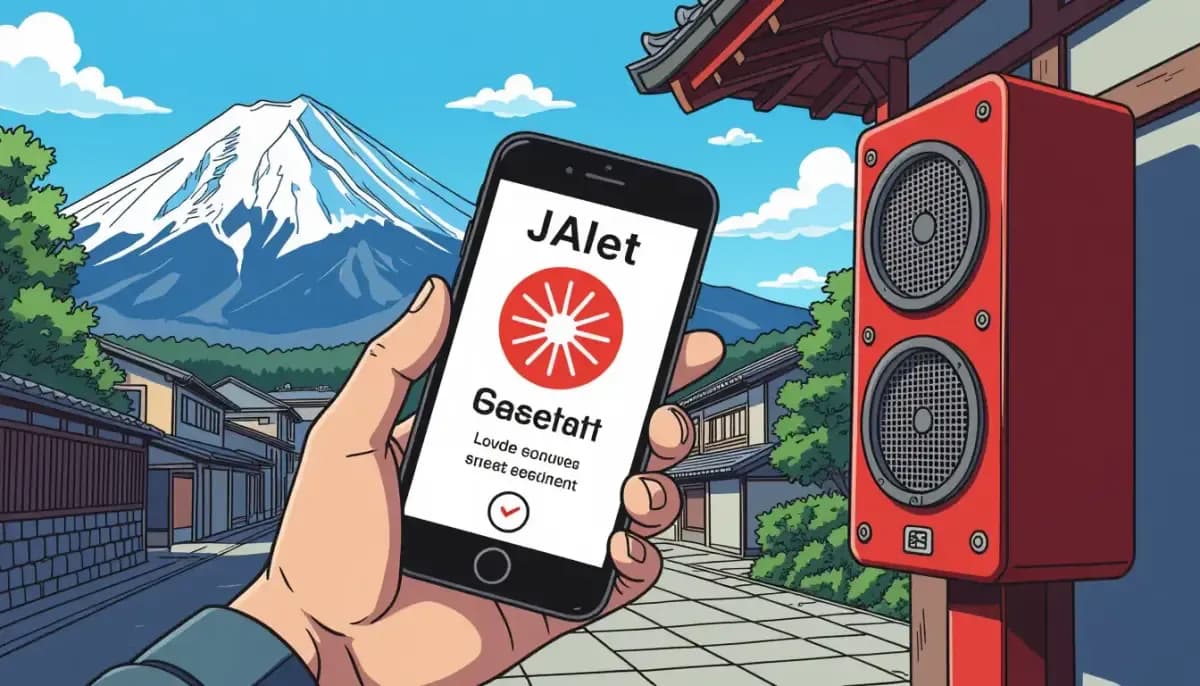
Everything foreigners need to know about Japan's J-Alert emergency alert system: how it works, what the sounds mean, why your foreign phone may not receive it, and which apps to install for English alerts.
Japan Emergency Alert System Explained: What Every Foreigner Needs to Know
Japan is one of the most disaster-prone countries in the world, sitting at the junction of four tectonic plates and experiencing approximately 1,500 earthquakes annually. Add typhoons, tsunamis, volcanic eruptions, and even the occasional ballistic missile threat to the mix, and it becomes clear why Japan has invested heavily in one of the most sophisticated emergency alert systems on the planet — J-Alert (全国瞬時警報システム).
If you live in or are planning to move to Japan, understanding how J-Alert works, what it sounds like, and how to make sure you receive alerts in English could literally save your life. This guide breaks down everything foreigners need to know about Japan's emergency alert system.
What Is J-Alert? Japan's National Instant Warning System
J-Alert, short for 全国瞬時警報システム (Zenkoku Shunji Keihō Shisutemu), is Japan's National Instant Warning System, launched in February 2007 by the Fire and Disaster Management Agency (FDMA). It is a satellite-based emergency broadcast system designed to transmit critical safety information to every corner of the country within seconds.
The system is capable of alerting local governments, broadcasters, and individual citizens virtually simultaneously. According to official data, it takes approximately 1 second to inform local officials and between 4 and 20 seconds to relay the message to citizens across the country. By May 2013, J-Alert coverage had expanded to 99.6% of all municipalities nationwide.
J-Alert is managed at the national level and connects to local government systems, which then push the alert out through multiple channels to ensure maximum reach.
For foreigners living in Japan, understanding this system is a key part of daily life safety. Make sure to also read the Complete Guide to Safety and Emergency Preparedness in Japan for a broader overview of staying safe as a foreign resident.
What Types of Emergencies Does J-Alert Cover?
J-Alert is designed to handle two broad categories of emergencies:
Natural Disaster Alerts
- Earthquake Early Warnings — Issued seconds before strong shaking begins, allowing people to take cover
- Tsunami Warnings — Triggered after major offshore earthquakes, warning coastal areas
- Volcanic Eruption Alerts — Warnings for nearby residents of active volcanoes
- Severe Weather Alerts — Including typhoons, heavy rain, landslides, and tornado risks
- Flood Warnings — For rivers and low-lying coastal areas
Civil Protection Alerts (Security Threats)
- Ballistic Missile Launches — North Korea missile tests have triggered real J-Alerts in Japan
- Air Raids and Aviation Attacks — In case of aerial threats
- Guerrilla Attacks and Terrorism — Large-scale terror event warnings
- Mega-Terrorism — Events involving weapons of mass destruction
| Alert Type | Issuing Authority | Channel |
|---|---|---|
| Earthquake/Tsunami/Volcano | Japan Meteorological Agency (JMA) | Satellite → Local Receivers |
| Ballistic Missile/Air Raid | Cabinet Secretariat | Satellite → Local Receivers |
| Severe Weather | JMA / Regional Weather Centers | Satellite → Local Receivers |
| Flood/Landslide | Ministry of Land, Infrastructure, Transport | Satellite → Local Receivers |
How J-Alert Works: From Government to Your Phone
The J-Alert process works in a chain from national authorities down to you:
- Detection: Monitoring agencies (JMA, Cabinet Intelligence, Defense Ministry) detect a threat.
- National Transmission: The FDMA broadcasts via satellite to all registered local government receivers.
- Local Relay: Local governments receive the signal and immediately activate:
- Outdoor loudspeakers throughout cities and towns - TV and radio broadcast interruptions — programs pause and the alert plays - Cell phone push notifications — sent to all mobile devices in the affected area
- Citizen Response: You hear/see the alert and take appropriate action.
The distinctive J-Alert sound is an upward-spiraling chime (similar to a European emergency siren), often followed by a robotic voice announcing the nature of the emergency in Japanese. On your smartphone, it arrives as a loud emergency notification (similar to an Amber Alert) that can override your phone's silent or Do Not Disturb settings.
The Big Problem for Foreigners: Your Foreign Phone May Not Receive J-Alert
Here is the most critical piece of information in this article: If your smartphone was purchased outside of Japan, it may not receive J-Alert push notifications automatically.
Japanese-market phones have J-Alert reception (called ETWS - Earthquake and Tsunami Warning System and CMAS - Commercial Mobile Alert System) built into their hardware and firmware. Phones bought in the US, Europe, Australia, or elsewhere often lack these configurations.
This means thousands of foreign residents in Japan could be caught completely off guard during an emergency — their phones silent while Japanese phones around them blare warnings.
What To Do If Your Phone Cannot Receive J-Alert
Install one or more of these recommended apps:
| App Name | Platform | Languages | Notes |
|---|---|---|---|
| Safety Tips | iOS / Android | 15 languages incl. English | Official JNTO app — highly recommended |
| NHK World-Japan | iOS / Android | English and more | Pushes alerts + live news coverage |
| Yahoo\! JAPAN Disaster Info | Android | Japanese | Most comprehensive for Android users |
| Disaster Alert (PDC) | iOS / Android | English | Covers Japan disasters + global events |
The Safety Tips app (developed by the Japan Tourism Agency) is the most highly recommended for foreigners, as it delivers alerts in 15 different languages and covers earthquakes, tsunamis, volcanic eruptions, and typhoons.
For more about navigating daily life in Japan as a foreign resident, see our Complete Guide to Daily Life in Japan.
Understanding J-Alert Sounds and Messages
When J-Alert activates, you will hear and see specific signals. Knowing them in advance helps you respond quickly instead of standing around confused.
The J-Alert Sound
The standard J-Alert broadcast starts with:
- Warning chime — A distinctive ascending/descending tone (similar to air raid sirens)
- Voice announcement in Japanese — Stating the type of emergency, affected region, and what to do
- Repeat — Messages are typically repeated 2-3 times
On smartphones, the alert overrides silent mode and emits a loud buzzing tone with a pop-up notification.
Common Japanese Phrases in J-Alert Messages
| Japanese | Romaji | Meaning |
|---|---|---|
| 緊急地震速報 | Kinkyū jishin sokuhō | Earthquake Early Warning |
| 津波警報 | Tsunami keihō | Tsunami Warning |
| 大津波警報 | Ōtsunami keihō | Major Tsunami Warning |
| 弾道ミサイル | Dandō misairu | Ballistic Missile |
| 避難してください | Hinan shite kudasai | Please evacuate |
| 頑丈な建物に避難 | Ganjō na tatemono ni hinan | Evacuate to a sturdy building |
What to Do When a J-Alert Sounds
Your response depends on the type of alert:
Earthquake Early Warning (緊急地震速報)
You typically have 5–30 seconds before strong shaking begins.
- Drop, Cover, and Hold On — Get under a sturdy table or cover your head and neck
- Move away from windows, shelves, and anything that could fall
- If outside, move away from buildings, power lines, and trees
- Do NOT try to run outside during shaking — most injuries happen from falling objects
Tsunami Warning (津波警報)
- Move immediately to higher ground — don't wait to watch or confirm
- Do NOT return to the coast until authorities officially lift the warning
- Follow signs for 津波避難場所 (tsunami evacuation points) — these are marked in Japanese cities and towns
Ballistic Missile Warning (弾道ミサイル)
If a missile is heading toward your region:
- Seek shelter in a sturdy concrete building or underground (subway stations, underground malls)
- Lie flat on the floor, protecting your head
- Stay away from windows
- Await further instructions on TV/radio or your emergency app
For understanding how Japan's healthcare system works in emergencies, see our Complete Guide to Healthcare in Japan.
J-Alert Drills: Don't Be Alarmed
Japan conducts regular J-Alert system drills to test the infrastructure and ensure citizens know what to expect. These drills are typically:
- Announced in advance through municipal announcements and local news
- Conducted on specific dates (often in March, coinciding with the anniversary of the 2011 Great East Japan Earthquake)
- Clearly identified as drills during the broadcast itself
If you are not aware of a scheduled drill, hearing J-Alert for the first time can be very alarming. Don't panic — check local news apps immediately if you are unsure whether an alert is real or a drill.
Additional Emergency Resources for Foreigners in Japan
Beyond J-Alert, there are several important resources every foreign resident should know:
- Japan's emergency numbers: Police: 110, Fire & Ambulance: 119
- Local FRESC (Foreign Residents Support Center) — Many major cities have multilingual support lines
- U.S. Embassy Emergency Line: Available 24/7 for American citizens — see the U.S. Embassy Emergency Preparedness page for current contact info
- NHK World Radio Japan — Broadcasts emergency information in 18 languages
- Wikipedia J-Alert article: J-Alert on Wikipedia for technical details
For broader coverage of safety topics in Japan, the Japan Living Guide's J-Alert section is an excellent resource.
For help understanding how foreign phones interact with J-Alert and which apps to install, see this detailed breakdown at Expat in Japan: No J-Alert on Your Foreign Phone.
If you are navigating other aspects of life in Japan, Living in Nihon offers guides covering everything from housing to daily life essentials for foreign residents. Similarly, For Work in Japan provides employment guidance for foreigners, and Ittenshoku is a useful resource for IT professionals making their career move to Japan.
Summary: Your J-Alert Preparation Checklist
Before your first earthquake or emergency in Japan, make sure you've done the following:
- [ ] Test whether your phone receives J-Alert by checking Settings > (varies by device)
- [ ] Download the Safety Tips app and set it to your language
- [ ] Download NHK World-Japan app for English-language emergency coverage
- [ ] Memorize the key Japanese emergency phrases above
- [ ] Locate your nearest tsunami evacuation point if you live near the coast
- [ ] Know your building's emergency procedures and nearest emergency exits
- [ ] Bookmark your local municipal disaster preparedness website
- [ ] Check if your area has a community disaster drill schedule
Japan's emergency alert system is remarkably effective — but only if you are plugged into it. Taking 30 minutes now to set up your apps and learn the basics of J-Alert could make an enormous difference when seconds count.
For more on getting settled and staying safe in Japan, check out the Complete Guide to Moving to Japan.

Originally from Vietnam, living in Japan for 16+ years. Graduated from Nagoya University, with 11 years of professional experience at Japanese and international companies. Sharing information about living in Japan for foreigners.
View Profile →Related Articles

Winter Safety Tips and Cold Weather Guide for Japan
Essential winter safety guide for foreigners in Japan: heating safety, hypothermia prevention, heat shock risks, layering tips, and emergency preparedness for cold weather.
Read more →
Heat Stroke Prevention in Japan Summer Safety Guide
Learn how to prevent heat stroke in Japan's brutal summer heat and humidity. Essential tips on hydration, symptoms, emergency numbers (119, #7119), and Japanese-specific heat prevention strategies for foreigners.
Read more →
How to Prepare for Volcanic Eruptions in Japan
Complete guide for foreigners on volcanic eruption preparedness in Japan. Learn the JMA 5-level alert system, build your emergency kit, and know what to do during an eruption or ash fall.
Read more →
Fire Safety and Prevention in Japan for Residents
Learn essential fire safety tips for living in Japan — from emergency number 119 and smoke detector laws to apartment evacuation routes and fire insurance. A complete guide for foreigners.
Read more →
Flood and Landslide Safety in Japan Guide
Everything foreigners need to know about flood and landslide safety in Japan: understanding the 5-level warning system, reading hazard maps, essential apps, evacuation steps, and building a disaster kit.
Read more →
How to Interact with Japanese Police as a Foreigner
Complete guide for foreigners on interacting with Japanese police: what ID to carry, your rights during stops, what happens if arrested, how to contact your embassy, and practical tips to stay safe in Japan.
Read more →