
Flood and Landslide Safety in Japan Guide

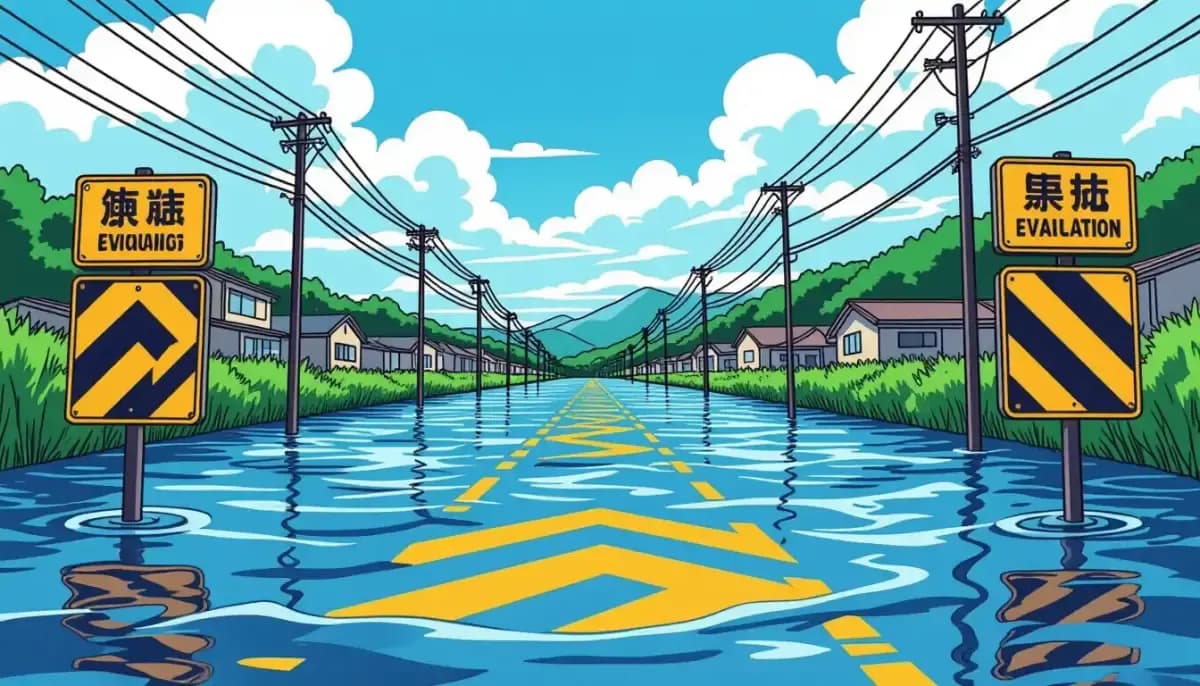
Everything foreigners need to know about flood and landslide safety in Japan: understanding the 5-level warning system, reading hazard maps, essential apps, evacuation steps, and building a disaster kit.
Flood and Landslide Safety in Japan: A Complete Guide for Foreigners
Japan is one of the most disaster-prone nations on earth, yet it is also one of the best-prepared. For foreigners living or travelling in Japan, floods and landslides pose some of the most immediate and predictable risks — far more manageable than earthquakes precisely because weather forecasts give advance warning. Understanding the warning systems, knowing how to read hazard maps, and having a clear evacuation plan are the three cornerstones of staying safe. This guide walks you through everything you need to know.
Why Floods and Landslides Are Japan's Most Frequent Natural Hazards
Japan's geography creates a perfect storm for water-related disasters. Steep, heavily forested mountains cover roughly 70% of the country, funneling enormous quantities of rainwater into narrow valleys and densely populated coastal plains. The result: Japan experiences approximately 972 landslide disasters every year, with a record peak of around 3,500 in 2018.
Two seasonal windows concentrate the risk dramatically:
- Rainy season (梅雨, *tsuyu*): mid-June to mid-July, when stationary fronts dump weeks of continuous rain
- Typhoon season: July through October, when powerful storms bring intense short-burst rainfall of 50–100 mm per hour
The 2018 Western Japan Floods remain the benchmark event. Rainfall hit 15 prefectures simultaneously, triggering both river flooding and debris flows. The final toll was 237 deaths and economic losses of approximately ¥1.09 trillion (around US$9.86 billion). Three years later, a 2021 landslide in the resort town of Atami killed 27 people after saturated hillside soil gave way within minutes. In every major event, a recurring pattern emerges: residents who delayed evacuation — especially foreign nationals who did not fully understand the Japanese-language alerts — paid the heaviest price.
For foreigners, the language barrier is not a minor inconvenience; it is a life-safety issue that demands deliberate preparation before the season begins.
Understanding Japan's Five-Level Disaster Warning System
Japan's Cabinet Office and Japan Meteorological Agency (JMA) operate a unified five-level alert system for flood and landslide risk. Knowing what each level demands of you is non-negotiable.
| Level | Japanese Name | Who Should Act | Required Action |
|---|---|---|---|
| 1 | 災害への心構えを高める | General public | Monitor weather forecasts; review your evacuation plan |
| 2 | 高齢者等避難 | Elderly, disabled, and those needing assistance | Begin evacuation to shelter now |
| 3 | 高齢者等避難 | Elderly, disabled, and those needing assistance | Evacuate immediately; general public should prepare |
| 4 | 避難指示 | All residents in designated zones | Evacuate immediately — do not wait |
| 5 | 緊急安全確保 | Everyone | Life-threatening situation; take emergency shelter IN PLACE if evacuation is impossible |
Critical point for foreigners: By the time a Level 5 alert is issued, it may be too dangerous to travel to an evacuation centre. Flood water rises fast; landslides strike in seconds. The goal is to act at Level 3 or 4, not Level 5.
Emergency alerts are pushed to all mobile phones in Japan via the J-Alert system, even to foreign SIM cards. The alert tone is unmistakable — a loud, pulsing chime followed by a text message. The text is in Japanese, so install a translation app and set it for offline use before the season begins.
How to Read a Hazard Map (ハザードマップ)
Every municipality in Japan publishes a free hazard map (ハザードマップ) that shows, street by street:
- Flood depth predictions (colour-coded from light blue = 0–0.5 m to deep purple = 5 m+)
- Landslide risk zones (sediment disaster warning zones in yellow; special warning zones in red)
- Designated evacuation centres with symbols indicating which disasters each can shelter from
- Evacuation routes
You can access your local hazard map through the National Land Information Division portal or by searching "[your city name] ハザードマップ" in a browser. The national portal also offers an English-language interface at https://disaportal.gsi.go.jp/.
Three steps every foreigner should take before typhoon season:
- Look up your home address on the hazard map and identify your flood depth risk and landslide proximity.
- Locate your nearest designated evacuation centre and walk the route at least once in daylight.
- Save the centre's address in your phone as a contact named "避難所" (evacuation centre) for quick access.
Approximately 10% of Japan's population lives on floodplains that cover only 2% of the land area. If your address falls within a coloured zone, take that seriously when choosing an apartment — and discuss it with your landlord.
Essential Apps and Alerts for Foreign Residents
You do not need to rely solely on Japanese-language broadcasts. Several tools provide real-time multilingual alerts.
| App / Service | Language Support | Best Feature |
|---|---|---|
| Safety Tips (JNTO official) | 14 languages incl. English | Push J-Alert notifications in your language |
| NHK World TV | English + 17 languages | Live broadcast during major disasters |
| Yahoo! Japan Bosai (防災) | Japanese; auto-translatable | Most granular local alerts |
| JMA Real-time Risk Map | English available | Visual landslide and flood risk by area |
| Portable News | Multiple languages | Aggregated disaster updates |
Install Safety Tips before anything else. It is the official app recommended by the Japan Tourism Agency and pushes alerts even when your phone is silent. The JMA Real-time Risk Map at https://www.jma.go.jp/bosai/en_risk/ provides an English-language visual overview of current landslide and flood risk across the entire country.
For deeper multilingual guidance tailored to foreigners living in Japan, the resource library at Living in Nihon covers everyday life topics including emergency preparedness essentials. Workers and job-seekers can also find practical settlement guidance at For Work in Japan, which addresses the broader challenges of relocating and integrating into Japanese society.
Landslide Warning Signs: What to Watch and Hear
Unlike a flooding river that rises over hours, a debris flow can accelerate to 40 km/h and bury a house in under a minute. Learning the physical warning signs buys you precious time.
Visual warning signs:
- Cracks appearing in the slope or in the soil above a retaining wall
- New springs or seeping water from a hillside that was previously dry
- Tilting trees, fence posts, or utility poles on a slope
- Unusual bulges or changes in the shape of a slope
- Streams suddenly running muddy brown without heavy rain in the immediate area
Auditory warning signs:
- A low rumbling sound from inside a hill (soil moving internally)
- Cracking or groaning of trees
- A sudden silence of stream sounds (water is being blocked by a build-up of debris above)
If you observe any of these signs: Do not shelter in the lowest floor of your house. Move immediately uphill or to a higher floor, then evacuate to an official shelter. Call 119 (fire and emergency) and report the location.
Japan's mountainous terrain and frequent heavy rain mean that approximately 1 in 3 of Japan's 73,000 landslide-prone sites is considered "high risk." If you live near a hillside, a cliff, or a steeply banked drainage channel, check your hazard map and know your escape route.
What to Do During a Flood: Step-by-Step
When heavy rain warnings escalate, follow this sequence:
24–48 hours before expected heavy rain (if typhoon is approaching):
- Fill bathtubs with water (in case supply is disrupted)
- Charge all devices and power banks
- Prepare a go-bag: passport, residence card (在留カード), cash (ATMs may go offline), medications, spare clothes, water for 3 days
- Move valuables to higher shelves; unplug electronics on lower floors
- Confirm evacuation centre address and route
When Level 3–4 alert is issued for your area:
- Evacuate to your designated centre before rain intensifies
- If on foot, avoid underpasses, riverside paths, and narrow drainage channels — these fill and surge rapidly
- Never attempt to drive through flooded roads; 30 cm of moving water can sweep a car off the road
If evacuation becomes impossible (Level 5 situation):
- Move to the highest floor of your building — flood water rarely exceeds the second or third floor in most Japanese urban zones
- Do NOT go to the basement or first floor
- Signal from a window; call 119 if in immediate danger
For a comprehensive overview of daily safety and emergency preparedness as a foreigner in Japan, see our guide: The Complete Guide to Safety and Emergency Preparedness in Japan.
Choosing a Safe Home: Flood and Landslide Risk Assessment
Before signing a lease in Japan, your real estate agent is legally required (under the 2020 revision to the Takuchi Tatemono Torihiki Gyosha regulations) to disclose if a property is located within a designated sediment disaster warning zone or flood depth zone. Ask explicitly.
Beyond the legal disclosure, do your own research:
| Check | How to Do It |
|---|---|
| Flood depth zone | Look up address on Hazard Map Portal |
| Landslide warning zone | Same portal; filter for "土砂災害" (sediment disaster) |
| River proximity | Properties 500 m+ from major rivers have significantly lower river-flood risk |
| Elevation | Free elevation check tools like GSI Maps show your exact height above sea level |
| Pumping station dependency | Ask your real estate agent — low-lying areas in reclaimed land depend on pumps that fail in power cuts |
Ground-floor and basement apartments in flood-prone districts carry the highest risk. If your building is in a flood zone and has no upper floors to retreat to, consider this in your housing decision.
For more on navigating the Japanese housing market, our guide to Finding Housing in Japan covers everything from apartment searching to signing your lease.
Building a Disaster Kit for Flood and Landslide Season
Japan's government recommends a 7-day emergency supply for individuals. For foreigners, a few additional items are critical given language barriers.
| Item | Quantity / Notes |
|---|---|
| Drinking water | 2 litres per person per day (14 litres for 7 days) |
| Emergency food | Non-perishable: retort curry, crackers, energy bars |
| Portable battery / power bank | 20,000 mAh minimum; solar charging is a bonus |
| Copies of key documents | Passport, residence card, health insurance card — keep digital copies in cloud too |
| Cash | ¥30,000–¥50,000 in small bills; ATMs and card readers may fail |
| Medications | At least 7-day supply of prescription medications |
| Rain poncho | Foldable; essential if evacuating on foot in heavy rain |
| Flashlight + extra batteries | Head torch preferred for hands-free use |
| First aid kit | Include basic wound care supplies |
| Multilingual phrasebook or offline translation app | Critical for communicating at evacuation shelters |
Keep your go-bag near your front door and review it at the start of every rainy season (early June). For broader guidance on navigating daily life in Japan as a foreigner, see The Complete Guide to Daily Life in Japan.
After a Flood or Landslide: Recovery Steps
The dangers do not end when the rain stops.
- Do not return home immediately. Wait for official clearance from your municipal disaster office. Secondary landslides are common within 24–72 hours of the main event, and flood-saturated soil can trigger new slides.
- Document all damage with photos and video before touching anything — required for insurance claims.
- Contact your municipal ward office (区役所 or 市役所) to register damage and receive disaster relief guidance. Many offices provide English support or have multilingual staff.
- Check your health insurance coverage under the national health system for any injuries or medical care needed. See our Healthcare in Japan Guide for details on using the Japanese health system as a foreigner.
- If your landlord is unresponsive about repairs, the Real Estate Transaction Guide at Izanau provides a practical English-language walkthrough of flood-related rights and procedures for foreign residents.
For additional resources on disaster preparedness and the unique challenges foreigners face in Japan's emergency systems, the Japan Natural Disaster Planning Resource Guide by Japan Remotely is an excellent English-language reference. The IT career platform Ittenshoku also offers settlement guides for foreigners building long-term lives in Japan, including neighbourhood safety considerations.
Quick Reference: Flood and Landslide Safety Checklist
Before rainy/typhoon season (by June 1):
- [ ] Check home address on hazard map
- [ ] Walk to nearest evacuation centre
- [ ] Install Safety Tips app; set to English
- [ ] Build 7-day emergency kit; check go-bag
- [ ] Save evacuation centre address in phone as "避難所"
- [ ] Download offline Japanese-English translation app
When warnings are issued:
- [ ] Monitor JMA Real-time Risk Map
- [ ] Evacuate at Level 3–4 (do not wait for Level 5)
- [ ] Avoid rivers, underpasses, drainage channels
- [ ] If evacuation impossible: move to highest floor
After the event:
- [ ] Wait for official all-clear before returning home
- [ ] Document damage photographically
- [ ] Contact ward office for disaster relief registration
- [ ] Check for secondary landslide risk (72-hour window)
Japan's flood and landslide warning systems are among the most sophisticated in the world. As a foreign resident, the single most important step you can take is bridging the language gap before an emergency happens — not during one. Download the apps, locate your shelter, and walk the route. The rest of Japan's infrastructure will work hard to protect you.

Originally from Vietnam, living in Japan for 16+ years. Graduated from Nagoya University, with 11 years of professional experience at Japanese and international companies. Sharing information about living in Japan for foreigners.
View Profile →Related Articles

Winter Safety Tips and Cold Weather Guide for Japan
Essential winter safety guide for foreigners in Japan: heating safety, hypothermia prevention, heat shock risks, layering tips, and emergency preparedness for cold weather.
Read more →
Heat Stroke Prevention in Japan Summer Safety Guide
Learn how to prevent heat stroke in Japan's brutal summer heat and humidity. Essential tips on hydration, symptoms, emergency numbers (119, #7119), and Japanese-specific heat prevention strategies for foreigners.
Read more →
How to Prepare for Volcanic Eruptions in Japan
Complete guide for foreigners on volcanic eruption preparedness in Japan. Learn the JMA 5-level alert system, build your emergency kit, and know what to do during an eruption or ash fall.
Read more →
Fire Safety and Prevention in Japan for Residents
Learn essential fire safety tips for living in Japan — from emergency number 119 and smoke detector laws to apartment evacuation routes and fire insurance. A complete guide for foreigners.
Read more →
Japan Emergency Alert System How It Works
Everything foreigners need to know about Japan's J-Alert emergency alert system: how it works, what the sounds mean, why your foreign phone may not receive it, and which apps to install for English alerts.
Read more →
How to Interact with Japanese Police as a Foreigner
Complete guide for foreigners on interacting with Japanese police: what ID to carry, your rights during stops, what happens if arrested, how to contact your embassy, and practical tips to stay safe in Japan.
Read more →