The Complete Guide to Japanese Culture and Etiquette for Foreigners
Moving to Japan or visiting for an extended stay is an exciting adventure — but navigating Japanese culture can feel overwhelming at first. Japanese society operates on a nuanced set of social rules, customs, and traditions that differ significantly from Western norms. The good news is that Japanese people are generally understanding toward foreigners who make genuine efforts to respect local customs. This comprehensive guide covers everything you need to know about Japanese culture and etiquette, from daily greetings to business meetings, dining customs, and public behavior.
!Japanese culture and etiquette guide for foreigners in Japan
Understanding Core Japanese Cultural Values
Before diving into specific rules, it helps to understand the philosophical foundation of Japanese social behavior. Three core principles underpin almost every etiquette rule you will encounter.
Wa (和) — Harmony: Japanese society prioritizes group cohesion over individual expression. This explains why public disruptions, loud behavior, or standing out unnecessarily are frowned upon. The goal is always to maintain smooth, harmonious interactions for everyone involved.
Meiwaku (迷惑) — Avoiding inconvenience to others: The concept of meiwaku shapes much of Japanese public behavior. Whether it is keeping your phone on silent on the train, stepping aside to let others pass, or lining up in an orderly queue, the driving motivation is minimizing disruption to those around you.
Honne and Tatemae (本音と建前) — Inner feelings vs. social facade: Japanese communication often involves a gap between what people truly think (honne) and what they express publicly (tatemae). Understanding this explains why Japanese people rarely say a direct "no" and why reading between the lines is an essential social skill.
Japan has one of the most uncertainty-avoidant cultures in the world, scoring 92 out of 100 on the Hofstede uncertainty avoidance index. This means people strongly prefer clear social rules, conventions, and predictability — which is why etiquette is taken so seriously.
For a deeper dive into Japanese social life, check out our guide on Making Friends and Social Life in Japan.
Greetings and Bowing Etiquette
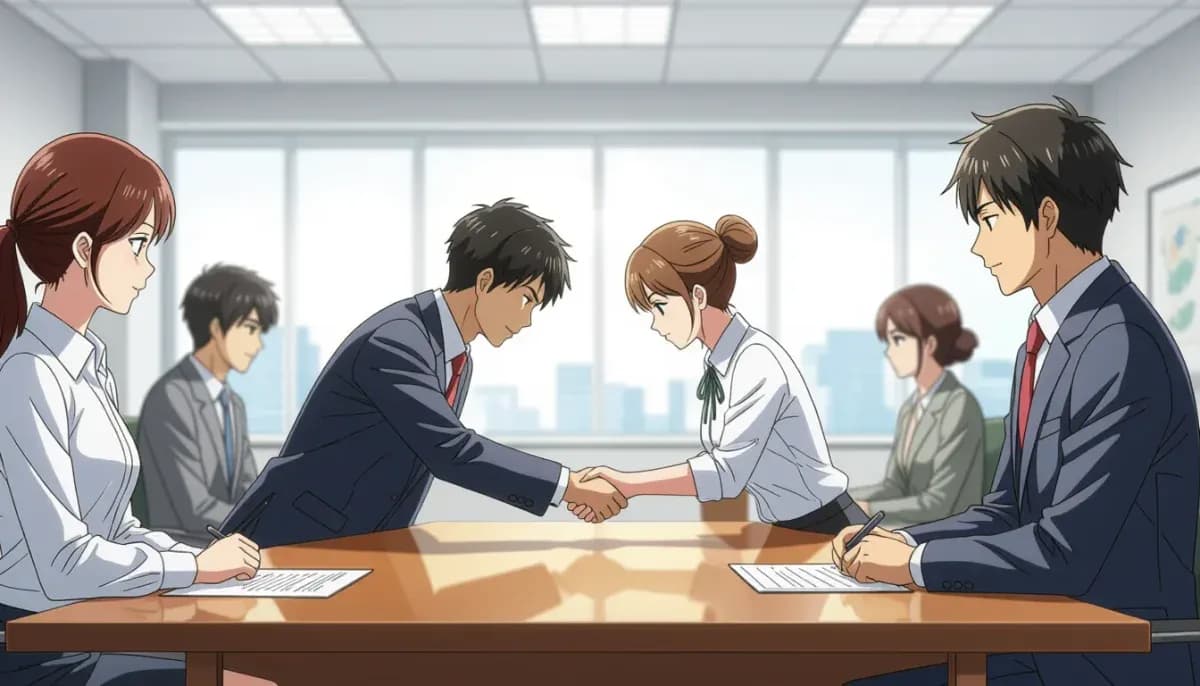
Bowing is the cornerstone of Japanese greetings. Unlike a handshake, the bow communicates respect, gratitude, and social hierarchy simultaneously. There are three main bow types:
| Bow Type | Angle | When to Use |
|---|
| Eshaku (会釈) | 15° | Casual greetings, passing colleagues |
| Keirei (敬礼) | 30° | Standard business meetings, formal greetings |
| Saikeirei (最敬礼) | 45° | Deep apology, meeting important executives |
As a foreigner, you are not expected to execute perfect bows. A respectful nod of the head goes a long way. What matters most is the genuine effort to show respect. When in doubt, a 15–30° bow is appropriate for most everyday situations.
Key greeting phrases to know:
- Ohayou gozaimasu (おはようございます) — Good morning (formal)
- Konnichiwa (こんにちは) — Hello / Good afternoon
- Konbanwa (こんばんは) — Good evening
- Yoroshiku onegaishimasu (よろしくお願いします) — Nice to meet you / Please treat me well
Handshakes are becoming more common in international business contexts, but bowing remains the default. When a Japanese person extends their hand for a handshake, feel free to reciprocate.
For more guidance on communicating in Japan, read our Complete Guide to Learning Japanese as a Foreigner.
Shoe and Indoor Space Etiquette
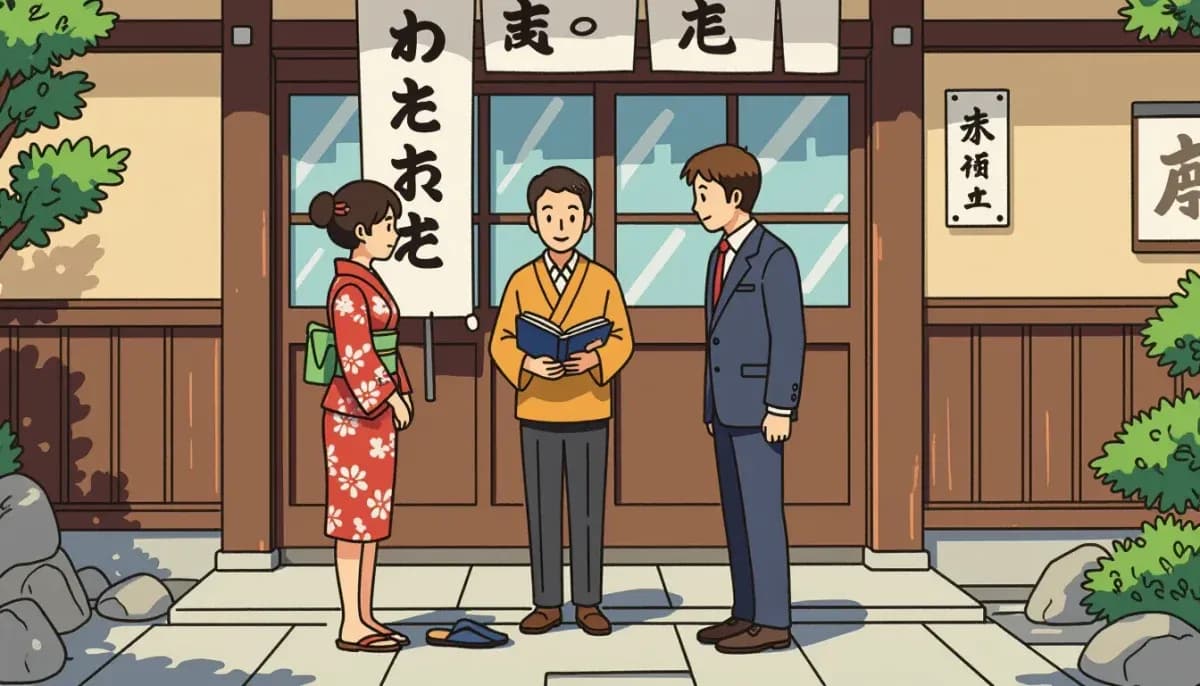
One of the first customs foreigners encounter is the shoe removal rule. In Japan, the boundary between outdoor and indoor space is taken very seriously.
Where to remove shoes:
- Private homes (always)
- Traditional restaurants with tatami seating
- Ryokan (traditional inns)
- Temples and some shrines
- Some medical facilities and schools
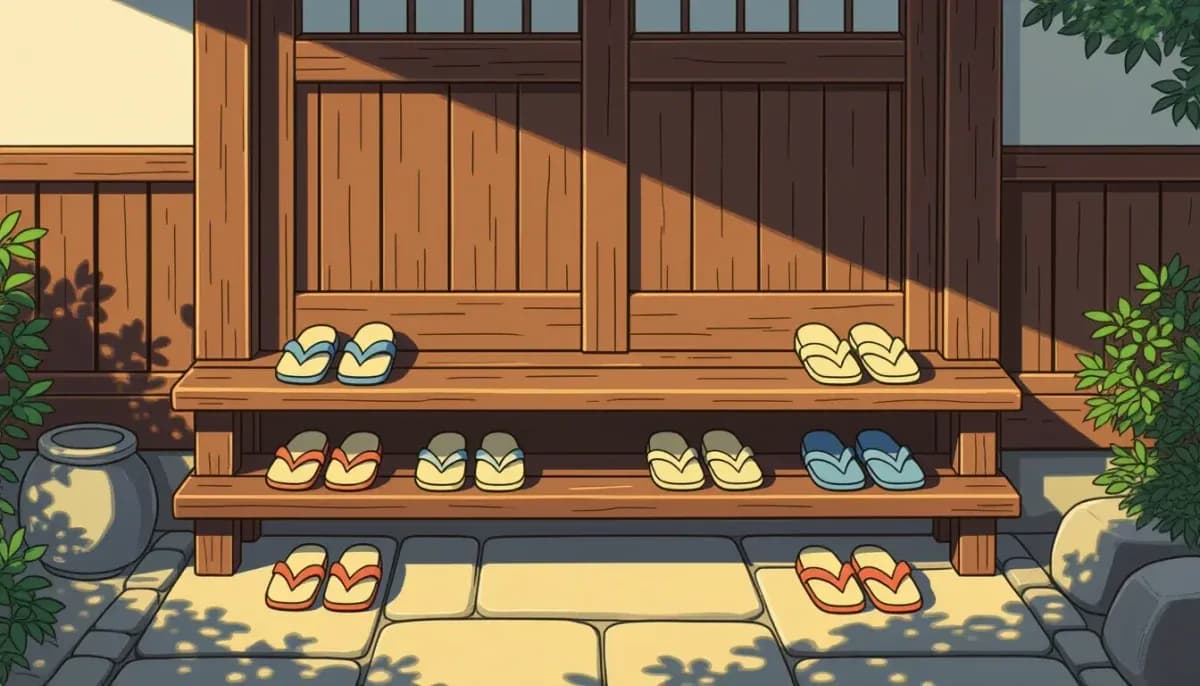
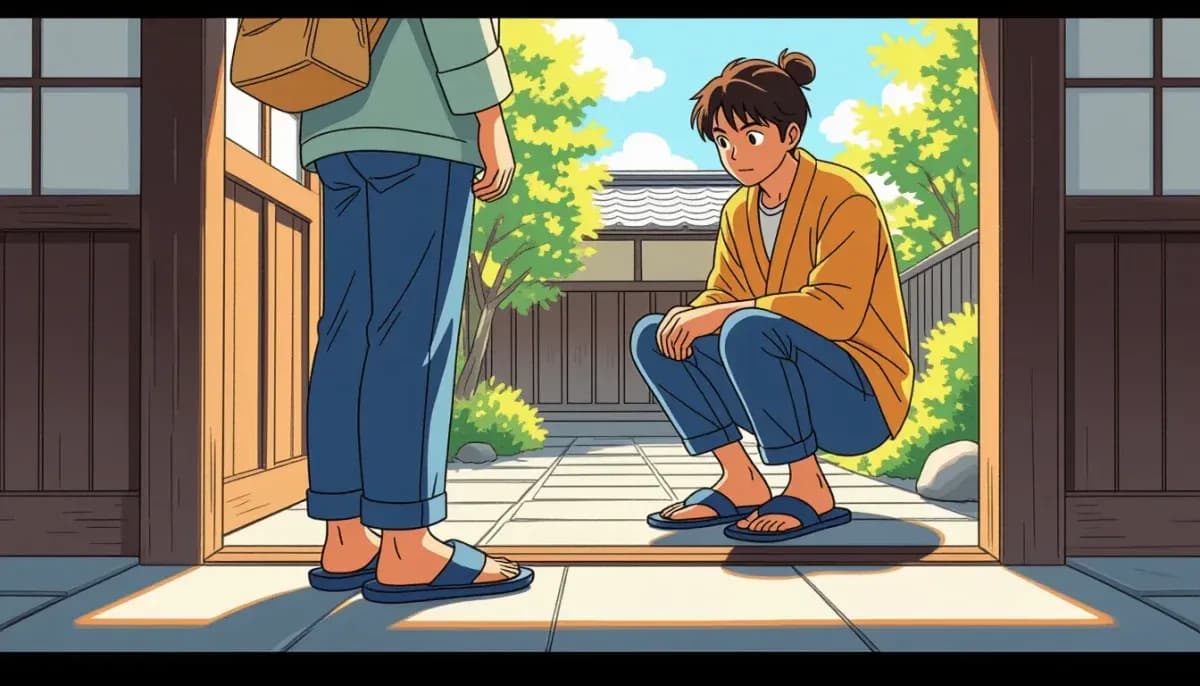
When removing shoes, place them neatly with the toes pointing toward the exit. If slippers are provided, put them on before walking further inside. Crucially, remove the slippers before stepping onto tatami mat areas — tatami is entered only in socks or bare feet.
A common mistake is walking into a tatami room with slippers on. Most homes will have a slight step up (genkan) at the entrance that signals where shoes should be left.
!Shoe removal etiquette at Japanese home entrance
Japanese Dining Customs and Table Manners
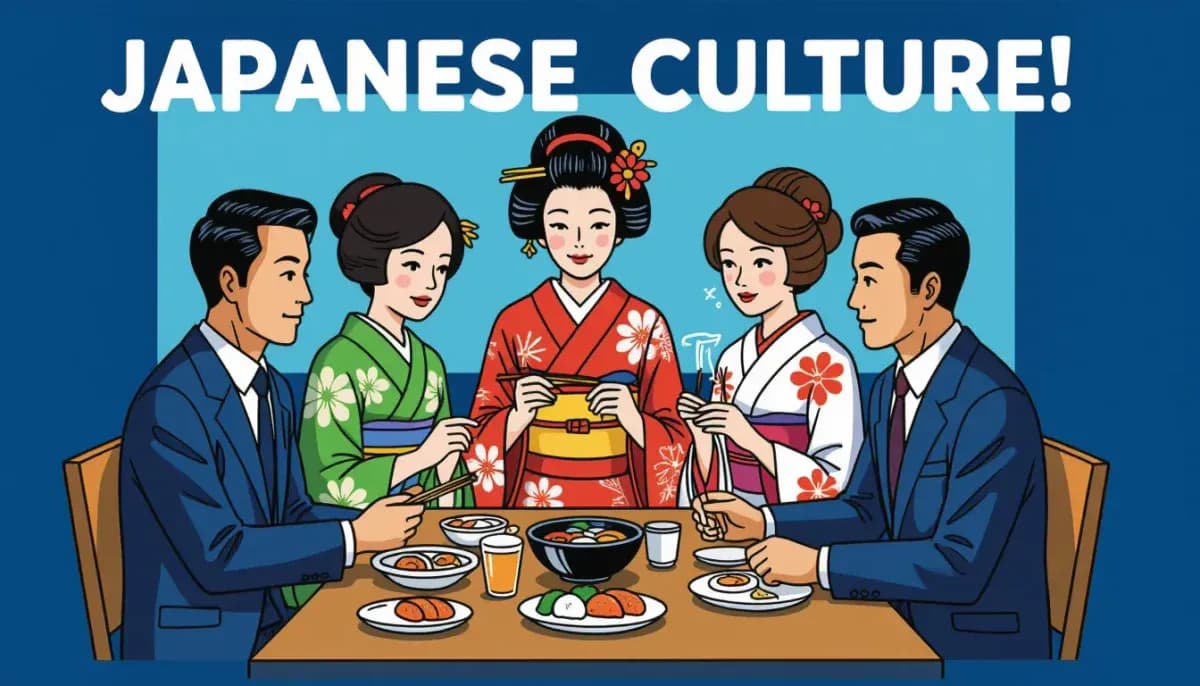
Japanese dining culture is rich with ritual and meaning. Knowing these customs will help you feel at ease in restaurants, at home with Japanese hosts, and at formal dinners.
Essential dining phrases:
- Itadakimasu (いただきます) — Said before eating; similar to "bon appétit" or giving thanks
- Gochisousama deshita (ごちそうさまでした) — Said after finishing a meal to express gratitude
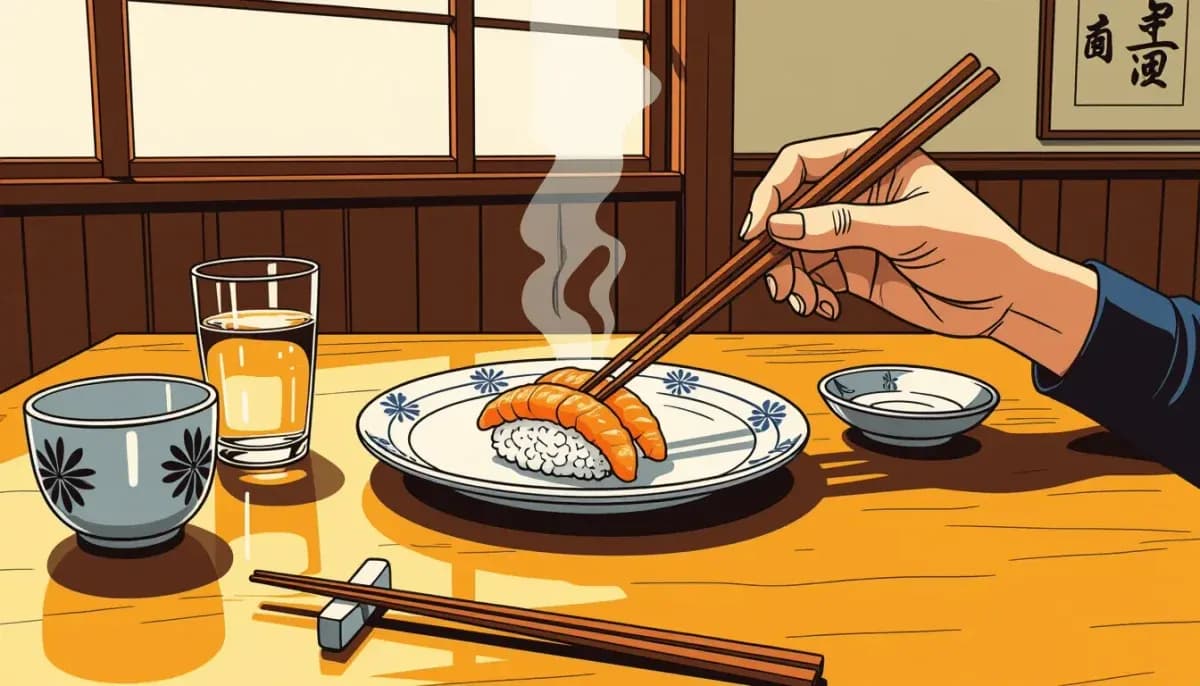
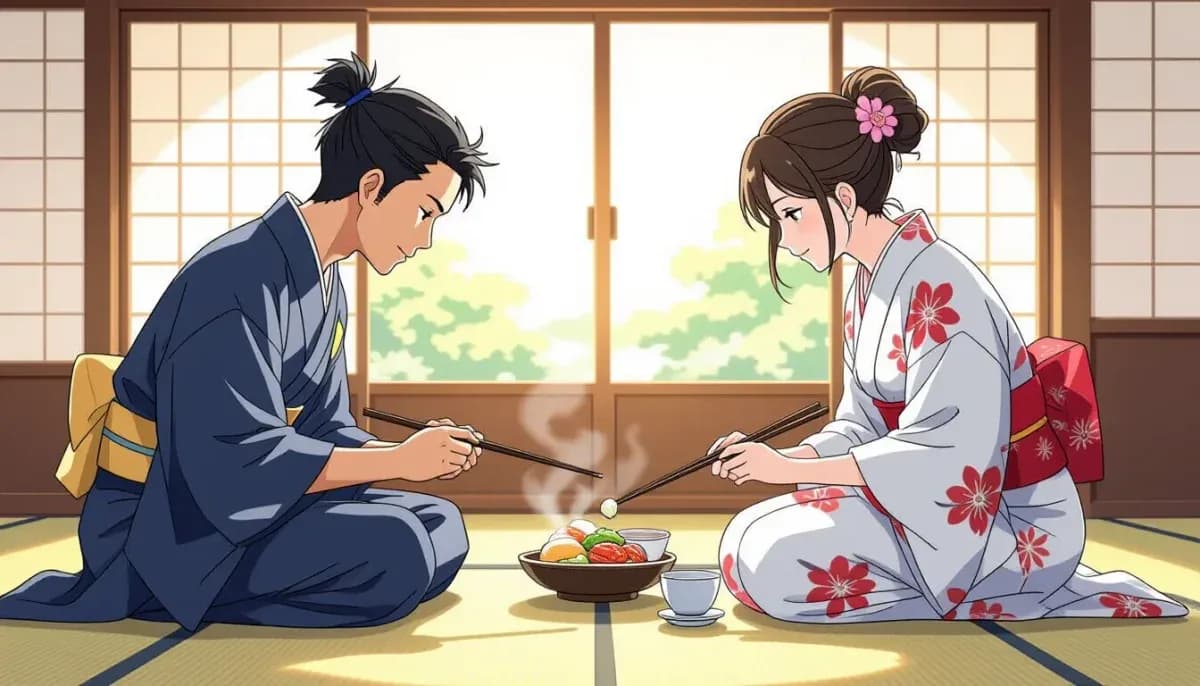
Chopstick rules: Chopsticks (hashi) carry significant social and ritual meaning. The following are considered serious taboos:
- Standing chopsticks upright in a bowl of rice (reminiscent of funeral incense)
- Passing food directly from chopstick to chopstick (associated with funeral rites)
- Pointing at people with chopsticks
- Waving chopsticks in the air while deciding what to eat
Other dining customs:
- Slurping noodles is perfectly acceptable and even complimentary to the chef
- Never tip at restaurants — tipping is considered insulting and may cause embarrassment
- Hold your rice bowl in one hand while eating; do not leave it on the table
- Avoid eating while walking outside — this is generally considered impolite
Drinking etiquette: When drinking with others, pour for those around you before pouring your own drink. Wait for everyone to be served before drinking, and toast with Kanpai! (乾杯) before the first sip.
For an in-depth look at Japanese cuisine, see our Complete Guide to Japanese Food and Cooking.
Public Behavior and Transportation Etiquette
Japan's public spaces — especially trains and subways — are governed by a strong unspoken code of conduct.
Train and subway etiquette:
- Keep your phone on silent mode at all times
- Avoid talking loudly on the phone; step off or keep conversations to a minimum
- Wear your backpack on your front during rush hours (7–9 AM and 5–7 PM)
- Yield priority seats (yūsen zaseki) to elderly, pregnant, injured, and disabled passengers
- Queue in orderly lines marked on the platform; wait for passengers to exit before boarding
- Do not eat on local trains (Shinkansen and long-distance trains are exceptions)
General public behavior:
- Dispose of trash properly — Japan has very few public trash bins; carry waste home or to convenience stores
- Maintain a quiet voice in public spaces like libraries, hospitals, and quiet restaurants
- Avoid blowing your nose loudly in public; excuse yourself if necessary
- Line up properly everywhere — cutting in line (wari-komi) is strongly frowned upon
For comprehensive guidance on navigating Japan's transportation network, read our Complete Guide to Transportation in Japan.
Business Culture and Workplace Etiquette
Japanese business culture has its own elaborate set of rules that differ significantly from Western corporate environments. Understanding these is essential for foreigners working in Japan.
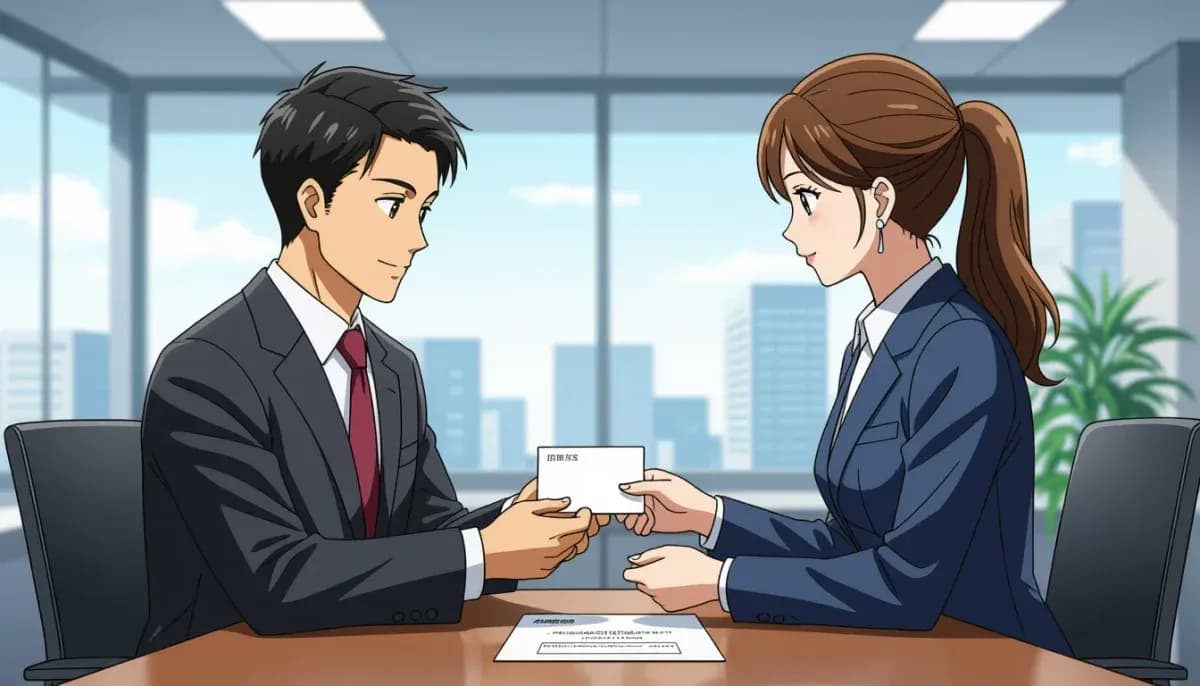
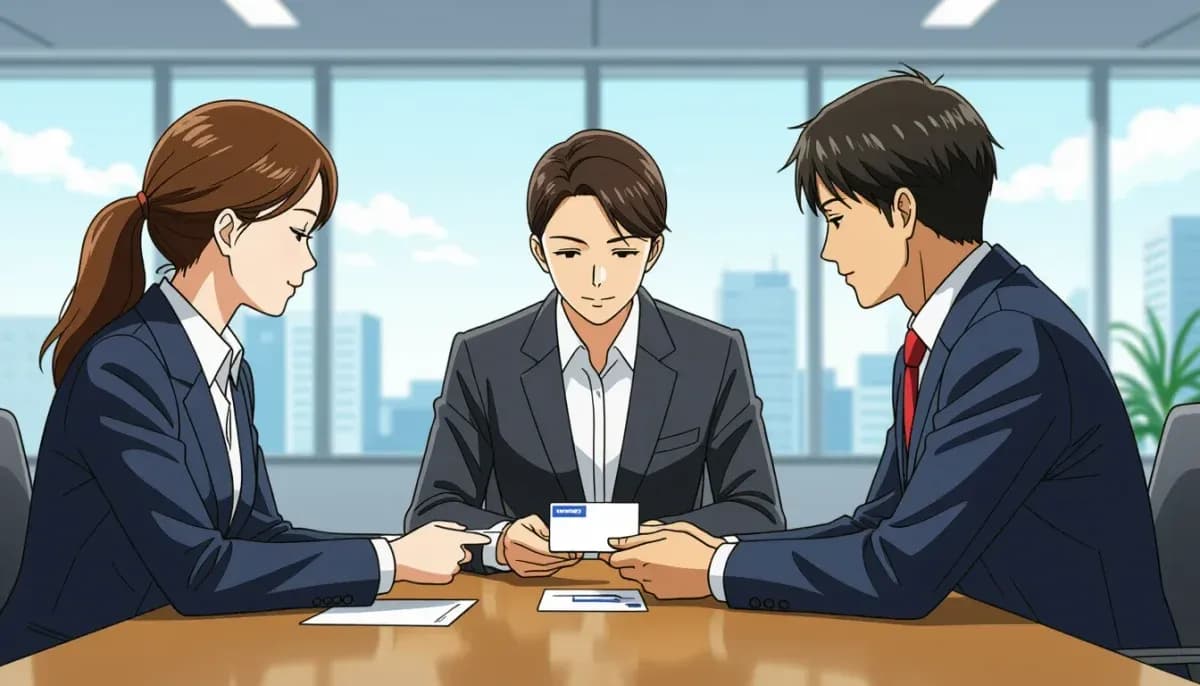
Business card (*meishi*) exchange: The business card exchange is a ritual in Japan. Present your card with both hands, with the text facing the recipient. Receive cards with both hands and study the card respectfully before placing it on the table in front of you or in a card holder. Never write on cards or stuff them immediately into your pocket — the card is treated as an extension of the person.
Punctuality: Being on time in Japan means being early. Arrive 5–10 minutes before meetings. Deadlines are non-negotiable, and being late reflects poorly on your professionalism and character.
Horenso (報連相) communication: The Japanese workplace communication philosophy of horenso consists of three practices:
- Hokoku (報告) — Report results and progress to your supervisor
- Renraku (連絡) — Communicate changes or updates promptly
- Soudan (相談) — Consult and seek input before making decisions
Workplace hierarchy: Japanese companies maintain clear seniority hierarchies. Even seating in meetings and elevators reflects rank — the most senior person sits furthest from the door, while the most junior person sits nearest. Understanding and respecting this hierarchy is key to being taken seriously in the workplace.
For more on working in Japan, see our Complete Guide to Working in Japan as a Foreigner and the Complete Guide to Japanese Business Culture at For Work in Japan.
Onsen, Gift-Giving, and Special Occasion Etiquette
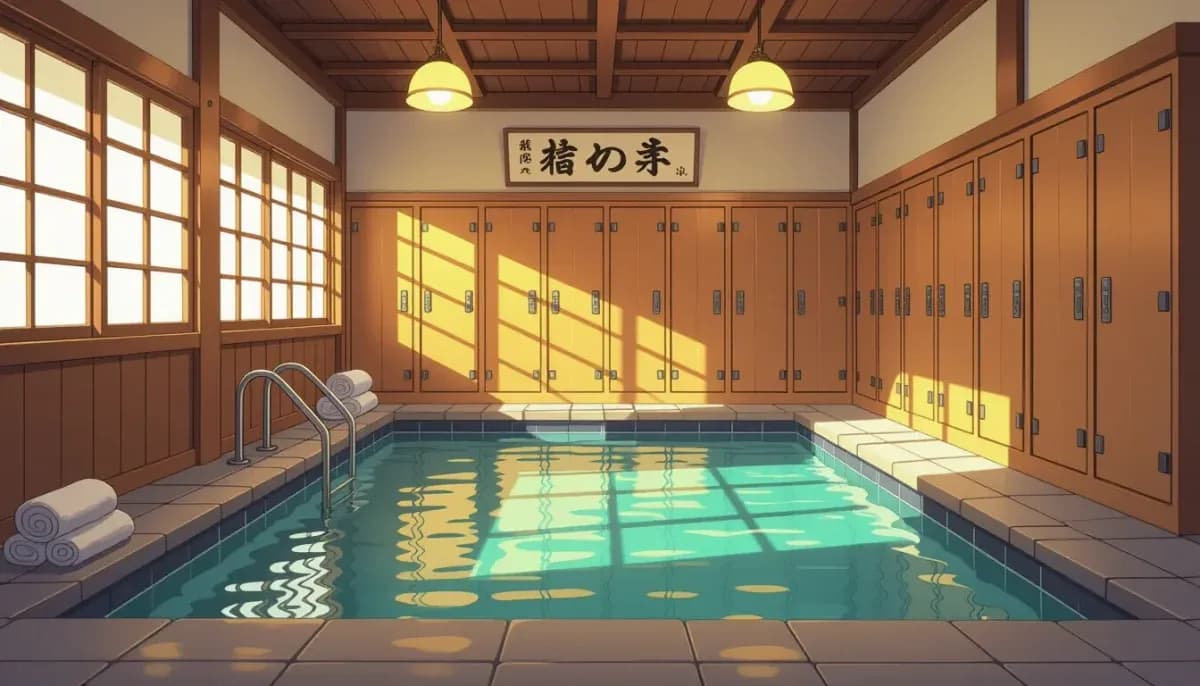
Hot springs (onsen) are central to Japanese culture and a cherished way to relax. However, onsen have strict rules that must be followed.
Before entering the onsen:
- Wash your entire body thoroughly at the shower stations before entering the communal bath
- The bath is for soaking, not cleaning; never enter without washing first
- Remove all clothing — bathing nude is standard practice (no swimsuits)
- Keep small towels on your head or to the side; never let them touch the water
- Tattoos: Traditional onsen often prohibit those with tattoos due to associations with yakuza. Some modern and tourist-oriented facilities now welcome tattooed guests — check policies in advance.
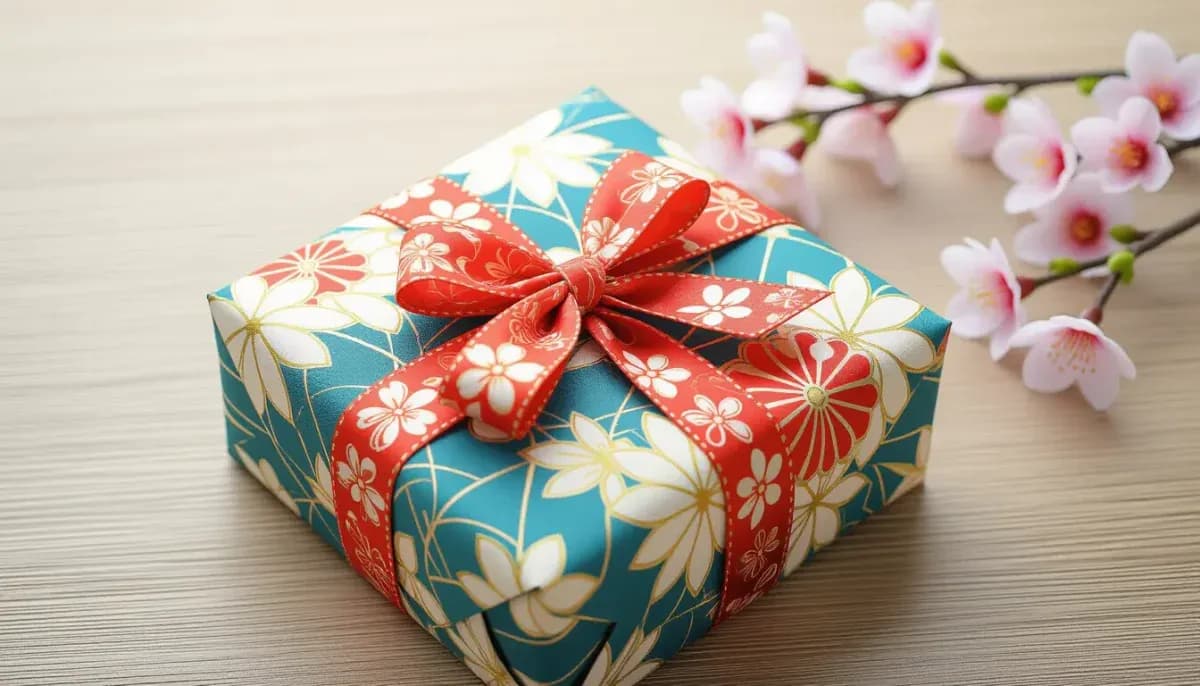
Gift-giving etiquette: Gift-giving is an important part of Japanese social culture. When bringing a gift, remember:
- Avoid items in sets of 4 (shi, meaning death) or 9 (ku, meaning suffering)
- Odd numbers are preferred for monetary gifts (e.g., ¥3,000, ¥5,000, ¥10,000)
- Say tsumaranai mono desu ga (つまらないものですが — "This is a humble thing") when presenting gifts
- Do not expect the recipient to open the gift immediately in your presence
Wedding and funeral etiquette:
- Weddings: Monetary gifts should be in new bills, in odd amounts (¥30,000 is standard). Avoid wearing white (the bride's color).
- Funerals: Use worn bills (not new) and place them in a condolence envelope. Wear formal black attire.
Shrine, Temple, and Religious Site Etiquette
With 66.7% of the population practicing Buddhism and 25.6% Shintoism (Japan Agency for Culture Affairs, 2018), religious sites are central to Japanese cultural life. Visiting them with proper respect enriches the experience enormously.
Shinto shrine (*jinja*) etiquette:
- Bow before passing through the torii gate
- Walk along the sides of the sandō path (the center is reserved for deities)
- Purify your hands and mouth at the temizuya (water basin): scoop water with the ladle, rinse your left hand, then right hand, then rinse your mouth (pour water into your cupped hand)
- At the main hall: offer a coin, bow twice, clap twice, bow once (nirei nishakuichirei)
Buddhist temple (*tera*) etiquette:
- Burn incense and waft the smoke toward your body for purification
- Bow before the main hall
- Light candles and incense respectfully
For more on Japanese traditions and celebrations, see our Complete Guide to Japanese Festivals and Traditions.
Reading the Room: Indirect Communication in Japan
One of the most challenging aspects of Japanese culture for many foreigners is the indirect communication style. Understanding kuuki yomu (空気を読む — "reading the air") is essential for navigating social and professional situations.
What to listen for:
- Chotto muzukashii (ちょっと難しい — "That is a little difficult") often means "no" or "I disagree"
- Silence or long pauses can indicate disagreement or discomfort
- Nodding during conversation signals attentiveness, not necessarily agreement
- Excessive positivity can sometimes mask hesitation
How to respond:
- Give people a graceful way to decline; never put someone in a position where they must directly refuse
- Offer alternatives rather than pressing for a direct answer
- Observe body language and context alongside verbal cues
This communication style takes time to master, but even a basic awareness of it will dramatically improve your relationships with Japanese colleagues, neighbors, and friends.
Practical Etiquette Quick Reference
| Situation | Do | Don't |
|---|
| Entering a home | Remove shoes at genkan | Walk in with outdoor shoes |
| Dining | Say itadakimasu, pour for others | Tip, point chopsticks at people |
| Train | Stay quiet, give up priority seats | Talk loudly, eat (on local trains) |
| Onsen | Wash before entering, go nude | Wear swimsuit, enter with towel |
| Business | Arrive early, use both hands for cards | Be late, pocket cards immediately |
| Gift-giving | Use odd amounts, say tsumaranai mono | Give sets of 4 or 9 |
| Shrine visit | Bow at torii, purify hands | Walk down the center path |
Final Thoughts: Effort Over Perfection
Japanese people do not expect foreigners to know every nuance of their culture. What matters most is the genuine intention to be respectful and considerate. Even small efforts — a bow, knowing a few phrases, removing your shoes without being asked — communicate that you care about the people and culture around you.
Japanese etiquette is ultimately about one thing: being thoughtful toward others. When in doubt, observe what those around you are doing and follow their lead.
For deeper cultural immersion, explore these resources:
Japan's culture is deep, layered, and endlessly fascinating. Approach it with curiosity and respect, and you will find that Japanese people are among the warmest and most welcoming hosts in the world.