
Visiting a Japanese Home Etiquette and Tips

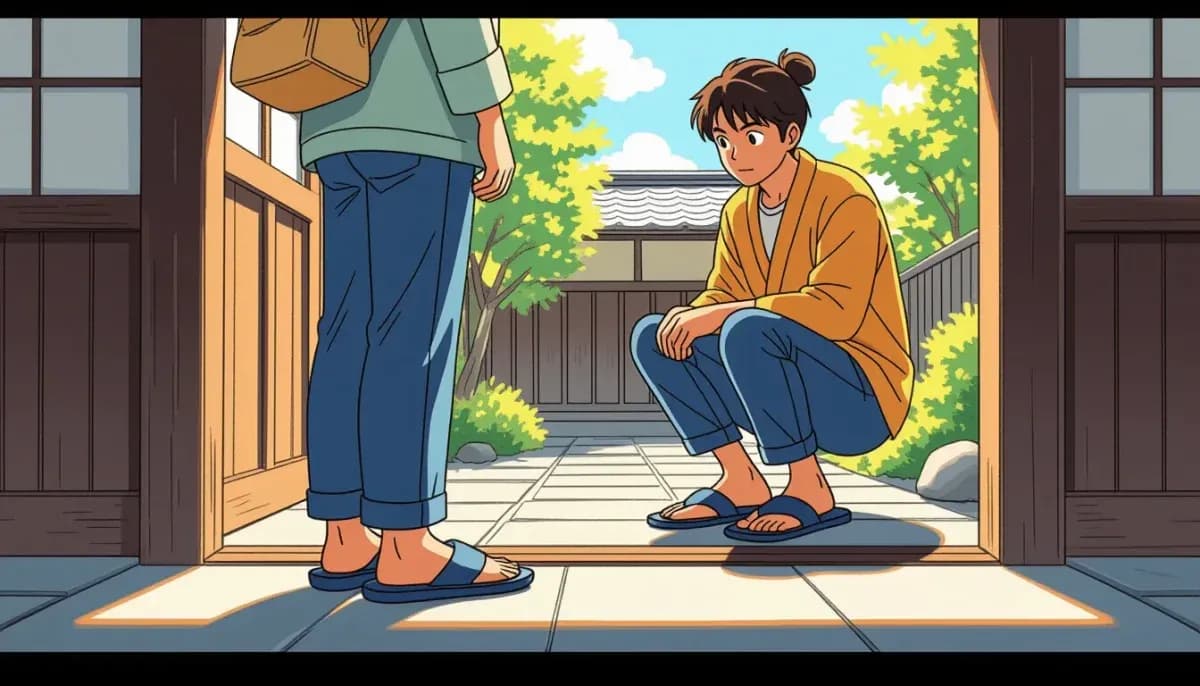
Complete guide to Japanese home visit etiquette for foreigners: genkan shoe removal, gift giving, tatami rules, meal customs, and how to be a respectful guest in Japan.
Visiting a Japanese Home: Etiquette and Tips for Foreigners
Getting invited to a Japanese home is a genuine honor. Many Japanese people feel their homes are too small or humble to host guests, so if someone opens their door to you, it signals a real sense of closeness and trust. Whether you've been invited by a coworker, a neighbor, or a new friend, following proper etiquette will leave a lasting positive impression and help you avoid any awkward missteps.
This guide walks you through everything you need to know before stepping inside a Japanese home, from the moment you arrive at the door to the time you say goodbye.
!A foreigner removing shoes at a Japanese home genkan entrance with slippers arranged neatly

The Genkan: Japan's Sacred Entryway
The first thing you'll encounter when visiting a Japanese home is the genkan (玄関) — a lowered entryway area that separates the outside world from the inside of the home. This isn't just a design choice; it's a cultural boundary with deep symbolic meaning.
When you arrive, you'll notice a step up from the genkan into the main living area. This transition point is where you remove your shoes. Never step into the raised area with outdoor shoes still on — this is one of the few rules where even the usual "gaijin exception" doesn't apply.
How to handle shoes properly:
- Remove your shoes while standing in the genkan (the lower area)
- Place them neatly with the toes pointing toward the door, making it easier to slip them back on when you leave
- Never kick shoes off carelessly or leave them scattered
- Always wear socks or stockings — going barefoot into a Japanese home is considered rude
- If slippers are provided, put them on after removing your shoes
The genkan often features decorative touches like flower arrangements or small ornaments, reflecting the household's attention to detail and hospitality.
What to Say When You Arrive
As you step inside, the correct phrase to say is "Ojama shimasu" (お邪魔します). Literally, it means "I am disturbing you" or "Excuse me for intruding." This phrase acknowledges that you're entering someone's private space and expresses gratitude for their hospitality.
Your host will likely respond with "Dozo" (どうぞ) or "Irasshaimase" to welcome you in. Don't skip this greeting — it sets the right tone for the entire visit.
Key phrases for your visit:
| Phrase | Pronunciation | Meaning | When to Use |
|---|---|---|---|
| Ojama shimasu | Oh-ja-ma she-mas | Excuse me for intruding | When entering the home |
| Itadakimasu | Ee-ta-da-key-mas | I humbly receive this meal | Before eating |
| Oishii | Oh-ee-shee | Delicious! | While eating to compliment the food |
| Gochisosama deshita | Go-chee-so-sa-ma des-ta | It was a feast / Thank you for the meal | After finishing eating |
| Osewa ni narimashita | Oh-se-wa-ni na-ri-ma-shta | Thank you for your hospitality | When leaving |
Learning these phrases will make your host very happy and show real cultural awareness.
Bringing the Right Gift (Temiyage)
Showing up to a Japanese home empty-handed isn't technically required, but bringing a small gift — called temiyage (手土産) — is a thoughtful and widely appreciated gesture that reflects well on your manners.
Good gift choices:
- Packaged sweets, cakes, or cookies from a well-known shop
- Seasonal fruit arranged nicely
- Local specialties from your hometown or a recent trip
- Premium tea or coffee
- Small cakes or wagashi (Japanese traditional sweets)
What to avoid:
- Items associated with the numbers 4 (shi, which sounds like "death") or 9 (ku, which sounds like "suffering")
- Sharp objects like knives, scissors, or letter openers — they symbolize cutting ties
- White flowers — reserved for funerals
- Cheap or hastily purchased items without proper wrapping
How to present your gift: Use both hands when giving the gift. Japanese gift-giving culture values humility, so accompany your presentation with "Tsumaranai mono desu ga..." (つまらないものですが), meaning "It's nothing special, but please accept this." This humble framing is standard and expected.
Your host may not open the gift in front of you — this is normal in Japanese culture. Opening gifts privately avoids the pressure of an immediate reaction.
Navigating the Home: Slippers, Tatami, and Toilet Rules
Once inside, there are several room-specific rules to keep in mind.
General Indoor Rules
Stand until invited to sit. Family members often have preferred seats, and sitting down uninvited can displace someone from their usual spot. Do not wander into rooms you haven't been invited to — bedrooms, studies, and other private spaces are off-limits unless your host specifically shows them to you. If you need the bathroom, politely ask: "Otearai wo kashite itadakemasu ka?" (May I use the restroom?)
Tatami Room Rules
If the home has a traditional Japanese room with tatami mats, you must remove your slippers before entering. Tatami is made from natural rush grass and is easily damaged and dirtied by footwear.
Inside a tatami room, the traditional sitting position is seiza — kneeling with the tops of your feet flat on the mat and sitting back on your heels. If seiza is uncomfortable, sitting cross-legged is acceptable for men (agura), and sitting with legs to one side is appropriate for women (yoko-zuwari). Avoid stretching your legs straight out toward elders or hosts, as this is considered disrespectful.
Bathroom Etiquette
Many Japanese homes have special toilet slippers kept just inside the bathroom door. These are used only in the toilet area. When you exit the bathroom, switch back to the regular house slippers — and don't forget. Forgetting to swap slippers is one of the most common faux pas for visitors.
!Japanese interior with tatami room and traditional sliding doors

Meal Etiquette at a Japanese Home
If you're invited to eat — which is likely — meal time comes with its own set of customs.
Before the meal:
- Wait for the host to indicate you should begin
- The host will often make the first toast; wait until glasses are raised before drinking
- Say "Itadakimasu" before you start eating — never skip this
During the meal:
- Compliment the food by saying "Oishii!" (delicious) — hosts genuinely appreciate knowing you're enjoying what they made
- Try everything offered; leaving food untouched can suggest you don't like it
- Use oshibori (hot wet towels) to clean your hands before eating if provided
- Don't pour your own drinks; pour for others and let them pour for you
After the meal:
- Say "Gochisosama deshita" — this is mandatory and equivalent to "thank you for this wonderful meal"
- Offer to help with dishes; your host will almost certainly decline, but the gesture is appreciated
Timing: When to Arrive and When to Leave
Arrival timing:
- Arrive exactly on time — not early, not late
- Arriving early is actually problematic; your host may still be preparing and will feel caught off guard
- If you're going to be more than 10-15 minutes late, call ahead
Departure timing: This is where foreigners often struggle. Japanese social culture is high-context, meaning important messages are communicated indirectly. Your host will rarely say outright "it's getting late, you should go." Instead, watch for subtle cues:
- The host begins cleaning up around you
- The host mentions having an early morning or other obligation
- Conversation lulls become longer and more frequent
- You've been offered a final cup of tea or dessert
When you sense these signals, it's time to gracefully excuse yourself. A good rule of thumb: don't stay past 9-10 PM unless explicitly encouraged to.
Common Mistakes Foreigners Make
Even well-intentioned guests can accidentally make missteps. Here are common ones to avoid:
| Mistake | Why It's a Problem | What to Do Instead |
|---|---|---|
| Wearing shoes inside | Brings dirt and is deeply disrespectful | Remove shoes in the genkan immediately |
| Forgetting toilet slippers | Culturally awkward | Always switch slippers at the bathroom |
| Sitting on tatami with slippers | Damages the tatami | Remove all footwear before tatami rooms |
| Bringing unannounced guests | Strains host's food and seating | Always ask permission before bringing anyone |
| Opening the fridge without asking | Oversteps boundaries | Only touch what you're offered |
| Excessive phone use | Appears disengaged and disrespectful | Put phone away; be present in conversation |
| Not saying itadakimasu | Skips an important ritual | Always say it before eating |
| Overstaying your welcome | Stresses the host who won't say anything | Read cues and leave at a reasonable hour |
Understanding Japanese Hospitality (Omotenashi)
The customs above all stem from a deep cultural value called omotenashi — the Japanese philosophy of wholehearted hospitality. It's about anticipating a guest's needs before they're expressed, and it runs throughout Japanese home culture.
When a Japanese host prepares a meal for you, they've likely spent hours cooking. When they offer you tea, they've considered the season, your taste, and the right accompaniment. This level of care isn't about formality — it's genuine warmth expressed through action rather than words.
As a guest, the best way to honor omotenashi is to be attentive and present, express appreciation both verbally and through body language, respect the norms that make the host feel their effort was worthwhile, and send a thank-you message after the visit.
For more on Japanese cultural values and social customs, see the Complete Guide to Japanese Culture and Etiquette for Foreigners and the guide on Making Friends and Social Life in Japan.
Practical Tips Before Your Visit
Dress appropriately:
- Wear socks without holes — you'll be showing them off
- Avoid boots or shoes that are hard to remove; slip-ons or easy-to-remove footwear is ideal
- Dress neatly; you're a guest
Before you go:
- If you have dietary restrictions, inform your host in advance — they will have gone to effort to cook
- If you're bringing children or pets, always ask first
- Send a thank-you message the same evening or following morning
For more context on daily life in Japan as a foreigner, see the Complete Guide to Daily Life in Japan for Foreigners. If you're new to Japan, the Complete Guide to Moving to Japan covers essential cultural preparation.
Additional Resources
For in-depth guidance on Japanese customs and home life:
- JR Pass Japanese Home Etiquette Guide — comprehensive breakdown of all key customs
- Live Japan: 10 Home Visit Tips — practical tips for visitors
- JCB: Dos and Don'ts When Visiting a Japanese Home — concise checklist format
- Living in Nihon: Japanese Culture and Manners Guide — broader cultural context for foreigners in Japan
- For Work in Japan: Family Life Guide — context on Japanese family and home culture
- Ittenshoku — resources for foreigners building a life in Japan
Visiting a Japanese home is one of the most rewarding cultural experiences available to foreigners living in or visiting Japan. The rules might seem elaborate at first, but they stem from a sincere culture of respect and care. Once you've been through a few visits, these customs become second nature — and you may find yourself appreciating the thoughtfulness they reflect.

Originally from Vietnam, living in Japan for 16+ years. Graduated from Nagoya University, with 11 years of professional experience at Japanese and international companies. Sharing information about living in Japan for foreigners.
View Profile →Related Articles

Japanese Seasonal Customs and Greeting Traditions
Discover Japan's seasonal customs and greeting traditions across all four seasons. From hanami and Tanabata to nengajo and oseibo—your complete guide to navigating Japanese seasonal culture as a foreigner.
Read more →
Common Cultural Misunderstandings Foreigners Make in Japan
Avoid embarrassing cultural mistakes in Japan. Learn about shoe etiquette, tipping, indirect communication, chopstick taboos, onsen rules, and business card customs that trip up most foreigners.
Read more →
Japanese Business Card Meishi Exchange Guide
Learn the complete meishi exchange etiquette for Japan: how to present and receive business cards correctly, bilingual card design tips, common mistakes to avoid, and why this ritual matters so much in Japanese professional culture.
Read more →
Public Bath Sento Etiquette Guide for Foreigners
Complete sento etiquette guide for foreigners in Japan. Learn how to use a Japanese public bathhouse, what to bring, tattoo policies, and essential dos and don'ts for a respectful experience.
Read more →
Japanese Noise Etiquette and Quiet Hours Guide
Learn Japanese noise etiquette, quiet hours rules, and how to avoid noise complaints in Japan apartments. Essential guide for foreigners and expats living in Japan.
Read more →
Chopstick Etiquette in Japan Rules You Must Know
Master chopstick etiquette in Japan with this complete guide. Learn the major taboos, how to hold chopsticks correctly, and the unwritten rules that every foreigner should know before dining in Japan.
Read more →