


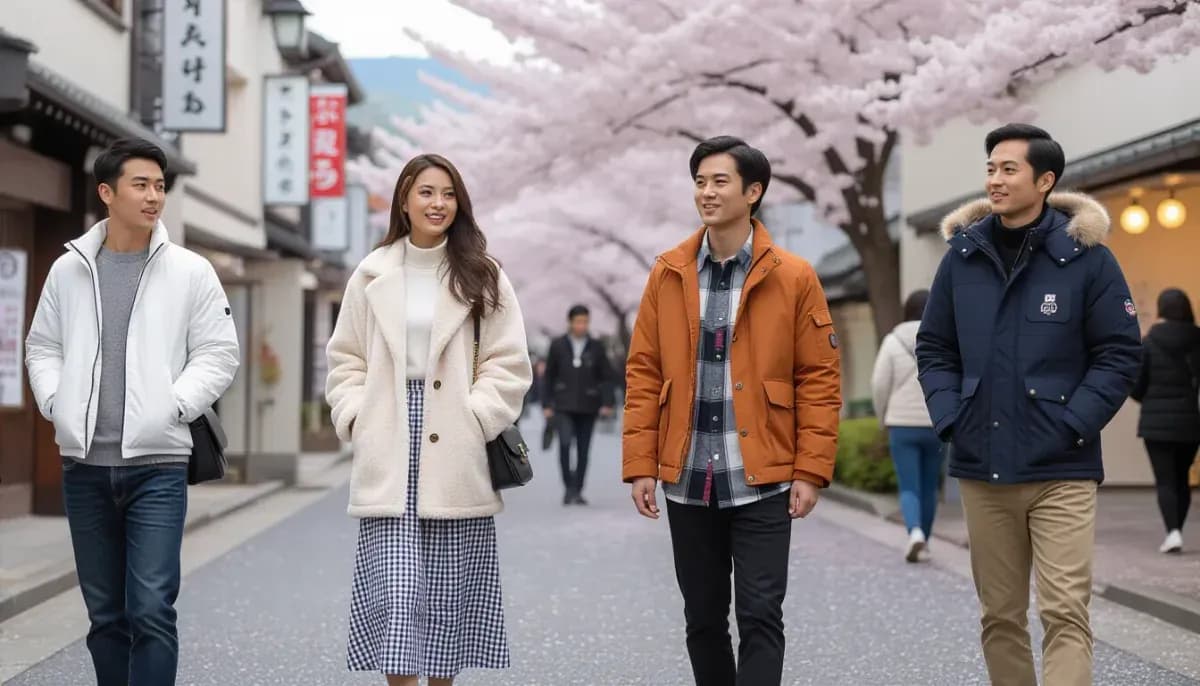
Seasonal Clothing Guide for Living in Japan
Complete seasonal clothing guide for foreigners living in Japan. Learn what to wear in spring, summer, rainy season, autumn, and winter with month-by-month tips and shopping advice.
Read more →
Everything foreigners need to know about daily life in Japan: housing, transportation, garbage rules, shopping, healthcare, and cultural etiquette. Practical tips for expats.
Moving to Japan is an exciting adventure, but navigating daily life as a foreigner comes with its own unique challenges and learning curves. From mastering the trash separation system to figuring out which convenience store services you can use, this guide covers everything you need to know to settle into your new life in Japan comfortably and confidently.
Whether you're a new arrival or have been in Japan for a while, understanding the rhythms and rules of everyday Japanese life will help you integrate smoothly, avoid common mistakes, and genuinely enjoy living in one of the world's most fascinating countries.
!Daily life in Japan for foreigners - a foreigner navigating Japanese urban life
The first two weeks after arriving in Japan are critical for getting your administrative affairs in order. Foreign residents are legally required to complete certain registrations within specific time frames.
Register at Your Local City Hall (Within 14 Days)
Within 14 days of arriving and establishing your address, you must submit a resident registration (転入届 - tennyu todoke) at your local municipal office. Bring your passport, residence card (在留カード - zairyu card), and address details. You'll receive a My Number card application and be added to the resident registry, which is essential for opening bank accounts, signing up for utilities, and countless other daily life activities.
Set Up Health Insurance
All residents in Japan are required to enroll in health insurance. If you're employed full-time, your company will typically enroll you in shakai hoken (社会保険 - employee health insurance). If you're self-employed, a student, or working part-time, you'll need to enroll in National Health Insurance (国民健康保険 - kokumin kenko hoken) at your city hall. Learn more about Japan's National Health Insurance system.
Set Up a Bank Account
A Japanese bank account is essential for paying rent, utilities, and receiving your salary. Major options include Japan Post Bank (ゆうちょ銀行), Sumitomo Mitsui, MUFG, and newer digital-friendly options like Rakuten Bank or PayPay Bank. Get a step-by-step guide to opening a bank account in Japan.
Utilities Setup
You'll need to arrange electricity, gas, and water service for your new apartment. Many utility providers now offer English-language support. Check our detailed guide on setting up utilities in Japan.
Japan's housing market has its own unique characteristics that can surprise newcomers. Understanding these will help you navigate your living situation more smoothly.
Typical Apartment Sizes and Costs
Japanese apartments are notably smaller than Western equivalents. Here's a breakdown of typical options and costs:
| Apartment Type | Description | Monthly Rent (Tokyo) | Monthly Rent (Osaka/Other Cities) |
|---|---|---|---|
| 1R (One Room) | Single room, no separate bedroom | ¥60,000 - ¥100,000 | ¥40,000 - ¥70,000 |
| 1K | One room + kitchen area | ¥70,000 - ¥120,000 | ¥50,000 - ¥90,000 |
| 1LDK | Living/dining/kitchen + 1 bedroom | ¥100,000 - ¥180,000 | ¥70,000 - ¥130,000 |
| Share House | Private room, shared facilities | ¥30,000 - ¥70,000 | ¥25,000 - ¥55,000 |
| UR Rental | No guarantor required, stable pricing | ¥60,000 - ¥150,000 | ¥45,000 - ¥100,000 |
Initial Costs
Be prepared for significant upfront costs when renting: typically 4-6 months of rent is required at move-in, covering security deposits (1-2 months), key money (礼金 - reikin, non-refundable gift money), agency fees, and fire insurance. For detailed guidance on finding and renting an apartment, see our apartment rental guide for foreigners.
UR Rental Housing
UR (Urban Renaissance Agency) rental housing is an excellent option for foreigners as it requires no guarantor and no key money. While inventory varies by location, it's worth checking if UR housing is available near your workplace.
For a complete financial planning perspective on housing and other major life expenses in Japan, Living in Nihon has an excellent resource on life events and financial planning.
Japan's public transportation system is world-renowned for its punctuality, cleanliness, and coverage. Once you master it, getting around becomes second nature.
IC Cards: Your Essential Transit Tool
The single most important item for daily commuting is an IC card. Suica (used mainly in Tokyo/east Japan) and PASMO are interchangeable rechargeable cards that work on trains, buses, subways, and even for small purchases at convenience stores and vending machines. ICOCA is the equivalent for the Kansai region (Osaka/Kyoto).
Rush Hours
Be prepared for intense crowding on trains during rush hours (typically 7:30-9:00 AM and 5:30-8:00 PM on weekdays). Major stations in Tokyo like Shinjuku, Shibuya, and Ikebukuro are among the busiest in the world. White-gloved "pushers" at some stations help pack passengers into trains during peak times.
Navigation Apps
Google Maps works excellently for navigation in Japan. HyperDia and Navitime are popular alternatives specifically designed for Japan's complex train system. For a comprehensive overview, check out our Japan train system guide for beginners.
Cycling
Bicycles are extremely practical for short-distance travel in Japan. Mandatory bicycle registration (防犯登録 - bohan toroku) is required, typically done at the shop where you purchase your bike. Note that riding on sidewalks is technically illegal in many areas, though enforcement varies.
!IC card and Japanese train system navigation
Japan offers an incredible variety of food options at different price points. Understanding where and how to shop will help you eat well without overspending.
Supermarkets (スーパー)
Major supermarket chains include AEON (イオン), Ito-Yokado (イトーヨーカドー), Seiyu, and regional chains. Most supermarkets offer excellent value. Look for markdowns on fresh food items in the evening (typically after 7-8 PM), when items receive 20-50% discount stickers.
Convenience Stores (コンビニ - Konbini)
Don't underestimate Japan's convenience stores. Chains like 7-Eleven, FamilyMart, and Lawson are open 24/7 and offer far more than snacks:
Budget tip: Konbini bento boxes and ready meals cost ¥400-700 and are often quite good quality.
Specialty Stores
For international ingredients, look for Kaldi Coffee Farm (カルディ), Jupiter Coffee, and specialty import stores. Major cities have international supermarkets catering to specific communities (Shin-Okubo in Tokyo for Korean/Asian ingredients, for example).
For a complete guide to navigating Japanese supermarkets and grocery stores, see our Japanese grocery shopping guide.
Japan's garbage disposal system is famously strict and one of the biggest cultural adjustments for newcomers. Rules vary by municipality, but the general framework is consistent.
Standard Garbage Categories
Most areas require separating waste into these categories:
How to Follow the Rules
When you register your address at city hall, you should receive a garbage collection calendar showing which type of garbage is collected on which day. In apartments, management companies often post rules near the garbage collection area. Violations can result in your garbage being left uncollected with a note explaining what's wrong, and in serious cases, fines or lease issues.
Practical Tips
Cash Culture
Japan remains significantly cash-dependent compared to many Western countries. While digital payments via IC cards, QR codes (PayPay, LINE Pay), and credit cards are growing rapidly, many local restaurants, small shops, and vending machines remain cash-only. Keeping approximately ¥10,000 in cash on hand is good practice.
Monthly Living Costs Overview
Based on surveys and data from multiple sources, here are realistic monthly budget estimates:
| Expense Category | Tokyo (Single Person) | Other Cities (Single Person) |
|---|---|---|
| Rent | ¥70,000 - ¥120,000 | ¥45,000 - ¥80,000 |
| Utilities (electricity, gas, water) | ¥15,000 - ¥20,000 | ¥12,000 - ¥18,000 |
| Groceries & dining | ¥30,000 - ¥60,000 | ¥25,000 - ¥45,000 |
| Transportation | ¥10,000 - ¥20,000 | ¥5,000 - ¥15,000 |
| Mobile phone | ¥3,000 - ¥8,000 | ¥3,000 - ¥8,000 |
| Health insurance | ¥5,000 - ¥20,000 | ¥5,000 - ¥15,000 |
| Entertainment/leisure | ¥10,000 - ¥30,000 | ¥8,000 - ¥25,000 |
| Total estimate | ¥143,000 - ¥278,000 | ¥103,000 - ¥206,000 |
For a detailed city-specific cost breakdown, see Cost of Living in Tokyo Complete Breakdown. For a broader overview of expat expenses, Remitly's cost of living guide for Japan provides helpful benchmarks.
For comprehensive guidance on housing and living infrastructure in Japan, For Work in Japan has an excellent pillar guide covering all the essentials.
Learning the Language
Japanese is classified as a Category IV language by the U.S. State Department — the most challenging tier for English speakers, requiring approximately 2,200 classroom hours for professional proficiency. However, even basic conversational Japanese dramatically improves daily life. Learning hiragana and katakana first (the phonetic alphabets, each with ~46 characters) makes reading menus, signs, and labels much easier.
Start your Japanese learning journey with our beginner's guide.
Japanese Social Etiquette
Understanding and following basic Japanese social rules will make your life much smoother and help you build positive relationships:
For a comprehensive guide to Japanese etiquette, see Essential Japanese Manners Every Foreigner Should Know.
Making Friends
Building a social circle in Japan takes effort but is deeply rewarding. Language exchange meetups, expat groups on Meetup.com, local clubs (地域活動 - chiiki katsudo), and workplace/school connections are all excellent starting points. Read our guide on making friends in Japan.
Accessing Healthcare
Japan's healthcare system is excellent and relatively affordable thanks to mandatory health insurance. You'll pay 30% of medical costs (the insurance covers 70%). For non-urgent issues, small clinics (クリニック - kurinikku) are affordable and often faster than large hospitals. Always bring your health insurance card (保険証 - hokensho) to appointments.
For non-Japanese speakers, larger hospitals in major cities often have English-speaking staff or interpretation services. The AMDA International Medical Information Center offers phone consultation services in multiple languages.
Emergency Numbers
Natural Disaster Preparedness
Japan experiences earthquakes regularly. All residents should:
Read our comprehensive earthquake preparedness guide.
For career and employment considerations as part of your daily life in Japan, Ittenshoku offers valuable career resources for those working in Japan.
Essential Apps for Living in Japan
| App | Purpose | Cost |
|---|---|---|
| Google Maps / Apple Maps | Navigation and transit | Free |
| PayPay | QR code payments | Free |
| LINE | Messaging (dominant in Japan) | Free |
| Suica/PASMO app | Mobile IC card | Free |
| NHK World | English news about Japan | Free |
| Google Translate | Real-time text/image translation | Free |
| Japan Official Travel App | Emergency alerts, travel info | Free |
Internet and Mobile Plans
Japan has excellent mobile coverage. Major carriers (docomo, SoftBank, au) offer full plans, while MVNOs (virtual operators) like Rakuten Mobile, IIJmio, and Y!mobile offer more affordable options. Monthly plans range from ¥3,000-8,000 depending on data needs.
Japan's bureaucratic processes can be challenging, but most municipal offices have English resources available. Key documents every foreign resident needs:
For more on navigating life in Japan as a foreigner, explore our related guides on Japan visa and immigration and moving to Japan as a foreigner.
For additional expat financial planning insights relevant to life in Japan, Living in Nihon offers detailed guidance on managing life events and financial milestones as a foreign resident.
Daily life in Japan for foreigners is a journey of continuous discovery. While there's certainly a learning curve — from mastering the garbage system to figuring out the best grocery stores — the rewards are immense. Japan offers extraordinary safety, incredible food, efficient infrastructure, and a rich cultural life that most residents come to deeply appreciate.
For more tips on settling in, Japan Living Guide's essential newcomer tips is a helpful resource. The key is preparation and patience. Register promptly, set up your essential services, learn the local rules, and don't be afraid to ask for help — most Japanese people are genuinely happy to assist a foreigner making the effort to navigate their daily life properly.
For more detailed guides on specific aspects of living in Japan, explore our complete library of resources for foreigners in Japan.
Complete seasonal clothing guide for foreigners living in Japan. Learn what to wear in spring, summer, rainy season, autumn, and winter with month-by-month tips and shopping advice.
Read more →
Discover the best konbini life hacks for foreigners in Japan — from ATM tips and bill payments to discount food strategies, package delivery, and printing services at 7-Eleven, FamilyMart, and Lawson.
Read more →
Everything foreigners need to know about Japan's chonaikai (neighborhood associations): fees, how to join, what happens at meetings, garbage rules, and practical tips for expats.
Read more →
Complete guide to furnishing your Japan apartment on a budget. Covers Nitori, IKEA, secondhand recycle shops, Sayonara Sales, and must-know tips for foreigners setting up their first Japanese apartment.
Read more →
Learn how the Japanese address system works, how to read chome-ban-go addresses, write Japanese addresses in English, and navigate Japan as a foreigner. Full guide with examples.
Read more →
Complete guide to doing laundry in Japan: how to use coin laundries, decode Japanese washing machines, understand prices, payment methods, and laundromat etiquette for foreigners and expats.
Read more →
Learn Japan garbage disposal rules for foreigners: how to sort burnable, non-burnable, and recyclable trash, collection schedules, special items, and tips for expats navigating the Japanese waste system.
Read more →
Step-by-step guide to Japan's My Number Card for foreigners: how to apply, key benefits including health insurance and banking, important 2025-2026 updates, and FAQs.
Read more →
Complete guide to getting a hanko personal seal in Japan as a foreigner. Learn about jitsuin, ginko-in, mitome-in types, where to buy, how to register, costs, and practical tips for expats.
Read more →
Complete guide to Japan Post Office services for foreigners: domestic and international mail rates, Yucho Bank account opening, mail forwarding, missed deliveries, and digital tools.
Read more →
Learn how to set up home internet in Japan as a foreigner. Compare fiber optic providers (NTT, SoftBank, NURO, GTN), costs, installation steps, and tips to get connected fast.
Read more →
Compare the best mobile phone plans in Japan for foreigners: Rakuten Mobile, IIJmio, Sakura Mobile, and more. Find the right SIM card plan for your budget and needs.
Read more →
Learn how to get a Japanese phone number as a foreigner. Compare the best SIM card providers, required documents, costs, and step-by-step setup instructions for expats in Japan.
Read more →
Complete guide for foreigners on setting up electricity, gas, water, and internet in a Japan apartment. Includes costs, step-by-step process, and tips for English speakers.
Read more →