
Earthquake Preparedness in Japan Complete Guide

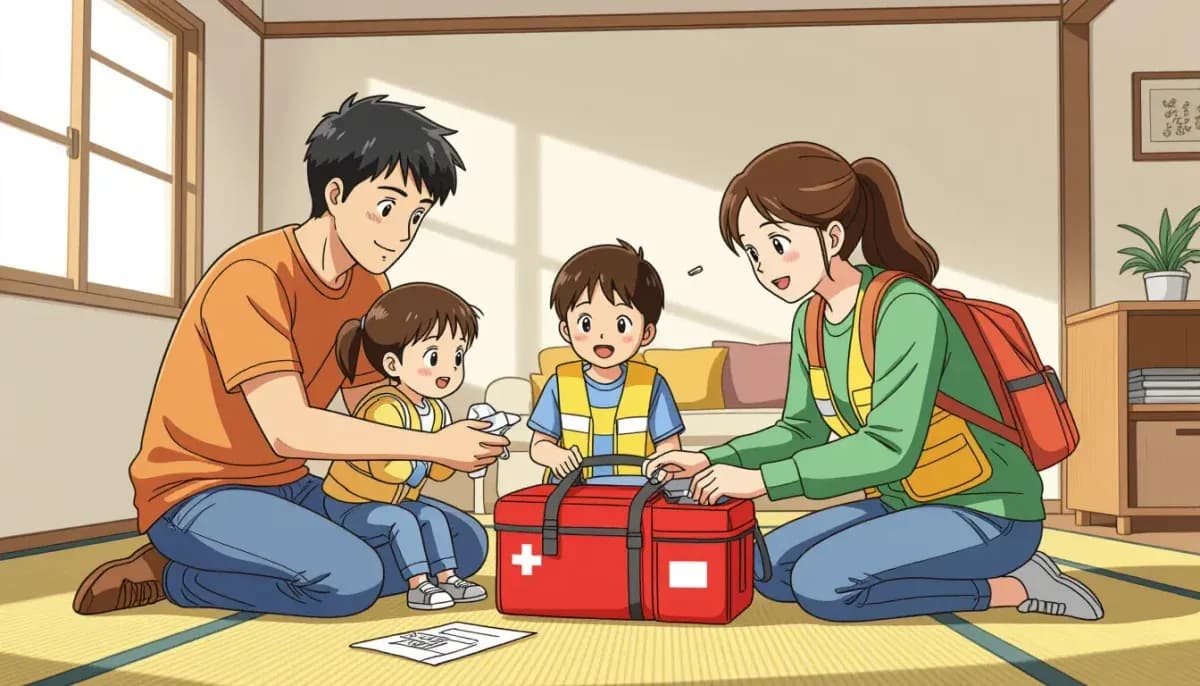
Everything foreigners need to know about earthquake preparedness in Japan: emergency kits, early warning systems, evacuation shelters, and what to do before, during, and after a quake.
Earthquake Preparedness in Japan: The Complete Guide for Foreigners
Japan is one of the world's most seismically active countries. Whether you've just arrived or have been living here for years, understanding earthquake preparedness is not optional — it's a fundamental part of life in Japan. This guide covers everything you need to know: how to build an emergency kit, what to do before, during, and after a quake, how to use Japan's early warning systems, and how to find your local evacuation shelter.
!Earthquake emergency kit prepared for Japan with water, food, flashlight and documents
Understanding Japan's Earthquake Risk
Japan sits at the convergence of four major tectonic plates — the Pacific, Philippine Sea, Eurasian, and North American plates. This makes it one of the most seismically active regions on Earth, accounting for approximately 20% of all earthquakes worldwide with a magnitude of 6.0 or greater.
In 2024 alone, Japan recorded 1,563 earthquakes of magnitude 4 or above. The most devastating was the Noto Peninsula earthquake (M7.5) in January 2024, which caused 703 deaths — the deadliest earthquake in Japan since the 2011 Tohoku disaster.
Looking ahead, seismologists and Japanese meteorological authorities estimate a 70–80% probability that the Nankai Trough will produce a mega-earthquake of magnitude 8 to 9 within the next 30 years. This event would affect millions of people across central and western Japan.
Understanding this risk isn't meant to frighten you — it's meant to motivate you. Japan is also one of the best-prepared countries in the world for seismic events, and foreigners who take the time to prepare can navigate disasters far more safely.
Japan's Seismic Intensity Scale
Japan uses its own 10-level seismic intensity scale (震度, shindo) ranging from 0 to 7, with levels 5 and 6 split into "lower" and "upper" categories. This scale measures how strongly the ground shakes at a specific location — separate from the earthquake's overall magnitude. Here's what each level means for daily life:
| Shindo Level | Shaking Description | Typical Effects |
|---|---|---|
| 0 | Imperceptible | No shaking felt |
| 1 | Slight | Felt by some people at rest |
| 2 | Weak | Felt by most indoors; hanging objects swing |
| 3 | Moderate | Dishes rattle; some people wake up |
| 4 | Strong | Dishes may fall; some buildings crack |
| 5 Lower | Very strong | Some furniture topples; walking difficult |
| 5 Upper | Very strong | Objects fly; many buildings damaged |
| 6 Lower | Severe | Standing nearly impossible; major damage |
| 6 Upper | Severe | Cannot stand; many buildings collapse |
| 7 | Extreme | Everything thrown; severe widespread damage |
At shindo 5 or above, Japan's gas utilities automatically cut off supply to prevent fires — a system that has saved countless lives.
Building Your Emergency Kit (非常用持ち出し袋)
Every person living in Japan should maintain two types of emergency supplies:
- Grab-and-Go Bag (非常用持ち出し袋) — A backpack with essentials for immediate evacuation
- Stockpile (備蓄) — Supplies stored at home for sheltering in place for 3–7 days
Essential Items for Your Go-Bag
- Water: At minimum 500ml per person; aim for 1–2L. One person needs approximately 3 liters per day for drinking and basic hygiene.
- Food: 3-day supply of non-perishable items (energy bars, canned goods, instant meals)
- Flashlight + batteries: Power outages are common after major quakes
- Portable radio: For emergency broadcasts when mobile networks are congested
- First aid kit: Including any personal medications with labels in Japanese and English
- Important documents: Passport, residence card (zairyu card), health insurance card — store photocopies in a waterproof bag
- Cash: Card payments and ATMs may be unavailable; keep small denomination bills
- Warm clothing and rain gear: Evacuation shelters can be cold, especially in winter
- Phone charger (portable battery): Keep it charged and in your bag
- Whistle: To signal for help if trapped under debris
- Work gloves: For moving through debris safely
- Allergy and medical information: Written in Japanese for emergency responders
For foreigners, also include a note in Japanese stating your nationality, blood type, any allergies, and emergency contacts. This can be critical if you're unable to communicate verbally during a crisis.
!Emergency evacuation shelter sign in Japan with multilingual directions
Japan's Earthquake Early Warning System
Japan operates one of the world's most sophisticated earthquake early warning (EEW) systems, managed by the Japan Meteorological Agency (JMA). When sensors detect initial seismic waves (P-waves), alerts are broadcast within seconds via:
- TV and radio broadcasts
- Cell phone emergency alerts (a loud, distinctive alarm tone)
- Outdoor loudspeakers
- Train and subway systems (which halt automatically)
The warning typically arrives 10–30 seconds before strong shaking — enough time to take cover under a table, move away from windows, or stop a vehicle safely.
Setting Up Emergency Alerts as a Foreigner
By default, Japanese SIM cards send emergency alerts in Japanese. If you're using a foreign SIM or a SIM without emergency alert support, you may not receive the warning. Here's how to ensure you get alerts:
- Safety tips app (安全確認アプリ): Available in 14 languages, this free government-backed app sends real-time disaster alerts including earthquakes, tsunamis, and typhoons. Download it immediately after arriving in Japan.
- NHK World app: Provides English-language emergency broadcasts and live updates during disasters.
- Yurekuru Call: A popular earthquake alert app used by both Japanese residents and foreigners.
For more on navigating daily life and emergency systems in Japan, see our guide on Safety and Emergency Preparedness in Japan.
What To Do Before an Earthquake
Preparation before a quake is the most important step. Here's a practical checklist for foreigners:
Secure Your Home
Unsecured furniture is one of the leading causes of injury during earthquakes. Take these steps in your apartment or house:
- Anchor tall furniture (bookshelves, wardrobes, refrigerators) to walls using L-brackets or tension rods (突っ張り棒, tsuppari-bou) — available at any home center like Cainz or Kohnan
- Apply anti-shatter film to windows and glass cabinets to prevent dangerous glass spray
- Store heavy objects low: Keep heavy items on lower shelves to reduce the risk of them falling
- Clear exit routes: Ensure your front door and main exit paths are never blocked by furniture
Know Your Evacuation Site
Every neighborhood in Japan has a designated evacuation point (避難場所, *hinanbasho*) — usually a school, park, or community center. These are open to all residents regardless of nationality or visa status.
Find your local evacuation site by:
- Checking your ward office (区役所) website
- Looking for green and white evacuation signs in your neighborhood
- Using the Disaster Risk Reduction Portal on your local government's website
Also identify a secondary meeting point in case you're separated from family or housemates.
Register with Your Embassy
Register your presence in Japan with your home country's embassy or consulate. In the event of a major disaster, embassies use registration databases to locate and assist their nationals. This is especially important for travelers and new arrivals.
For more on getting settled and registered in Japan, see our Complete Guide to Moving to Japan.
What To Do During an Earthquake
When you feel shaking, act immediately. The core rule is Drop, Cover, Hold On:
- Drop to your hands and knees — this prevents being knocked off your feet
- Cover your head and neck with one arm; get under a sturdy table or desk if nearby
- Hold On until shaking stops — do not try to run outside during active shaking
Specific Situations
Indoors at home:
- Stay away from windows, glass, and exterior walls
- Open interior doors (shaking can warp frames and trap you)
- Never use elevators — use stairs only after shaking stops
- Do not light matches or candles until you've checked for gas leaks
Outdoors:
- Move away from buildings, vending machines, utility poles, and walls
- Protect your head with your bag or arms
- Stay away from rivers, cliffs, and coastal areas (tsunami risk after large quakes)
In a high-rise building:
- Do not rush to evacuate — stay inside and take cover
- High-rise buildings in Japan are designed to sway; this is intentional
- Wait for official guidance before leaving the building
On public transportation:
- Trains halt automatically during major earthquakes
- Hold bars firmly and shield your head
- Do not exit until railway staff give instructions
Underground or in a mall:
- Shield your head with your belongings
- Move away from glass storefronts and shelving
- Walk along walls toward the nearest emergency exit
What To Do After an Earthquake
The moments after a quake can be just as dangerous as the quake itself.
Immediate Actions
- Check for injuries: Provide first aid if needed. Do not move seriously injured people unless there is immediate danger.
- Check for gas leaks: If you smell gas, open windows immediately and leave the building. Do not operate light switches or create sparks.
- Check for fire: Japan's automatic gas shutoff system reduces fire risk, but check your kitchen stove and any open flames.
- Inspect structural damage: Look for cracks in walls, ceilings, or floors before staying in the building.
Communication After a Major Quake
Mobile networks become severely congested after major earthquakes. Use these alternatives:
- Disaster Message Dial (171): A voicemail service activated during disasters — leave and check safety messages by calling 171
- Web171: The web version of the disaster message service
- Social media safety check: Facebook, LINE, and Google's Person Finder are often used for safety confirmation
- NHK World TV/radio: For ongoing English-language news and instructions
Evacuation Shelters
If your home is damaged or unsafe, go to your designated evacuation shelter. Shelters provide:
- Water and emergency rations
- A place to sleep (bring your sleeping bag if possible)
- Information from local authorities
- Translation support (many shelters now have multilingual volunteer staff)
Bring your go-bag, ID documents, and any necessary medications. Shelters in Japan are generally well-organized and open to foreign residents.
Planning Ahead: Resources and Further Reading
Japan's disaster preparedness infrastructure is world-class, but navigating it as a foreigner requires some upfront effort. Here are key resources:
- Living in Nihon Disaster Guide: Comprehensive information on disaster preparedness for foreign residents — Read the full guide at Living in Nihon
- For Work in Japan — Safety Resources: Practical safety guidance for foreign workers in Japan — Visit For Work in Japan
- Ittenshoku Japan Relocation Guide: Career and lifestyle resources for foreigners in Japan — Explore Ittenshoku
- Japan Times Earthquake Preparation: Official tips from Japan's leading English-language newspaper — Japan Times Earthquake Guide
- Nippon.com Earthquake Safety: Detailed scenario-based earthquake guidance — Nippon.com Earthquake Safety Guide
- Mobal Earthquake Survival Guide: Practical checklist-style survival guide for foreign residents — Mobal Earthquake Guide
For broader context on healthcare access and insurance during emergencies, see our Healthcare in Japan Guide for Foreigners. For information on your rights and housing safety obligations as a renter in Japan, see our Housing in Japan Guide.
Summary: Your Earthquake Preparedness Checklist
Use this quick checklist to assess your current preparedness level:
| Task | Priority | Done? |
|---|---|---|
| Download Safety Tips app (14 languages) | High | |
| Build grab-and-go emergency bag | High | |
| Stockpile 3–7 days of water and food | High | |
| Anchor tall furniture to walls | High | |
| Know your evacuation shelter location | High | |
| Register with your embassy | Medium | |
| Apply shatter film to windows | Medium | |
| Store document copies in waterproof bag | Medium | |
| Download NHK World app | Medium | |
| Practice Drop, Cover, Hold On with family | Medium |
Japan's earthquake preparedness culture is deeply ingrained, and as a foreign resident, you have every resource available to be just as prepared as your Japanese neighbors. Take the time now — before an earthquake happens — to put these steps in place. Your safety in Japan depends on preparation, not luck.

Originally from Vietnam, living in Japan for 16+ years. Graduated from Nagoya University, with 11 years of professional experience at Japanese and international companies. Sharing information about living in Japan for foreigners.
View Profile →Related Articles

Winter Safety Tips and Cold Weather Guide for Japan
Essential winter safety guide for foreigners in Japan: heating safety, hypothermia prevention, heat shock risks, layering tips, and emergency preparedness for cold weather.
Read more →
Heat Stroke Prevention in Japan Summer Safety Guide
Learn how to prevent heat stroke in Japan's brutal summer heat and humidity. Essential tips on hydration, symptoms, emergency numbers (119, #7119), and Japanese-specific heat prevention strategies for foreigners.
Read more →
How to Prepare for Volcanic Eruptions in Japan
Complete guide for foreigners on volcanic eruption preparedness in Japan. Learn the JMA 5-level alert system, build your emergency kit, and know what to do during an eruption or ash fall.
Read more →
Fire Safety and Prevention in Japan for Residents
Learn essential fire safety tips for living in Japan — from emergency number 119 and smoke detector laws to apartment evacuation routes and fire insurance. A complete guide for foreigners.
Read more →
Japan Emergency Alert System How It Works
Everything foreigners need to know about Japan's J-Alert emergency alert system: how it works, what the sounds mean, why your foreign phone may not receive it, and which apps to install for English alerts.
Read more →
Flood and Landslide Safety in Japan Guide
Everything foreigners need to know about flood and landslide safety in Japan: understanding the 5-level warning system, reading hazard maps, essential apps, evacuation steps, and building a disaster kit.
Read more →