
How to Set Up Utilities in Your Japan Apartment

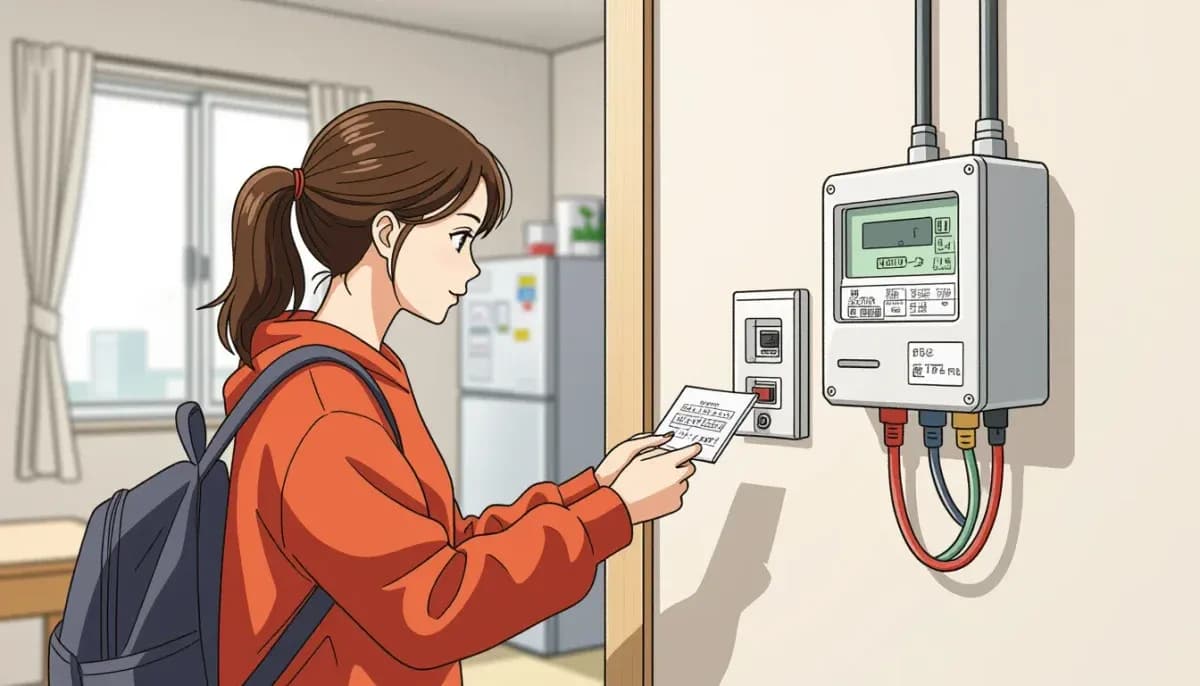
Complete guide for foreigners on setting up electricity, gas, water, and internet in a Japan apartment. Includes costs, step-by-step process, and tips for English speakers.
How to Set Up Utilities in Your Japan Apartment
Moving into a new apartment in Japan is exciting, but one of the first practical challenges you'll face is getting your utilities up and running. Unlike in some countries where utilities come pre-activated, Japan generally requires you to set up each service individually — electricity, gas, water, and internet. The good news is that once you understand the process, it's straightforward and many providers offer English support. This guide walks you through everything you need to know to get your lights on, your shower hot, and your tap flowing from day one.
What to Expect Before You Move In
Preparation is key. Ideally, you should start the process 1–2 weeks before your move-in date, especially if you're moving during the busy season from January through April when many people are relocating for new jobs or school years.
Before contacting any utility company, gather the following information:
- Your exact move-in date
- The full Japanese address of your new apartment (including postal code)
- A registered Japanese phone number (for callbacks and account verification)
- Your Residence Card (在留カード, zairyu card) number
- Your preferred payment method (bank transfer is common)
It's also worth asking your landlord or real estate agent which utilities are already set up and which ones need a new registration. In some buildings, the landlord handles water or internet, so double-check before you start making calls.
For a broader overview of everything involved in apartment hunting and moving, check out our Complete Guide to Finding Housing in Japan and the Complete Guide to Moving to Japan.
Setting Up Electricity
Electricity is typically the easiest utility to activate, and in many cases you can do it entirely online without any need for a technician to visit.
How to register:
- Identify your regional power company. Japan's electricity market is divided by region, with the major providers being TEPCO (Tokyo and surrounding prefectures), Kansai Electric Power (Osaka, Kyoto, Nara), Chubu Electric Power (Nagoya area), and others.
- Visit your provider's website or call their English helpline. TEPCO, for example, has a dedicated English website and phone line.
- Submit your move-in date, new address, and payment details.
- On move-in day, locate your circuit breaker (breaker box), usually near the front door or in the bathroom hallway, and flip the main switch to "ON."
Important note: Japan uses 100-volt electricity at either 50 Hz (eastern Japan, including Tokyo) or 60 Hz (western Japan, including Osaka). Most modern electronics handle both frequencies, but high-powered appliances from overseas may face compatibility issues.
Monthly cost: Expect to pay between ¥5,000 and ¥9,000 per month for a single-person household, though this rises significantly in summer (air conditioning) and winter (heating).
Setting Up Gas
Gas is where things get a little more involved. Unlike electricity, you cannot set up gas remotely — a technician must visit your apartment for a mandatory safety inspection called kaiheki (開栓).
Step-by-step gas setup:
- Determine your building's gas type. Japan has two types: city gas (都市ガス, toshi gas) which comes via pipes, and LP gas / propane (プロパンガス), which is delivered in tanks. Your building's type is fixed — you don't get to choose.
- Call the gas company that serves your address. Major city gas providers include Tokyo Gas, Osaka Gas, Toho Gas, and Saibu Gas.
- Schedule an appointment for the technician to visit. This is a brief inspection (roughly 10–20 minutes), but you must be home for it.
- On the day of the visit, the technician will check your gas lines and appliances, then activate your service.
Critical warning: City gas and LP gas appliances are not interchangeable. If your apartment uses city gas, you need city gas appliances (stoves, water heaters). Confirm your building's gas type before purchasing any gas appliances.
Monthly cost: Gas bills average ¥3,500–¥7,000/month, rising sharply in winter when people use more hot water and heating.
For more information on living costs in Japan, see our Complete Guide to Cost of Living in Japan.
Setting Up Water
Water service is the simplest of the three main utilities. In most cases, the water is already on because the supply line remains active between tenants. However, you still need to register the service in your name so you'll receive the bills.
How to register:
- Look for a registration form (水道使用開始届) that may have been left in your apartment by the previous tenant or your landlord. Fill it out and mail or submit it online.
- Alternatively, contact your local city or ward water bureau (水道局) directly.
- If the water is somehow off, look for the water meter — typically in a small metal box outside your front door — and turn the valve to the "open" position.
Monthly cost: Water bills are usually ¥2,500–¥4,500/month for a single person. Bills often come every two months rather than monthly.
Setting Up Internet
Internet is not a traditional "utility" but it's essential for most residents. Japan has some of the fastest internet infrastructure in the world, but setup can take time.
Options for foreigners:
- Fiber optic (光回線, *hikari kaisen*): The fastest and most common option for apartments. Providers like NTT (Flets Hikari), SoftBank Hikari, and au Hikari are popular. Lead time can be 2–4 weeks, so apply as early as possible. Note: some apartments already have fiber installed; check with your landlord.
- Pocket Wi-Fi / Mobile Wi-Fi: A faster alternative while waiting for fiber. Rental services are widely available and can be set up in a day.
- SIM cards with large data plans: Useful as a stopgap, especially if you already have an unlocked smartphone.
For foreigners in Japan, services like Sakura Mobile and other expat-focused providers offer bilingual support and flexible contracts well-suited to non-native Japanese speakers.
Also see our Complete Guide to Daily Life in Japan for tips on navigating other everyday services.
Monthly Utility Costs at a Glance
Here's a summary of typical utility costs in Japan for a single-person household in 2024–2025:
| Utility | Monthly Cost (Single Person) | Notes |
|---|---|---|
| Electricity | ¥5,000–¥9,000 | Higher in summer (AC) and winter (heating) |
| Gas | ¥3,500–¥7,000 | Higher in winter; LP gas is usually pricier than city gas |
| Water & Sewage | ¥2,500–¥4,500 | Often billed every 2 months |
| Internet (fiber) | ¥4,000–¥6,000 | After setup; may include router rental |
| Total (est.) | ¥15,000–¥26,500 | Seasonal variation is significant |
For a couple or family, multiply electricity and gas roughly by 1.5–2x. Water bills increase more modestly. Budget around ¥20,000–¥35,000/month for utilities as a couple.
Tips for Managing Utility Bills in Japan
Pay on time. Japanese utility companies take payment deadlines seriously. Late payment can result in service being cut off, and reconnecting requires calling customer service and possibly waiting.
Set up automatic payment (口座振替, *koza furikae*). This is the most convenient option. You authorize your utility companies to deduct bills directly from your Japanese bank account. It's reliable and sometimes comes with a small monthly discount.
Convenience store payment is also accepted. Bills come with a barcode that you can scan and pay at any convenience store, which is useful before you've set up a Japanese bank account.
Compare electricity providers. Since Japan deregulated its electricity market, you can now choose from multiple providers in most areas. Switching can save you ¥500–¥2,000/month. Some providers offer discounts when you bundle electricity and gas (e.g., Tokyo Gas + Tepco packages).
Monitor seasonal spikes. Utility bills roughly double in peak summer (July–August) and winter (January–February). Budget accordingly.
For more tips on managing finances in Japan, visit our Complete Guide to Banking and Finance in Japan.
Language and Support for Foreigners
If your Japanese is limited, don't panic. Here are your options:
- TEPCO (Tokyo area electricity) has an English-language website and English phone support.
- Tokyo Gas and several other major providers have multilingual web forms or English-speaking staff.
- Ask your real estate agent or landlord. Many agents for foreigners will help you set up utilities as part of their service.
- Use a bilingual friend or colleague. Japanese people are generally happy to help with a quick translation call.
Helpful resources for navigating life as a foreigner in Japan:
- Living in Nihon – Expat Resource Guide
- For Work in Japan – Housing and Living Guide
- Ittenshoku – Life in Japan for Foreigners
- GaijinPot – How to Set Up Utilities in Your Apartment in Japan
- A-Realty – Comprehensive Utilities Setup Guide
Summary: Your Utility Setup Checklist
Use this checklist as you prepare to move in:
- [ ] Confirm move-in date and collect apartment address
- [ ] Contact electricity company 1–2 weeks before moving in (register online or by phone)
- [ ] Schedule gas technician visit — make sure you'll be home
- [ ] Confirm building gas type (city gas or LP gas) before buying appliances
- [ ] Register water service with local water bureau
- [ ] Apply for fiber internet early (2–4 week lead time)
- [ ] Set up automatic bank payment for all utilities
- [ ] Budget ¥15,000–¥26,500/month for all utilities
Setting up utilities in Japan is a manageable process once you know what steps to take. The most important things are to start early, be home for the gas inspection, and register everything in your name so bills reach you correctly. With that done, you can focus on settling into your new home and enjoying life in Japan.

Originally from Vietnam, living in Japan for 16+ years. Graduated from Nagoya University, with 11 years of professional experience at Japanese and international companies. Sharing information about living in Japan for foreigners.
View Profile →Related Articles

Seasonal Clothing Guide for Living in Japan
Complete seasonal clothing guide for foreigners living in Japan. Learn what to wear in spring, summer, rainy season, autumn, and winter with month-by-month tips and shopping advice.
Read more →
Japanese Convenience Store Life Hacks for Foreigners
Discover the best konbini life hacks for foreigners in Japan — from ATM tips and bill payments to discount food strategies, package delivery, and printing services at 7-Eleven, FamilyMart, and Lawson.
Read more →
Neighborhood Association Chonaikai Guide for Foreigners
Everything foreigners need to know about Japan's chonaikai (neighborhood associations): fees, how to join, what happens at meetings, garbage rules, and practical tips for expats.
Read more →
How to Furnish Your Japan Apartment on a Budget
Complete guide to furnishing your Japan apartment on a budget. Covers Nitori, IKEA, secondhand recycle shops, Sayonara Sales, and must-know tips for foreigners setting up their first Japanese apartment.
Read more →
Japanese Address System Explained for Foreigners
Learn how the Japanese address system works, how to read chome-ban-go addresses, write Japanese addresses in English, and navigate Japan as a foreigner. Full guide with examples.
Read more →
Laundry Tips and Coin Laundry Guide in Japan
Complete guide to doing laundry in Japan: how to use coin laundries, decode Japanese washing machines, understand prices, payment methods, and laundromat etiquette for foreigners and expats.
Read more →