
Japanese Convenience Store Life Hacks for Foreigners

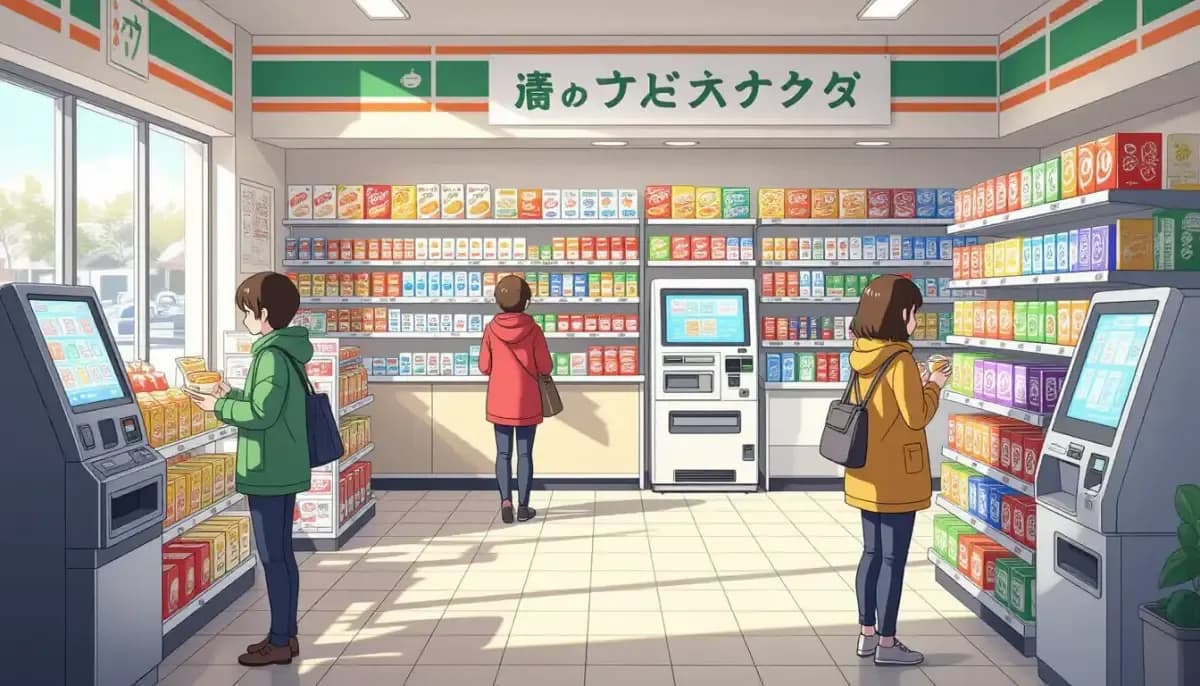
Discover the best konbini life hacks for foreigners in Japan — from ATM tips and bill payments to discount food strategies, package delivery, and printing services at 7-Eleven, FamilyMart, and Lawson.
Japanese Convenience Store Life Hacks for Foreigners
If you've just arrived in Japan, one of the first things you'll notice is that convenience stores — known as konbini (コンビニ) — are nothing like what you're used to back home. Open 24 hours a day, 365 days a year, Japan's konbini are mini-service centers packed into every neighborhood corner. With over 55,736 stores nationwide generating more than $77 billion USD annually, they are a fundamental part of daily life in Japan. For foreigners and expats, knowing how to use a konbini properly can save you time, money, and a lot of stress.
This guide walks you through the best life hacks for making the most of Japan's convenience stores — from saving money on food to managing your bills, packages, and banking all in one stop.
The Big Three: 7-Eleven, FamilyMart, and Lawson
Japan's convenience store market is dominated by three major chains: 7-Eleven (Seven-Eleven), FamilyMart, and Lawson. Together, they hold nearly 90% of the market, with 7-Eleven alone operating over 21,000 locations across Japan. While the core services are similar, each chain has its own specialties:
| Chain | Store Count | Known For |
|---|---|---|
| 7-Eleven | 21,000+ | Seven Café coffee, international ATMs, premium sandwiches |
| FamilyMart | ~16,000 | Famichiki fried chicken, Famiport ticket machine, hot snacks |
| Lawson | ~14,500 | Natural Lawson health products, dessert selection, Loppi kiosks |
As a foreigner, you'll quickly develop a favorite, but don't hesitate to explore all three — each has exclusive products and services worth discovering. You can learn more about day-to-day budgeting in Japan in our Complete Guide to Cost of Living in Japan.
Banking and ATM Hacks at Konbini
One of the biggest surprises for foreigners in Japan is that most Japanese bank ATMs do not accept foreign cards. This is where konbini ATMs become a lifesaver.
7-Eleven ATMs are the gold standard for international card users. They:
- Accept Visa, Mastercard, American Express, and most international debit cards
- Offer multilingual menus in English, Chinese, Korean, and more
- Are available 24/7 at virtually every 7-Eleven location
- Allow cash withdrawals, balance checks, and transfers
FamilyMart and Lawson also have ATMs (E-net and Lawson ATM respectively) that accept many international cards, though language options may be more limited.
Pro tip: Withdraw cash in larger amounts to minimize transaction fees, which typically range from ¥110 to ¥220 per transaction depending on your bank and the time of day.
For a comprehensive overview of managing money in Japan, see our Guide to Banking and Finance in Japan.
Food Hacks: Eat Well Without Breaking the Bank
Japanese konbini food is genuinely good — a fact that surprises most first-time visitors. Around 35% of konbini shoppers regularly buy bento boxes and onigiri (rice balls). Here's how to eat smart:
Discount Sticker Strategy
Konbini restock prepared foods three times daily. Items nearing their sell-by time get marked down with discount stickers — often 20% to 50% off. The best time to hunt for discounts is:
- Early morning: Previous night's leftovers get marked down
- Late evening (after 8 PM): Dinner-hour items get reduced
Must-Try Konbini Foods
- Onigiri: From ¥110 — rice balls with fillings like tuna mayo, salmon, or pickled plum
- Hot steamed buns (nikuman): Especially good in autumn and winter, from ¥150
- Fried chicken: FamilyMart's Famichiki and Lawson's L-Chiki are legendary
- Egg salad sandwiches: Uniquely Japanese and addictive
- Cup ramen: Far better quality than what you find outside Japan
Seasonal Specials to Watch For
- Winter: Oden (fish cakes and vegetables in hot broth, sold by piece from around ¥100)
- Autumn: Yakiimo (roasted sweet potato, often sold outside stores)
- Spring: Sakura-themed sweets and beverages
- Summer: Frozen treats and kakigori (shaved ice)
!Japanese convenience store onigiri and bento selection on shelves

For more tips on Japanese food culture, check out our Complete Guide to Japanese Food and Cooking.
Paying Bills and Utility Payments at Konbini
This is one of the most practical hacks for foreign residents in Japan: you can pay almost all your utility bills at a konbini counter.
Bills payable at konbini include:
- Electricity (Tokyo Electric, Kansai Electric, etc.)
- Water and gas
- Internet and fixed phone services
- Mobile phone bills
- Credit card statements (some issuers)
- National Health Insurance premiums
- Municipal taxes
How to pay: Simply bring the paper bill (with barcode) to the cashier and say "Shiharai onegaishimasu" (お支払いお願いします). They'll scan the barcode and take your payment.
Important: Bill payments at konbini can only be made in cash or e-money — credit cards are not accepted for this service. Also check that your bill hasn't expired (most have a deadline printed on them).
For more on managing finances and taxes in Japan, see our Guide to Taxes in Japan for Foreigners.
Printing, Scanning, and Document Services
Forgot to print something important? No problem. Every major konbini has a multifunction printer/copier that can:
- Print documents from USB or smartphone app
- Print photos in high quality
- Photocopy documents
- Scan documents to email or USB
- Send and receive faxes (still commonly used in Japan)
- Print tickets, boarding passes, and reservations
How to Use the Konbini Printer
- Download the store's app: 7-Eleven App, FamilyMart Print Service (PrintSmash), or Lawson/FamilyMart Netprint
- Upload your file to the app or generate a print number online
- Enter your print number at the in-store kiosk
- Pay and collect your prints (usually ¥20–¥30 per black-and-white page, ¥50–¥80 for color)
This is especially useful for printing residence card paperwork, job application documents, or boarding passes.
Package Delivery and Shipping Hacks
Japan's konbini double as package pickup and drop-off points — a service that solves one of the biggest annoyances of living in Japan: being home for deliveries.
Receive Packages at Konbini
Most major online retailers, including Amazon Japan, allow you to specify a nearby konbini as your delivery address. When your package arrives, you'll receive a notification with a pickup code. Head to the konbini, enter the code at the kiosk, and retrieve your package at your convenience — 24/7.
Send Packages from Konbini
You can ship parcels via Yamato Transport (Kuroneko) or Japan Post directly from most 7-Eleven and FamilyMart locations. This is great for:
- Sending souvenirs back home
- Forwarding packages when moving within Japan
- Sending luggage ahead to your next hotel (takuhaibin service)
Mobile Battery Rental
Running low on battery? Many 7-Eleven and FamilyMart stores now have mobile battery rental kiosks (ChargeSPOT). Scan a QR code, rent a portable charger, and return it to any compatible kiosk anywhere in Japan.
!Convenience store ATM and multifunction printer kiosk area

Transportation and IC Card Hacks
If you use public transportation in Japan — and you will — your konbini is your IC card hub.
Top up your Suica, Pasmo, or Icoca at the konbini counter:
- Go to the cashier and say "Suica no cha-ji, onegaishimasu" (スイカのチャージ、お願いします)
- Hand over cash and your IC card
- They'll process the top-up immediately
You can also buy new IC cards at some konbini kiosks, though main train station machines are more reliable for this.
Reserve and print transport tickets: Use the in-store kiosks (Famiport at FamilyMart, Loppi at Lawson) to:
- Reserve and print Shinkansen (bullet train) tickets
- Book highway bus tickets
- Print airline boarding passes
- Purchase theme park entry tickets (often at a discount vs. gate price)
For everything you need to know about getting around, see our Complete Guide to Transportation in Japan.
Etiquette and Language Tips for Konbini
A few key phrases and customs will make your konbini visits smoother:
| Japanese Phrase | Pronunciation | Meaning |
|---|---|---|
| 温めますか? | Atatame masu ka? | Shall I heat this up? (Say はい/hai for yes) |
| 袋はいりますか? | Fukuro wa irimasu ka? | Do you need a bag? |
| ポイントカードはお持ちですか? | Pointo kaado wa o-mochi desu ka? | Do you have a points card? |
| 現金ですか? | Genkin desu ka? | Will you pay in cash? |
| レシートはいりますか? | Reshiito wa irimasu ka? | Do you need a receipt? |
Customs to remember:
- Place cash on the tray at the counter — don't hand it directly
- The staff greeting "Irasshaimase!" doesn't require a verbal response; a nod or smile is fine
- Ask staff to heat your food — they'll do it for free
- Eat-in seating (if available) incurs 10% consumption tax vs. 8% for takeout
Points Programs: Save Money on Every Visit
All three major chains have loyalty points programs that reward regular customers:
- 7-Eleven: Connects with nanaco e-money card (1 point per ¥100)
- FamilyMart: FamiPay app offers cashback and bonus point campaigns
- Lawson: Ponta or d-Point cards (1 point per ¥100, redeemable for free items)
For foreigners planning to stay long-term, signing up for at least one points card is worth it — points accumulate fast with daily visits and can be redeemed for free coffee, snacks, or discounts.
Useful Resources for Konbini Life
To deepen your knowledge of using convenience stores and daily life in Japan, these guides are highly recommended:
- Japan Living Guide: Convenience Store Services — A thorough breakdown of all konbini services for residents
- Interac Network: Convenience Stores in Japan — Written specifically for foreigners working and living in Japan
- Enjoy Japan Navi: Konbini Guide in English — Step-by-step guide with practical tips for newcomers
- Arigato Travel: Tips and Tricks for Convenience Stores — Travel-oriented tips that work equally well for residents
- Tokyo Weekender: Konbini Industry in 2024 — Latest news on Japan's konbini industry
Making Konbini Part of Your Daily Routine
Once you understand everything a Japanese convenience store can do, it's natural to wonder how you ever managed without them. From picking up a quick breakfast on the way to work, printing visa documents at midnight, paying your electricity bill, and topping up your train card — konbini are the backbone of daily life in Japan.
For new foreigners, the key is to explore. Don't just grab a snack and leave. Browse the services kiosk, try the seasonal foods, and download the store's app to unlock printing and points features. The more you use them, the more indispensable they become.
For more on settling into everyday life in Japan, check out our Complete Guide to Daily Life in Japan for Foreigners and our Complete Guide to Shopping in Japan for Foreigners.

Originally from Vietnam, living in Japan for 16+ years. Graduated from Nagoya University, with 11 years of professional experience at Japanese and international companies. Sharing information about living in Japan for foreigners.
View Profile →Related Articles

Seasonal Clothing Guide for Living in Japan
Complete seasonal clothing guide for foreigners living in Japan. Learn what to wear in spring, summer, rainy season, autumn, and winter with month-by-month tips and shopping advice.
Read more →
Neighborhood Association Chonaikai Guide for Foreigners
Everything foreigners need to know about Japan's chonaikai (neighborhood associations): fees, how to join, what happens at meetings, garbage rules, and practical tips for expats.
Read more →
How to Furnish Your Japan Apartment on a Budget
Complete guide to furnishing your Japan apartment on a budget. Covers Nitori, IKEA, secondhand recycle shops, Sayonara Sales, and must-know tips for foreigners setting up their first Japanese apartment.
Read more →
Japanese Address System Explained for Foreigners
Learn how the Japanese address system works, how to read chome-ban-go addresses, write Japanese addresses in English, and navigate Japan as a foreigner. Full guide with examples.
Read more →
Laundry Tips and Coin Laundry Guide in Japan
Complete guide to doing laundry in Japan: how to use coin laundries, decode Japanese washing machines, understand prices, payment methods, and laundromat etiquette for foreigners and expats.
Read more →
Garbage Collection and Disposal Rules in Japan
Learn Japan garbage disposal rules for foreigners: how to sort burnable, non-burnable, and recyclable trash, collection schedules, special items, and tips for expats navigating the Japanese waste system.
Read more →