The Complete Guide to Taxes in Japan for Foreigners
Moving to Japan is exciting, but understanding the tax system can feel overwhelming. Whether you are an employee, freelancer, or business owner, Japan requires all residents to pay taxes — and foreigners are no exception. This comprehensive guide breaks down everything you need to know about taxes in Japan, from income tax brackets to filing deadlines, so you can stay compliant and avoid costly mistakes.
If you are new to Japan, make sure to also check out our guide to banking and finance in Japan to get your financial foundations in order.
Understanding Your Tax Residency Status
Your tax obligations in Japan depend heavily on your residency classification. The Japanese tax system divides taxpayers into three categories, and each determines what income gets taxed.
Non-Residents are individuals who have lived in Japan for less than one year. They pay a flat 20.42% tax rate on Japan-source income only, with no deductions available. This rate includes the 2.1% reconstruction surtax.
Non-Permanent Residents are foreign nationals who have lived in Japan for one year or more but less than five out of the last ten years. They are taxed on Japan-source income and any foreign-source income that is paid in or remitted to Japan.
Permanent Residents are those who have lived in Japan for five or more years out of the last ten, or Japanese nationals. Permanent residents are taxed on their worldwide income, regardless of where it is earned.
| Residency Status | Time in Japan | Income Taxed | Key Point |
|---|
| Non-Resident | Less than 1 year | Japan-source only | Flat 20.42% rate, no deductions |
| Non-Permanent Resident | 1-5 years (of last 10) | Japan-source + remitted foreign income | Foreign income taxed only if sent to Japan |
| Permanent Resident | 5+ years (of last 10) | Worldwide income | Same treatment as Japanese nationals |
Understanding your status is crucial because it directly affects how much you owe. For more information about establishing your life in Japan, see our guide to moving to Japan.
Japan's Income Tax Brackets and Rates
Japan uses a progressive income tax system with seven brackets. The more you earn, the higher your tax rate on the additional income. Here are the current national income tax rates:
| Taxable Income (JPY) | Tax Rate | Quick Deduction (JPY) |
|---|
| Up to 1,950,000 | 5% | 0 |
| 1,950,001 – 3,300,000 | 10% | 97,500 |
| 3,300,001 – 6,950,000 | 20% | 427,500 |
| 6,950,001 – 9,000,000 | 23% | 636,000 |
| 9,000,001 – 18,000,000 | 33% | 1,536,000 |
| 18,000,001 – 40,000,000 | 40% | 2,796,000 |
| Over 40,000,000 | 45% | 4,796,000 |
On top of national income tax, a 2.1% reconstruction surtax applies to your calculated income tax amount. This surtax was introduced after the 2011 earthquake and is expected to continue through 2037.
For a practical example, if your taxable income is JPY 5,000,000, your national income tax would be: 5,000,000 × 20% - 427,500 = JPY 572,500, plus the 2.1% surtax of approximately JPY 12,023, totaling about JPY 584,523.
You can learn more about salary expectations in our guide to working in Japan.
Residence Tax (Inhabitant Tax)
In addition to national income tax, everyone living in Japan on January 1st of each year must pay residence tax (住民税 / jūminzei). This tax is collected by your local municipality and prefecture.
The residence tax rate is a flat 10% of your previous year's income, split between the prefecture (4%) and the municipality (6%). There is also a per capita levy of approximately JPY 5,000 per year. Starting from 2024, a new forest environmental tax of JPY 1,000 has been added annually for all residents.
Important timing note: Residence tax is based on your income from the previous calendar year and your address as of January 1st. Even if you leave Japan after January 1st, you are still required to pay the full year's residence tax. This catches many foreigners off guard, so plan accordingly.
If you are an employee, residence tax is typically deducted from your salary in 12 monthly installments starting in June. Freelancers and self-employed individuals receive a bill and pay in four quarterly installments.
For a detailed breakdown of living costs including taxes, check out our cost of living guide.
Other Taxes You Need to Know
Beyond income and residence tax, foreigners in Japan encounter several other taxes in daily life.
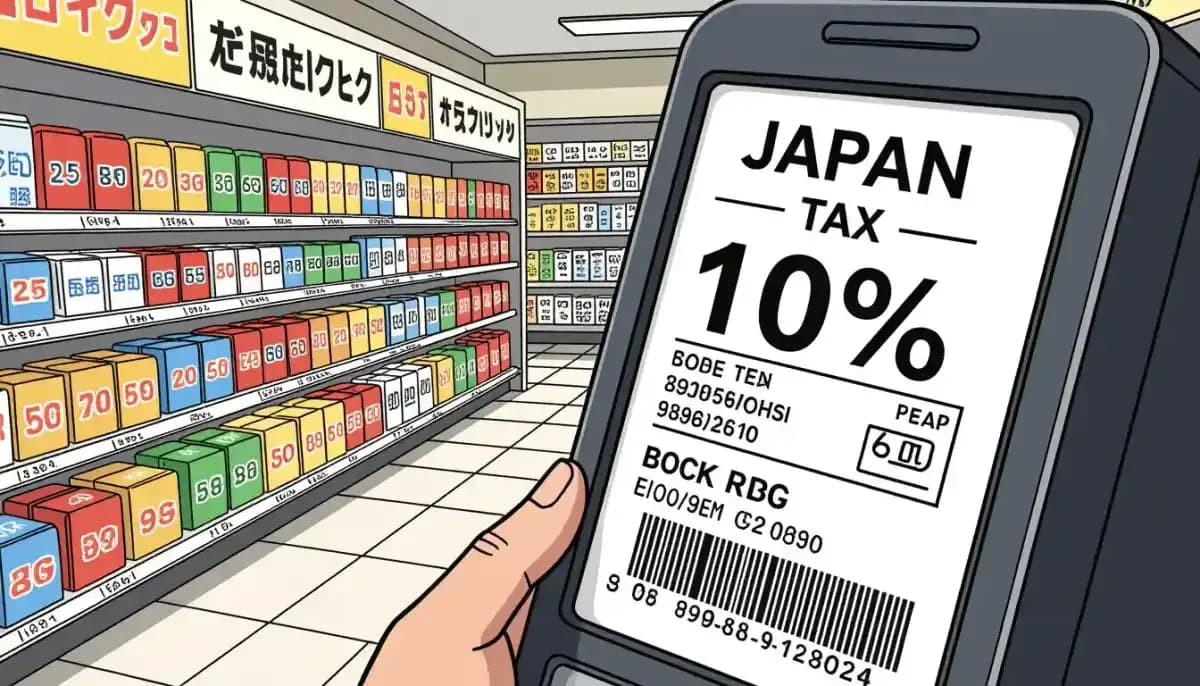
Consumption Tax (消費税): Japan's consumption tax is currently 10% on most goods and services. A reduced rate of 8% applies to food and non-alcoholic beverages (excluding dining out and alcohol). This tax is included in the displayed price at most stores.
Social Insurance Premiums: While not technically a tax, social insurance is mandatory for most workers in Japan. This includes health insurance (approximately 5% of salary), pension contributions (approximately 9.15% of salary), employment insurance (0.6% of salary), and long-term care insurance for those aged 40 and over (approximately 0.8% of salary). Your employer matches most of these contributions. Learn more in our healthcare guide.
Property Tax: If you own real estate in Japan, you will pay an annual property tax of approximately 1.4% of the assessed property value, plus a city planning tax of up to 0.3%. See our housing guide for more on property ownership.
Inheritance and Gift Tax: Japan imposes inheritance tax ranging from 10% to 55% on inherited assets. Gifts exceeding JPY 1,100,000 per year are also subject to gift tax.
How to File Your Tax Return in Japan
Japan's tax year runs from January 1 to December 31, and the filing period is February 16 to March 15 of the following year. However, not everyone needs to file a return.
You do NOT need to file if:
- You are a regular employee with only one employer
- Your employer handles year-end tax adjustment (年末調整 / nenmatsu chōsei)
- You have no significant additional income
You MUST file a return if:
- Your annual salary exceeds JPY 20,000,000
- You have side income exceeding JPY 200,000
- You worked for multiple employers during the year
- You are self-employed or freelancing
- You want to claim deductions not handled by your employer
- You left Japan during the tax year
Filing can be done at your local tax office, by mail, or online through the e-Tax system. The National Tax Agency website provides English-language guidance, and many tax offices in major cities have multilingual support.
For those with side jobs or freelance work, Ittenshoku has a helpful guide on tax filing requirements that covers when you are required to submit a return.
Tax Deductions and Credits for Foreigners
Japan offers various deductions that can significantly reduce your tax bill. Understanding and claiming these deductions is one of the most effective ways to lower your tax burden.
Basic Deduction: As of 2025, the basic deduction has been increased to JPY 580,000 (up from JPY 480,000), and the minimum employment income deduction has been raised to JPY 650,000. This means the annual income threshold for taxation has been elevated from JPY 1.03 million to JPY 1.23 million.
Furusato Nozei (Hometown Tax Donation): This popular program allows you to make donations to local governments across Japan in exchange for tax deductions and regional gifts. You can effectively redirect a portion of your residence tax to a municipality of your choice while receiving local specialty products in return. This is available to all tax-paying residents, including foreigners.
Medical Expense Deduction: If your out-of-pocket medical expenses exceed JPY 100,000 in a year (or 5% of your income if lower), you can deduct the excess amount. Keep all medical receipts.
Social Insurance Deduction: All social insurance premiums you pay are fully deductible from your taxable income.
Spouse Deduction: If your spouse earns below certain thresholds, you may qualify for a spouse deduction of up to JPY 380,000.
Dependent Deduction: You can claim deductions for qualifying dependents, including family members living overseas. For overseas dependents, you must provide documentation proving the relationship and financial support.
For comprehensive tax and financial planning resources, visit Living in Nihon's tax filing guide and For Work in Japan's tax and social insurance guide.
Tax Treaties and Double Taxation
Japan has signed tax treaties with over 50 countries, including the United States, United Kingdom, Canada, Australia, and most European nations. These treaties help prevent double taxation and may provide reduced tax rates or exemptions.
The 183-day rule is commonly referenced in many tax treaties. If you stay in Japan for fewer than 183 days in a qualifying period and your employer is based outside Japan, you may be exempt from Japanese income tax on your employment income. However, the specific rules vary by treaty, so always check the treaty between Japan and your home country.
If you are subject to taxes in both Japan and your home country, you can typically claim a foreign tax credit in one country for taxes paid in the other. This prevents the same income from being taxed twice.
Important: Tax treaty benefits are not automatic. You usually need to file specific forms with the tax office to claim treaty benefits. Consult a tax professional if you think a treaty applies to your situation.
For more details on Japan's tax system from an expert perspective, see PwC's comprehensive Japan tax summary and Japan Remotely's expat tax guide.
Common Tax Mistakes Foreigners Make
Avoiding these common pitfalls can save you significant money and stress:
1. Ignoring residence tax after leaving Japan. Many foreigners leave Japan without realizing they owe residence tax for the current year. If you were registered as a resident on January 1st, you must pay the full year's tax — even if you depart in February.
2. Not filing when required. If you have side income over JPY 200,000 or work multiple jobs, you must file. Penalties for late filing include surcharges of 15-20% plus interest.
3. Missing deduction opportunities. Many foreigners do not claim deductions they are entitled to, such as medical expenses, dependent deductions for overseas family, or Furusato Nozei benefits.
4. Misunderstanding residency status. Your tax classification can change over time. After five years in Japan, you become a permanent resident for tax purposes and must report worldwide income. This transition happens automatically.
5. Not designating a tax agent when leaving. If you leave Japan before your final tax matters are settled, you should appoint a tax agent (納税管理人 / nōzei kanrinin) to handle your affairs. Failure to do so can result in difficulties with future visa applications.
6. Underestimating total tax burden. When you add up income tax, residence tax, and social insurance premiums, the effective total can reach 30-40% of your gross salary. Plan your budget accordingly using our daily life in Japan guide.
Practical Tips for Managing Your Taxes
Here are actionable tips to make tax season less stressful:
- Keep all receipts for medical expenses, charitable donations, and work-related expenses throughout the year
- Set up a My Number card — this is increasingly required for tax filing and accessing government services
- Use e-Tax for convenient online filing, especially helpful if you have Japanese language support
- Consider hiring a tax accountant (税理士 / zeirishi) if you have complex tax situations, foreign income, or run a business
- Check your payslip monthly to verify that correct amounts are being withheld for income tax and social insurance
- Mark your calendar for the February 16 – March 15 filing window
- Contact your local tax office early — many offer English-language consultation, especially in major cities like Tokyo and Osaka
The Japan Guide tax overview is another excellent English-language resource for understanding the basics.
Remember that tax compliance is not optional in Japan. Failure to pay taxes can result in penalties, denial of visa renewals, and even deportation. Stay on top of your obligations, and when in doubt, seek professional advice.
Conclusion
Navigating Japan's tax system as a foreigner does not have to be intimidating. By understanding your residency status, knowing the applicable tax rates, and taking advantage of available deductions, you can manage your tax obligations effectively. The key is to stay organized, file on time, and seek help when needed.
For more guides on building your life in Japan, explore our articles on Japanese culture and etiquette, learning Japanese, and making friends in Japan.