
Japan Consumption Tax Everything You Need to Know

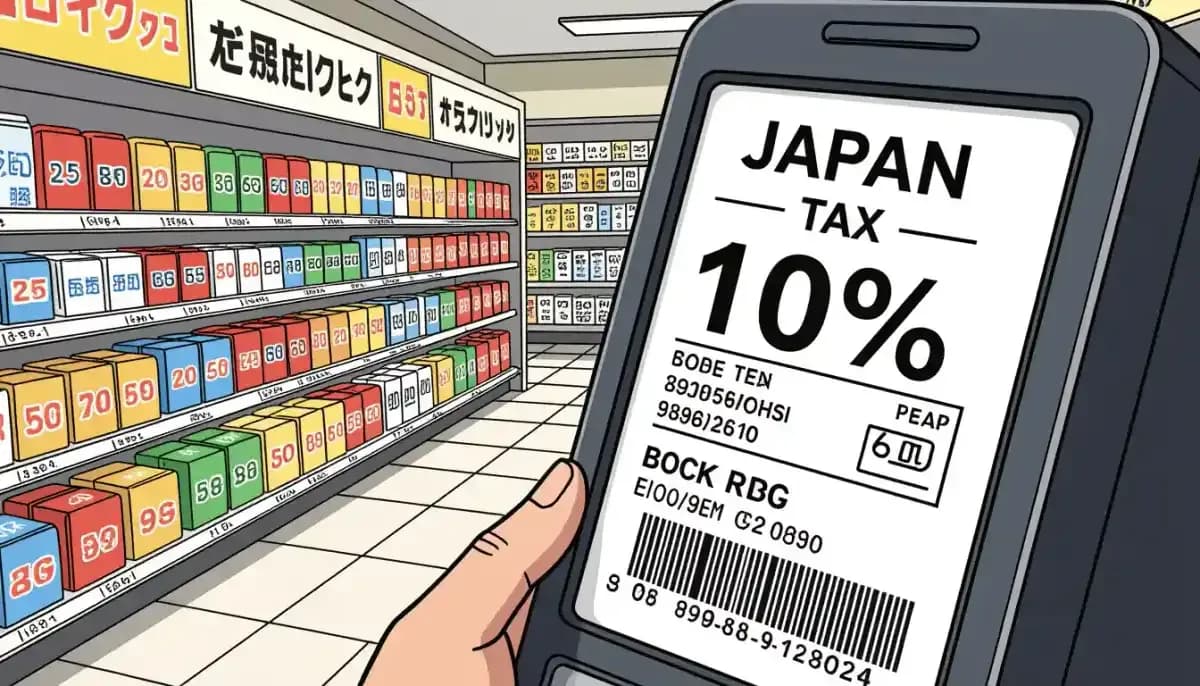
Everything foreigners need to know about Japan's consumption tax: current 10% and 8% rates, what's exempt, tax-free shopping for tourists, the 2026 changes, and how it affects residents and business owners.
Japan Consumption Tax: Everything You Need to Know
If you've ever shopped in Japan, you've paid the consumption tax (消費税, shōhizei). It's added to almost everything you buy — from a convenience store onigiri to a brand-new laptop. But while Japanese residents pay it automatically, the rules are different for tourists, and the system recently went through some major changes that affect how you shop in Japan.
This guide covers everything foreigners need to know about Japan's consumption tax: the current rates, what's exempt, how tax-free shopping works for visitors, what changes are coming in 2026, and how it affects you as a resident.
What Is Japan's Consumption Tax?
Japan's consumption tax is the equivalent of VAT (Value Added Tax) in Europe or GST in Australia. It's a broad-based tax on the sale of goods and services, collected by businesses and passed on to the government.
The tax was introduced on April 1, 1989 at just 3% under Prime Minister Noboru Takeshita. Since then, it has been raised several times as Japan grappled with aging demographics and rising social security costs:
| Year | Rate | Notes |
|---|---|---|
| 1989 | 3% | First introduction under PM Takeshita |
| 1997 | 5% | Raised under PM Hashimoto |
| 2014 | 8% | First hike under PM Abe |
| 2019 (Oct) | 10% standard / 8% reduced | Current dual-rate system introduced |
Today, Japan operates a dual-rate system: a standard rate of 10% for most goods and services, and a reduced rate of 8% for certain everyday necessities.
For a deeper look at Japan's full tax system, check out the Complete Guide to Taxes in Japan for Foreigners.
Current Consumption Tax Rates: 10% and 8%
The Standard 10% Rate
The 10% rate applies to the vast majority of goods and services you'll encounter day-to-day:
- Electronics, appliances, and gadgets
- Clothing, shoes, and accessories
- Dining in at restaurants, cafes, and bars
- Hotel stays and accommodation
- Transportation and entertainment services
- Alcohol, whether at a bar or from a convenience store
- Online services and digital goods
The 10% rate breaks down technically as 7.8% national consumption tax + 2.2% local consumption tax.
The Reduced 8% Rate
The reduced 8% rate was introduced in 2019 to ease the burden on everyday expenses. It applies to:
- Food and non-alcoholic beverages purchased for takeout or home use
- Subscription newspapers (printed, not digital)
Important nuance: The same bottle of beer costs different tax rates depending on where you consume it. If you buy it at a convenience store to drink at home, it's 8%. If you order it at a restaurant, it's 10%. This distinction — whether food is "eat in" or "take out" — is something you'll notice at fast food chains and convenience stores where staff may ask whether you're dining in.
What's Completely Exempt from Consumption Tax
Not everything is taxed. Major exempt categories include:
- Residential rent (a major relief for expats in expensive cities)
- School and university tuition
- Medical care under Japan's public health insurance
- Financial services and insurance premiums
- Land sales (but building sales are taxed)
This is worth knowing for your budget planning — a large chunk of your monthly expenses (rent, medical) won't include consumption tax.
How Prices Are Displayed in Japan
Since April 2021, all retailers in Japan are legally required to display tax-inclusive prices (税込価格, zeikomi kakaku). This means the price tag you see at the register is the price you actually pay — no surprise taxes at checkout.
You'll often see prices displayed in two ways:
- 税込 (zeikomi) — tax included (the final price you pay)
- 税抜 (zeinuki) — tax excluded (the base price before tax)
When in doubt, the larger or more prominent price is usually the tax-included one. As a practical tip: when comparing prices online or in stores, always check whether the listed price is 税込 or 税抜.
For more on managing daily expenses, see the guide on Banking and Finance in Japan for Foreigners.
Tax-Free Shopping for Tourists and Short-Term Visitors
Japan operates a consumption tax exemption system for foreign visitors. If you're a tourist or temporary visitor (not a resident), you can shop tax-free at thousands of registered retailers across Japan.
Who Qualifies for Tax-Free Shopping?
You're eligible if you are:
- A foreign national entering Japan on a tourist, short-term stay, or temporary resident visa
- A Japanese national who has lived overseas and is temporarily returning
- Someone who has been in Japan for less than 6 months
Important: If you hold a Japanese residence card (在留カード), you are considered a resident and cannot use tax-free shopping for personal purchases. As a resident, consumption tax is simply part of your cost of living.
Minimum Purchase Requirements
To qualify for tax-free shopping:
- Purchases at the same store on the same day must total at least ¥5,000 (excluding tax)
- For consumables (cosmetics, food, drinks, medicine): purchases must be between ¥5,000 and ¥500,000 (excluding tax)
- General goods (electronics, clothing, bags): minimum ¥5,000 with no upper limit
Types of Tax-Free Goods
| Category | Examples | Special Rules |
|---|---|---|
| General Items | Electronics, cameras, clothing, bags, watches, souvenirs | Must leave Japan before expiry of stay |
| Consumables | Cosmetics, food, drinks, medicine, alcohol | Sealed in a bag at purchase, cannot open in Japan |
How to Shop Tax-Free
- Bring your passport — stores require it to record your purchase
- Look for the "Tax Free" sign or ask store staff
- You'll be asked to fill out a purchase record form
- Your consumables will be sealed in a bag — do not open until you leave Japan
- Upon departure, customs may check your purchases
The items must leave Japan with you. If customs officials discover you've been using consumables inside Japan, you could face penalties.
For more on Japan's shopping experience, check out the Complete Guide to Shopping in Japan for Foreigners and this helpful overview on Japan's Tax Exemption from the Japan National Tourism Organization.
Major 2026 Changes to Tax-Free Shopping
The current tax-free shopping system has faced criticism because some visitors were abusing it by purchasing goods tax-free and reselling them within Japan. The Japanese government is overhauling the system entirely.
From November 1, 2026:
- Tourists pay full price at checkout (including the 10% tax)
- Receipts are submitted to customs at the airport when departing
- Tax refund is processed after confirming the items leave Japan
- Refunds must be claimed within 90 days of purchase
This is a significant change — instead of paying nothing upfront, tourists will pay the full tax-inclusive price and get a refund later. For more details, see this guide on Tax-Free Shopping Changes in Japan 2026.
Consumption Tax for Residents: What You Need to Know
If you live in Japan with a residence card, you're subject to the consumption tax system like any Japanese resident. Here's what that means in practice:
Daily Life Impact
You'll pay:
- 10% on dining in restaurants, buying alcohol, electronics, clothing, and services
- 8% on groceries, takeout food, and non-alcoholic drinks
- 0% on your rent, medical care, and school fees
Over a month, this adds up. A typical household spending ¥300,000/month might pay ¥20,000–¥30,000 in consumption tax on taxable purchases.
Business Owners and Self-Employed Foreigners
If you run a business in Japan, consumption tax obligations become more complex. Businesses with taxable sales exceeding ¥10 million in the base period (usually 2 years prior) must:
- Register as a consumption tax-paying business
- Collect 10% (or 8%) from customers
- File consumption tax returns and remit the net amount to the tax office
If your sales are under ¥10 million, you're generally exempt and don't need to collect or file consumption tax — though you also can't claim input tax credits.
The Qualified Invoice System (インボイス制度): Since October 2023, businesses must issue qualified invoices to allow clients to claim input tax credits. If you're a freelancer or sole proprietor, this system affects whether your clients can deduct the consumption tax they pay you. Read more in the Freelancer and Self-Employed Tax Guide in Japan.
For comprehensive guidance on business tax obligations, see For Work in Japan's Tax and Social Insurance Guide.
Consumption Tax vs. Other Japanese Taxes
Consumption tax is one of several taxes you'll encounter in Japan. Here's a quick comparison:
| Tax Type | Rate | Who Pays | Notes |
|---|---|---|---|
| Consumption Tax | 8-10% | Everyone | On goods/services |
| Income Tax | 5-45% | Residents & workers | Progressive rate |
| Resident Tax | ~10% | Residents (prior year) | Paid the year after |
| Social Insurance | ~15% employee share | Employed residents | Health + pension |
For a full breakdown of income taxes, see Japan Income Tax Guide for Foreign Residents and Japan Resident Tax Explained.
The consumption tax is the most "invisible" of these — it's already baked into the prices you see, so you're paying it without thinking about it. The bigger financial shocks for new residents are usually the income tax and resident tax bills.
Practical Tips for Managing Consumption Tax in Japan
For tourists:
- Keep your passport handy when shopping
- Plan big purchases (electronics, cameras, cosmetics) at tax-free stores
- Buy consumables near the end of your trip so sealed bags aren't a burden
- After November 2026, budget the full tax-inclusive price and get your refund at the airport
For residents:
- Take advantage of the 8% reduced rate on groceries — buying food at supermarkets rather than eating out saves the 2% difference plus restaurant markup
- Rent is tax-exempt, so it won't change with any future rate hikes
- If you're self-employed and earning near ¥10 million, consult a tax professional about consumption tax registration
For business owners:
- Understand whether you need to register for consumption tax (check against ¥10 million threshold)
- Use the simplified tax method if eligible — it reduces administrative burden
- Register for the Qualified Invoice System if your clients need to claim input tax credits
For additional expat financial guidance, see Living in Nihon's Complete Tax Filing Guide and Ittenshoku's Money and Legal Knowledge Guide for career-related tax considerations.
Summary: Japan Consumption Tax at a Glance
Japan's consumption tax is straightforward in daily life — prices are tax-inclusive, and you simply pay what's on the tag. The dual-rate system (10% standard, 8% reduced) means groceries are slightly cheaper than eating out, which benefits budget-conscious residents.
For tourists, the tax-free shopping system offers real savings on big purchases — but the rules are changing significantly in November 2026. If you're a resident, consumption tax is simply a fact of life, with the silver lining that your biggest expense (rent) is completely exempt.
Understanding the tax system is a key part of financial literacy in Japan. For more on managing your finances here, explore the Complete Guide to Banking and Finance in Japan and the Complete Guide to Cost of Living in Japan. If you need to file taxes or understand your obligations, check out How to File a Tax Return in Japan as a Foreigner.
For a comprehensive overview of all taxes in Japan, see this detailed guide from MailMate on Japan's Consumption Tax and Japan Handbook's guide for expats.

Originally from Vietnam, living in Japan for 16+ years. Graduated from Nagoya University, with 11 years of professional experience at Japanese and international companies. Sharing information about living in Japan for foreigners.
View Profile →Related Articles

How to Find a Tax Advisor in Japan for Foreigners
Need a tax advisor in Japan? Learn how to find an English-speaking zeirishi, what fees to expect, what questions to ask, and when professional tax help is worth it for foreigners living in Japan.
Read more →
Japan Departure Tax and Exit Tax for Foreigners
Complete guide to Japan's departure tax and exit tax for foreigners. Learn about the ¥1,000 tourist tax (rising to ¥3,000 in 2026), the capital gains exit tax affecting high-net-worth residents, eligibility requirements, and practical filing tips.
Read more →
How to Pay Your Taxes in Japan Step by Step
Complete step-by-step guide to paying taxes in Japan as a foreigner. Learn about income tax brackets, kakuteishinkoku, e-Tax filing, resident tax, and key deadlines for 2025-2026.
Read more →
Japan Tax Withholding for Foreign Employees Explained
Understand how Japan tax withholding works for foreign employees. Learn about resident vs non-resident rates, income tax brackets, social insurance deductions, and year-end adjustment.
Read more →
Side Income Tax Rules in Japan for Foreigners
Learn the side income tax rules in Japan for foreigners: the 200,000 yen filing threshold, Blue Return vs White Return, resident tax tips, and how to file your Kakutei Shinkoku correctly.
Read more →
Furusato Nozei Hometown Tax Program Guide
Complete guide to Japan's Furusato Nozei hometown tax system for foreign residents. Learn eligibility requirements, deduction limits, step-by-step process, and 2025 rule changes to maximize your tax benefits.
Read more →