
Japan Tax Withholding for Foreign Employees Explained


Understand how Japan tax withholding works for foreign employees. Learn about resident vs non-resident rates, income tax brackets, social insurance deductions, and year-end adjustment.
Japan Tax Withholding for Foreign Employees Explained
If you work in Japan as a foreign employee, understanding how tax withholding works is essential for managing your finances and staying compliant with Japanese tax law. Japan uses a "Pay-As-You-Earn" (PAYE) withholding system where employers deduct income taxes and social insurance premiums directly from your monthly salary before you ever see the money. This guide explains the entire system — from resident vs. non-resident classification to year-end adjustments — so you know exactly what comes out of your paycheck and why.
!Foreign employee reviewing paycheck and tax documents in Japan

Resident vs. Non-Resident: How Japan Classifies You for Tax
Your tax treatment in Japan depends entirely on your residency status for tax purposes — not your visa type or nationality. Japan defines three categories:
Non-Residents are individuals who have been in Japan for less than one year and do not have a permanent domicile here. Non-residents are taxed only on Japan-sourced income, and employers must withhold a flat rate of 20.42% from gross wages with no deductions allowed. This rate includes the 2.1% Special Reconstruction Income Tax surtax that remains in place through 2037.
Non-Permanent Residents are foreign nationals who have been tax residents for five years or fewer within the last ten years. They are taxed on their Japan-sourced income and any foreign-sourced income that is paid in Japan or remitted to Japan. They benefit from progressive tax rates and available deductions, just like permanent residents.
Permanent Residents (for tax purposes) are individuals who have lived in Japan for more than five years in the last ten years. They are subject to tax on their worldwide income, including income earned outside Japan. After reaching this threshold, your foreign bank interest, rental income abroad, and overseas dividends may become taxable in Japan.
Understanding which category you fall into when you start your job is critical, as it determines whether your employer withholds a flat 20.42% or uses the progressive income tax table.
National Income Tax Rates for Foreign Employees
If you are classified as a resident or non-permanent resident, you benefit from Japan's progressive income tax system. The rates apply to your taxable income after deductions:
| Taxable Income (JPY) | National Tax Rate | Deduction Amount |
|---|---|---|
| Up to ¥1,950,000 | 5% | ¥0 |
| ¥1,950,001 – ¥3,300,000 | 10% | ¥97,500 |
| ¥3,300,001 – ¥6,950,000 | 20% | ¥427,500 |
| ¥6,950,001 – ¥9,000,000 | 23% | ¥636,000 |
| ¥9,000,001 – ¥18,000,000 | 33% | ¥1,536,000 |
| ¥18,000,001 – ¥40,000,000 | 40% | ¥2,796,000 |
| Over ¥40,000,000 | 45% | ¥4,796,000 |
On top of your national income tax, a 2.1% surtax for Special Reconstruction is applied to the calculated national tax amount. This is automatically included in your withholding. For the 2025 tax year, the basic personal deduction was increased to ¥580,000 (up from ¥480,000).
For more information on navigating Japan's full tax landscape as a foreigner, see our Complete Guide to Taxes in Japan for Foreigners.
Local Inhabitant Tax (Resident Tax)
In addition to national income tax, most foreign employees pay local inhabitant tax (住民税, juuminzei) — a flat 10% of your previous year's taxable income, split between your municipal government (~6%) and prefecture (~4%), plus a small per-capita fee of approximately ¥5,000 per year.
The critical thing to know about resident tax is its one-year lag: it is assessed based on your previous year's income. This means:
- In your first year working in Japan, you pay no resident tax at all
- Starting your second year, your employer begins deducting monthly resident tax payments from your salary
- If you leave Japan mid-year, you may owe a lump sum for the current year based on prior-year income
Resident tax is owed to the municipality where you were registered as a resident on January 1 of the assessment year. Even if you move cities mid-year, you pay to your January 1 address. For a comprehensive look at managing costs in Japan, check out our Complete Guide to Cost of Living in Japan.
For a detailed breakdown of how your take-home pay is calculated, including simulation tables for various income levels, see Take-Home Pay Calculation Guide for Foreigners in Japan.
Social Insurance Deductions: What Gets Taken Out of Your Paycheck
On top of income taxes, foreign employees enrolled in Japan's social insurance system have several mandatory deductions. Most full-time employees — including foreigners on work visas — are enrolled automatically.
!Japan payroll deduction breakdown showing social insurance and tax components

| Insurance Type | Employee Rate | Employer Rate |
|---|---|---|
| Health Insurance | ~5.0% | ~5.0% |
| Welfare Pension (Kosei Nenkin) | 9.15% | 9.15% |
| Employment Insurance | 0.6% | 0.95% |
| Workers' Accident Insurance | 0% (none) | 0.25%–8.8% |
| Care Insurance (age 40+) | ~0.8% | ~0.8% |
Combined employee social insurance deductions typically total 14.75–15.55% of gross salary. When added to income and resident taxes, most employees take home 70–80% of their gross salary, with the percentage decreasing as income rises.
One important benefit for foreign employees: if you have contributed to the welfare pension for at least 6 months, you can claim a lump-sum withdrawal (dattai ichijikin) when you permanently leave Japan. This refunds a portion of your pension contributions, though the amount is capped and subject to 20.42% withholding tax — which you can typically recover by filing a tax return from overseas.
How Monthly Withholding Works
Your employer handles all withholding automatically each month through the following process:
- Calculate gross monthly salary including any bonuses or allowances
- Deduct social insurance premiums (health, pension, employment insurance)
- Apply income tax withholding using the National Tax Agency's monthly withholding table based on your gross salary minus social insurance
- Pay resident tax (if applicable) — this is a fixed monthly amount determined in June each year based on last year's income
The income tax withheld each month is an estimate. The actual final amount is calculated during the Year-End Adjustment (年末調整, nenmatsu chosei) process in November/December.
According to the National Tax Agency's guidelines, employers must remit withheld taxes to the tax office no later than the 10th of the month following payment. Employers with fewer than 10 employees may apply for a "special rule" allowing semi-annual payments instead.
For authoritative details, you can read the NTA's guidance on non-resident taxation.
Year-End Adjustment (Nenmatsu Chosei): Your Tax Reconciliation
The year-end adjustment is Japan's way of reconciling monthly withholding with your actual tax liability for the year. For most salaried foreign employees with a single employer, your company handles this entirely — you simply submit some paperwork in October/November and receive any refund (or pay any shortfall) via your December salary.
Through nenmatsu chosei, your employer recalculates:
- Your actual taxable income after all eligible deductions
- Deductions for dependents (spouse, children, overseas family members)
- Life insurance premium deductions
- Earthquake insurance deductions
- The small income credit (shōgakusha kōjo) for earners below certain thresholds
Most foreign employees receive a small refund in December because the monthly withholding tables are designed to slightly over-withhold as a buffer.
When you still need to file a tax return yourself:
- You have income from multiple employers
- You have freelance, rental, or investment income exceeding ¥200,000
- You want to claim deductions not handled in nenmatsu chosei (e.g., medical expenses over ¥100,000)
- You are leaving Japan permanently and must file before departure
For a step-by-step guide to filing your own tax return, see Tax Return Filing & e-Tax Guide for Foreigners.
Tax Treaties: Reducing or Eliminating Withholding
Japan has concluded tax treaties with over 70 countries, which can reduce or eliminate withholding tax obligations. If your home country has a tax treaty with Japan, you may be eligible for:
- Reduced withholding rates on specific income types (dividends, royalties, interest)
- Full exemption from Japanese tax on certain income if you meet residency criteria
- Relief from double taxation on income taxed in both Japan and your home country
To claim treaty benefits, you (or your employer) must file a Tax Convention Application Form (租税条約に関する届出書) with the National Tax Agency before or at the time of payment. Without this form, the standard rates apply regardless of treaty status.
The US-Japan tax treaty, for example, provides specific rules for professors, students, and government employees. If you earn income in both Japan and your home country, consulting a bilingual tax professional is strongly recommended. For side job and freelance tax obligations, Ittenshoku's guide to tax filing for side jobs is a useful reference.
Practical Tips for Foreign Employees in Japan
Track your residency timeline. The transition from non-resident to non-permanent resident to permanent resident status happens automatically based on time spent in Japan. Each transition changes your tax obligations significantly.
Keep your withholding certificate (源泉徴収票). Your employer provides this document at year-end or when you leave the company. You need it for tax filing, loan applications, and residency visa renewals.
Notify your employer of deductions. Many foreigners miss deductions they are entitled to because they don't submit the required paperwork during nenmatsu chosei — especially for overseas dependent family members.
Plan for resident tax in year two. Your first year in Japan is tax-light because no resident tax is collected. Budget carefully because your second-year take-home pay will be noticeably lower once resident tax kicks in.
Appoint a tax agent before leaving. If you leave Japan without filing or paying taxes, your employer's withholding covers income tax, but outstanding resident tax may remain. Appoint a tax representative (納税管理人) who can handle filings and payments on your behalf after departure.
Use e-Tax for faster refunds. The NTA's e-Tax system supports English, Chinese, Vietnamese, Portuguese, and Nepali, in addition to Japanese. Online filers typically receive refunds in about 3 weeks versus 1–2 months for paper returns.
For broader financial planning while working in Japan, our Complete Guide to Banking and Finance in Japan and Complete Guide to Working in Japan as a Foreigner cover complementary topics in detail. The Japan Payroll Tax System Guide 2025 is another excellent reference for understanding employer obligations and employee deductions.
Summary
Japan's tax withholding system is automatic and largely employer-managed, which makes it relatively straightforward for salaried foreign employees. The key points to remember:
- Your tax status (non-resident, non-permanent resident, or permanent resident) determines your rates and obligations
- Non-residents face a flat 20.42% withholding; residents use progressive rates from 5–45%
- Resident tax (10% of prior-year income) kicks in from your second year
- Social insurance adds another 14–16% in employee-side deductions
- Year-end adjustment reconciles most salaried employees' withholding automatically
- Tax treaties with your home country may reduce or eliminate certain obligations
Understanding these fundamentals helps you plan your budget accurately and avoid unexpected tax bills — especially in year two when resident tax begins. When in doubt, consult the NTA's English resources or a qualified Japanese tax accountant who works with foreign residents.

Originally from Vietnam, living in Japan for 16+ years. Graduated from Nagoya University, with 11 years of professional experience at Japanese and international companies. Sharing information about living in Japan for foreigners.
View Profile →Related Articles

How to Find a Tax Advisor in Japan for Foreigners
Need a tax advisor in Japan? Learn how to find an English-speaking zeirishi, what fees to expect, what questions to ask, and when professional tax help is worth it for foreigners living in Japan.
Read more →
Japan Departure Tax and Exit Tax for Foreigners
Complete guide to Japan's departure tax and exit tax for foreigners. Learn about the ¥1,000 tourist tax (rising to ¥3,000 in 2026), the capital gains exit tax affecting high-net-worth residents, eligibility requirements, and practical filing tips.
Read more →
How to Pay Your Taxes in Japan Step by Step
Complete step-by-step guide to paying taxes in Japan as a foreigner. Learn about income tax brackets, kakuteishinkoku, e-Tax filing, resident tax, and key deadlines for 2025-2026.
Read more →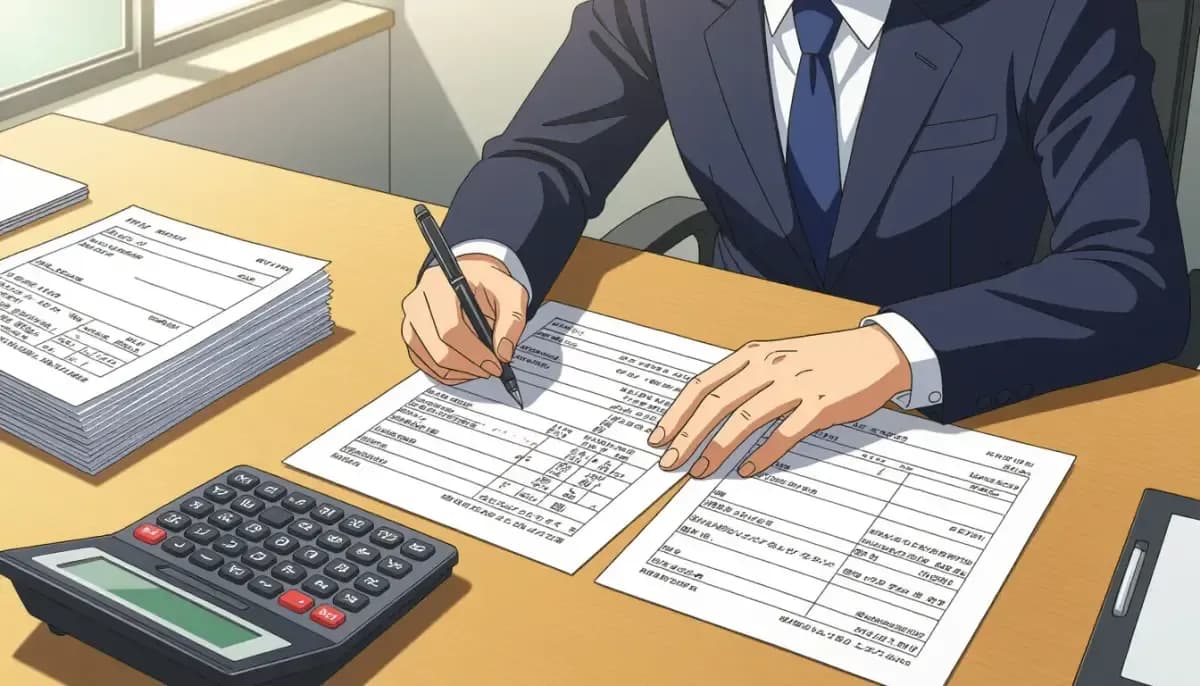
Side Income Tax Rules in Japan for Foreigners
Learn the side income tax rules in Japan for foreigners: the 200,000 yen filing threshold, Blue Return vs White Return, resident tax tips, and how to file your Kakutei Shinkoku correctly.
Read more →
Japan Consumption Tax Everything You Need to Know
Everything foreigners need to know about Japan's consumption tax: current 10% and 8% rates, what's exempt, tax-free shopping for tourists, the 2026 changes, and how it affects residents and business owners.
Read more →
Furusato Nozei Hometown Tax Program Guide
Complete guide to Japan's Furusato Nozei hometown tax system for foreign residents. Learn eligibility requirements, deduction limits, step-by-step process, and 2025 rule changes to maximize your tax benefits.
Read more →