
Getting a Phone Number in Japan as a Foreigner

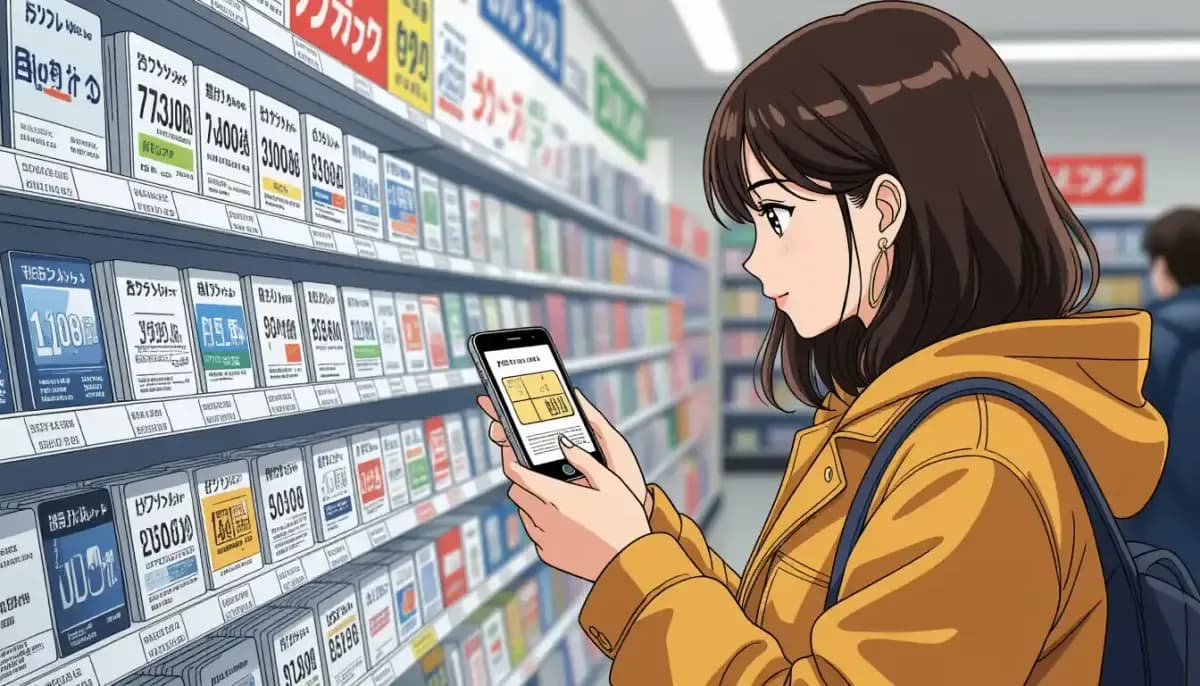
Learn how to get a Japanese phone number as a foreigner. Compare the best SIM card providers, required documents, costs, and step-by-step setup instructions for expats in Japan.
Getting a Phone Number in Japan as a Foreigner: The Complete Guide
Getting a phone number in Japan as a foreigner might seem complicated at first, but with the right information, the process is straightforward. Whether you just arrived on a work visa, are studying abroad, or planning to settle long-term, having a Japanese phone number is essential for daily life — from signing apartment leases to opening bank accounts and landing a job. This guide walks you through everything you need to know: what documents you need, the best providers, costs, and step-by-step instructions to get connected.
Why You Need a Japanese Phone Number
Many foreigners assume they can get by with an international SIM or VoIP app like WhatsApp or LINE. While these tools work for chatting with friends and family back home, a local Japanese phone number is a requirement for several key activities:
- Opening a bank account: Major banks including Japan Post Bank, MUFG, and Rakuten Bank require a Japanese mobile number for SMS verification
- Signing an apartment contract: Landlords and real estate agencies almost always require a local contact number
- Job applications: Japanese employers expect a local phone number on your resume
- Government services: Many municipal procedures require SMS verification via a Japanese number
- Subscription services: Streaming platforms and e-commerce sites often need a local number for account verification
Without a Japanese phone number, navigating daily life in Japan becomes significantly harder. The good news is that getting one is cheaper and easier than you might expect — especially compared to the major carriers.
For more information about setting up your life in Japan, check out our complete guide to daily life in Japan for foreigners.
Types of Phone Plans Available for Foreigners
Before diving into providers, it helps to understand the three main categories of mobile plans available in Japan:
1. Voice + Data SIM Plans (Most Common)
These plans give you a Japanese phone number along with data. You can make and receive calls using a standard phone number. This is what most long-term residents choose. Plans typically start at around ¥1,000–¥2,000 per month for basic data plus voice calling.
2. Data-Only SIM Plans
If you mainly use apps like LINE or WhatsApp for calls, a data-only SIM is cheaper. You won't get a traditional Japanese phone number, but you can add an SMS option for under ¥100/month — enough to receive verification codes from banks and apps. This is a popular choice for freelancers and remote workers.
3. eSIM Plans
Some providers now offer eSIM (embedded SIM) plans that don't require a physical SIM card. These are increasingly popular because you can activate them instantly without waiting for delivery. Providers like Mobal and Rakuten Mobile offer eSIM options.
What Documents Do You Need?
Japan has strict identity verification laws for mobile phone contracts under the Act on Confirmation of Identity by Mobile Voice Communication Carriers. Here is what you typically need:
For long-term foreign residents:
- Residence Card (Zairyu Card) — the most important document; you cannot get a voice SIM without this
- Passport — for additional identity verification
- Bank account or credit card — for monthly payment (some providers accept international cards)
- Email address — for contract notifications and account management
For tourists (short-term visitors):
- Tourists cannot get a standard Japanese phone number with a Residence Card
- Data-only SIMs and tourist pocket WiFi are available at airports
- Some providers offer special tourist plans with a temporary number, but these are limited
Important note: If your Residence Card was issued very recently (within a few days), some online providers may ask you to wait until your address is fully registered in the municipal system before applying.
For help understanding the immigration process and getting your Residence Card, see our Japan visa and immigration guide.
Best SIM Card Providers for Foreigners in Japan
Here is a comparison of the top providers commonly used by foreigners:
| Provider | Setup Fee | Monthly Cost | English Support | Best For |
|---|---|---|---|---|
| IIJmio | ¥3,300 | ¥400–¥2,000 | Limited | Budget-conscious residents |
| Mobal | ¥2,970 | ¥1,650–¥4,378 | Excellent | New arrivals, no Japanese needed |
| Sakura Mobile | ¥5,500 | ¥3,278+ | Excellent | English-speaking expats |
| Rakuten Mobile | Free | ¥0–¥3,278 | Moderate | Long-term residents |
| GTN Mobile | ¥3,300 | ¥1,628+ | Multilingual | Foreign workers |
| Mineo | ¥3,300 | ¥1,298+ | Limited | Flexible family plans |
IIJmio — Best for Budget Travelers
IIJmio (Internet Initiative Japan) is one of the most affordable MVNO (Mobile Virtual Network Operator) options in Japan. Plans range from ¥400/month for 2GB data-only to ¥2,000/month for 55GB with voice. The downside is that customer support is primarily in Japanese, so it works best once you have some Japanese ability. They frequently run campaigns reducing setup fees.
Mobal — Best for New Arrivals
Mobal is UK-based and has been serving foreigners in Japan for over 20 years. Their Voice Lite plan starts at ¥1,650/month and includes a Japanese phone number. Crucially, Mobal can ship SIM cards to your home country before you arrive, or to your hotel/accommodation in Japan. English support is fully available, making it the easiest option for people who just landed.
Sakura Mobile — Best Full English Service
Sakura Mobile operates out of Shinjuku, Tokyo, and is specifically designed for foreigners. Plans start at ¥3,278/month for 5GB with voice. While pricier than budget options, they offer complete English-language support and easy online application. They also offer student discounts and accommodation delivery.
Rakuten Mobile — Best Long-Term Value
Rakuten Mobile's pricing structure is unique: ¥0/month for up to 3GB (on their network), ¥1,078 for 3–20GB, and ¥3,278 for unlimited. If you use under 1GB, it is genuinely free. The app-based system works well once set up, though initial registration can be challenging if you don't read Japanese well. They accept foreign credit cards and have moderate English support.
For related financial setup tips, see our complete guide to banking and finance in Japan.
Step-by-Step: How to Get a SIM Card in Japan
Follow these steps to get your Japanese phone number:
Step 1: Confirm Your Residency Status
Make sure your Residence Card is valid and your address is registered at your local ward office (区役所). Without a valid address registered on your Residence Card, most SIM providers cannot complete your contract. If you just moved, register your address first.
Step 2: Choose a Provider and Plan
Decide based on your needs:
- Just arrived or no Japanese ability → Mobal or Sakura Mobile
- Have basic Japanese, want to save money → IIJmio or Rakuten Mobile
- Sponsored by an employer → Ask your company; GTN Mobile has corporate packages
Step 3: Apply Online or In-Store
Most providers accept online applications. You will need to:
- Upload a photo of your Residence Card (front and back)
- Upload a photo of your Passport
- Enter your Japanese address
- Provide a credit card or bank account number for payment
For in-store applications, bring your physical documents to electronics stores like Yodobashi Camera, Bic Camera, or the carrier's direct shops.
Step 4: Receive and Activate Your SIM
- Physical SIM: Delivered by mail within 3–7 business days. Insert into your unlocked phone and follow the provider's activation steps (usually online or via a setup guide)
- eSIM: Download the QR code and scan it with your phone. Activation is usually instant
Step 5: Unlock Your Current Phone (If Needed)
If you brought your phone from your home country, ensure it is SIM-unlocked. Contact your home carrier to unlock it before leaving. Most modern iPhones and Android phones support Japanese network frequencies (LTE Bands 1, 3, 19 are essential for Japan).
Common Problems and How to Avoid Them
Problem: Application rejected despite having all documents
This often happens when the address on your Residence Card doesn't exactly match the address you entered during the online application. Double-check every character, including the building name and room number format.
Problem: Phone not compatible with Japanese networks
Some US CDMA phones don't work on Japan's GSM-based networks. Check your phone's LTE band compatibility. Band 19 (800MHz) is critical for rural coverage. Newer phones from 2020 onwards are usually compatible.
Problem: Can't pay without a Japanese credit card
Several providers now accept international credit cards (Visa, Mastercard). Mobal, Sakura Mobile, and GTN Mobile are known to accept foreign cards. If you have already opened a Japanese bank account, setting up direct debit is the most reliable option.
Problem: Your employer wants a Japanese number immediately
Some employers require you to have a local number before your first day. In this case, use Mobal (can be ordered before arrival) or pick up a tourist SIM at the airport as a temporary solution while applying for a regular plan.
For housing-related setup tips that go along with getting your phone set up, read our guide to finding housing in Japan.
Understanding Japanese Mobile Contract Terms
Japanese mobile contracts come with some terms that differ from Western countries:
- MNP (Mobile Number Portability): You can transfer your number between carriers. This is called MNP (番号ポータビリティ) and usually takes 1–2 business days
- SIM lock: Older phones purchased in Japan from major carriers (Docomo, au, SoftBank) may be SIM-locked and require unlocking before switching to an MVNO
- Data throttling: Many plans slow your connection after you exceed your monthly data allowance. Check the throttle speed — 200kbps is standard and workable for messaging, but too slow for maps or streaming
- 2-year contracts vs. no-commitment: Major carriers (Docomo, au, SoftBank) often require 2-year contracts with early termination fees. MVNOs like IIJmio and Rakuten Mobile offer month-to-month contracts with no cancellation penalty
Additional Resources for Foreign Residents
For comprehensive daily life advice including phone setup, check out Living in Nihon, which covers a wide range of topics for foreigners settling in Japan.
If you are navigating a career transition in Japan, For Work in Japan has useful career resources for foreign professionals.
For IT professionals and those considering job changes in Japan, Ittenshoku covers career opportunities specifically for technology workers.
For detailed SIM card comparison and contract help, MailMate's phone number guide offers an up-to-date comparison of pricing and providers.
For guidance on setting up a long-term SIM contract as a foreign resident, Japan Life Support's SIM guide provides detailed documentation requirements by visa type.
Summary: Quick Reference Checklist
Before you apply for a Japanese phone number, make sure you have:
- [ ] Valid Residence Card (Zairyu Card) with your current address
- [ ] Passport
- [ ] Credit card (international accepted by Mobal, Sakura Mobile, GTN Mobile)
- [ ] Japanese bank account (optional but useful for payment)
- [ ] Unlocked phone compatible with Japanese LTE bands
- [ ] Japanese email address (or any email you can access)
- [ ] Your registered Japanese address ready to enter
Getting a phone number in Japan as a foreigner is one of the first practical steps toward building your life here. Once you have a Japanese number, many other tasks — opening a bank account, signing up for utilities, and even making friends — become much easier. Start with a foreigner-friendly provider like Mobal or Sakura Mobile if you are new, and consider switching to a budget MVNO like IIJmio or Rakuten Mobile once you are comfortable navigating Japanese systems.
For more help settling into life in Japan, explore our full guide to working in Japan as a foreigner and our cost of living guide.

Originally from Vietnam, living in Japan for 16+ years. Graduated from Nagoya University, with 11 years of professional experience at Japanese and international companies. Sharing information about living in Japan for foreigners.
View Profile →Related Articles

Seasonal Clothing Guide for Living in Japan
Complete seasonal clothing guide for foreigners living in Japan. Learn what to wear in spring, summer, rainy season, autumn, and winter with month-by-month tips and shopping advice.
Read more →
Japanese Convenience Store Life Hacks for Foreigners
Discover the best konbini life hacks for foreigners in Japan — from ATM tips and bill payments to discount food strategies, package delivery, and printing services at 7-Eleven, FamilyMart, and Lawson.
Read more →
Neighborhood Association Chonaikai Guide for Foreigners
Everything foreigners need to know about Japan's chonaikai (neighborhood associations): fees, how to join, what happens at meetings, garbage rules, and practical tips for expats.
Read more →
How to Furnish Your Japan Apartment on a Budget
Complete guide to furnishing your Japan apartment on a budget. Covers Nitori, IKEA, secondhand recycle shops, Sayonara Sales, and must-know tips for foreigners setting up their first Japanese apartment.
Read more →
Japanese Address System Explained for Foreigners
Learn how the Japanese address system works, how to read chome-ban-go addresses, write Japanese addresses in English, and navigate Japan as a foreigner. Full guide with examples.
Read more →
Laundry Tips and Coin Laundry Guide in Japan
Complete guide to doing laundry in Japan: how to use coin laundries, decode Japanese washing machines, understand prices, payment methods, and laundromat etiquette for foreigners and expats.
Read more →