
Setting Up Home Internet in Japan Complete Guide

Learn how to set up home internet in Japan as a foreigner. Compare fiber optic providers (NTT, SoftBank, NURO, GTN), costs, installation steps, and tips to get connected fast.
Setting Up Home Internet in Japan: Complete Guide for Foreigners
Moving to Japan and getting reliable home internet is one of the most important setup tasks you'll face. Japan boasts some of the fastest internet speeds in the world, but the process of signing up can feel overwhelming — especially with language barriers, complex contracts, and multiple provider options. This guide walks you through everything you need to know to get connected quickly and affordably.
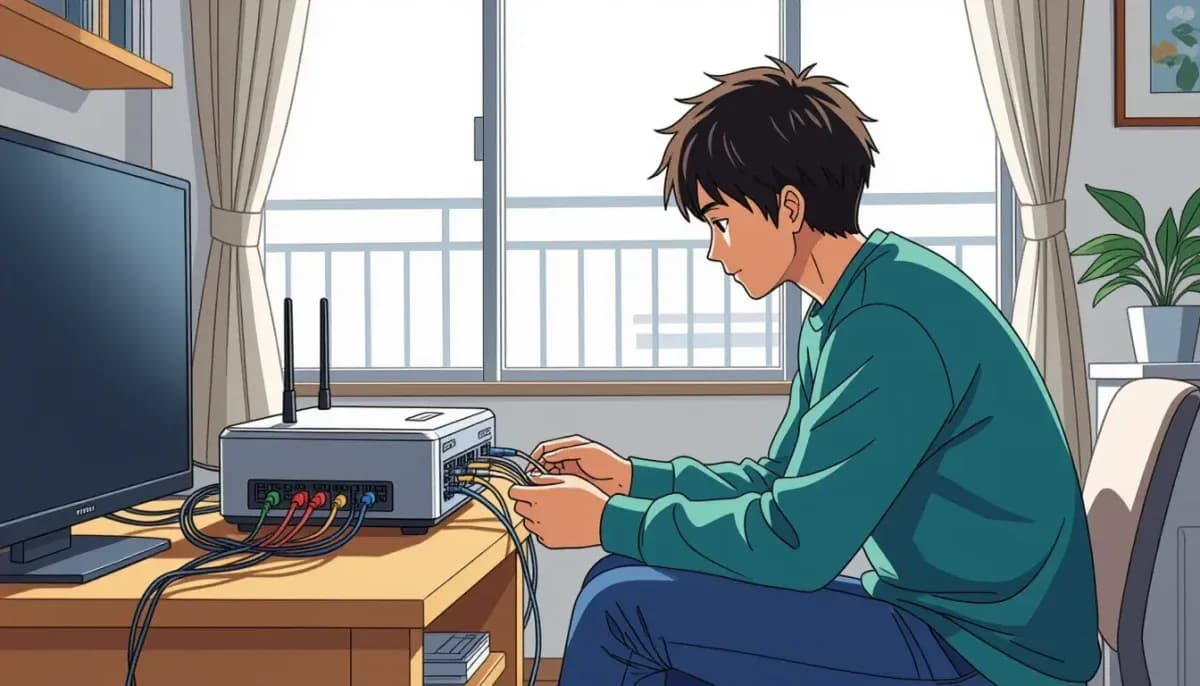
!Setting up fiber optic internet in a Japanese apartment

Whether you're in Tokyo, Osaka, or a smaller city, you have several solid options. The key is understanding how Japan's internet infrastructure works and choosing the right plan for your situation. For a broader overview of technology and apps in Japan, see our Complete Guide to Technology and Apps in Japan.
Understanding Japan's Internet Infrastructure
Japan's home internet market is unique because it is "unbundled." This means the physical line you use (the fiber-optic cable running into your building) is typically provided by one company, while your actual internet service (your ISP) is provided by another.
The three main fiber-optic networks in Japan are:
- NTT FLET'S Hikari — The largest and most widely available network, run by NTT East (for eastern Japan including Tokyo) and NTT West (for western Japan including Osaka and Kyoto)
- au Hikari — Run by KDDI, available in major urban areas
- NURO Hikari — Run by Sony, offering extremely fast speeds (up to 10 Gbps) but limited to lower buildings (not available in buildings over 8 stories)
Most ISPs operate on top of the NTT FLET'S network, which gives it the broadest coverage across Japan — urban and rural alike. When you sign up with an ISP like SoftBank Hikari, Docomo Hikari, or Asahi Net, they bundle the NTT line with their service, so you only deal with one company.
For more on navigating daily life logistics, check out our Complete Guide to Daily Life in Japan for Foreigners.
Types of Home Internet Connections
Before choosing a provider, it helps to understand the main connection types available:
Fiber-Optic (Hikari / 光回線)
Fiber is the gold standard for home internet in Japan. It delivers speeds from 200 Mbps up to 10 Gbps and is the most stable connection for streaming, gaming, video calls, and remote work. Most apartments in cities already have fiber cables running into the building.
Pros: Fast, stable, widely available, competitive pricing Cons: Requires installation, landlord permission needed for new wiring, 2–4 week wait for setup
Home Wi-Fi Routers (SoftBank Air / WiMAX)
These plug-in wireless routers connect to Japan's mobile network (4G/5G) and require no installation or construction work. You simply plug in the device and you're online.
Pros: No installation required, ready immediately, good for renters who move frequently Cons: Speeds vary by location, can be less stable than fiber, monthly data caps on some plans
Pocket Wi-Fi (Long-Term Rental)
A portable device you carry with you. Useful for bridging the gap while waiting for fiber installation, or for people who move often.
Pros: Portable, no fixed contract in many cases Cons: Less stable, monthly cost around ¥3,000–¥7,000, battery needs charging
Starlink (Satellite)
Available across Japan including rural areas. Requires a one-time equipment cost of around ¥73,000 plus a monthly fee of approximately ¥12,300. Best for locations where fiber is unavailable.
Top Internet Providers in Japan for Foreigners
Here is a comparison of the major providers and their key features:
| Provider | Network | Max Speed | Monthly Cost | English Support | Notes |
|---|---|---|---|---|---|
| NTT Docomo Hikari | NTT FLET'S | 1 Gbps | ¥4,400–¥5,500 | Limited | Widely available |
| SoftBank Hikari | NTT FLET'S | 1 Gbps | ¥4,180–¥5,720 | Limited | Bundles with SoftBank mobile |
| au Hikari | au (KDDI) | 1 Gbps | ¥4,180–¥5,610 | Limited | Good in western Japan |
| NURO Hikari | NURO | 2–10 Gbps | ¥2,699–¥5,200 | Limited | Fastest, low-rise buildings only |
| GTN Hikari | NTT FLET'S | 1 Gbps | ¥4,400–¥5,500 | 7 languages | Best for foreigners |
| Sakura Fiber | NTT FLET'S | 1 Gbps | ~¥5,000 | English | No long-term contract |
| SoftBank Air | 4G/5G mobile | ~300 Mbps | ¥4,180–¥5,368 | Limited | No installation needed |
| WiMAX | 4G/5G mobile | ~440 Mbps | ¥3,776–¥4,950 | Limited | Portable + home use |
GTN Hikari and Sakura Fiber Internet stand out as the most foreigner-friendly options. GTN provides support in seven languages and caters specifically to foreign residents. Sakura Fiber has no long-term contract requirement and allows a minimum commitment of just 3 months — ideal if you're unsure how long you'll stay.
For more details on English-friendly internet options, Tokyo Cheapo's ISP comparison is an excellent resource. The Expat Den guide to internet providers in Japan also provides thorough cost breakdowns and step-by-step advice.
Step-by-Step: How to Set Up Internet in Japan
Step 1: Check What's Available in Your Building
Before anything else, find out what type of connection your building supports. Ask your landlord or real estate agent:
- Is fiber-optic already installed in the building?
- Which providers are approved or already connected?
- Is permission required for new wiring?
Many apartment buildings already have fiber installed, meaning you just need to subscribe to an ISP — no construction needed.
Step 2: Get Landlord Permission (If Needed)
If your building doesn't have fiber yet, the provider will need to run cables inside the building. This requires written permission from your landlord. Most landlords approve this since it adds value to the property, but it's a required step that can add time to the process.
Step 3: Choose Your Provider and Apply
Once you know what's available, choose a provider that suits your needs. For most foreigners:
- Best stability and speed: NURO Hikari (if eligible) or au Hikari
- Widest coverage: NTT FLET'S-based providers (SoftBank Hikari, Docomo Hikari)
- Best English support: GTN Hikari or Sakura Fiber Internet
- No installation hassle: SoftBank Air or WiMAX
You can apply online or in person at a phone carrier store. Many providers now have English-language application pages. For comprehensive guidance on the mobile phone and internet landscape in Japan, Living in Nihon's mobile and internet guide is a useful reference.
Step 4: Gather the Required Documents
To complete your application, you will typically need:
- Residence card (在留カード / Zairyu Card) — Your main ID as a foreign resident
- Registered address — Must match your residence card
- Bank account or credit card — For automatic monthly payments
- Your name in Katakana — Required on all contracts
- Japanese phone number — Providers may call you to confirm the installation appointment
If you haven't sorted out banking yet, read our Complete Guide to Banking and Finance in Japan for Foreigners.
Step 5: Schedule the Installation
After submitting your application, the provider will contact you to schedule an installation appointment. A technician will visit to connect the fiber cable and set up your router.
- Typical wait time: 2–4 weeks from application
- Peak seasons (March–May and August–September): Can extend to 4–6 weeks due to high moving activity
- Installation time: 1–3 hours depending on building setup
Many providers offer a temporary 4G/5G Wi-Fi router to use during the wait, so you're not left without internet.
Step 6: Configure Your Router
The technician usually sets everything up for you, but you'll need to:
- Set your Wi-Fi name (SSID) and password
- Connect your devices
- Test your speeds using a site like fast.com or speedtest.net
!Home internet router setup in Japan apartment

Costs Breakdown: What to Expect
Understanding the full cost picture helps you budget properly.
| Cost Type | Typical Range | Notes |
|---|---|---|
| Monthly fee | ¥4,000–¥8,000 | Fiber plans average ¥4,500–¥6,500 |
| Setup/construction fee | ¥15,000–¥30,000 | Often waived or spread over contract period |
| Router rental | ¥500–¥700/month | Some providers include it free |
| Cancellation fee | ¥0–¥10,000+ | Check before signing |
| Cashback promotions | Up to ¥85,000 | Available for new subscribers |
Many providers run aggressive cashback and promotional campaigns, especially in spring (moving season). New subscribers can sometimes receive up to ¥85,000 in cashback over the contract period, effectively making the first year nearly free. Check comparison sites like kakaku.com for current deals.
Tips for Foreigners Setting Up Internet in Japan
1. Start the process before you move in. Since installation takes 2–4 weeks, apply as soon as you have your new address confirmed. You can often apply before you've physically moved in.
2. Use a foreigner-friendly provider if you're unsure. GTN Hikari and Sakura Fiber have English-speaking staff and simplified application processes designed for non-Japanese speakers.
3. Ask your landlord about existing infrastructure. If fiber is already in the building, your setup could be as simple as subscribing and plugging in a router — no technician visit needed.
4. Watch out for long contracts. Standard contracts in Japan are 2–3 years. Early cancellation fees can be significant. If you might move or leave Japan, consider Sakura Fiber (3-month minimum) or a no-contract home router like SoftBank Air.
5. Bundle for discounts. Carriers like SoftBank, au (KDDI), and Docomo offer discounts when you bundle home internet with their mobile phone plans. If you already have a SoftBank mobile SIM, SoftBank Hikari could save you ¥1,100 per month.
6. Consider alternative options for rural areas. If you're living outside major cities, fiber may not reach your home. In that case, SoftBank Air, WiMAX, or Starlink are practical alternatives. For insights on living outside the big cities, see our Complete Guide to Regional Living in Japan.
For additional career and lifestyle guidance as a foreign resident, For Work in Japan and Ittenshoku are valuable resources for the foreign community in Japan.
Troubleshooting Common Issues
"My provider says fiber isn't available at my address." This is common in older buildings or rural areas. Ask your landlord if fiber can be installed, or switch to a home 4G/5G router.
"I can't complete the application because it's only in Japanese." Use GTN Hikari or Sakura Fiber Internet — both have English application processes. Alternatively, use Google Translate on the application page or ask a Japanese-speaking friend for help.
"The technician is coming but I can't communicate with them." Download a translation app like Google Translate with offline Japanese capability. The technician's job is mostly physical (running cables, setting up the router), so communication needs are limited. Have your Wi-Fi name and password preferences written down.
"My internet is slow despite having fiber." Check the router placement — routers should be in a central location, not in a closet. If speeds are still low, contact your provider. Also check if your router supports Wi-Fi 6 (802.11ax) for the latest speed standards.
Conclusion
Setting up home internet in Japan is straightforward once you understand the system. Fiber-optic internet (hikari) offers excellent speeds and value — plan for a 2–4 week setup process and gather your documents in advance. If you need English support or flexibility, GTN Hikari and Sakura Fiber Internet are your best bets.
For a deeper dive into the full expat experience in Japan, our Complete Guide to Moving to Japan covers all the major logistics of relocating. You can also explore the Sakura Mobile blog on internet providers in Japan for updated provider comparisons and reviews.
Getting connected is the first step to feeling at home in Japan — good luck!

Originally from Vietnam, living in Japan for 16+ years. Graduated from Nagoya University, with 11 years of professional experience at Japanese and international companies. Sharing information about living in Japan for foreigners.
View Profile →Related Articles

Seasonal Clothing Guide for Living in Japan
Complete seasonal clothing guide for foreigners living in Japan. Learn what to wear in spring, summer, rainy season, autumn, and winter with month-by-month tips and shopping advice.
Read more →
Japanese Convenience Store Life Hacks for Foreigners
Discover the best konbini life hacks for foreigners in Japan — from ATM tips and bill payments to discount food strategies, package delivery, and printing services at 7-Eleven, FamilyMart, and Lawson.
Read more →
Neighborhood Association Chonaikai Guide for Foreigners
Everything foreigners need to know about Japan's chonaikai (neighborhood associations): fees, how to join, what happens at meetings, garbage rules, and practical tips for expats.
Read more →
How to Furnish Your Japan Apartment on a Budget
Complete guide to furnishing your Japan apartment on a budget. Covers Nitori, IKEA, secondhand recycle shops, Sayonara Sales, and must-know tips for foreigners setting up their first Japanese apartment.
Read more →
Japanese Address System Explained for Foreigners
Learn how the Japanese address system works, how to read chome-ban-go addresses, write Japanese addresses in English, and navigate Japan as a foreigner. Full guide with examples.
Read more →
Laundry Tips and Coin Laundry Guide in Japan
Complete guide to doing laundry in Japan: how to use coin laundries, decode Japanese washing machines, understand prices, payment methods, and laundromat etiquette for foreigners and expats.
Read more →