
My Number Card Japan Complete Guide for Foreigners

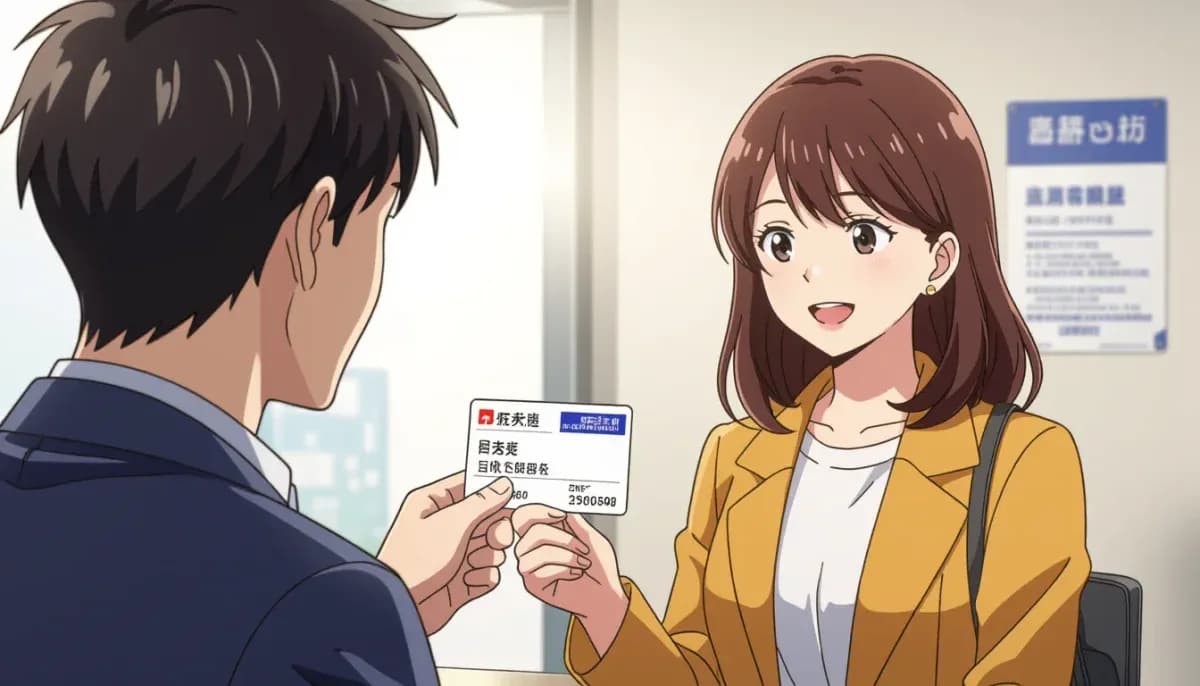
Step-by-step guide to Japan's My Number Card for foreigners: how to apply, key benefits including health insurance and banking, important 2025-2026 updates, and FAQs.
My Number Card Japan Complete Guide for Foreigners
If you live in Japan as a foreigner, the My Number Card (マイナンバーカード) is one of the most important pieces of identification you can carry. It simplifies banking, tax filing, healthcare, and a growing list of government services — all with a single card. This guide walks you through everything you need to know: what the card is, why you need it, how to apply, and what to expect in 2025 and beyond.
For a broader overview of navigating Japanese paperwork and official procedures, see the Japanese Paperwork & Documents Guide for Foreigners on Living in Nihon.
What Is the My Number Card?
Japan's My Number system was introduced in January 2016 to consolidate each resident's information across three key areas: social security, taxation, and disaster response. Every person registered as a resident in Japan — including foreign nationals staying for more than three months — is assigned a unique 12-digit Individual Number (My Number / 個人番号).
The My Number Card is the physical, IC-chip-equipped identification card that displays your My Number along with your name, address, date of birth, and photo. It is optional — you can receive your number without ever applying for the card — but choosing not to get the card means missing out on a wide range of practical benefits that make daily life much easier.
Key facts at a glance:
| Feature | Details |
|---|---|
| Card type | Physical IC chip card (credit card size) |
| Cost | Free to apply and receive |
| Processing time | Approx. 1 month |
| Validity (foreigners) | Expires on same date as your visa |
| Validity (Japanese citizens) | 10 years |
| Languages available | Application form in 12 languages |
| Mandatory? | No, but strongly recommended |
Why Every Foreign Resident Should Get the My Number Card
The My Number Card has evolved from a "nice to have" into a near-essential document for anyone living in Japan long-term. Here's why:
1. Ultimate Proof of Identity for Banking
Japanese banks are required to comply with strict global Know Your Customer (KYC) regulations. The My Number Card is considered the strongest single form of ID you can present when opening a bank account, because it simultaneously satisfies two requirements:
- Photo ID (the card displays your photo)
- My Number Proof (your Individual Number is printed on the card)
Without it, you may need to present multiple separate documents. For more details on banking requirements, visit our Banking and Finance in Japan for Foreigners guide.
2. Health Insurance Card (Since December 2025)
As of December 2025, conventional paper health insurance cards officially expired in Japan. The My Number Card is now the primary proof of health insurance eligibility. When you visit a hospital or clinic, you simply scan your My Number Card at the reception terminal instead of presenting a separate insurance card. This change makes carrying your My Number Card essential for every medical appointment. Learn more in our Healthcare in Japan for Foreigners guide.
3. Tax Filing Made Easier
Linking your My Number Card to the government's My Number Portal (マイナポータル) and the e-Tax system allows your personal details — name, address, income records — to be auto-filled into tax return forms. This is particularly helpful during tax season if you're filing your own return. See our Taxes in Japan for Foreigners guide for a full walkthrough.
4. Driver's License Integration (Since March 2025)
Starting March 24, 2025, the My Number Card officially integrated with Japanese Driver's Licenses. Residents who hold both can link them, reducing the number of separate documents needed in daily life.
5. Government Benefits and Subsidies
By registering your bank account in advance on the My Number Portal, government or municipal benefit payments (such as COVID-19 relief payments, child allowances, and other subsidies) are deposited directly into your account — no need to submit copies of your bankbook or bank details every time.
For a detailed look at social insurance and pension procedures, check out this resource: Tax & Social Insurance Guide for Foreigners.
Who Is Eligible to Apply?
Any foreign national who has completed resident registration (住民登録) at their local city hall or ward office is eligible to apply for a My Number Card. In practice, this includes:
- Long-term visa holders (work visa, spouse visa, student visa, etc.) staying 3+ months
- Permanent residents
- Special permanent residents
You cannot apply for the card if:
- You have not yet registered as a resident at a municipal office
- You are on a short-term stay (tourist visa or similar)
- You have not yet received your Individual Number notification letter
Important: Before applying for the card, make sure you have completed your move-in registration (転入届) at your local city hall. See our Daily Life in Japan Guide for Foreigners for a checklist of essential administrative steps.
How to Apply for Your My Number Card: Step-by-Step
There are three ways to apply for a My Number Card, and all of them start with the Individual Number Card Application Form — a paper form that was mailed to you when you first received your My Number notification.
Step 1: Find Your Application Form
When you registered your address at a city hall, you should have received (or will receive by mail) a letter containing:
- Your Individual Number
- An Application Form with a QR code at the bottom right corner
If you have lost this form, visit your local city hall and request a new one. Many city halls can also print one for you on the spot.
Step 2: Choose Your Application Method
Method A: Online via Smartphone (Recommended)
- Scan the QR code on your application form with your smartphone
- You'll be taken to the official application website
- Upload a front-facing photo (selfie)
- Complete and submit the form
Method B: By Mail The application form includes a prepaid return envelope. Fill in the form, attach a photo, and mail it back. This method is ideal for those who find the online process difficult — the form is available in 12 languages including English, Korean, Chinese, Spanish, Portuguese, Filipino (Tagalog), Vietnamese, Thai, Indonesian, and Nepali.
Method C: At a Photo Booth Many convenience store photo booths (at 7-Eleven, FamilyMart, etc.) are registered to accept My Number Card applications. Scan the QR code from your application form at the booth and follow the on-screen instructions. The booth takes your photo automatically.
Step 3: Wait for the Issuance Notice
Processing takes approximately 3–5 weeks. Your city hall will send you a postcard notice when your card is ready for pickup, including the date, time, and location.
Step 4: Pick Up Your Card at City Hall
Bring the following to pick up your card:
- The issuance notice postcard
- Your Residence Card (在留カード)
- Your notification letter (個人番号通知書 or 通知カード)
- Any other ID requested in the postcard
At pickup, you will set a 4-digit PIN for general use and a separate 6–16 character alphanumeric password for the electronic certificate function. Keep these safe — you will need them for e-Tax and My Number Portal access.
Important Notes for Foreign Residents
Card Expiry Is Tied to Your Visa
Unlike for Japanese citizens (whose cards are valid for 10 years), foreign residents' My Number Cards expire on the exact same date as their current visa. After renewing your residence card, you must visit your local city hall to update your My Number Card's expiration date. Bring both cards when you go.
Address Changes
Whenever you move, update your address at the new city hall. Your My Number Card can be updated with your new address on-site, avoiding the need to apply for a replacement card.
Lost or Stolen Card
If your card is lost or stolen, call the My Number Card Call Center (0120-95-0178, available 24 hours) to suspend the card immediately, then visit city hall to apply for a replacement.
2026 Update: The New Tokutei Zairyu Card
Starting June 14, 2026, Japan will roll out a significant change for foreign residents: the Tokutei Zairyu Card (特定在留カード). This new card will combine the functions of both the Residence Card and the My Number Card into a single document.
What this means for you:
- Eligible foreign nationals will be able to apply for the new integrated card instead of maintaining two separate cards
- The integration reduces administrative burden and the number of documents you need to carry
- The rollout will be gradual — existing cards remain valid until their expiration dates
For the latest updates on visa and residency status requirements, visit our Japan Visa and Immigration Guide.
My Number Card vs. My Number Notification Letter
Many foreigners are confused about the difference between the notification letter and the actual card. Here's a clear comparison:
| My Number Notification Letter (通知カード) | My Number Card (マイナンバーカード) |
|---|---|
| Type | Paper document |
| Photo | |
| Yes | |
| No | Yes |
| Accepted as My Number Proof | Yes |
| Health Insurance Card | |
| Yes | |
| No | Yes |
| Status | Distributed since 2016; new issuance discontinued |
The notification letter can still be used to prove your My Number in certain situations, but it cannot be used as photo ID, and it no longer functions as a health insurance card. Getting the physical My Number Card is strongly recommended.
Frequently Asked Questions
Q: Do I need to get the My Number Card if I'm only in Japan for one year? A: It depends on your situation. If you will be using Japanese health insurance, filing taxes, or opening a bank account, the card will make these processes significantly easier even for short stays.
Q: Can I use my My Number Card as my primary ID instead of my Residence Card? A: The My Number Card is widely accepted as photo ID. However, in immigration-related situations (e.g., re-entry to Japan, reporting to immigration), you must carry your Residence Card. Always check which ID is specifically required.
Q: What happens if I return to my home country temporarily? A: Your My Number Card remains valid while you are outside Japan. However, if you de-register your address in Japan (e.g., for an extended absence), your card may be invalidated. Consult your city hall before making any changes.
Q: Is the My Number Card required for employment in Japan? A: You are not legally required to hand over your My Number Card to your employer, but you must provide your Individual Number for payroll and tax withholding purposes. See our Working in Japan for Foreigners guide for employment documentation requirements.
Additional Resources
For more guidance on living in Japan as a foreigner, explore these helpful resources:
- Living in Nihon – Paperwork & Documents Guide – Comprehensive navigation for official Japanese procedures
- For Work in Japan – Tax & Social Insurance Guide – Understanding taxes and social insurance as a foreign resident
- Ittenshoku – IT Career & Legal Knowledge in Japan – Useful for IT professionals navigating employment law in Japan
- Japan Dev – How to Get Your My Number Card – Step-by-step guide with photos
- MailMate – My Number Card Quick Start Guide – Concise overview for new arrivals
Getting your My Number Card is one of the smartest administrative steps you can take as a foreign resident in Japan. It streamlines your interactions with banks, hospitals, and government offices — and with the upcoming integration of the Residence Card in 2026, its importance will only grow. Apply as soon as you complete your resident registration, and you'll have one less bureaucratic hurdle to worry about in your daily life.

Originally from Vietnam, living in Japan for 16+ years. Graduated from Nagoya University, with 11 years of professional experience at Japanese and international companies. Sharing information about living in Japan for foreigners.
View Profile →Related Articles

Seasonal Clothing Guide for Living in Japan
Complete seasonal clothing guide for foreigners living in Japan. Learn what to wear in spring, summer, rainy season, autumn, and winter with month-by-month tips and shopping advice.
Read more →
Japanese Convenience Store Life Hacks for Foreigners
Discover the best konbini life hacks for foreigners in Japan — from ATM tips and bill payments to discount food strategies, package delivery, and printing services at 7-Eleven, FamilyMart, and Lawson.
Read more →
Neighborhood Association Chonaikai Guide for Foreigners
Everything foreigners need to know about Japan's chonaikai (neighborhood associations): fees, how to join, what happens at meetings, garbage rules, and practical tips for expats.
Read more →
How to Furnish Your Japan Apartment on a Budget
Complete guide to furnishing your Japan apartment on a budget. Covers Nitori, IKEA, secondhand recycle shops, Sayonara Sales, and must-know tips for foreigners setting up their first Japanese apartment.
Read more →
Japanese Address System Explained for Foreigners
Learn how the Japanese address system works, how to read chome-ban-go addresses, write Japanese addresses in English, and navigate Japan as a foreigner. Full guide with examples.
Read more →
Laundry Tips and Coin Laundry Guide in Japan
Complete guide to doing laundry in Japan: how to use coin laundries, decode Japanese washing machines, understand prices, payment methods, and laundromat etiquette for foreigners and expats.
Read more →