
Shoes Off Culture in Japan When and Where to Remove

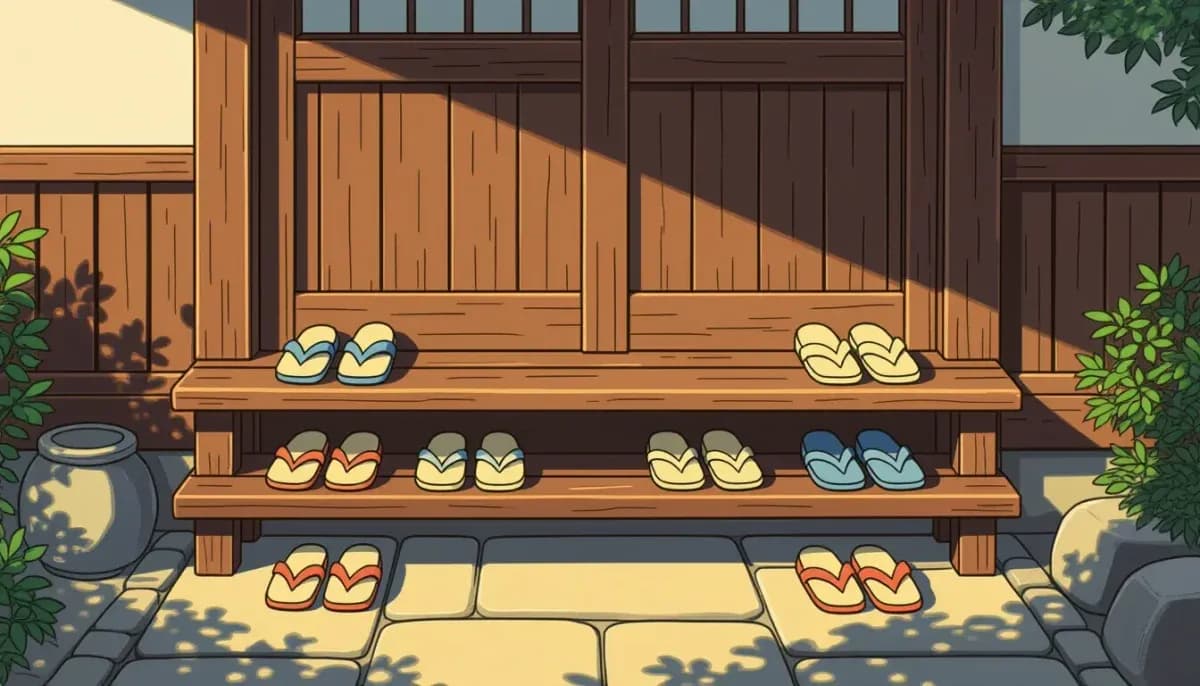
Complete guide to Japan's shoes-off culture for foreigners. Learn where to remove your shoes, genkan etiquette, tatami rules, and practical tips for daily life in Japan.
Shoes Off Culture in Japan: When and Where to Remove Your Footwear
One of the first cultural customs that surprises many foreigners arriving in Japan is the "shoes off" rule. Whether you're visiting a friend's home, staying at a ryokan, or dining at a traditional restaurant, you'll frequently encounter the expectation that you leave your shoes at the door. Understanding this practice — and following it correctly — is one of the most important aspects of fitting into Japanese daily life.
This guide explains everything foreigners need to know about Japan's shoes-off culture: where to remove your footwear, how to do it properly, and the deep cultural reasons behind this centuries-old custom.
!Japanese genkan entryway with shoes neatly arranged and slippers ready

The Genkan: Japan's Sacred Entryway
At the heart of Japan's shoe-removal custom is the genkan (玄関), a transitional entryway found in almost every Japanese home, apartment, and many traditional businesses. The genkan is typically a small recessed area just inside the front door, set lower than the rest of the interior floor. This step-down design creates a clear boundary between the "outside world" and the "inside home."
When entering a space with a genkan, the rule is simple: remove your shoes in the lower area of the genkan, then step up onto the elevated indoor floor in your socks or the slippers provided. Never step with outdoor shoes onto the raised indoor floor — this is a serious breach of etiquette.
The genkan usually features:
- A tsukuriage (step up) separating outdoor and indoor zones
- A getabako (shoe cupboard) or kutsuraki (shoe rack) for storing footwear
- Indoor slippers ready for guests to use
Even in modern Japanese apartments that lack a traditional genkan, you'll often find a small tile or stone area near the door that serves the same purpose. The custom persists regardless of architectural style.
Where You Must Remove Your Shoes
Knowing where shoe removal is expected can save you from awkward situations. Here is a breakdown of the most common places:
| Location | Shoes Off Required? | Notes |
|---|---|---|
| Private homes | Always | No exceptions — core rule |
| Ryokan (traditional inn) | Always | Slippers provided throughout |
| Traditional Japanese restaurants | Usually | Especially with tatami rooms |
| Temples (interior) | Often | Check for signs at entrance |
| Shrines (interior) | Sometimes | Not always required in outer areas |
| Schools | Yes (indoor shoes) | Uwabaki worn inside |
| Hospitals | Varies | Some areas require shoe covers |
| Onsen / public baths | At main entrance | Remove at door, not changing room |
| Western-style restaurants | No | Normal shoes acceptable |
| Convenience stores / shops | No | Standard outdoor footwear fine |
| Modern office buildings | No | Unless specified otherwise |
The key indicator is usually the presence of a genkan step or a visible row of shoes/slippers at the entrance. When in doubt, look at what others are doing.
How to Remove Shoes Properly
The how matters as much as the where in Japanese etiquette. Improper shoe removal can come across as careless or disrespectful. Follow these steps:
- Stop at the genkan lower area — do not step up with your shoes on.
- Untie or loosen your shoes before removing them, so you don't hop or struggle.
- Remove shoes facing the door — turn your back to the host to avoid bumping into them if you wobble.
- Step up and turn your shoes around so the toes face the door (toward the outside). This is considered polite and practical.
- Place shoes neatly on the side or in the shoe rack — don't leave them blocking the center.
- Put on slippers if provided — always wear them in the hallway and living areas (but not on tatami).
If you visit frequently, your host may assign you a specific spot for your shoes. Accept this graciously — it's a sign you're considered a regular guest.
The Tatami Room: Another Layer of Etiquette
Inside many Japanese homes and traditional restaurants, you'll encounter tatami (畳) rooms — spaces floored with woven rush mats. The rule here is even stricter: slippers must come off too before entering.
Tatami is delicate, expensive, and culturally significant. Wearing anything on tatami — even soft slippers — can damage it and is considered deeply disrespectful. Step onto tatami only in socks or bare feet.
You'll often find a small strip of regular flooring (called an engawa or threshold) at the edge of a tatami room to leave your slippers. This is where they belong while you're inside.
For more on Japanese home customs and daily life etiquette, see our Complete Guide to Japanese Culture and Etiquette.
Why Japan Has a Shoes-Off Culture
The roots of this custom run deep — approximately 2,000 years, according to historians. Several factors explain why it developed and persisted:
1. Traditional Flooring Materials Early Japanese homes used tatami, straw mats, and wooden floors where people sat, slept, and ate directly on the ground. Bringing in dirt from outside would contaminate these living surfaces. The genkan emerged as an architectural solution.
2. Shinto Purification Concepts Shinto, Japan's indigenous religion, places enormous importance on ritual purity. The distinction between uchi (inside/pure) and soto (outside/impure) is fundamental. Removing shoes at the threshold is a physical act of purification before entering a sacred or private space.
3. Buddhist Cleanliness as Spiritual Practice In Zen Buddhism, cleaning and maintaining purity are forms of spiritual training. Everyday acts like sweeping, washing, and keeping floors pristine are seen as expressions of mindfulness and respect.
4. Hygiene Research Backing Modern science has validated what the Japanese have known instinctively for centuries. Studies show that the soles of outdoor shoes can carry bacteria, viruses, pesticides, and heavy metals. Homes where shoes are removed consistently show lower levels of indoor allergens and contaminants.
5. The Uchi-Soto Distinction Japanese social structure is built around the concept of "inside" (private, clean, trusted) versus "outside" (public, potentially dirty, unknown). The genkan ritualizes this boundary, reinforcing the idea that the home is a protected, pure sanctuary.
For deeper reading on this cultural framework, KCP International has an excellent overview of Japan's shoe removal traditions.
Uwabaki: Indoor Shoes in Schools and Workplaces
An interesting extension of the shoes-off custom is the Japanese institution of uwabaki (上履き) — soft indoor shoes worn inside schools, some offices, and certain public institutions. Japanese children bring their uwabaki to school every day, changing out of their outdoor shoes at the entrance. The same concept applies in some traditional Japanese companies and healthcare settings.
If you're working in Japan — particularly in education or a traditional industry — you may need to purchase your own pair of indoor shoes. Living in Nihon has a helpful breakdown of indoor shoe etiquette in Japanese homes and workplaces.
Uwabaki are typically:
- Soft canvas shoes with a flexible sole
- White or light-colored (for easy cleanliness checks)
- Slip-on or Velcro for quick changing
Practical Tips for Foreigners Living in Japan
Adapting to the shoes-off culture is easier than it sounds. Here's what experienced expats recommend:
Wear slip-on shoes or easy-remove footwear. Boots with multiple buckles or tightly-laced sneakers become a daily annoyance when you're removing them 5–10 times a day. Loafers, slip-ons, and easily laced sneakers are far more practical.
Always wear clean socks — without holes. Your feet will be visible regularly. Threadbare or holey socks cause embarrassment and reflect poorly on you as a guest.
Keep a compact shoe bag in your bag. When visiting someone's home or traditional event space, some guests bring a small bag to carry their shoes if storage is limited.
Learn to read the signs. A step down at the entrance, rows of shoes along a wall, a pile of slippers, or a sign reading 「靴を脱いでください」 (please remove your shoes) all signal the same thing. For foreigners navigating Japanese workplace culture, Ittenshoku offers career resources for working in Japan.
Don't hesitate to ask. If you're uncertain — especially in a restaurant or community space — it's perfectly acceptable to politely ask, "Should I remove my shoes?" (「靴を脱ぎますか?」). Japanese people appreciate the effort.
For more on navigating daily life customs in Japan, visit our Daily Life in Japan Guide for Foreigners and our Complete Guide to Finding Housing in Japan for what to expect in Japanese apartments.
Common Mistakes Foreigners Make
Even well-intentioned foreigners sometimes slip up (pun intended). Here are the most common errors:
- Walking into the genkan with shoes on — always stop at the threshold first.
- Leaving shoes in the center of the genkan — always place them to the side, neatly.
- Wearing outdoor slippers into a tatami room — always remove slippers for tatami.
- Using the toilet slippers outside the bathroom — many homes have special toilet slippers; do not wear them back into the living area. This is a famous foreigner mistake that causes great amusement (and horror) for Japanese hosts.
- Wearing shoes in a genkan-free space without checking — newer apartments sometimes lack a clear genkan; the custom still applies if there is any distinction between the entrance tiles and the main floor.
For more information on Japan's living infrastructure and housing etiquette, For Work in Japan has a comprehensive guide to housing for foreigners.
Visiting Traditional Spaces: Temples, Ryokan, and Restaurants
Beyond the home, three types of traditional spaces deserve special attention:
Ryokan (Traditional Inns) Upon arrival, you remove shoes at the main entrance and are given a locker or designated space. You'll wear indoor slippers throughout the ryokan — in hallways, common areas, and your room (except on tatami). Yukata (casual kimono) and slippers together are the classic ryokan aesthetic.
Temples and Shrines Not all temple and shrine areas require shoe removal, but the interior of most main halls does. Look for cubbyholes, plastic bags for your shoes, or signs in Japanese/English. Never assume — observe what other visitors are doing. Learn more at Japan Guide's indoor etiquette page.
Traditional Restaurants Restaurants with zashiki seating (floor cushions, low tables, tatami rooms) always require shoe removal. Some have shoe lockers at the entrance; others simply have a step where you leave your shoes. Western-style seating restaurants follow normal shoe-on customs.
For related cultural guidance, our Japanese Festivals and Traditions Guide covers what to expect at shrine visits and traditional events.
Conclusion: Embrace the Custom, It's Worth It
Japan's shoes-off culture is more than etiquette — it's an invitation to experience a fundamentally different relationship with the concept of "home." The moment you remove your shoes at a genkan, you're participating in a 2,000-year-old ritual of respect, purity, and transition. It's one of those customs that, once adopted, feels completely natural and even comforting.
For foreigners living in Japan, mastering this simple but significant practice will earn you respect from neighbors, hosts, and colleagues — and it will help you feel truly at home in your new country.
For more guidance on Japanese culture and daily life, explore:

Originally from Vietnam, living in Japan for 16+ years. Graduated from Nagoya University, with 11 years of professional experience at Japanese and international companies. Sharing information about living in Japan for foreigners.
View Profile →Related Articles
Japanese Seasonal Customs and Greeting Traditions
Discover Japan's seasonal customs and greeting traditions across all four seasons. From hanami and Tanabata to nengajo and oseibo—your complete guide to navigating Japanese seasonal culture as a foreigner.
Read more →
Common Cultural Misunderstandings Foreigners Make in Japan
Avoid embarrassing cultural mistakes in Japan. Learn about shoe etiquette, tipping, indirect communication, chopstick taboos, onsen rules, and business card customs that trip up most foreigners.
Read more →
Japanese Business Card Meishi Exchange Guide
Learn the complete meishi exchange etiquette for Japan: how to present and receive business cards correctly, bilingual card design tips, common mistakes to avoid, and why this ritual matters so much in Japanese professional culture.
Read more →
Public Bath Sento Etiquette Guide for Foreigners
Complete sento etiquette guide for foreigners in Japan. Learn how to use a Japanese public bathhouse, what to bring, tattoo policies, and essential dos and don'ts for a respectful experience.
Read more →
Japanese Noise Etiquette and Quiet Hours Guide
Learn Japanese noise etiquette, quiet hours rules, and how to avoid noise complaints in Japan apartments. Essential guide for foreigners and expats living in Japan.
Read more →
Chopstick Etiquette in Japan Rules You Must Know
Master chopstick etiquette in Japan with this complete guide. Learn the major taboos, how to hold chopsticks correctly, and the unwritten rules that every foreigner should know before dining in Japan.
Read more →