
Typhoon Season in Japan What Foreigners Need to Know

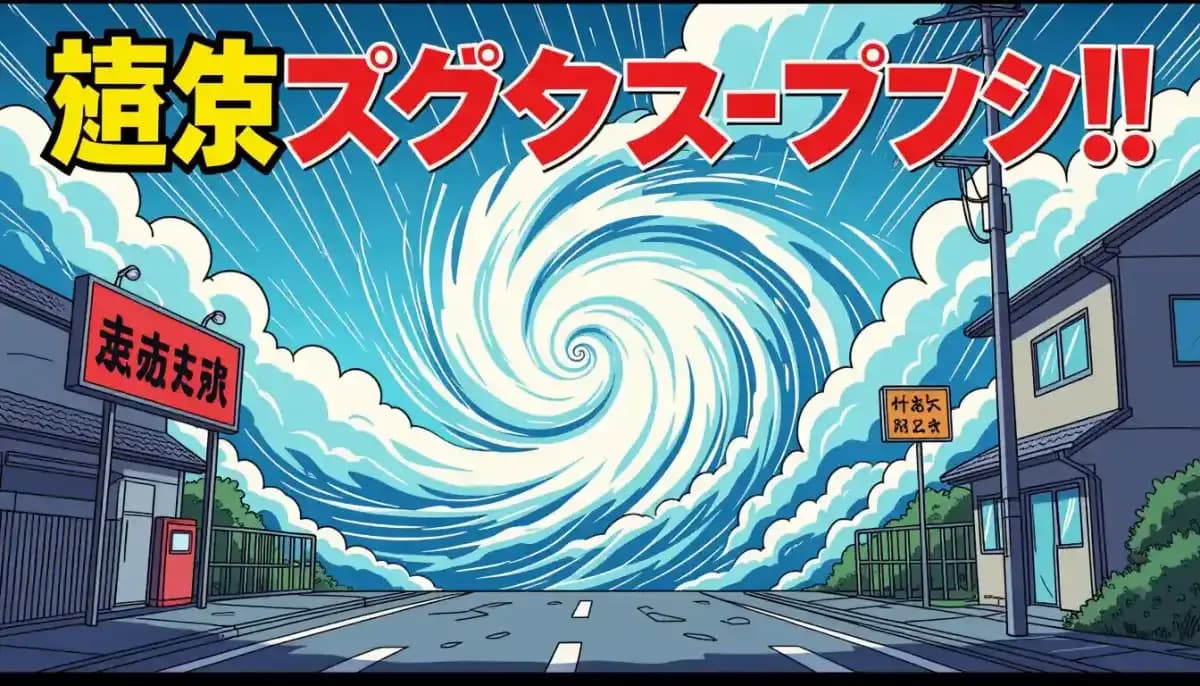
Everything foreigners need to know about Japan's typhoon season — when it happens, which regions are affected, how to prepare an emergency kit, understand warning systems, and stay safe during typhoons.
Typhoon Season in Japan: What Foreigners Need to Know
Living in Japan means experiencing one of the most typhoon-prone countries in the world. Every year, massive tropical storms sweep through Japan from late summer into autumn, bringing heavy rain, powerful winds, and significant disruption to daily life. For foreigners living or traveling in Japan, understanding typhoon season is not just useful — it could be life-saving.
This guide covers everything you need to know about Japan's typhoon season: when it happens, which regions are most affected, how to prepare, and what to do when a typhoon strikes.
!Typhoon warning signs and emergency preparedness supplies laid out for a typhoon in Japan

When Is Typhoon Season in Japan?
Japan's typhoon season officially runs from May through October, with the most intense activity occurring in August and September. This is when sea surface temperatures in the northwest Pacific Ocean are warmest, fueling the development of powerful tropical storms.
On average, approximately 30 typhoons form each year over the northwest Pacific Ocean. Of these, around 3 make landfall on Japan's main islands, while 7–8 pass through Okinawa Prefecture annually. Later-season typhoons (September–October) tend to be stronger than those that form earlier in the summer.
The Japan Meteorological Agency (JMA) uses a numbered system for typhoons — for example, "Typhoon No. 7" — rather than assigning personal names like Atlantic hurricanes. You'll see this referenced in all official Japanese weather communications.
Month-by-Month Typhoon Risk
| Month | Risk Level | Notes |
|---|---|---|
| May–June | Low | Occasional early-season storms |
| July | Moderate | Season picking up, especially Okinawa |
| August | High | Peak season, frequent landfall |
| September | Very High | Strongest storms of the year |
| October | Moderate | Risk declining but strong storms possible |
| November | Low | Season end, rare exceptions |
Which Regions of Japan Are Most Affected?
Typhoon impacts vary significantly by region. Here's what you need to know depending on where you live:
Okinawa is by far the most typhoon-prone area in Japan. With an average of 7–8 typhoons passing through annually, residents there develop a routine approach to storm preparation that the rest of Japan can learn from.
Kyushu and Shikoku are the most frequently struck regions on the main islands. Cities like Kagoshima, Miyazaki, Kochi, and Nagasaki see direct typhoon hits multiple times a decade.
Honshu (Tokyo, Osaka, Nagoya) can experience powerful typhoons, though less frequently than southern regions. When a typhoon reaches the Kanto or Kansai regions, it often causes widespread transportation disruptions across the entire country.
Hokkaido receives the fewest and weakest typhoons due to its northern latitude, but it is not immune — typhoons can travel the full length of Japan before dissipating.
Regional Typhoon Frequency (Average per Year)
| Region | Typhoons per Year | Risk Level |
|---|---|---|
| Okinawa | 7–8 | Extreme |
| Kyushu | 2–3 | High |
| Shikoku | 1–2 | High |
| Honshu (incl. Tokyo, Osaka) | 1–2 | Moderate |
| Hokkaido | <1 | Low |
How to Prepare Before a Typhoon Hits
Preparation is everything when it comes to typhoon survival in Japan. The good news is that Japan's weather forecasting system gives residents 24–72 hours of warning before a typhoon makes landfall, which is plenty of time to get ready.
Build Your Emergency Kit
Every household in Japan — especially foreigners who may not have established support networks — should maintain a basic emergency kit:
- Water: At least 3 liters per person per day for a minimum of 3 days
- Non-perishable food: Instant noodles, canned goods, energy bars for 3+ days
- Cash: Small bills (ATMs and card readers may go offline during power outages)
- Flashlights and batteries or a hand-crank lantern
- Portable battery pack for charging phones
- First aid kit and any prescription medications
- Copies of important documents: Passport, residence card (zairyu card), health insurance card
- Hand-crank radio for receiving emergency broadcasts without power
For foreigners specifically, keeping your passport and residence card accessible is important. Evacuation shelters will verify your identity, and having copies stored separately from originals protects you if your home is damaged.
!Emergency kit and evacuation supplies for foreigners living in Japan during typhoon season

Secure Your Home
Before a typhoon arrives, take these steps around your residence:
- Bring in all balcony items: Flower pots, laundry racks, bicycles, and outdoor furniture can become dangerous projectiles in high winds
- Secure or close storm shutters (雨戸, amado) if your unit has them
- Fill your bathtub with water as an emergency water reserve in case utilities fail
- Tape large windows in an X-pattern to reduce the risk of shattering (though modern tempered glass is generally safer)
- Clear drainage areas around your home to prevent flooding
- Charge all electronic devices before the storm arrives
Know Your Evacuation Route
Visit your local city or ward office's website to download the hazard map (ハザードマップ, hazard map) for your area. This free resource shows flood zones, landslide risk areas, and the locations of evacuation shelters (避難所, hinanjo) near your home.
Identify at least two nearby evacuation shelters in case your primary one is full or inaccessible. Walk the route beforehand if possible.
Understanding Japan's Typhoon Warning System
Japan has a sophisticated and well-organized disaster warning system. As a foreigner, you need to understand how it works to respond appropriately.
The 5-Level Evacuation Alert System
Japan's government issues evacuation alerts on a 5-level scale:
| Level | Color | Who Should Act | Action Required |
|---|---|---|---|
| Level 1 | Blue | Everyone | Stay informed, check hazard maps |
| Level 2 | Yellow | Everyone | Confirm evacuation procedures and routes |
| Level 3 | Orange | Elderly, disabled, those needing assistance | Begin evacuation now |
| Level 4 | Red | All residents in danger zones | Evacuate immediately |
| Level 5 | Black | All residents | Life-saving actions only (disaster in progress) |
Level 4 is the critical threshold. If you are in a designated danger zone and a Level 4 alert is issued, leave immediately. Do not wait for Level 5.
Typhoon Warning Types
The JMA issues several types of weather warnings during typhoon events:
- 暴風警報 (Boufuu Keihou) — Storm Warning: Violent winds expected
- 大雨警報 (Oame Keihou) — Heavy Rain Warning: Severe flooding/mudslide risk
- 洪水警報 (Kouzui Keihou) — Flood Warning: River overflow danger
- 高潮警報 (Takashio Keihou) — High Tide Warning: Coastal flooding risk
- 波浪警報 (Haro Keihou) — High Wave Warning: Dangerous seas
When multiple warnings are issued simultaneously, the risks compound significantly.
Essential Apps and Resources for Typhoon Season
As a foreigner in Japan, having the right apps on your phone can make a critical difference during a typhoon emergency.
Must-Have Emergency Apps
Safety Tips is the single most important app for foreigners. Available in 14 languages including English, it sends push notifications for earthquakes, tsunamis, typhoon warnings, and other disasters directly to your phone. Download it before typhoon season begins.
NHK World provides English-language emergency broadcasts from Japan's national public broadcaster. During major typhoons, NHK World streams live coverage with English commentary, covering evacuation orders, transportation closures, and safety updates.
Yahoo! Disaster Alert (Yahoo!防災速報) sends location-based warning notifications. Even if your Japanese language ability is limited, the app's alerts and maps are relatively easy to navigate.
Japan Meteorological Agency website (jma.go.jp/en/) has an English version with real-time typhoon tracking, intensity forecasts, and regional warnings.
Key Emergency Contact Numbers
| Number | Service | When to Use |
|---|---|---|
| 110 | Police | Crimes, accidents |
| 119 | Fire & Ambulance | Medical emergencies, fires |
| 171 | Disaster Message Hotline | Record/check safety status |
| #7119 | Ambulance Consultation | Non-emergency medical advice |
| 118 | Coast Guard | Maritime incidents |
The 171 disaster message dial is particularly useful — you can record a brief message in any language confirming your safety, and family members in Japan or abroad can call to check your status.
What to Do During a Typhoon
Once a typhoon is underway, your primary goal is to stay safe indoors. Here's what to do:
Stay inside. The most dangerous mistakes people make during typhoons are venturing outside to take photos, check on cars, or run quick errands during apparent calm periods. The "eye" of a typhoon creates a brief lull before conditions rapidly worsen again.
Stay away from windows. Even if they don't shatter, windows can flex dangerously in typhoon-force winds. Stay in interior rooms away from exterior walls.
Monitor official alerts. Keep your phone charged and notifications enabled. Follow NHK or local TV for evacuation updates.
If you need to evacuate, do so before conditions deteriorate. Attempting to evacuate during peak typhoon conditions is extremely dangerous. Leave early — even if it means spending the night at a shelter unnecessarily.
At an evacuation shelter (避難所), remove your shoes at the entrance, register your name and contact information with shelter staff, and show your residence card or passport for identification. Foreign language volunteers may be available; ask shelter staff. Supplies including food, water, and blankets are distributed equally to all evacuees regardless of nationality.
Useful Japanese Phrases for Emergencies
| Japanese | Reading | Meaning |
|---|---|---|
| 避難所はどこですか? | Hinanjo wa doko desu ka? | Where is the evacuation shelter? |
| 助けてください | Tasukete kudasai | Please help me |
| 日本語がわかりません | Nihongo ga wakarimasen | I don't understand Japanese |
| アレルギーがあります | Arerugii ga arimasu | I have allergies |
| 薬が必要です | Kusuri ga hitsuyou desu | I need medicine |
Transportation During Typhoon Season
One of the most visible impacts of typhoons in Japan is transportation disruption. Unlike in some countries where operations continue through storms, Japanese transport operators proactively cancel or suspend services when typhoon conditions are forecast.
Trains and Shinkansen: Railway operators including JR and private lines issue planned suspension announcements (計画運休, keikaku unkyu) often 12–24 hours in advance. Services may be suspended for an entire day or longer.
Flights: Both domestic and international flights are cancelled or significantly delayed during typhoons. Okinawa airports may close entirely for major storms.
Expressways: Major highways may close when wind speeds reach dangerous thresholds.
Refund and rebooking policies: Most transport operators offer free cancellations or rescheduling for typhoon-affected reservations. Keep your booking confirmation for refund requests.
If you know a typhoon is approaching and have travel plans, contact your carrier or hotel in advance to understand their cancellation policy. Many Japanese businesses proactively offer accommodations for stranded travelers.
For more information about navigating Japan's transportation system, see our guide to Transportation in Japan.
After the Typhoon: What to Do Next
Once a typhoon passes, resist the urge to immediately head outside. Wait for official all-clear announcements. After the storm:
Check your surroundings carefully. Floodwaters may still be rising even after rain stops. Trees, power lines, and structures can be unstable.
Document any damage to your rental property immediately with photos before cleaning up. Contact your landlord and, if applicable, your renter's insurance provider. For foreigners, your insurance coverage in Japan may differ from what you're used to at home.
Boil drinking water if local authorities issue a water contamination advisory. This is common after severe flooding.
Check in with your workplace or school. Many Japanese companies and schools issue their own closures or work-from-home directives during and after major typhoons.
For broader emergency preparedness beyond typhoons, including earthquake preparedness and evacuation planning, see our Safety and Emergency Preparedness Guide for Foreigners in Japan.
Staying Informed: Reliable Resources
Staying ahead of typhoon information requires a proactive approach, especially when you're not fluent in Japanese.
Japan Meteorological Agency (JMA): The official source for all typhoon tracking and warnings. Their English website at jma.go.jp provides real-time typhoon position, intensity, and forecast track data.
NHK World: Japan's international broadcasting service offers continuous typhoon coverage in English, including live evacuation advisories and transportation updates.
Your local city or ward office: Register for local emergency notifications and download your area's hazard map. Many municipalities have multilingual support hotlines during major disasters.
Your country's embassy: Register with your embassy's traveler registration service so they can contact you during emergencies. Most embassies provide emergency hotlines for their nationals in crisis situations.
For comprehensive guidance on disaster preparedness in Japan, including earthquake, tsunami, and flooding readiness, the Living in Nihon disaster preparedness guide is an excellent reference for English-speaking foreigners.
Additional practical resources for foreign residents include Japan Living Guide's typhoon preparation guide and the Japan Guide typhoon information page.
For foreigners working in Japan and managing schedules around typhoon season disruptions, For Work in Japan provides guidance on workplace rights and labor-related questions. Similarly, Ittenshoku offers career guidance for those navigating professional life in Japan.
Conclusion: Be Prepared, Not Scared
Japan's typhoon season is a serious reality of life in the country, but it doesn't have to be a source of constant anxiety. The Japanese approach to typhoon preparedness — methodical, well-organized, and deeply ingrained in public culture — means that the infrastructure and systems to keep you safe are already in place.
Your job as a foreigner is to plug into those systems: download the apps, know your evacuation shelter, build your emergency kit, and stay informed. With preparation, typhoon season becomes something you manage rather than something that happens to you.
Japan is one of the safest countries in the world for natural disaster management. By following local guidance and understanding the warning systems, you can weather any typhoon that comes your way.
For more guides on living safely and comfortably in Japan as a foreigner, explore our comprehensive resources on daily life in Japan, Japanese culture and etiquette, and moving to Japan.

Originally from Vietnam, living in Japan for 16+ years. Graduated from Nagoya University, with 11 years of professional experience at Japanese and international companies. Sharing information about living in Japan for foreigners.
View Profile →Related Articles

Winter Safety Tips and Cold Weather Guide for Japan
Essential winter safety guide for foreigners in Japan: heating safety, hypothermia prevention, heat shock risks, layering tips, and emergency preparedness for cold weather.
Read more →
Heat Stroke Prevention in Japan Summer Safety Guide
Learn how to prevent heat stroke in Japan's brutal summer heat and humidity. Essential tips on hydration, symptoms, emergency numbers (119, #7119), and Japanese-specific heat prevention strategies for foreigners.
Read more →
How to Prepare for Volcanic Eruptions in Japan
Complete guide for foreigners on volcanic eruption preparedness in Japan. Learn the JMA 5-level alert system, build your emergency kit, and know what to do during an eruption or ash fall.
Read more →
Fire Safety and Prevention in Japan for Residents
Learn essential fire safety tips for living in Japan — from emergency number 119 and smoke detector laws to apartment evacuation routes and fire insurance. A complete guide for foreigners.
Read more →
Japan Emergency Alert System How It Works
Everything foreigners need to know about Japan's J-Alert emergency alert system: how it works, what the sounds mean, why your foreign phone may not receive it, and which apps to install for English alerts.
Read more →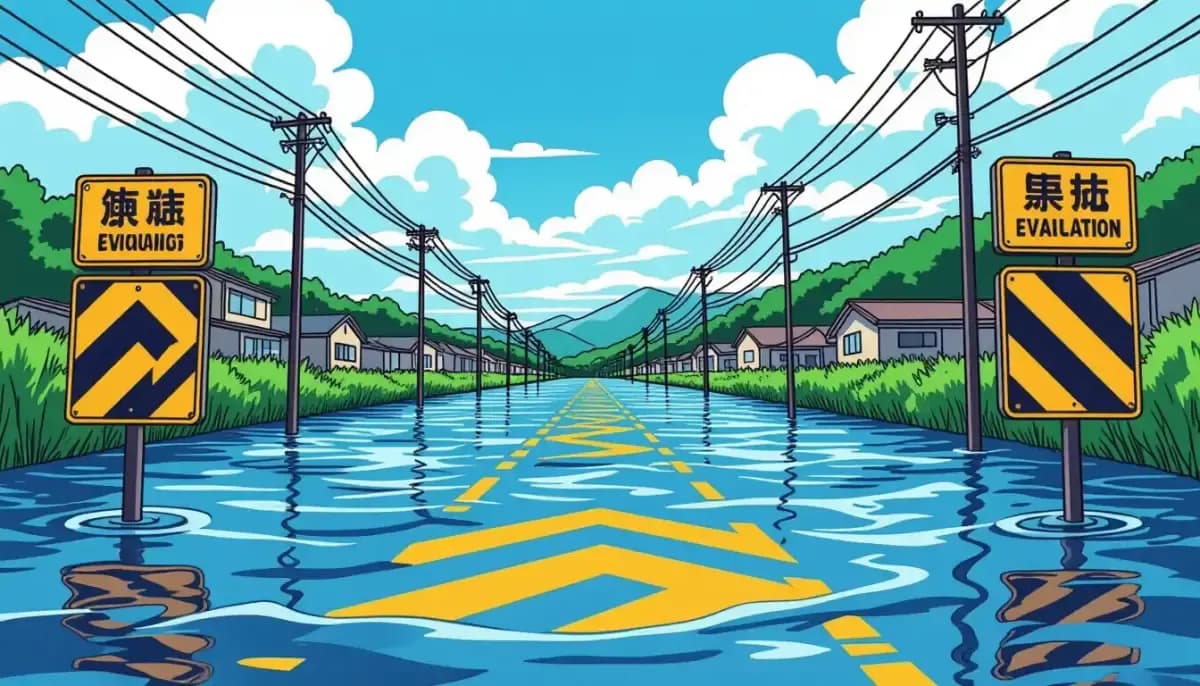
Flood and Landslide Safety in Japan Guide
Everything foreigners need to know about flood and landslide safety in Japan: understanding the 5-level warning system, reading hazard maps, essential apps, evacuation steps, and building a disaster kit.
Read more →