
Japan Emergency Phone Numbers and Services Guide

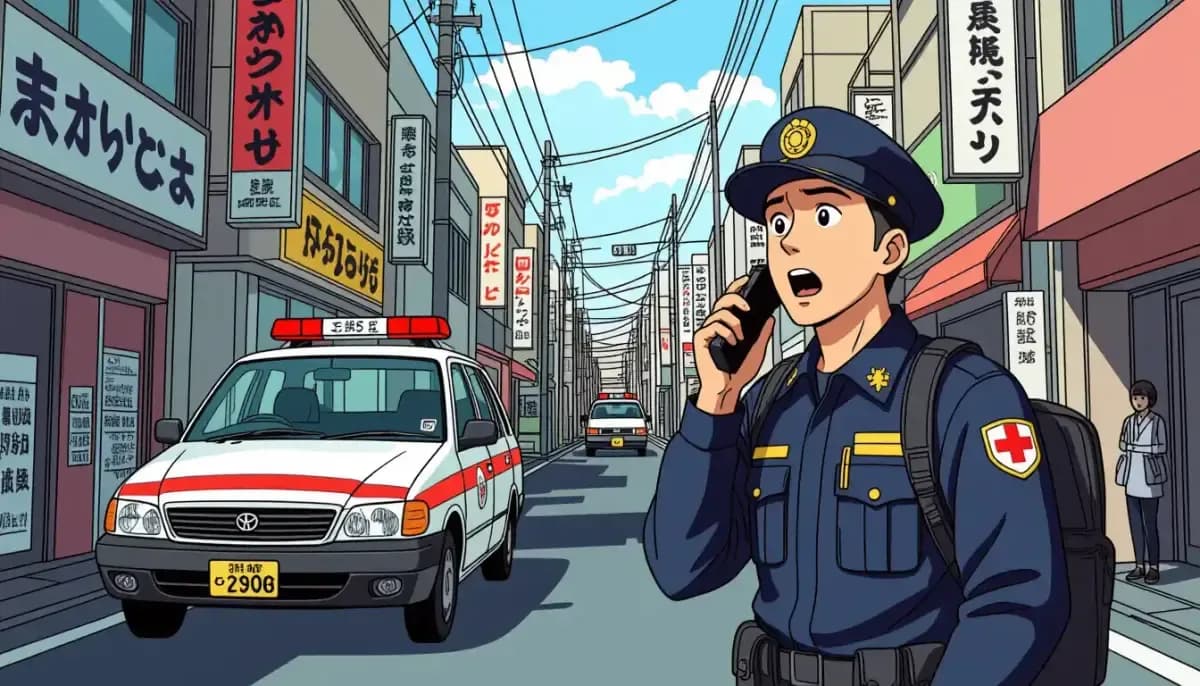
Complete guide to Japan emergency phone numbers: 110 police, 119 ambulance/fire, 118 coast guard, JNTO hotline, English support lines, disaster apps, and key phrases for foreigners.
Japan Emergency Phone Numbers and Services Guide
When living in or visiting Japan as a foreigner, knowing the right emergency phone numbers can make the difference in a crisis. Japan's emergency services are efficient and well-organized, but the language barrier can be a real challenge. This comprehensive guide covers every emergency number you need in Japan, English-language support options, and practical tips to help you navigate urgent situations with confidence.
!Emergency services in Japan - ambulance and police
Core Emergency Numbers in Japan
Japan uses three primary short-code emergency numbers that are active 24 hours a day, 7 days a week. These work from any phone — mobile, landline, or public payphone — at no charge.
| Number | Service | When to Use |
|---|---|---|
| 110 | Police | Crimes, theft, assault, traffic accidents |
| 119 | Fire & Ambulance | Fires, serious injuries, sudden illness |
| 118 | Coast Guard | Maritime accidents, drowning at sea |
| #9110 | Police (non-emergency) | Advice, minor incidents, consultation |
| #7119 | Medical advice | Unsure if ambulance is needed |
| 171 | Disaster message dial | Post-disaster safety check messages |
How to Call 110 (Police)
Dial 110 for any police emergency: robbery, assault, traffic accidents, lost passports, or suspicious activity. The operator will answer in Japanese. Stay calm and say "Eigo ga hanasemasu ka?" (Can you speak English?) or simply "English, please." Many major city police centers have access to interpreter services.
When calling, be ready to state:
- Your location (address or nearby landmarks)
- What happened
- Whether anyone is injured
How to Call 119 (Fire & Ambulance)
Dial 119 for fires, serious injuries, heart attacks, stroke, or any life-threatening medical emergency. Say "Kyuukyuusha wo onegaishimasu" (救急車をお願いします) to request an ambulance, or "Kaji desu" (火事です) to report a fire.
Important: Ambulance transport in Japan is free of charge. You will only be billed for hospital treatment once you arrive at a medical facility. If you are ever unsure whether a situation requires an ambulance, call the medical advice line #7119 first.
English-Language Emergency Support
One of the most valuable resources for foreigners in Japan is the Japan Visitor Hotline, operated by the Japan National Tourism Organization (JNTO).
Japan Visitor Hotline: 050-3816-2787
- Available 24 hours, 365 days a year
- Languages: English, Chinese, Korean, Japanese
- Services: Emergency assistance, medical facility referrals, disaster support
- International callers: +81-50-3816-2787
This hotline can help you find English-speaking hospitals, connect you with the right authorities, or provide guidance during a natural disaster. Save this number in your phone before you need it.
!Japan emergency guide for foreigners living in Japan
Medical Consultation Lines
Not every health situation requires calling 119. Japan has dedicated medical consultation lines that can help you assess the situation:
#7119 — Non-Emergency Medical Consultation
The #7119 line (available in major cities including Tokyo) provides free medical advice from trained nurses and dispatchers. Use it when you're unsure whether a situation is serious enough for an ambulance. This reduces unnecessary ambulance use and ensures emergency vehicles are available for true life-threatening cases.
HIMAWARI (Tokyo Metropolitan Medical Information Service)
Phone: 03-5285-8181 Hours: 9:00 AM – 8:00 PM daily
HIMAWARI introduces foreign-language-compatible medical institutions and explains Japan's medical system. If you're in Tokyo and need to find a doctor who speaks English or another language, this is the right call.
For more on navigating Japanese healthcare, see our Complete Guide to Healthcare in Japan for Foreigners.
Expat Support Centers by Region
Beyond emergency lines, Japan has a network of international resident support centers staffed with multilingual advisors who can assist with legal issues, visas, housing disputes, and daily-life emergencies.
| Center | Region | Phone | Services |
|---|---|---|---|
| FRAC | Tokyo | 03-5320-7744 | Daily life & emergency advice |
| TMC Navi | Tokyo | 0120-142-142 | Legal/visa issues (toll-free) |
| OFIX | Osaka | 06-6941-2297 | General foreigner support |
| YOKE | Yokohama | 045-671-7209 | Foreign resident support |
These centers are particularly useful if you face a non-life-threatening emergency such as landlord disputes, workplace abuse, or immigration-related stress. Learn more about daily life support at Living in Nihon.
Mental Health and Crisis Support
Emergencies are not always physical. Japan can be an isolating place, especially for newly arrived foreigners dealing with language barriers, culture shock, or work pressure.
TELL Lifeline
Phone: 0800-300-8355 (toll-free)
- Available for English-speaking residents across Japan
- Provides telephone counseling for emotional crises
- Also offers face-to-face therapy sessions in Tokyo
Ministry of Justice Human Rights Hotline
Phone: 0570-090-911 Hours: Weekdays 9:00 AM – 5:00 PM
This line handles complaints about discrimination, harassment, or human rights violations. It is important for foreigners who may face unfair treatment in the workplace or housing. See our guide to Working in Japan as a Foreigner for more context on workplace rights.
For workers looking to build a career in Japan, For Work in Japan provides practical employment guidance including workplace safety awareness.
Disaster Preparedness Resources
Japan is one of the most earthquake-prone countries in the world. Foreigners need to be prepared for natural disasters in addition to standard emergencies.
171 — NTT Disaster Emergency Message Dial
After a major earthquake or disaster, mobile networks often become overloaded. Dial 171 to:
- Record a voice message confirming your safety
- Listen to safety messages from family or friends
Recommended Apps
| App | Language | Purpose |
|---|---|---|
| Safety tips | EN/CN/KO/TH | Push alerts for earthquakes, tsunamis |
| NHK WORLD-JAPAN | Multiple | Multilingual breaking news and alerts |
| Yahoo! Bosai | Japanese | Real-time disaster maps |
Download these apps before any emergency. The Safety Tips app in particular is endorsed by Japan's government for foreign residents and tourists. For a full overview of disaster preparedness, see our Complete Guide to Safety and Emergency Preparedness in Japan.
Practical Phrases for Emergencies
The ability to communicate even a few words in Japanese can dramatically improve response times during an emergency.
| Situation | Japanese | Pronunciation |
|---|---|---|
| I need an ambulance | 救急車をお願いします | Kyuukyuusha wo onegaishimasu |
| Call the police | 警察を呼んでください | Keisatsu wo yonde kudasai |
| There is a fire | 火事です | Kaji desu |
| I am hurt | 怪我をしました | Kega wo shimashita |
| I don't understand Japanese | 日本語が分かりません | Nihongo ga wakarimasen |
| Please speak slowly | ゆっくり話してください | Yukkuri hanashite kudasai |
Keep a printed or digital copy of these phrases in your wallet or phone notes.
Medical Costs and Insurance
While ambulance transport is free, hospital treatment is not. Japan has a public health insurance system that all registered foreign residents must enroll in. If you have National Health Insurance, you typically pay 30% of medical costs.
Tourists and short-term visitors should carry valid travel insurance. Important warning from JNTO: Foreign visitors who fail to pay their medical expenses may be denied re-entry to Japan in the future. Always carry travel insurance when visiting Japan.
For a deeper look at financial planning in Japan, visit Ittenshoku for job and career resources that can help you understand workplace benefits and coverage.
Also see our Complete Guide to Banking and Finance in Japan for information on health insurance enrollment and payment options.
Summary Checklist
Before or immediately after arriving in Japan, take these steps:
- Save 110, 119, and 050-3816-2787 (JNTO Hotline) in your phone
- Download the Safety Tips app for disaster alerts
- Enroll in National Health Insurance (for residents)
- Purchase travel insurance (for tourists)
- Locate your nearest expat support center (FRAC, OFIX, YOKE, etc.)
- Learn the key emergency phrases in Japanese
- Know your home address in Japanese to give to emergency dispatchers
Japan is an extremely safe country, and emergency services are highly professional. With a little preparation and the right phone numbers saved, you can handle almost any situation confidently.
For more guidance on settling into life in Japan, explore our Complete Guide to Daily Life in Japan for Foreigners.
Additional resources:

Originally from Vietnam, living in Japan for 16+ years. Graduated from Nagoya University, with 11 years of professional experience at Japanese and international companies. Sharing information about living in Japan for foreigners.
View Profile →Related Articles

Winter Safety Tips and Cold Weather Guide for Japan
Essential winter safety guide for foreigners in Japan: heating safety, hypothermia prevention, heat shock risks, layering tips, and emergency preparedness for cold weather.
Read more →
Heat Stroke Prevention in Japan Summer Safety Guide
Learn how to prevent heat stroke in Japan's brutal summer heat and humidity. Essential tips on hydration, symptoms, emergency numbers (119, #7119), and Japanese-specific heat prevention strategies for foreigners.
Read more →
How to Prepare for Volcanic Eruptions in Japan
Complete guide for foreigners on volcanic eruption preparedness in Japan. Learn the JMA 5-level alert system, build your emergency kit, and know what to do during an eruption or ash fall.
Read more →
Fire Safety and Prevention in Japan for Residents
Learn essential fire safety tips for living in Japan — from emergency number 119 and smoke detector laws to apartment evacuation routes and fire insurance. A complete guide for foreigners.
Read more →
Japan Emergency Alert System How It Works
Everything foreigners need to know about Japan's J-Alert emergency alert system: how it works, what the sounds mean, why your foreign phone may not receive it, and which apps to install for English alerts.
Read more →
Flood and Landslide Safety in Japan Guide
Everything foreigners need to know about flood and landslide safety in Japan: understanding the 5-level warning system, reading hazard maps, essential apps, evacuation steps, and building a disaster kit.
Read more →