The Complete Guide to Sustainable Living in Japan for Foreigners
Japan is a country of fascinating contradictions when it comes to sustainability. On one hand, it is home to the ancient philosophy of mottainai (もったいない) — a profound sense of regret over waste that has shaped Japanese culture for centuries. On the other hand, Japan is also a nation known for excessive packaging and single-use plastics. As a foreigner living in Japan, understanding this complex landscape is key to living a greener, more conscious life — and fitting into your local community.
This comprehensive guide covers everything you need to know about sustainable living in Japan, from mastering the infamous waste-sorting system to finding eco-friendly products, using sustainable transport, and participating in local environmental initiatives. Whether you've just arrived or have been here for years, there's always more you can do to reduce your environmental footprint in your adopted home.
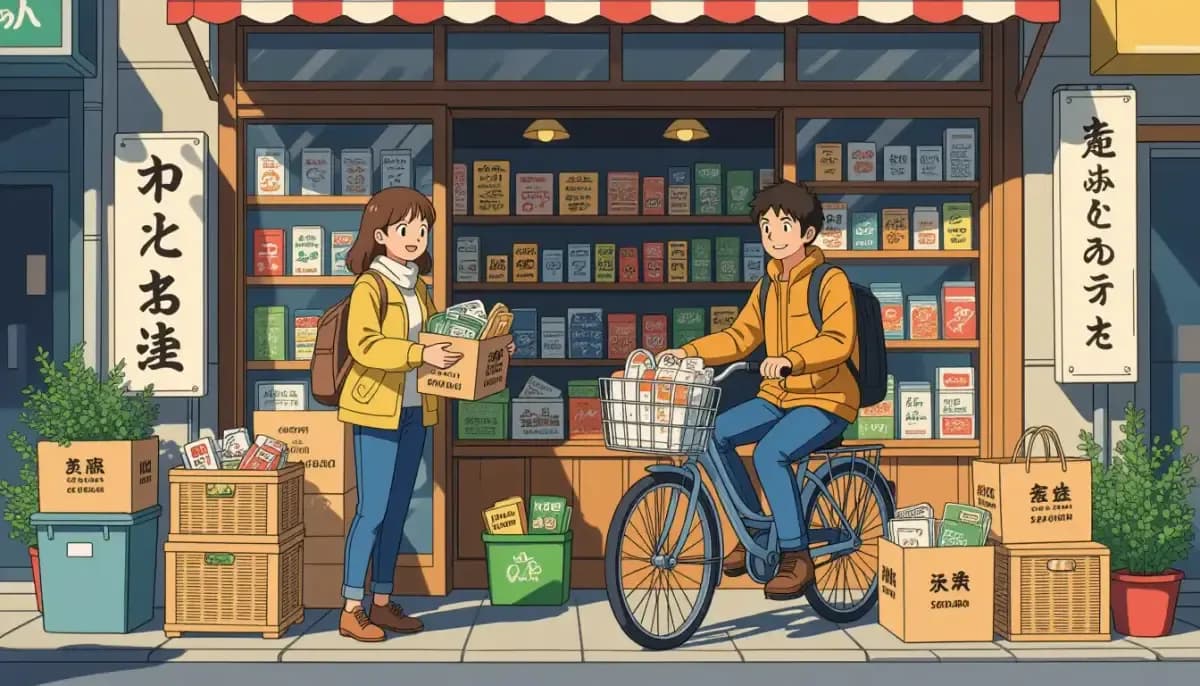
!Foreigners cycling through a Japanese neighborhood with reusable shopping bags
Understanding Japan's Sustainability Culture: Mottainai and Beyond
The foundation of Japanese sustainability lies in the concept of mottainai (もったいない), which expresses a deep sense of regret and sorrow over wastefulness. This single word encapsulates four key principles: Reduce, Reuse, Recycle, and Respect — going far beyond a simple catchphrase to represent a cultural mindset that influences daily life.
Long before environmental sustainability became a global conversation, Japan's Edo period (1603–1867) featured sophisticated circular economies. Urban areas had organized systems where nothing was wasted: old paper was recycled into new paper, food scraps became compost, and broken items were repaired rather than discarded. Craftspeople called kintsugi (金継ぎ) masters repaired broken ceramics with gold, celebrating imperfection and longevity over disposability.
Today, this philosophy continues in everyday life. You'll see Japanese grandmothers carefully folding plastic bags for reuse, neighbors meticulously separating their waste, and salarymen carrying their own chopsticks to avoid disposable ones. As a foreigner, embracing mottainai is not just environmentally responsible — it's a way to connect more deeply with Japanese values.
Key Japanese concepts for sustainable living:
- Mottainai (もったいない) — Regret over wastefulness; the drive to reduce, reuse, recycle
- Satoyama (里山) — Traditional land management practice maintaining harmony between people and nature
- Sankankyo (3R) — Japan's national campaign for Reduce, Reuse, Recycle
- SDGs — Japan is strongly committed to the UN Sustainable Development Goals
Japan has committed to achieving carbon neutrality by 2050, with an interim target of reducing greenhouse gas emissions by 46% by 2030 compared to 2013 levels. Some 1,196 local governments — including Tokyo, Kyoto, and Yokohama — have also committed to net zero carbon by 2050. This policy backdrop makes Japan one of the more ambitious countries on climate action.
For more comprehensive guidance on daily life in Japan, Living in Nihon offers excellent resources for foreign residents navigating Japanese society and culture.
Mastering Japan's Waste Sorting System
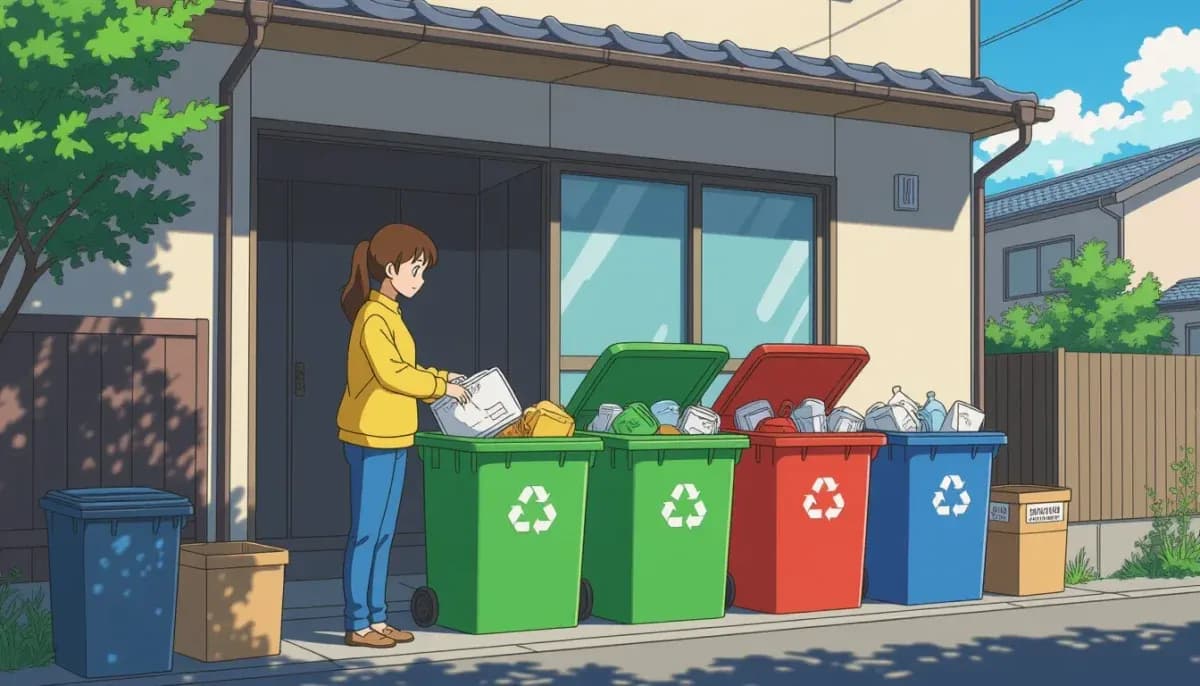
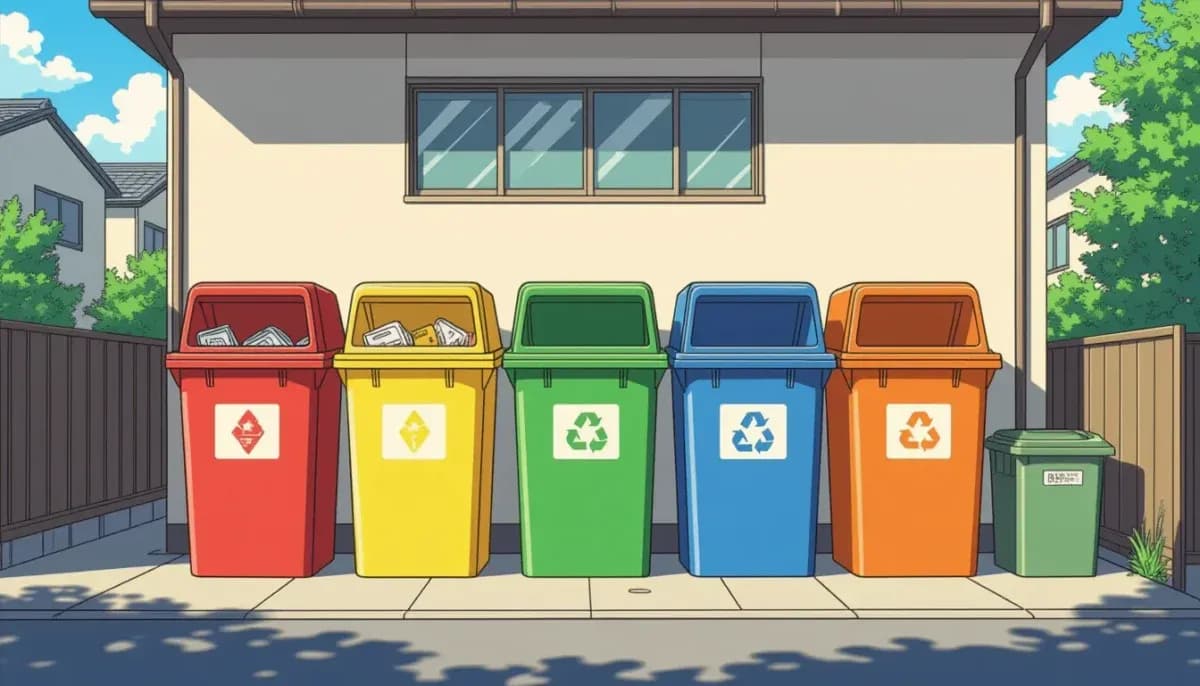
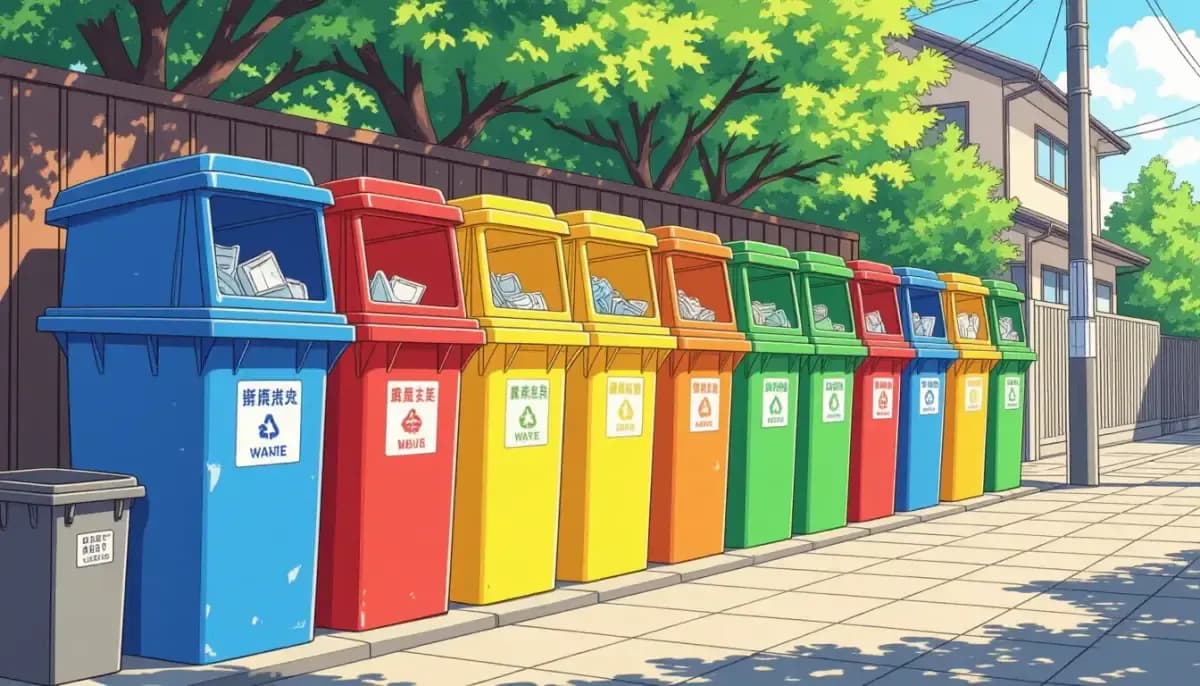
Arguably the most immediate challenge for foreigners living in Japan is navigating the waste separation system (ゴミ分別 / gomi bunbetsu). Unlike many Western countries where you might toss everything into one or two bins, Japan requires residents to sort their garbage into multiple categories — sometimes as many as 45 different types in cities like Tokyo.
Getting this right matters. Your trash won't be collected if it's improperly sorted, and you may receive a warning sticker (or a polite visit from the neighborhood association). More importantly, proper sorting is essential to Japan's impressive recycling infrastructure.
The Main Waste Categories
| Category | Japanese Term | Examples | Collection Day |
|---|
| Burnable waste | 燃えるごみ (moeru gomi) | Food scraps, paper, wood, non-recyclable plastics | 2-3x per week |
| Non-burnable waste | 燃えないごみ (moenai gomi) | Metal, glass, ceramics, small appliances | 1-2x per month |
| Plastic bottles (PET) | ペットボトル | Drink bottles (rinsed, labels removed) | Weekly |
| Cans | 缶 (kan) | Aluminum and steel cans (rinsed) | Weekly |
| Glass bottles | ガラス瓶 | Rinsed glass bottles | Weekly |
| Cardboard/Paper | 段ボール/紙 | Flattened cardboard, newspapers, magazines | Weekly or bi-weekly |
| Oversized waste | 粗大ごみ (sodai gomi) | Furniture, bicycles, appliances | By appointment |
| Hazardous waste | 有害ごみ | Batteries, fluorescent bulbs | Special collection |
Practical tips for foreigners:
- Get the local guide: Most municipalities provide waste sorting guides in English, Chinese, Korean, and other languages. Ask your ward office (区役所) or city hall.
- Download the app: Many cities have free garbage sorting apps (e.g., "Gomi Navi" for some areas). Some municipalities even have multi-language apps.
- Check collection times: Trash must be put out early morning on collection day (typically 6–8am). Never put it out the night before.
- Rinse everything: Rinse all food containers, cans, and bottles before recycling. Even a small amount of residue can contaminate a batch.
- Remove labels: PET bottle labels and caps are often sorted separately from the bottle itself.
Japan's landfill usage rate is just 1.1% — one of the lowest in the world. The overall recycling and reuse rate reached 87.8% in 2021. These impressive numbers are only possible because of the meticulous sorting done by residents like you.
Learn more about navigating daily life logistics in Japan at For Work in Japan, which provides helpful resources for foreign workers and residents.
Sustainable Shopping: Second-Hand Culture and Eco-Friendly Choices
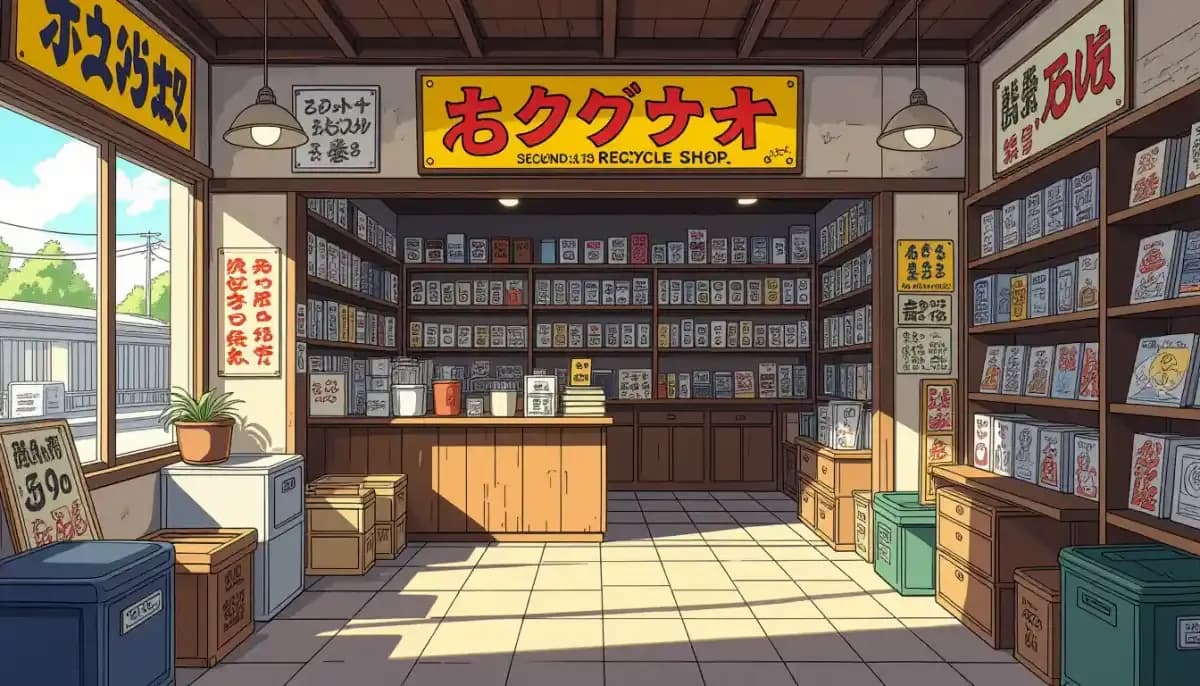
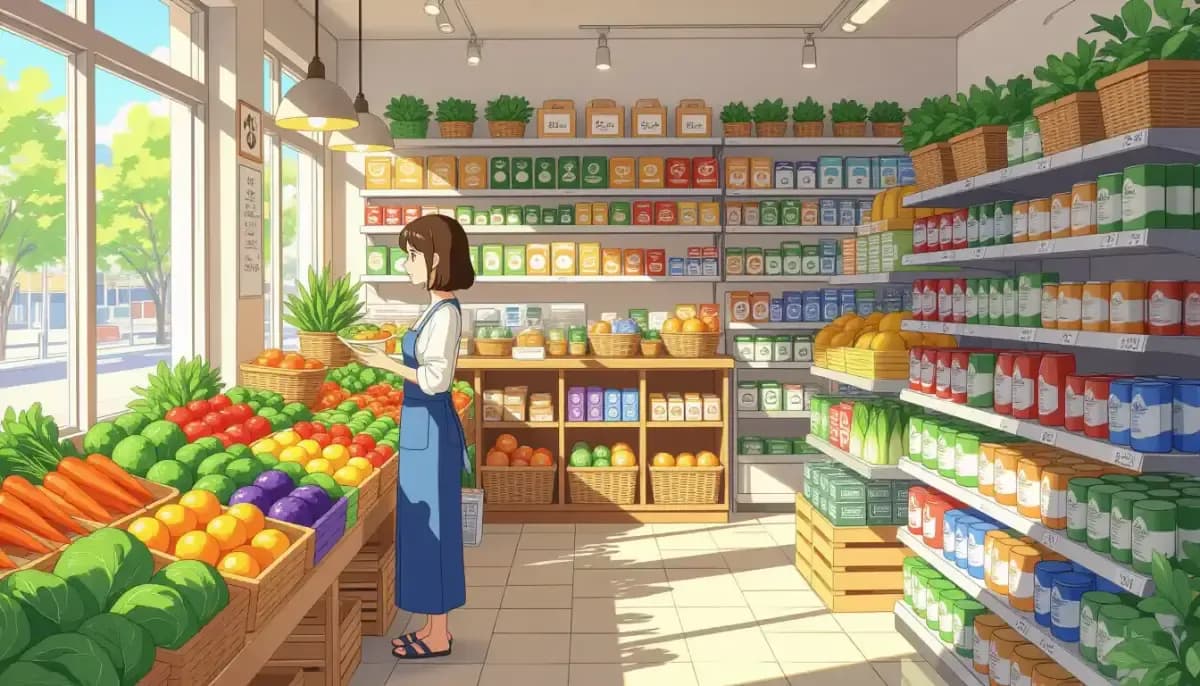
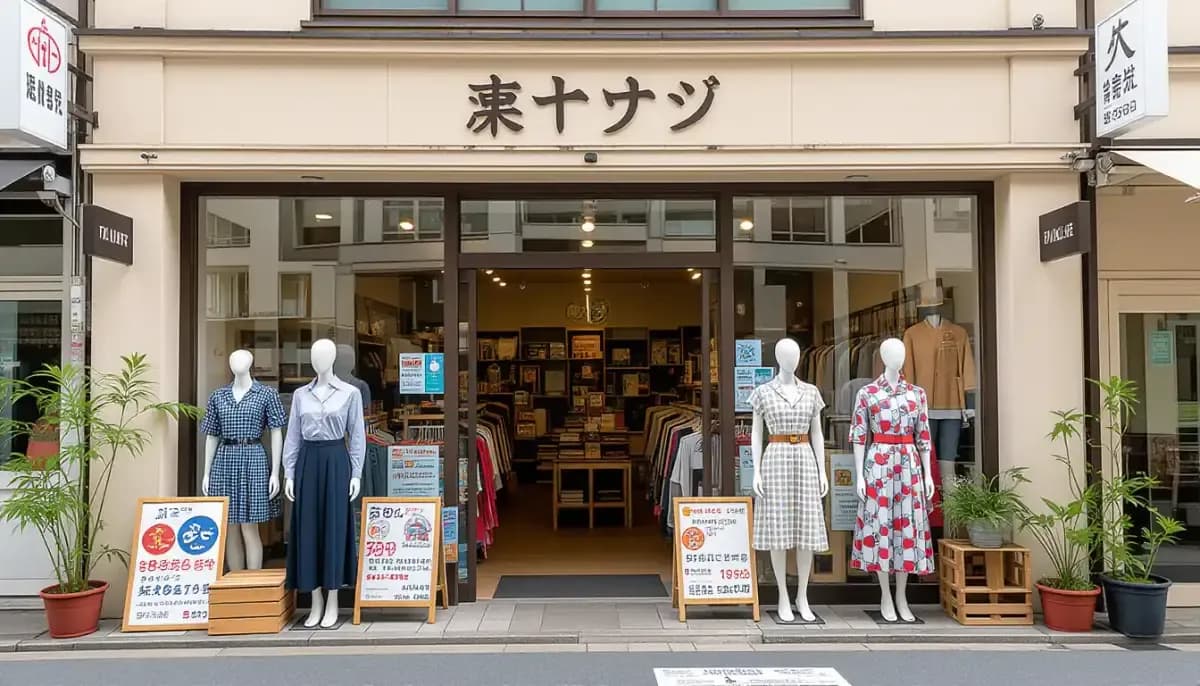
Japan has an extraordinary second-hand (中古品 / chuko-hin) shopping culture that is both budget-friendly and environmentally beneficial. This is great news for eco-conscious foreigners — you can find virtually anything pre-owned, often in excellent condition.
Japan's Second-Hand Ecosystem
Japan's resale market is vast and well-organized. Unlike second-hand shopping in many countries, Japanese thrift stores are typically clean, well-organized, and carry items in excellent condition (reflecting the cultural expectation of taking good care of belongings).
Popular second-hand store chains:
- BookOff (ブックオフ) — Books, CDs, DVDs, games; also has BookOff Super Bazaar with clothing and electronics
- HardOff (ハードオフ) — Electronics, musical instruments, sports equipment
- 2nd Street (セカンドストリート) — Clothing, accessories, household goods
- Off House (オフハウス) — Furniture, kitchenware, baby items
- Treasure Factory (トレジャーファクトリー) — General second-hand goods
- Mercari (メルカリ) — Japan's dominant C2C resale app, enormous selection
Furoshiki and eco-friendly wrapping: The traditional Japanese cloth furoshiki (風呂敷) is experiencing a modern revival. Used for centuries to wrap and carry goods, furoshiki eliminates the need for paper bags and gift wrapping. Many department stores and specialty shops sell beautiful furoshiki that double as gifts themselves.
Shopping with Less Plastic
Japan reduced plastic bag usage dramatically after introducing mandatory plastic bag fees at supermarkets and convenience stores in July 2020. Here's how to reduce your plastic footprint while shopping:
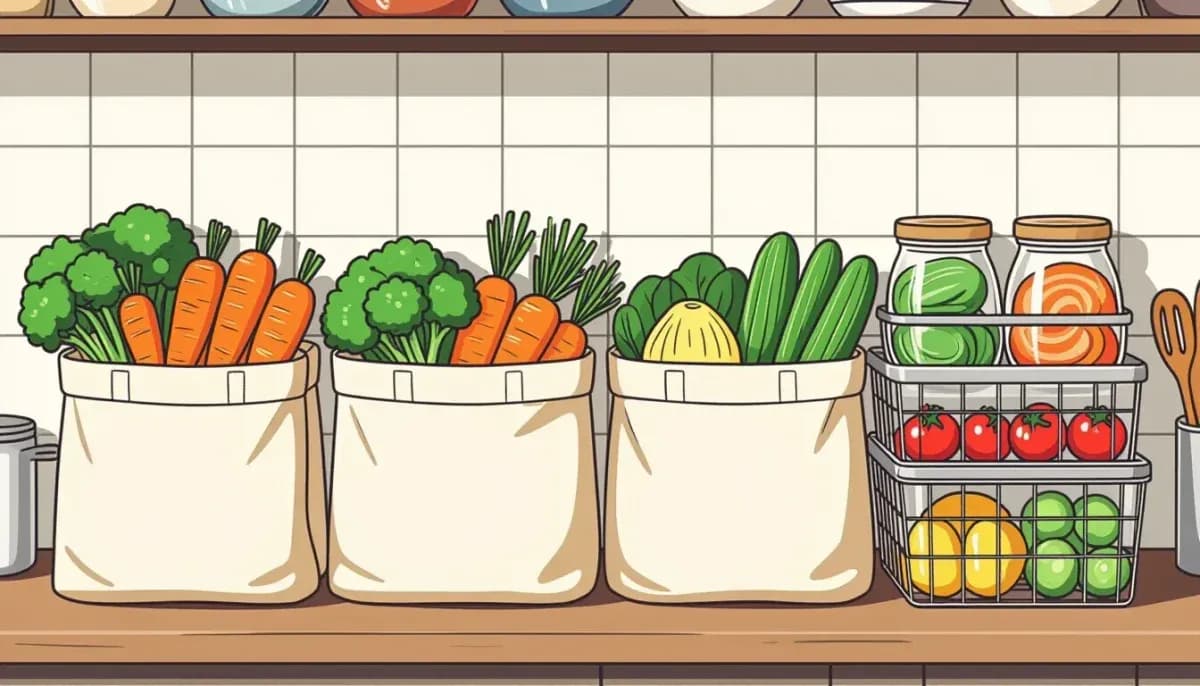
- Carry a reusable shopping bag (エコバッグ / eco-bag) at all times — they're sold everywhere and often feature cute designs
- Bring your own containers to delis or prepared food sections at some stores
- Choose glass or paper packaging over plastic when available
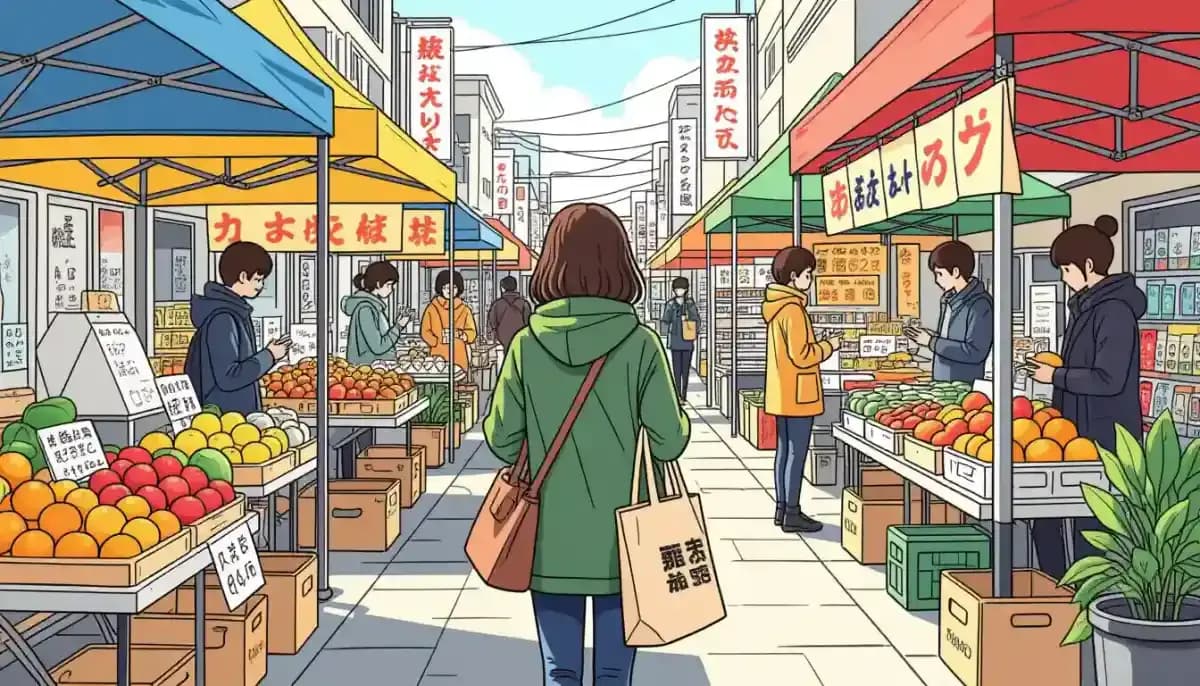
- Visit farmers' markets (朝市 / asaichi) for local, often less-packaged produce
- Use your own water bottle — Japan has excellent tap water quality and many stations with water fountains
!Eco-friendly shopping at a Japanese farmers market with reusable bags
Green Transportation in Japan
One of the easiest ways to live sustainably in Japan is to take advantage of the country's world-class public transportation system. Japan's trains, buses, and subways are not only extraordinarily punctual — they're also far more energy-efficient than private cars.
Public Transportation: The Greenest Way to Move
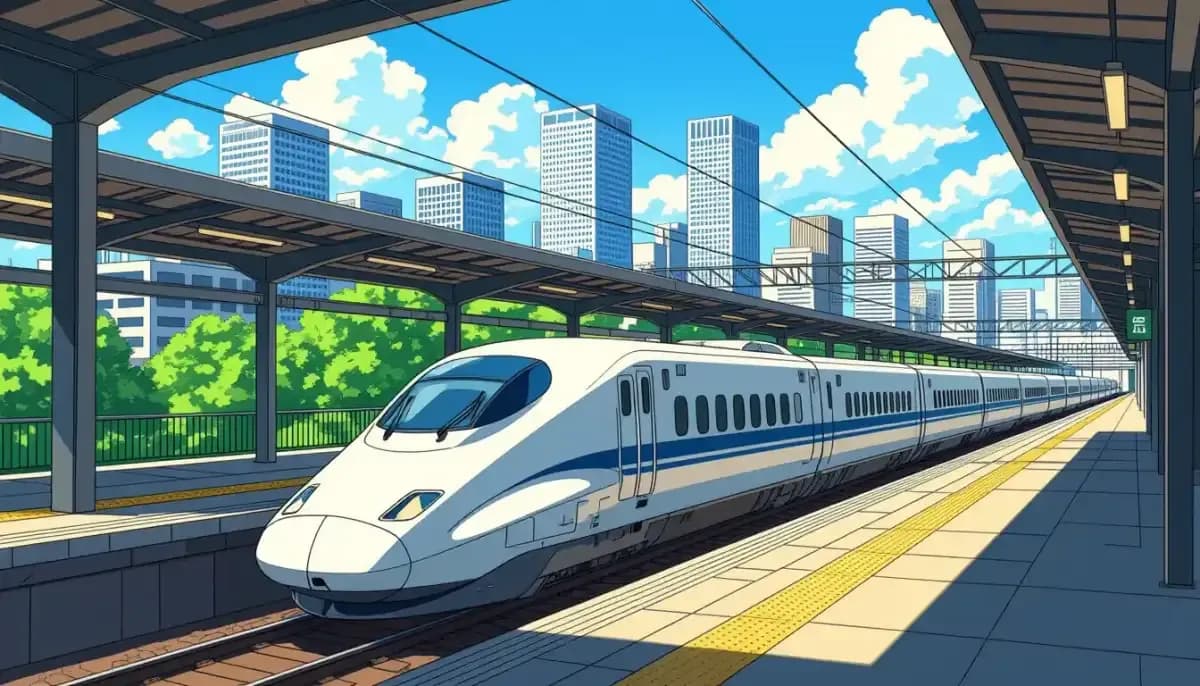
Japan's train network is one of the densest and most efficient in the world. The Shinkansen (bullet train) is actually one of the most energy-efficient forms of long-distance travel in the world, emitting significantly less CO₂ per passenger than air travel or car travel.
For daily commuting, using trains and buses instead of cars eliminates a significant portion of your carbon footprint. The average car in Japan emits approximately 130g of CO₂ per km, while the train emits a fraction of that — around 19g of CO₂ per passenger per km.
Cycling: The Urban Eco-Commuter's Choice
Cycling is enormously popular in Japan, particularly for short distances. Many cities offer:
- Community bicycle parking (駐輪場 / chuurinjou) near stations
- Bicycle rental services (シェアサイクル / share cycle) including Hello Cycling and DOCOMO Bike Share
- Dedicated cycling lanes in many urban areas
- Bicycle registration (防犯登録 / bohan toroku) for anti-theft purposes
For longer commutes, some companies allow employees to claim a bicycle commuter allowance (自転車通勤手当). If you work in Japan, check if your company offers this benefit.
For work-related transportation tips and employer rights in Japan, visit Ittenshoku, a resource focused on career transitions and working life in Japan.
Electric Vehicles in Japan
Japan is a global leader in electric vehicle (EV) technology, home to companies like Toyota (Prius pioneer), Nissan (Leaf), and Honda. If you need a car, consider:
- EV leasing or purchasing — subsidies are available through the Clean Energy Vehicle program
- Car sharing services like Times Car Share or Orix Car Share for occasional use
- Eco-car tax reductions — EVs and hybrids receive preferential tax treatment
Energy Efficiency at Home
Making your home more energy-efficient in Japan can save money and reduce your environmental impact. Japan has strong building standards and numerous programs to support energy-efficient living.
Understanding Your Energy Bills and Usage
Japanese utility bills (electricity, gas, water) arrive monthly and are relatively straightforward. Key tips for reducing consumption:
Electricity:
- Use LED bulbs (LED電球) throughout your home — they use 80% less energy than incandescent bulbs and are widely sold in Japan
- Take advantage of time-of-use pricing if your provider offers it — running laundry and dishwashers during off-peak hours (late night) can reduce costs
- Set air conditioning (エアコン) to 28°C in summer and 20°C in winter as recommended by the government's "Cool Biz" and "Warm Biz" campaigns
- Unplug electronics when not in use — phantom loads (standby power) account for a surprising portion of electricity bills
Water:
- Japanese bathing culture typically involves everyone using the same bath water (kept warm by a heated tub function) rather than draining and refilling for each person
- Many Japanese toilets have built-in bidets that reduce toilet paper usage
- Collect the cold water that runs before your shower heats up — use it for watering plants or cleaning
Renewable Energy Options for Renters
Even if you rent an apartment, you can choose a green electricity provider (再生可能エネルギー / saisei kanou energy). Several Japanese utility companies now offer 100% renewable electricity plans:
| Provider | Green Plan Name | Notes |
|---|
| Tokyo Gas | Carbon Neutral Plan | Includes carbon offset certificates |
| Eneos | Renewable Energy Plan | Available in many regions |
| Looop Denki | Flat Rate Renewable | 100% renewable, popular with expats |
| Patagonia Denki | 100% Renewable | Supports environmental nonprofits |
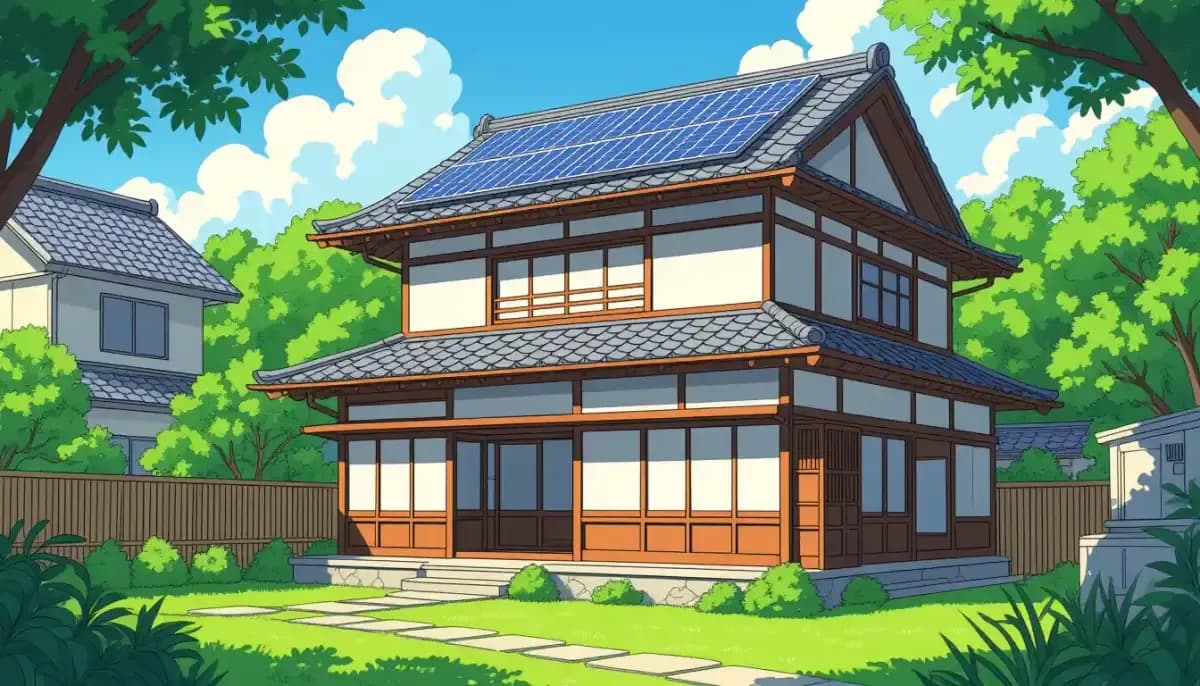
Japan's energy mix is rapidly evolving. By 2050, the target is for renewable energy to comprise 50-60% of the total energy mix, with the country being the world's third largest solar energy provider.
Sustainable Food Choices in Japan
Japan's food culture offers many opportunities for sustainable eating, from celebrating seasonal produce to reducing food waste.
Eating Seasonally and Locally
Japan has a deeply ingrained culture of eating seasonally (旬 / shun). Seasonal produce is not only more delicious — it's also more sustainable, as it requires less energy-intensive growing conditions and transportation. Look for seasonal markers in supermarkets:
- Spring (春): Bamboo shoots (たけのこ), strawberries (いちご), mountain vegetables (山菜)
- Summer (夏): Edamame (枝豆), corn (とうもろこし), tomatoes (トマト)
- Autumn (秋): Matsutake mushrooms (松茸), sweet potatoes (さつまいも), persimmons (柿)
- Winter (冬): Daikon radish (大根), negi leeks (ネギ), citrus fruits (みかん)
Visiting local farmers' markets connects you directly with producers, reduces packaging, and supports local agriculture. Check for weekly markets in your area — many cities have them on weekends.
Reducing Food Waste
Japan has serious food waste challenges — an estimated 6 million tonnes of edible food is discarded annually. Here's how to contribute to the solution:
- Buy "ugly" produce: Many supermarkets now sell misshapen or slightly damaged produce at discounts — it tastes exactly the same
- Use convenience store end-of-day discounts: Convenience stores mark down food products approaching their sell-by dates, often with yellow discount stickers (値引きシール)
- Meal prep and portion control: Japanese bento culture naturally promotes measured portions and planned meals
- Composting: While not as widespread in apartments as in houses, some municipalities provide composting guidance and subsidies for compost bins
Plant-Based and Low-Carbon Eating
Japan's traditional diet is actually quite plant-forward, featuring tofu, natto, miso, seaweed, and countless vegetable dishes. Embracing more of Japan's traditional foods is naturally a lower-carbon way of eating.
For grocery shopping tips in Japan, see our guide to Japanese grocery shopping for foreigners.
Participating in Environmental Communities and Initiatives
Living sustainably isn't just about individual choices — it's about connecting with a broader community of people who share your values.
Local Clean-Up and Community Activities
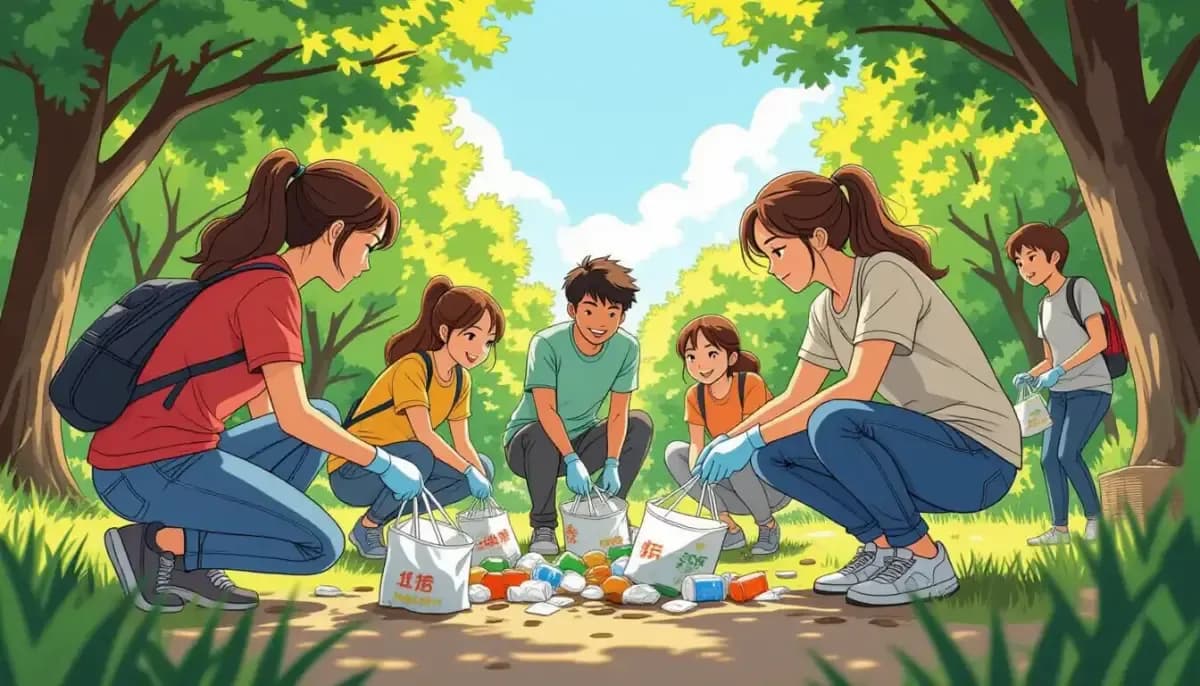
Japan has a strong tradition of neighborhood clean-up activities (地域清掃 / chiiki seisou). Many neighborhoods organize regular clean-ups of local parks, rivers, and streets. Joining these activities is an excellent way to:
- Meet your neighbors
- Contribute to the local community
- Practice Japanese in a natural setting
- Keep your neighborhood beautiful
Ask at your local ward office or neighborhood association (町内会 / chōnaikai) about upcoming activities.
Environmental NPOs and Volunteer Organizations
Several organizations welcome foreign volunteers in Japan's environmental sector:
- Japan for Sustainability (JFS) — An NPO sharing Japanese sustainability stories globally (japanfs.org)
- Zenbird — Media platform covering sustainability in Japan (zenbird.media)
- WWF Japan — Conservation and environmental protection campaigns
- Greenpeace Japan — Climate and ocean advocacy, welcomes volunteers
Japan's Government SDG Initiatives
The Japanese government takes the UN Sustainable Development Goals (SDGs) seriously, with dedicated initiatives at national and local levels. The SDGs Action Platform lists opportunities for companies and individuals to contribute. Many cities have their own SDG promotion offices where foreigners can learn about local initiatives.
Japan created a ¥2 trillion Green Innovation Fund and has committed over $15 billion to supporting ambitious green projects. As a resident, you can benefit from related programs including EV subsidies, home insulation grants, and renewable energy support.
For more about navigating Japanese bureaucracy and government services, see our guide to moving to Japan.
Practical Daily Habits for Sustainable Living in Japan
Here's a quick reference guide to sustainable habits you can adopt immediately:
| Area | Sustainable Action | Benefit |
|---|
| Shopping | Always carry an eco-bag | Reduce 350+ plastic bags per year |
| Transport | Use trains/buses instead of taxis | Cut transport CO₂ by up to 90% |
| Food | Shop at farmers' markets | Support local, reduce packaging |
| Waste | Master your local sorting system | Ensure proper recycling |
| Energy | Switch to a green electricity provider | 100% renewable energy at home |
| Clothing | Shop at second-hand stores | Reduce fashion waste |
| Water | Reuse bath water for cleaning | Save hundreds of liters monthly |
| Food waste | Use discount stickers at konbini | Reduce food waste, save money |
Essential Apps and Resources
- Gomi Navi — Waste sorting guide for many Japanese municipalities
- Mercari — Japan's largest second-hand marketplace app
- Hello Cycling — Bicycle sharing service available in major cities
- The IKEA Japan App — Includes sustainability features (IKEA actively promotes second-hand and sustainable products)
- Japan for Sustainability website — japanfs.org — In-depth coverage of Japanese environmental initiatives
Conclusion: Embracing Sustainable Living as a Foreigner in Japan
Sustainable living in Japan is not just possible — it's deeply embedded in the culture you've moved to. From the ancient wisdom of mottainai to Japan's ambitious 2050 carbon neutrality targets, you are living in a society that genuinely values environmental stewardship.
As a foreigner, your engagement with sustainability practices does double duty: you reduce your environmental impact and you integrate more meaningfully into Japanese society. Mastering waste sorting earns respect from your neighbors. Shopping at second-hand stores saves money and reduces waste. Using public transport connects you to the rhythms of Japanese daily life.
The journey doesn't have to be perfect. Start with one area — maybe mastering your local garbage collection schedule, or finding a favorite second-hand store. Build from there. Japan's sustainability culture is rich, deep, and rewarding to explore.
For additional resources on living well in Japan as a foreigner, explore our guides on setting up utilities in your Japan apartment, understanding your cost of living in Tokyo, and essential Japanese manners.
Sources and Further Reading: