
Energy Saving Tips for Your Japan Home

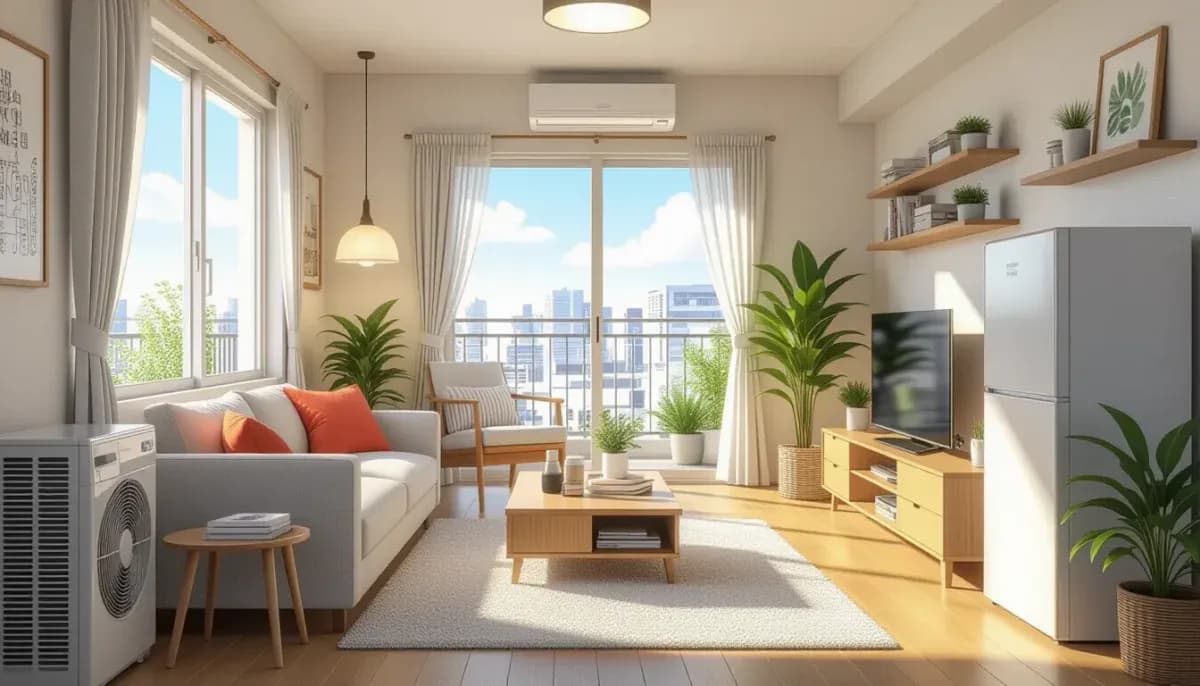
Cut your utility bills in Japan with practical energy-saving tips for foreigners. Learn about AC settings, LED lighting, off-peak rates, switching providers, and more to save money on electricity, gas, and water.
Energy Saving Tips for Your Japan Home: Cut Your Utility Bills as a Foreigner
Living in Japan comes with many perks, but utility bills can be a rude awakening — especially after the government energy subsidy expired in October 2025, adding roughly ¥1,200 per month to the average household's costs. Whether you're in a compact Tokyo apartment or a suburban family home, there are practical strategies to keep your electricity, gas, and water bills in check. This guide covers everything you need to know about saving energy in a Japanese home, from navigating the unique aircon culture to switching electricity providers.
Understanding Your Japanese Utility Bills
Before you can save money, you need to understand how Japanese utility bills work. Unlike some countries, electricity billing in Japan follows a tiered progressive structure.
A typical electricity bill consists of:
- Fixed basic fee (基本料金): Determined by your contracted amperage (アンペア数), ranging from ¥286 to ¥1,716 per month
- Usage charge (従量電灯): Approximately ¥27–40 per kWh, rising in tiers
- Fuel adjustment surcharge: Fluctuates monthly with global oil and LNG prices
- Renewables surcharge (再エネ賦課金): Approximately ¥4/kWh as of 2025
| Household Size | Average Monthly Electricity | Average Monthly Gas | Average Monthly Water |
|---|---|---|---|
| Single person | ~¥5,100–¥6,500 | ~¥2,900 | ~¥6,800 |
| Family of 4 | ~¥10,000–¥12,800 | ~¥5,000 | ~¥13,900 |
| Household average | ~¥12,379 | ~¥4,396 | ~¥10,559 |
Source: Japan Living Guide – Utility Prices
TEPCO's tiered rate structure charges ¥29.80/kWh for usage up to 120 kWh, ¥36.40/kWh from 121–300 kWh, and ¥40.49/kWh above 300 kWh. This means heavy users pay significantly more per unit — making conservation especially worthwhile.
For a comprehensive overview of managing costs as a foreigner in Japan, check out our Complete Guide to Cost of Living in Japan.
Mastering Your Air Conditioner: Japan's #1 Energy Drain
In Japanese homes, the wall-mounted heat-pump aircon (エアコン) is king. Unlike Western-style central HVAC, Japanese apartments typically have individual units in each room, giving you precise control — but also more responsibility.
Summer Cooling Tips
The government's Cool Biz campaign recommends setting your aircon to 28°C in summer. While this feels warm to many foreigners, using a fan to circulate air can allow comfortable temperatures at higher settings. Each 1°C increase in the summer set-point reduces electricity consumption by approximately 10–13%.
Key habits for summer:
- Clean your AC filters every two weeks during heavy use — dirty filters reduce efficiency by 0.6–1.9%
- Use bamboo blinds (簾/すだれ) or thick curtains to block heat before it enters
- Run the aircon continuously rather than constantly switching it off and on, which wastes energy
- Set a timer for longer blocks (3+ hours at night) to prevent temperature rebound
Winter Heating Tips
The Warm Biz initiative promotes a 20°C winter set-point paired with layered clothing. Consider also using a kotatsu (こたつ) — the heated table covered with a thick blanket — to stay warm without heating the entire room. Portable kerosene heaters are efficient for small spaces but require ventilation and a carbon monoxide alarm.
For a deeper dive into Japanese AC operations and mode settings (冷房, 暖房, 除湿, エコ), see Japan Handbook's guide to air conditioning for expats.
Switch to LED Lighting: Easy, Immediate Savings
One of the simplest and highest-impact changes you can make is replacing old incandescent or fluorescent bulbs with LED alternatives.
The numbers are stark:
- LED bulb: ~9W consumption, daily cost ¥1.90
- Incandescent bulb: ~54W consumption, daily cost ¥11.70
- Annual savings per bulb: Over ¥3,500
Additionally, turning off lights when leaving a room saves 1.5–2.3% on your total electricity bill, and dimming living area lights can contribute an additional 2.5–3.9% reduction.
Japanese home centers (ホームセンター) like Cainz and Kohnan carry a wide range of LED bulbs at reasonable prices. Most Japanese screw bases (E26 and E17) are standard and easy to replace yourself.
Defeat Standby Power (Vampire Power)
You might be surprised to learn that standby power accounts for 5–10% of total residential electricity use in Japan. Every device left plugged in — your TV, microwave, phone charger, rice cooker — draws a small but constant trickle of power.
Simple strategies to combat vampire power:
- Use power strips (タップ) with individual switches to cut power to entertainment centers and home office equipment
- Unplug chargers and appliances when not in use
- Switch off the rice cooker's keep-warm function after meals (this is a major standby draw)
- Use smart plugs with scheduling to automatically cut power overnight
Implementing this alone can reduce your bill by ¥500–¥1,000 per month depending on your setup.
Time Your Appliance Use for Off-Peak Rates
Since Japan's electricity market was liberalized in 2016, many providers offer time-of-use pricing plans that charge less during nighttime hours.
For example, TEPCO's "Night Tokuwari" plan charges approximately:
- Daytime rate: ~¥42.80/kWh
- Night rate: ~¥31.84/kWh
Running your washing machine, dishwasher, or charging your devices overnight can save 20–30% compared to daytime usage. Check your current provider's website (or the Enel-X or Enechange comparison sites) to see if a time-of-use plan suits your lifestyle.
For more on managing your finances in Japan, our Complete Guide to Banking and Finance in Japan for Foreigners covers payment setups and automatic billing options.
Refrigerator and Kitchen Appliance Efficiency
The refrigerator runs 24/7, making it one of the largest contributors to your electricity bill. Here's how to optimize:
- Set temperature correctly: Refrigerator at 3–5°C, freezer at -18°C — don't go colder than needed
- Maintain clearance: Keep at least 5cm of space around the unit for proper ventilation
- Avoid overfilling: A too-full fridge restricts airflow; a too-empty fridge loses cold when opened
- Defrost regularly: Ice buildup in older freezers forces the motor to work harder
- Upgrade if old: A modern refrigerator can use 20–30% less power than a model from 10+ years ago, saving approximately ¥13,000/year
For cooking, induction cooktops (IH調理器) are significantly more energy-efficient than gas stoves since nearly all the energy goes directly to the pan. Many modern Japanese apartments are already equipped with IH systems.
Switch Your Electricity Provider and Save
Since the 2016 deregulation of Japan's electricity market, you can freely switch providers without any complex process. New entrants like Looopでんき, CDエナジー, ENEOSでんき, and auでんき often offer flat-rate or discount plans that can undercut the major regional utilities.
For a single-person household in the Kanto region, switching from TEPCO to CD Energy Direct saved approximately ¥350/month (about ¥4,200/year) in recent comparisons. For families, the savings scale up significantly.
Use the Enechange (エネチェンジ) comparison site to compare providers based on your actual usage and location. The switch typically takes about two weeks and doesn't require any rewiring.
For general advice on setting up your life in Japan as a foreigner, Living in Nihon offers comprehensive guides on daily living topics. Also, if you're navigating housing and infrastructure setup, the For Work in Japan Housing & Living Infrastructure Guide is an excellent resource.
Water and Gas Saving Tips
Electricity often takes center stage, but water and gas bills add up too.
Water saving tips:
- Install a water-saving showerhead (節水シャワーヘッド) — they can reduce water usage by 30–50%
- Reuse laundry rinse water to clean the bathroom or flush the toilet
- Take shorter showers; Japanese bath culture encourages filling the bathtub only once for the whole family to use in succession
- Fix dripping faucets promptly — a slow drip wastes thousands of liters per year
Gas saving tips:
- Shower instead of bathing every day — filling a bathtub uses significantly more hot water
- Use lids when cooking to retain heat and reduce cooking time
- Bundle your electricity and gas contracts with the same provider; many offer a 3–5% discount for combined contracts
Summary: Your Japan Energy-Saving Action Plan
Implementing the tips in this guide can realistically reduce your total utility expenditure by 15–30%. Here's a prioritized action list:
- Clean your AC filters every two weeks during heavy use seasons
- Replace all bulbs with LEDs — immediate and lasting savings
- Unplug standby devices or use smart power strips
- Shift appliance use to nighttime if your plan has off-peak rates
- Compare and switch electricity providers via Enechange
- Install a water-saving showerhead
- Optimize your refrigerator settings and clearance
- Use a kotatsu instead of full-room heating in winter
For broader tips on daily life as a foreigner in Japan, our Complete Guide to Daily Life in Japan for Foreigners is your go-to resource. And if you're managing a family budget, see our Complete Guide to Cost of Living in Japan for a full picture of what to expect.
Additionally, Ittenshoku provides career and lifestyle resources that can help you plan your finances as you settle into Japanese life.
For detailed strategies on reducing your electricity bill specifically, E-Housing's guide to easy electricity efficiency and their electricity bill breakdown are excellent further reading.
Living in Japan doesn't have to mean sky-high utility bills. With a bit of awareness and the right habits, you can keep your home comfortable without breaking the bank.

Originally from Vietnam, living in Japan for 16+ years. Graduated from Nagoya University, with 11 years of professional experience at Japanese and international companies. Sharing information about living in Japan for foreigners.
View Profile →Related Articles
Japan Secondhand Reuse and Upcycle Culture Guide
Complete guide to Japan's secondhand and upcycle culture. Discover recycle shops, flea markets, online platforms like Mercari, mottainai philosophy, and tips for foreigners living in Japan.
Read more →
Water Conservation Tips for Living in Japan
Learn practical water conservation tips for living in Japan. Discover Japanese bathing culture, smart toilet technology, bath water recycling for laundry, and how to reduce your water bill as a foreigner in Japan.
Read more →
Sustainable and Eco Friendly Housing in Japan
Complete guide to sustainable and eco-friendly housing in Japan for foreigners. Learn about ZEH homes, green certifications, government subsidies, and practical tips for renting or buying an eco-friendly home.
Read more →
Community Clean Up Events and Volunteering in Japan
Learn how to join community clean-up events and volunteering activities in Japan as a foreigner. Discover organizations, cultural etiquette, useful phrases, and tips to integrate into Japanese community life.
Read more →
Japan Environmental Regulations Affecting Daily Life
A complete guide to Japan's environmental regulations affecting daily life — garbage sorting, recycling laws, noise rules, and public cleanliness standards for foreign residents.
Read more →
Where to Buy Organic Food in Japan
Complete guide to buying organic food in Japan for foreigners and expats. Learn about JAS certification, best organic stores in Tokyo, delivery services, farmer's markets, and money-saving tips.
Read more →