
Sustainable and Eco Friendly Housing in Japan

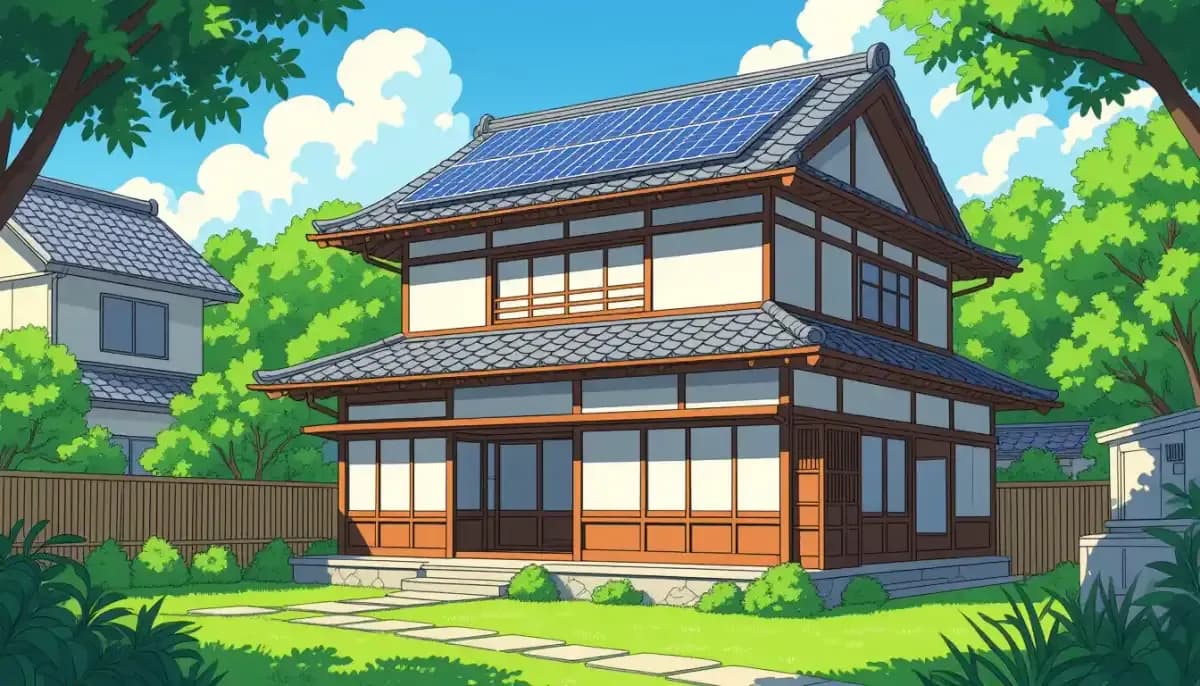
Complete guide to sustainable and eco-friendly housing in Japan for foreigners. Learn about ZEH homes, green certifications, government subsidies, and practical tips for renting or buying an eco-friendly home.
Sustainable and Eco Friendly Housing in Japan: The Complete Guide for Foreigners
Japan is quietly becoming one of the world's most exciting destinations for eco-conscious living. From government-mandated solar panels on new Tokyo homes to centuries-old sustainable building traditions, the country blends cutting-edge green technology with deep-rooted environmental sensibility. For foreigners looking to live sustainably in Japan, understanding the housing landscape — what's available, what the regulations say, and how to reduce your footprint — is an essential first step.
This guide covers everything you need to know about sustainable and eco-friendly housing in Japan, whether you're renting an apartment, buying a property, or simply trying to green up your existing home.
!Eco-friendly Japanese house with solar panels and traditional architecture surrounded by plants

Japan's Green Housing Landscape: An Overview
Japan's relationship with sustainable housing is shaped by a combination of government policy, cultural values, and the practical realities of living in a seismically active, resource-limited island nation. The country has set ambitious targets: all newly built houses must be zero-energy (ZEH) by 2030, following a 2014 Cabinet decision that transformed how the industry approaches construction.
ZEH, or Zero Energy House (ゼッチ), refers to homes that consume less energy than they produce on a net annual basis — primarily through photovoltaic solar panels, high-level insulation, and energy-efficient appliances. These aren't experimental luxury projects; they're rapidly becoming the standard.
As of April 2025, all newly built homes in Japan are legally required to meet Thermal Insulation Performance Grade 4 and Primary Energy Consumption Grade 4 standards. In Tokyo specifically, all new detached houses must install solar panels, making the capital one of the first major cities globally to mandate residential solar at this scale.
For foreigners, this means that newer apartments and houses — whether renting or buying — increasingly come with built-in eco-friendly features at no extra effort from the tenant or buyer.
Types of Eco-Friendly Housing Available in Japan
Understanding your options is the first step to finding sustainable accommodation in Japan.
ZEH (Zero Energy Houses)
The gold standard of Japanese sustainable housing, ZEH properties achieve net-zero or negative annual energy consumption. Key features include:
- High-performance insulation: Walls, floors, and roofs with insulation ratings far above older standards
- Solar photovoltaic systems: Typically 3–5 kW rooftop installations
- Energy storage batteries: Store excess solar generation for evening use
- HEMS (Home Energy Management Systems): Smart technology monitoring and optimizing consumption
- High-efficiency HVAC: Heat pump systems for heating and cooling
Government subsidies make ZEH homes more accessible: the standard ZEH grant is 550,000 yen per unit, rising to 900,000 yen for ZEH+ (an enhanced version with even higher performance). Storage battery subsidies add another layer of support.
Passive Houses
Passive Houses (パッシブハウス) take a different approach, focusing on reducing energy demand through design rather than generation. They use triple-pane windows, thermal bridge-free construction, and mechanical ventilation with heat recovery. A Passive House consumes one-tenth the energy of a conventional home while maintaining a consistently comfortable indoor temperature year-round. Passive House Japan certifies architects who meet these German-origin standards, and there is a small but growing community of builders offering certified passive construction.
MUJI Prefab Homes
For those considering buying or building, MUJI's prefabricated homes offer an accessible eco-friendly option. Three models are available — the Wood House, Window House, and Vertical House — ranging from 90 to 130 square meters. All feature double insulation, triple-pane windows, and simplified design that reduces material waste. Prices are competitive with conventional new builds.
Major Developer Eco-Series
Several of Japan's largest homebuilders offer dedicated green product lines:
- Sekisui House Green First ZERO: Reduces energy consumption by 50% through insulation and efficient systems, with remaining energy needs met by solar and Ene-Farm hydrogen generators
- Daiwa House SMAxECO: Includes solar panels, lithium batteries, and HEMS
- Panasonic Homes: Integration with Panasonic's energy management ecosystem
Rental Market: What to Expect
The rental market is slower to adopt green features than the new-build sector, but change is happening. Look for apartments with:
- Energy-efficient LED lighting (now standard in most new rentals)
- Double-glazed windows (二重窓 — nijū mado)
- Insulated walls noted in listings
- Floor heating (床暖房 — yuka danbō), which is more efficient than forced-air systems
- Smart meters from utilities
Platforms like GaijinPot Housing and UR Housing increasingly list energy performance ratings. For a comprehensive overview of finding housing in Japan as a foreigner, see our complete guide to finding housing in Japan.
!Japanese apartment interior with energy-efficient features and natural light

Understanding Japan's Green Building Certifications
When shopping for property, you'll encounter several certification systems worth understanding:
| Certification | What It Measures | Who Issues It |
|---|---|---|
| ZEH (Zero Energy House) | Net energy balance | Ministry of Economy, Trade and Industry |
| BELS (Building Energy-efficiency Labeling System) | Energy efficiency rating (1–5 stars) | Third-party assessors |
| CASBEE | Comprehensive sustainability | Japan GreenBuild Council |
| DBJ Green Building | ESG performance for investment properties | Development Bank of Japan |
| LEED | International green standard | U.S. Green Building Council |
For rental apartments, the BELS label is most commonly encountered and is the easiest to compare between properties. A 5-star BELS rating indicates top-tier energy performance. Since 2024, new buildings must display energy efficiency information, making comparisons more transparent.
Government Subsidies and Support Programs
Japan's government offers significant financial incentives for sustainable housing. These apply to purchases and renovations — foreigners who are legal residents can access most of these programs.
Key subsidy programs include:
- ZEH Subsidy: 550,000 yen (standard) or 900,000 yen (ZEH+) for purchasing or building a certified ZEH home
- Home Energy Storage Battery Subsidy: Up to 950,000 yen toward battery installation costs
- Solar Panel Subsidy: Up to 100,000 yen for panel installation (varies by municipality)
- Child-Rearing Green Housing Support Program: Additional support for families with children purchasing energy-efficient homes
- Renovation Subsidies: For upgrading older homes with insulation, windows, or efficient equipment
The Ministry of Land, Infrastructure, Transport and Tourism (MLIT) maintains updated information on national programs, and most prefectures and municipalities add their own top-up subsidies. Tokyo residents often benefit from the most generous packages given the city's aggressive carbon reduction targets (50% reduction from 2000 levels by 2030).
For more on managing your home energy costs, see our guide on energy saving tips for your Japan home.
Traditional Japanese Sustainable Building Techniques
Japan has a long history of environmentally conscious construction that predates the modern green building movement. Many of these techniques are being rediscovered and combined with contemporary sustainable design.
Tatami Insulation: Tatami mats (畳) are made from igusa rush grass over a rice straw base, providing natural insulation and humidity regulation without synthetic materials.
Yakisugi (焼杉): Charred cedar wood used as exterior cladding. The charring process makes wood naturally weather-resistant, pest-resistant, and fire-resistant without chemical treatments. It's experiencing a major global revival as a sustainable cladding option.
Shikkui (漆喰): Traditional lime plaster used on interior and exterior walls. Shikkui naturally regulates humidity, has antimicrobial properties, and sequesters CO₂ as it cures.
Tsugite (継手): Traditional Japanese wood joinery techniques that connect structural elements without metal fasteners or glue, allowing buildings to flex during earthquakes while remaining biodegradable at end of life.
Engawa and Sliding Screens: Traditional transitional spaces and shoji screens naturally moderate temperature and airflow, reducing the need for mechanical heating and cooling.
Some architects now blend these traditional techniques with contemporary passive design principles, offering genuinely beautiful and sustainable homes. This connects to Japan's broader cultural appreciation for sustainability, explored further in our guide to Japan environmental regulations affecting daily life.
Practical Tips for Renting an Eco-Friendly Home in Japan
If you're renting — as most foreigners in Japan do, at least initially — here's how to reduce your environmental impact and choose more sustainable accommodation:
When Searching:
- Look for properties built after 2013 (new energy conservation standards took effect)
- Properties built after 2025 legally meet higher insulation standards
- Ask agents specifically about BELS ratings or energy consumption data
- Check if the building has common-area solar panels or energy management systems
After Moving In:
- Request LED bulb replacements from your landlord if incandescent bulbs are present (many will comply)
- Use programmable thermostats and heat pump settings efficiently
- Investigate your utility's time-of-use pricing — running high-consumption appliances off-peak saves money and shifts load
- Register with Japan's solar buyback scheme (FIT — Feed-in Tariff) if your property has solar panels you can access
Reducing Impact in Any Home:
- Japan's district heating network (in some cities) can be more efficient than individual gas units
- UR Housing properties (public housing) often have better insulation than older private stock and are available to foreigners without a guarantor
- Share houses can significantly reduce per-person energy consumption through shared appliances and spaces
For broader guidance on finding accommodation that fits your needs, see Living in Nihon's guide to finding housing in Japan as a foreigner.
Buying or Building an Eco-Friendly Home in Japan as a Foreigner
Japan places no nationality restrictions on property ownership, meaning foreigners can purchase freehold land and properties on the same terms as Japanese citizens, without residency requirements. This opens the eco-housing market fully to foreign buyers.
Key considerations for buying:
- Request the Energy Performance Certificate: All new homes since 2024 must provide this; request it for older homes too
- Check ZEH certification: Look for the official ZEH mark from MLIT
- Verify solar capacity: Confirm the size of the photovoltaic system and its connection to the grid
- Ask about Ene-Farm: Hydrogen fuel cell systems (エネファーム) provide 40–60% of household electricity and hot water — significant for total energy self-sufficiency
- Inspect insulation specifications: Ask for UA value (heat loss coefficient) — ZEH requires UA ≤ 0.6 in most of Japan
While eco-homes typically cost 10–20% more upfront than conventional properties, the long-term math is compelling. A ZEH-standard home can save approximately 200,000 yen per year in energy costs, and families with solar panels save an average of 7,800 yen per month (93,600 yen annually). When combined with government subsidies, the premium often pays back within 5–10 years.
For more on Japan's property market, For Work in Japan's housing and infrastructure guide for foreigners provides useful context on what to expect as a foreign resident.
The Environmental Impact: Why It Matters in Japan
Japan's housing sector carries significant environmental weight. Residential buildings contribute to approximately 30% of Tokyo's total CO₂ emissions, with electricity and city gas accounting for 90% of that number. The nationwide push toward ZEH and higher efficiency standards is one of Japan's key strategies for meeting its Paris Agreement commitments.
Living in more sustainable housing isn't just a personal choice in Japan — it's increasingly a legal baseline, and the infrastructure supporting it (solar buyback programs, smart grid integration, efficient public transportation networks) makes green living more practical here than in many countries.
For foreigners, aligning your housing choices with Japan's sustainability direction also has practical benefits: newer, more efficient homes tend to be better constructed, better insulated against both cold and heat, and easier to maintain. The environmental benefits of Japan's public transport system compound the impact of sustainable housing choices.
Additional resources on green housing trends and ZEH development can be found at E-Housing's eco-friendly properties guide, REthink Tokyo's green home building guide, and ArchDaily's analysis of Japan's net-zero housing future.
You can also explore Japan's broader sustainability culture through resources at Ittenshoku for working in Japan, which connects the workplace and lifestyle dimensions of living here sustainably.
Conclusion
Sustainable and eco-friendly housing in Japan has moved from niche to mainstream. Government mandates, generous subsidies, and rapidly improving construction standards mean that whether you're renting a modern apartment or purchasing your first Japanese home, green options are more accessible than ever before.
For foreigners, Japan's zero-restriction property ownership policy and the universality of ZEH standards across new construction remove many of the barriers that complicate sustainable housing in other countries. The combination of traditional building wisdom — yakisugi, shikkui, tatami — and cutting-edge ZEH technology makes Japan one of the most interesting places in the world to explore sustainable living.
Start by understanding what's available in your price range, check for certifications and energy performance ratings, take advantage of government subsidies if purchasing, and explore Japan's broader sustainable living culture to align your home with everything else the country has to offer.

Originally from Vietnam, living in Japan for 16+ years. Graduated from Nagoya University, with 11 years of professional experience at Japanese and international companies. Sharing information about living in Japan for foreigners.
View Profile →Related Articles
Japan Secondhand Reuse and Upcycle Culture Guide
Complete guide to Japan's secondhand and upcycle culture. Discover recycle shops, flea markets, online platforms like Mercari, mottainai philosophy, and tips for foreigners living in Japan.
Read more →
Water Conservation Tips for Living in Japan
Learn practical water conservation tips for living in Japan. Discover Japanese bathing culture, smart toilet technology, bath water recycling for laundry, and how to reduce your water bill as a foreigner in Japan.
Read more →
Community Clean Up Events and Volunteering in Japan
Learn how to join community clean-up events and volunteering activities in Japan as a foreigner. Discover organizations, cultural etiquette, useful phrases, and tips to integrate into Japanese community life.
Read more →
Japan Environmental Regulations Affecting Daily Life
A complete guide to Japan's environmental regulations affecting daily life — garbage sorting, recycling laws, noise rules, and public cleanliness standards for foreign residents.
Read more →
Where to Buy Organic Food in Japan
Complete guide to buying organic food in Japan for foreigners and expats. Learn about JAS certification, best organic stores in Tokyo, delivery services, farmer's markets, and money-saving tips.
Read more →
Zero Waste Living Tips for Residents in Japan
Discover how to live a zero waste lifestyle in Japan as a foreigner. Learn Japan's garbage separation rules, eco-friendly apps, zero waste shops, sustainable shopping tips, and the mottainai philosophy that makes Japan a leader in sustainable living.
Read more →