
Japan Environmental Regulations Affecting Daily Life

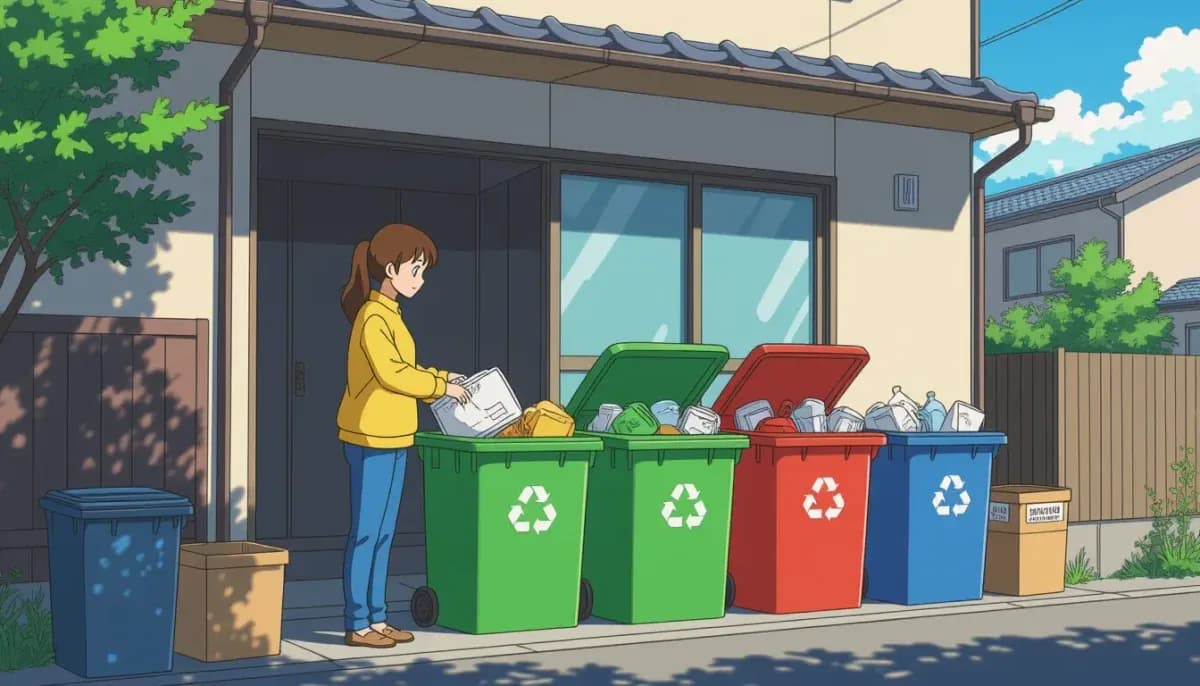
A complete guide to Japan's environmental regulations affecting daily life — garbage sorting, recycling laws, noise rules, and public cleanliness standards for foreign residents.
Japan Environmental Regulations Affecting Daily Life: A Complete Guide for Foreigners
Moving to Japan means adapting to a society that takes environmental responsibility seriously. From the strict garbage sorting systems to noise ordinances and appliance recycling laws, Japan has built one of the world's most comprehensive frameworks for environmental management. For foreigners, understanding these regulations is not optional — failing to comply can lead to social friction, fines, and even legal trouble.
This guide covers all the key environmental regulations that affect your day-to-day life in Japan, helping you become a respectful and compliant resident.
Understanding Japan's Waste Separation System
Japan's garbage disposal system is among the most detailed in the world. Unlike many countries where all household waste goes into a single bin, Japan divides trash into multiple categories that must be sorted correctly and disposed of on designated collection days.
The six main categories you will encounter are:
| Category | What It Includes | Notes |
|---|---|---|
| Burnable (可燃ゴミ) | Kitchen waste, tissues, paper, rubber, leather, clothing | Most common category |
| Unburnable (不燃ゴミ) | Glass, metals, ceramics, small electronics, lighters | Collected less frequently |
| Plastic (プラスチック) | Food containers, Styrofoam, bags, hangers, toothbrushes | Must carry the プラ symbol |
| Recyclables (資源ゴミ) | PET bottles, cans, glass bottles and jars | Must be cleaned before disposal |
| Paper & Cardboard (古紙) | Newspapers, magazines, cardboard boxes | Bundled with string |
| Bulky Waste (粗大ゴミ) | Furniture, bedding, appliances, bicycles | Requires special arrangement |
When you register at your local city hall or ward office, you should receive a garbage calendar showing collection days for each category. Follow this calendar carefully — if you miss the day or put out the wrong type, the collectors will leave a sticker on your bag explaining what went wrong.
For recyclables like PET bottles, you must rinse them out, remove the label, and place the cap separately. Failing to do so is one of the most common mistakes new residents make. If a plastic container is too dirty to clean, it typically goes in burnable trash instead.
For more on daily life logistics in Japan, see our guide on Daily Life in Japan for Foreigners.
Large Item Disposal (粗大ゴミ / Sodai Gomi)
You cannot simply leave large items on the curb in Japan. Furniture, bicycles, futons, and large appliances require a special process called sodai gomi (bulky waste) disposal.
Here is how it works:
- Contact your municipality: Call or go online to schedule a pickup with your city or ward office's large waste reception center
- Pay the disposal fee: Fees vary by item and municipality, typically ranging from ¥500 to ¥2,000 per item
- Purchase disposal stickers: Buy these at convenience stores such as 7-Eleven, Lawson, or FamilyMart
- Affix stickers and place items: On the morning of your scheduled pickup, place items at your designated collection point with the sticker clearly attached
Plan several weeks ahead, as pickup appointment slots can fill quickly, especially in urban areas.
Some items can also be sold through apps like Mercari or Jimoty, or donated to local secondhand shops, which is both environmentally and financially beneficial.
The Home Appliance Recycling Law (家電リサイクル法)
Japan has a specific law that governs the disposal of major household appliances. Under the Home Appliance Recycling Law (家電リサイクル法), the following four types of appliances cannot be discarded through regular garbage collection:
- Air conditioners (エアコン)
- Televisions (テレビ) — including CRTs and flat screens
- Refrigerators and freezers (冷蔵庫・冷凍庫)
- Washing machines and dryers (洗濯機・衣類乾燥機)
When disposing of these items, consumers are required to pay both a collection and transport fee and a recycling fee. You can arrange disposal through:
- The retailer where you bought the replacement appliance
- The original manufacturer
- Your local municipality (in some cities)
Illegally dumping these appliances is a serious offense. Unauthorized disposal of waste in Japan is punishable by up to 5 years in prison or a fine of up to ¥10 million. Even leaving appliances at improper locations can draw significant legal and social consequences.
For tips on navigating shopping and appliance purchases in Japan, see our Shopping in Japan Guide.
Noise Regulations and the Concept of Meiwaku
Japan's approach to noise is governed both by law and by a deep cultural value: meiwaku (迷惑), meaning to cause trouble or inconvenience to others. While there are official noise ordinances, much of daily noise management in Japan is driven by social norms rather than direct enforcement.
Official Standards: Under the Noise Regulation Law, residential areas in Japan typically have limits of:
- 55 decibels during the day
- 45 decibels at night
In practice, this means being mindful of:
- Footsteps: Japanese apartments often have minimal sound insulation. Wearing slippers and walking gently, especially on upper floors, is expected
- Washing machines: Avoid running them late at night or early morning. Most buildings have unwritten rules about appliance use after 10 PM
- TV and music: Keep volume low, especially after 9 PM. Use headphones if possible
- Doors: Opening and closing doors loudly — especially sliding ones — is a common complaint in apartments
Neighbors in Japan rarely confront you directly about noise. Instead, they will report the issue to the building manager or property management company. This can lead to warning letters, security deposit deductions, or in severe cases, lease termination. Understanding this indirect communication style is essential for maintaining good relations.
For more on Japanese social norms, read our Japanese Culture and Etiquette Guide.
Outdoor and Public Environmental Rules
Japan's environmental standards extend well beyond the home. In public spaces, there are rules and expectations around cleanliness and behavior that differ significantly from many other countries.
Smoking Regulations: Japan has strict designated smoking areas in public spaces. Many municipalities, particularly Tokyo, Osaka, and Kyoto, prohibit smoking on public streets outside of designated zones. Violations can result in on-the-spot fines (typically ¥1,000–¥2,000 in Tokyo wards). Always look for smoking area signs before lighting up.
No Public Garbage Bins: One of the most surprising aspects of Japan for newcomers is the near-absence of public garbage bins on streets. You are expected to carry your waste home with you or use bins found inside convenience stores. Leaving garbage in improper places is both illegal and deeply frowned upon.
Water and River Regulations: The Water Pollution Control Law prohibits disposing of oils, detergents, food waste, or chemicals down drains in ways that could reach waterways. Be mindful about what goes down your sink, especially cooking oil, which must be absorbed with paper towels or disposed of in burnable trash.
For guidance on staying safe and understanding emergency rules in Japan, see our Safety and Emergency Preparedness Guide.
Municipal Variations: Why You Must Check Local Rules
One of the most important things to understand about Japan's environmental regulations is that rules vary significantly by municipality. The national laws provide a framework, but the specific implementation — collection days, bag requirements, sorting categories, and accepted materials — differs between cities, wards, and even neighborhoods.
For example:
- In some cities, PET bottles must go in separate dedicated bags
- In others, caps must go in plastic recyclables while bodies go in resource recyclables
- Some municipalities require transparent bags for all waste; others accept opaque ones
- Collection days for certain categories can differ even between streets in the same ward
How to find your local rules:
- Visit your city or ward office when registering your address
- Ask for the multilingual garbage disposal guide — many cities have guides in English, Chinese, Korean, and other languages
- Download your city's garbage management app (Tokyo's is especially comprehensive)
- Check local expat forums and community groups for practical tips from residents
Resources like Living in Nihon provide helpful overviews for foreign residents navigating life in Japan, while sites like For Work in Japan cover the broader practical aspects of living and working as a foreigner. For career-focused expats in Japan, Ittenshoku offers guidance on building your professional life here.
Practical Tips for Environmental Compliance in Japan
Complying with Japan's environmental regulations is much easier once you build the right habits. Here are the most practical steps for new residents:
- Get your garbage calendar immediately: When you move in, ask your landlord, real estate agent, or local city hall for the garbage collection calendar and designated disposal points near your home
- Invest in proper bags: Some municipalities require specific colored or transparent bags sold at local supermarkets and convenience stores
- Set calendar reminders: Missing collection days means living with uncollected garbage until the next round — sometimes a week away
- Learn the kanji for waste categories: Knowing 可燃 (burnable), 不燃 (unburnable), and プラ (plastic) will help you navigate sorting even when no English guide is available
- Never leave waste outside designated areas: This is both a social and legal violation
- Ask your neighbors: Japanese neighbors are often happy to help new residents understand local rules if approached respectfully
Environmental compliance is also a key part of being a good neighbor, which matters greatly in Japan's community-oriented society. Your relationship with neighbors can significantly affect the quality of your life, from lease renewals to general day-to-day comfort.
For more on building a social life and integrating into your community in Japan, see our Making Friends and Social Life in Japan Guide.
Conclusion
Japan's environmental regulations are comprehensive, strictly enforced, and deeply embedded in social culture. For foreigners, understanding and following these rules is not just about avoiding fines — it is about being a respectful member of the community and demonstrating that you take your responsibilities as a resident seriously.
The garbage sorting system, the Home Appliance Recycling Law, noise ordinances, and public cleanliness standards all reflect a national commitment to environmental responsibility. Once you understand the logic behind them, they become second nature. Start by getting your garbage calendar, understanding your local rules, and being mindful of the concept of meiwaku — and you will be well on your way to thriving as an environmentally conscious resident in Japan.
For additional context on living well in Japan as a foreigner, explore our comprehensive guide on Daily Life in Japan.
Sources and further reading:

Originally from Vietnam, living in Japan for 16+ years. Graduated from Nagoya University, with 11 years of professional experience at Japanese and international companies. Sharing information about living in Japan for foreigners.
View Profile →Related Articles
Japan Secondhand Reuse and Upcycle Culture Guide
Complete guide to Japan's secondhand and upcycle culture. Discover recycle shops, flea markets, online platforms like Mercari, mottainai philosophy, and tips for foreigners living in Japan.
Read more →
Water Conservation Tips for Living in Japan
Learn practical water conservation tips for living in Japan. Discover Japanese bathing culture, smart toilet technology, bath water recycling for laundry, and how to reduce your water bill as a foreigner in Japan.
Read more →
Sustainable and Eco Friendly Housing in Japan
Complete guide to sustainable and eco-friendly housing in Japan for foreigners. Learn about ZEH homes, green certifications, government subsidies, and practical tips for renting or buying an eco-friendly home.
Read more →
Community Clean Up Events and Volunteering in Japan
Learn how to join community clean-up events and volunteering activities in Japan as a foreigner. Discover organizations, cultural etiquette, useful phrases, and tips to integrate into Japanese community life.
Read more →
Where to Buy Organic Food in Japan
Complete guide to buying organic food in Japan for foreigners and expats. Learn about JAS certification, best organic stores in Tokyo, delivery services, farmer's markets, and money-saving tips.
Read more →
Zero Waste Living Tips for Residents in Japan
Discover how to live a zero waste lifestyle in Japan as a foreigner. Learn Japan's garbage separation rules, eco-friendly apps, zero waste shops, sustainable shopping tips, and the mottainai philosophy that makes Japan a leader in sustainable living.
Read more →