
UR Housing in Japan Complete Guide for Foreigners

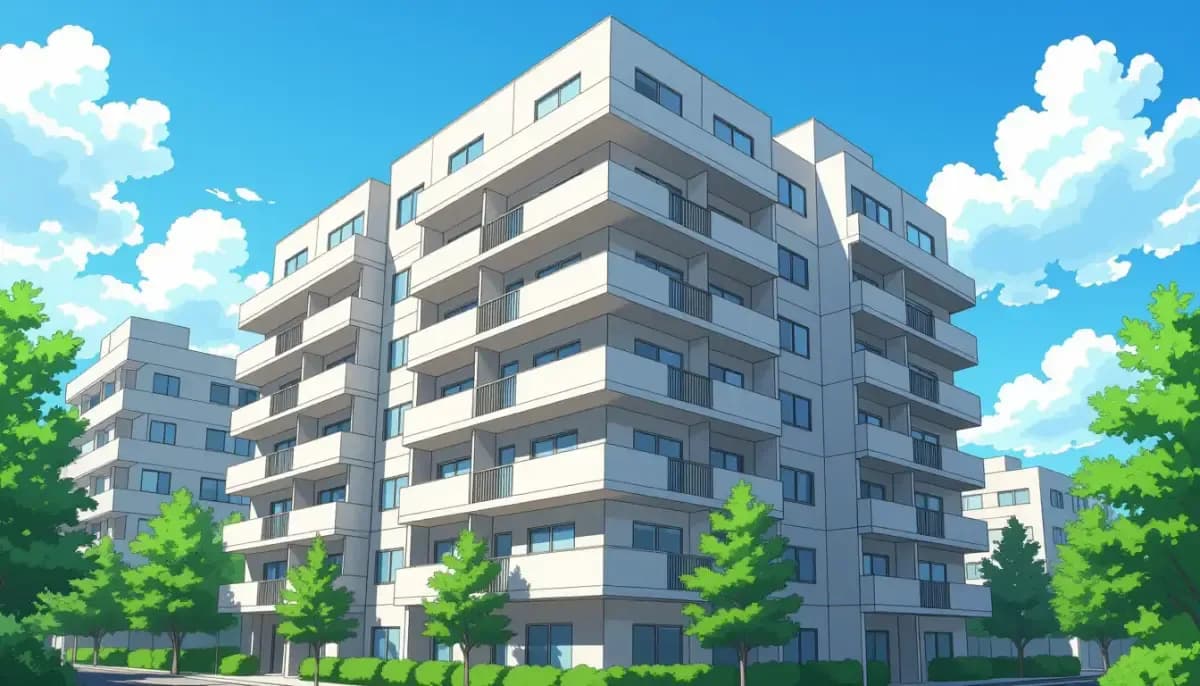
Everything foreigners need to know about UR housing in Japan, including eligibility requirements, costs, application process, apartment types, and practical tips for a smooth move-in.
UR Housing in Japan: Complete Guide for Foreigners
Finding an apartment in Japan as a foreigner can feel like navigating a maze of guarantors, key money, and complicated contracts. But there is a government-backed alternative that eliminates many of these headaches: UR Housing. Managed by the Urban Renaissance Agency, UR apartments offer transparent pricing, no guarantor requirements, and no key money — making them one of the most foreigner-friendly housing options in Japan. This guide covers everything you need to know about UR housing, from eligibility to application and beyond.
What Is UR Housing?
UR (Urban Renaissance Agency) is a semi-private, independent administrative agency that manages approximately 740,000 rental housing units across Japan. Originally established to provide quality public housing during Japan's post-war economic boom, UR has evolved into a major housing provider serving diverse residents including families, students, singles, and foreign nationals.
Unlike private landlords who often refuse foreign tenants, UR properties are open to anyone who meets the basic income and visa requirements. The agency operates sales offices throughout the country, with over 52% of its complexes located in the greater Tokyo area (Tokyo, Kanagawa, Chiba, Saitama, and Ibaraki). For a comprehensive overview of housing options in Japan, check out our complete guide to finding housing in Japan.
Why UR Housing Is Perfect for Foreigners
The biggest advantage of UR housing is what you don't have to pay. Here is how UR compares to typical private rentals:
| Cost Item | Private Rental | UR Housing |
|---|---|---|
| Key Money (礼金) | 1-2 months' rent | None |
| Agent Commission | 0.5-1 month's rent | None |
| Guarantor Fee | 0.5-1 month's rent | None |
| Renewal Fee (every 2 years) | 1 month's rent | None |
| Security Deposit | 1-2 months' rent | 2-3 months' rent |
| Move-out Restoration Cost | ~1 month's rent | ~3,000 yen average |
For a typical apartment at 80,000 yen per month, you could save 240,000-400,000 yen on initial move-in costs alone by choosing UR over a private rental. Over a two-year period, the savings grow even larger since UR charges no renewal fees. Learn more about key money and the deposit system in Japan to understand just how much you can save.
The Living in Nihon guide to UR and public housing provides additional details on application procedures from a foreigner's perspective.
Eligibility Requirements for Foreigners
UR housing is open to foreign nationals, but you must meet certain requirements. The two main factors are your visa status and your income level.
Visa Requirements
Foreign nationals must hold a valid residence card and one of the following:
- Permanent Resident status
- Employment visa (engineer, specialist in humanities, etc.)
- Spouse or dependent visa with at least 1 year remaining
- Working holiday visa (requires 1 year advance rent payment)
- Student visa (requires 1 year advance rent payment)
Short-term tourist visas are not accepted. You must also be able to understand the contents of the rental contract, though English-speaking staff are available at larger offices.
Income Requirements
UR uses a straightforward income threshold based on your rent amount:
| Monthly Rent | Required Monthly Income |
|---|---|
| Under 62,500 yen | 4x the monthly rent |
| 62,500 - 200,000 yen | 250,000 yen minimum (singles) / 330,000 yen (household heads) |
| Over 200,000 yen | 400,000 yen minimum |
If you cannot meet the income requirement, there is an alternative: pay one full year of rent upfront to bypass income verification entirely. This is particularly useful for working holiday and student visa holders who may not have a stable Japanese income yet. For related financial guidance, see our guide to banking and finance in Japan.
How to Apply for UR Housing Step by Step
The application process is simpler than private rentals, with a first-come, first-served system and no lottery.
Step 1: Search for Properties
Browse available units on the official UR website (ur-net.go.jp) or through third-party English sites like Japan Homes. You can filter by region, rent range, room layout, and proximity to train stations. Tokyo Cheapo's UR housing guide is also an excellent English-language resource for finding affordable UR units in Tokyo.
Step 2: Visit a UR Sales Office
While online browsing is possible, visiting a sales office in person is strongly recommended. Larger offices in Shinjuku, Ikebukuro, and other major stations are open 7 days a week and are more likely to have English-speaking staff. Smaller offices are typically closed on Wednesdays.
Step 3: Prepare Your Documents
You will need:
- Passport and Residence Card (在留カード)
- Proof of income (tax withholding statement, income certificate, or employment contract)
- Recent tax certificate from your local government office
- Bank account information for rent payments
Step 4: Submit Application and Sign Lease
Once approved, you sign the lease agreement at a UR sales center, pay the security deposit (2-3 months' rent) plus daily pro-rated rent for the first month, and receive your keys. You must move in within one month of the designated move-in date.
For more details on what documents you need for living in Japan, see our essential documents guide. The For Work in Japan housing and infrastructure guide also covers useful information about setting up your living situation as a working foreigner.
Types of UR Apartments Available
UR offers surprising variety beyond basic public housing. Tokyo apartments range from 26,000 yen per month for a compact studio to 335,000 yen for spacious family units. Common layouts include:
- 1K / 1DK — compact units for singles (20-30 sqm)
- 2DK / 2LDK — suitable for couples (40-55 sqm)
- 3LDK / 4LDK — spacious family apartments (60-80+ sqm)
The average UR apartment size is 46-52 sqm, significantly larger than the typical private rental studio. Several special programs expand your options further:
- MUJI x UR — minimalist renovated apartments designed in collaboration with MUJI
- IKEA x UR — cost-effective furnished design collaborations
- UR Light Plan — reduced upfront costs with shorter lease terms
- DIY Housing — apartments where you can customize walls, floors, and fixtures without restoration obligations at move-out
To better understand Japanese apartment sizes and layouts, check our guide to Japanese apartment layouts. You can also find career transition resources at Ittenshoku if you are considering a job change while apartment hunting.
Pros and Cons of UR Housing
Advantages
- No guarantor required — removes the biggest barrier for foreigners without Japanese connections
- No key money or renewal fees — dramatically lower costs over time
- Government-backed transparency — clear rules, no hidden fees
- Earthquake-resistant construction — built to strict government standards
- Foreigner-friendly — no nationality discrimination in the application process
- Low move-out costs — restoration averages just 3,000 yen compared to one month's rent at private rentals
Disadvantages
- Income threshold — you must prove sufficient income or pay a year's rent upfront
- Unfurnished units — most apartments come completely empty
- Fixed pricing — rent is non-negotiable
- Location limitations — popular areas and newer buildings fill up quickly
- Older buildings — some complexes date back several decades, though many have been renovated
- Limited availability — desirable units may not always be open
For tips on furnishing your new home, see our guide on buying vs shipping furniture when moving to Japan. Understanding monthly apartment costs in Japan will also help you budget accurately.
Tips for Foreigners Applying to UR Housing
Based on research from multiple sources including Wagaya Japan and Gurukul Galaxy, here are practical tips to improve your UR housing experience:
- Visit the largest sales office — Shinjuku and Ikebukuro offices have English-speaking staff and handle the most applications from foreigners
- Check availability frequently — popular units go fast on a first-come basis; check the website daily
- Prepare documents in advance — having all your paperwork ready means you can apply on the spot when a good unit appears
- Consider suburban locations — units in Chiba, Saitama, and outer Tokyo offer much lower rents while still being commutable
- Look for renovated units — MUJI x UR and recently renovated buildings offer modern interiors at UR prices
- Bring a Japanese speaker if needed — while larger offices have English support, having someone who reads Japanese is helpful for paperwork
- Budget for the deposit — 2-3 months' rent upfront is required, so prepare accordingly
If you don't have a guarantor for other housing options, read our guide on how to find a guarantor in Japan or learn about guarantor companies in Japan.
Frequently Asked Questions
Can I apply for UR housing from outside Japan? Yes. Some agencies like Japan Homes can process applications from overseas on your behalf. However, you will need to visit a UR sales center to finalize the contract.
Is there an English version of the UR website? The official UR website (ur-net.go.jp) is primarily in Japanese, but third-party sites like ur-housing.com offer English-language property listings and support.
How long does the application process take? Once you find an available unit and submit your documents, approval can take as little as a few days. The entire process from search to move-in can be completed within 2-4 weeks.
Can I keep pets in UR housing? Most UR apartments do not allow pets, but some designated pet-friendly buildings exist. Check the listing details carefully before applying.
What happens when my lease expires? UR leases automatically renew every year with no renewal fee. You can continue living in your apartment indefinitely as long as you pay rent on time.
Conclusion
UR Housing remains one of the best-kept secrets in Japan's rental market for foreigners. With no key money, no guarantor requirement, and transparent government-backed management, it solves many of the pain points that make apartment hunting so stressful for non-Japanese residents. While the income requirements and deposit can be significant, the long-term savings and accessibility make UR a top choice for anyone looking to settle in Japan.
Start your search by visiting the nearest UR sales office or browsing available properties online. For more comprehensive guidance on relocating to Japan, explore our complete guide to moving to Japan and cost of living guide.

Originally from Vietnam, living in Japan for 16+ years. Graduated from Nagoya University, with 11 years of professional experience at Japanese and international companies. Sharing information about living in Japan for foreigners.
View Profile →Related Articles
Tokyo Apartment Hunting Tips for Foreigners
Complete guide to finding an apartment in Tokyo as a foreigner. Learn about rental costs, required documents, guarantor system, best neighborhoods, and negotiation strategies for expats.
Read more →
Short Term Housing Options in Japan for Foreigners
Discover the best short term housing options in Japan for foreigners, including monthly apartments, share houses, serviced apartments, and vacation rentals with costs and tips.
Read more →
Furnished vs Unfurnished Apartments in Japan
Compare furnished and unfurnished apartments in Japan with detailed cost breakdowns, pros and cons, and practical tips for foreigners choosing the right rental option.
Read more →
Complete Guide to Moving Out of a Japanese Apartment
Step-by-step guide to moving out of a Japanese apartment as a foreigner. Learn about notice periods, security deposits, restoration fees, cleaning tips, and how to protect your deposit refund.
Read more →
Monthly Apartment Costs in Japan Fully Explained
Complete breakdown of monthly apartment costs in Japan including rent by city, utilities, internet, management fees, and budget-saving tips for foreign residents.
Read more →
How to Get a Guarantor Company in Japan
Complete guide to getting a guarantor company (hoshō kaisha) in Japan as a foreigner. Learn about types, costs, application process, required documents, and tips for approval.
Read more →