
Essential Documents You Need Before Moving to Japan

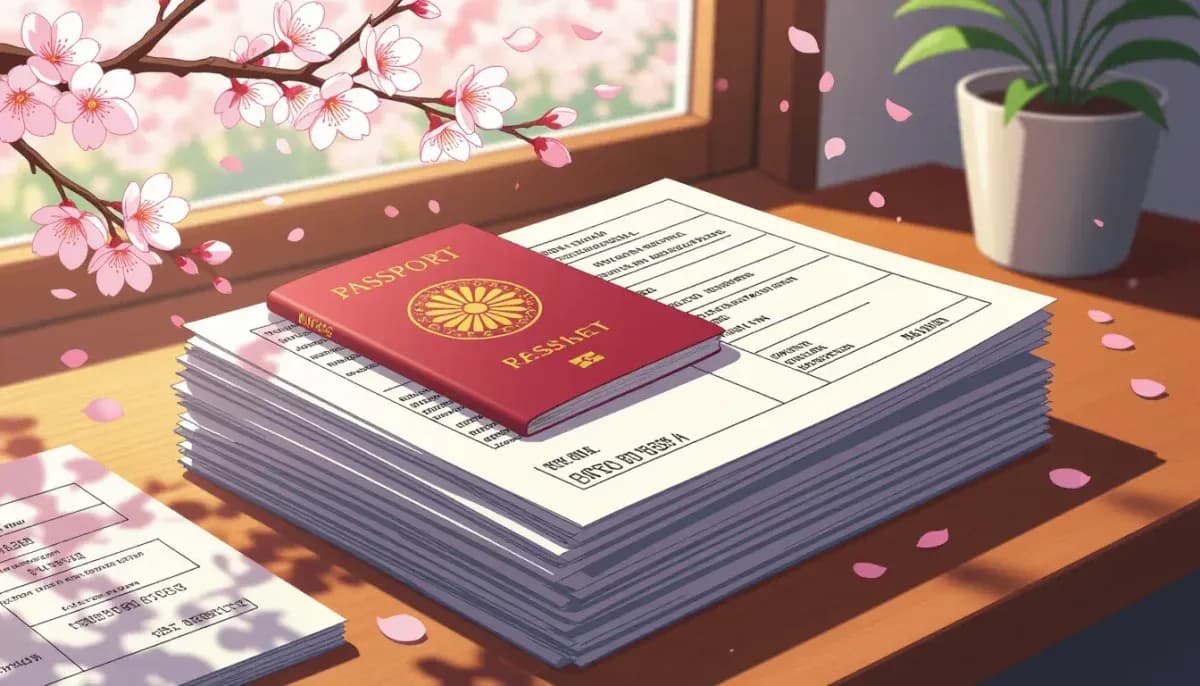
Complete checklist of essential documents you need before moving to Japan including visa paperwork, COE, financial documents, medical records, and post-arrival registration requirements.
Essential Documents You Need Before Moving to Japan
Moving to Japan is an exciting life change, but it requires careful preparation when it comes to paperwork. Whether you are relocating for work, study, or to join a spouse, having the right documents ready before your departure can make the difference between a smooth transition and weeks of frustrating delays. This comprehensive guide covers every essential document you need to prepare, organize, and bring with you when moving to Japan.
Pre-Departure Identity and Travel Documents
Your passport is the single most important document for your move to Japan. Make sure it is valid for the entire duration of your intended stay, and ideally for at least six months beyond your planned arrival date. If your passport is close to expiring, renew it well in advance since processing times can vary from a few weeks to several months depending on your country.
Beyond your passport, you should gather certified copies of your birth certificate, as these may be needed for dependent visa applications or certain administrative procedures in Japan. If you are married, bring your marriage certificate as well, since it will be required for spouse visa applications and for registering your marriage at a Japanese municipal office.
Passport-sized photos are another essential item. Japanese visa and immigration photos have strict requirements: they must be 45mm x 45mm, taken against a white background with a neutral expression, and taken within the last six months. Bring at least 10 copies, as you will need them for multiple applications and registrations after arrival.
For a complete overview of the visa application process, check out our Japan visa and immigration guide.
Certificate of Eligibility (COE) and Visa Application
The Certificate of Eligibility (COE) is arguably the most critical document for anyone planning a long-term stay in Japan. This document is a pre-approval issued by Japan's Immigration Services Agency confirming that you meet the conditions for your specific visa status. The COE significantly speeds up the visa application process at your local Japanese embassy or consulate.
Your sponsor in Japan, whether an employer, school, or family member, submits the COE application to the nearest regional immigration authority. Processing typically takes one to three months, so plan accordingly and start this process as early as possible.
Once you have the COE, you can apply for your visa at a Japanese embassy or consulate in your home country. Standard visa application documents include:
- Valid passport with at least two blank pages
- Completed visa application form
- Passport-sized photos meeting Japanese standards
- Certificate of Eligibility (original)
- Supporting documents specific to your visa category
Different visa types require different supporting documents. For a work visa, you will need your employment contract and company documentation. For a student visa, you need acceptance letters and proof of financial support. For a spouse visa, you need marriage certificates and your partner's documentation.
Learn more about visa types and residence status requirements at For Work in Japan.
Financial and Employment Documents
Proof of financial stability is a key requirement for most visa categories. Prepare the following financial documents before your move:
- Bank statements from the past three to six months showing sufficient funds
- Employment contract or letter of appointment from your Japanese employer
- Income tax returns from your home country for the past one to two years
- Scholarship award letters if applicable for students
If you are self-employed or a freelancer, you may need additional documentation such as business registration certificates, client contracts, and revenue statements. The Digital Nomad visa introduced in Japan requires proof of annual income of at least 10 million yen (approximately $67,000 USD).
For those moving to Japan for work, your employer will typically handle much of the paperwork on the Japanese side. However, you should keep copies of everything and understand what has been submitted on your behalf. Our working in Japan guide covers employment-related requirements in detail.
Educational and Professional Certificates
Japan places significant importance on educational qualifications, especially for work visa applications. Bring original and certified copies of the following:
- University degree certificates and transcripts
- Professional licenses and certifications relevant to your field
- Language proficiency certificates (JLPT, TOEFL, IELTS)
- Letters of recommendation from previous employers
All documents in foreign languages must be translated into Japanese by a certified translator. Some Japanese immigration offices may also accept English translations, but having Japanese translations ready will speed up processing. Keep both originals and translated copies organized and easily accessible.
If you plan to continue your education or leverage your qualifications in Japan, check our learning Japanese guide for language certification resources.
Medical and Health Documents
Health documentation is essential both for your visa application and for settling into life in Japan. Prepare these medical documents:
- Complete vaccination records, including COVID-19 vaccination certificates
- Prescription medication documentation with generic drug names
- Medical history summary from your doctor, ideally translated into Japanese
- Health insurance documentation from your home country
- Dental and optical records if relevant
If you take prescription medication, bring a letter from your doctor explaining your condition and the medication you need. Some medications that are legal in other countries are restricted or banned in Japan, so check with the Japanese embassy beforehand. You may need to apply for a Yakkan Shoumei (medicine import certificate) for certain medications.
Starting from December 2, 2024, new paper health insurance cards are no longer issued in Japan. Instead, your My Number Card serves as your health insurance certificate. You will need to enroll in either Employee Health Insurance (through your employer) or National Health Insurance (at your city hall) within your first 14 days.
For comprehensive information about the Japanese healthcare system, read our healthcare in Japan guide.
Post-Arrival Documents and Registration Deadlines
Upon arriving in Japan, you will receive your Residence Card (Zairyu Card) at the airport. This card is issued at major international airports including Narita, Haneda, Kansai, Nagoya, New Chitose, Hiroshima, and Fukuoka. The Residence Card is your primary proof of legal residency and contains your name, nationality, residency status, and work permissions.
After arrival, you face several critical deadlines for document registration. Missing these deadlines can result in fines or complications with your residency status.
| Task | Deadline | Where to Go | What to Bring |
|---|---|---|---|
| Address registration (Juminhyo) | Within 14 days of moving in | City/Ward office | Residence Card, Passport |
| Health insurance enrollment | At address registration | City/Ward office or employer | Residence Card, Passport |
| Pension registration | At address registration | City/Ward office or employer | Residence Card, Passport |
| Bank account opening | First month | Major bank branch | Residence Card, Passport, Proof of address |
| My Number Card application | First month | City/Ward office | Residence Card, Passport photo |
| Mobile phone contract | First week | Carrier shop | Residence Card, Passport, Bank account |
| Driver's license conversion | Within first year | Driver's License Center | Home country license, Residence Card, JAF translation |
The address registration at your local city or ward office is the most time-sensitive task. This registration unlocks your access to health insurance, pension, banking, and many other essential services. Bring your Residence Card and passport, and be prepared to fill out forms in Japanese. Many ward offices have multilingual support available.
For detailed guidance on navigating Japanese paperwork and bureaucracy, visit Living in Nihon's paperwork navigation guide.
Housing and Moving Documents
Renting an apartment in Japan requires a significant amount of documentation. Japanese landlords and real estate agencies typically require:
- Residence Card copy
- Proof of employment or enrollment
- Income verification (pay stubs or tax certificates)
- Emergency contact information in Japan
- Guarantor documentation or guarantor company agreement
If you are shipping household goods to Japan, prepare a customs declaration form (C-5360) for unaccompanied baggage. Items shipped as unaccompanied baggage must clear customs within six months of your arrival to qualify for duty and tax relief.
For those looking for foreigner-friendly housing options, UR (Urban Renaissance Agency) public housing does not require key money or a guarantor, making it an accessible option for newcomers. Learn more about finding housing in our housing in Japan guide.
Document Organization Tips and Checklist
Staying organized with your documents can save you significant time and stress. Here are proven strategies for managing your Japan relocation paperwork:
Digital Backup: Scan all important documents and store them securely in cloud storage. This protects you if originals are lost or damaged during your move. Keep both color scans and high-resolution photos of every document.
Physical Organization: Use a dedicated document folder or binder with labeled sections for each category: identity, visa, financial, medical, educational, and housing. Bring this with you in your carry-on luggage, never in checked baggage.
Translation Preparation: Get all foreign-language documents professionally translated into Japanese before departure. While some offices accept English, having Japanese translations eliminates potential delays.
Multiple Copies: Make at least three copies of every important document. Keep one set with you, leave one with a trusted contact in your home country, and store one digitally.
For more tips on settling into daily life in Japan, visit our daily life guide and explore practical resources at Ittenshoku for career-related information.
For a comprehensive moving checklist with timeline and budget planning, see this detailed moving to Japan checklist from Japan Handbook. You can also find practical tips on what documents to prepare when relocating to Tokyo on Blueground's relocation guide.
Frequently Asked Questions
How far in advance should I start preparing documents? Start at least six months before your planned move date. The COE alone can take one to three months, and some documents like apostilled certificates may require additional processing time.
!Frequently Asked Questions - illustration for Essential Documents You Need Before Moving to Japan
Do I need to translate all my documents into Japanese? Officially, yes. All documents submitted to Japanese immigration and government offices should be in Japanese. However, some embassies and immigration offices accept English documents. Having Japanese translations ready is always recommended.
Can I open a bank account immediately after arriving? Most banks require you to have lived in Japan for at least three months before opening an account. However, some banks like Shinsei Bank, Sony Bank, or Japan Post Bank may allow earlier account opening with your Residence Card and passport. Check our banking guide for the latest options.
What happens if I miss the 14-day registration deadline? Failing to register your address within 14 days is technically a violation of immigration law and can result in a fine of up to 200,000 yen. In practice, registering as soon as possible after finding your housing is strongly advised.
What is the complete moving to Japan guide? For a comprehensive overview covering every aspect of relocation, visit our complete guide to moving to Japan. It covers everything from initial planning to fully settling in.

Originally from Vietnam, living in Japan for 16+ years. Graduated from Nagoya University, with 11 years of professional experience at Japanese and international companies. Sharing information about living in Japan for foreigners.
View Profile →Related Articles
Buying vs Shipping Furniture When Moving to Japan
Should you ship furniture to Japan or buy new? Compare costs, timelines, and options including Nitori, IKEA, recycle shops, and rental services for foreigners moving to Japan.
Read more →
Registering at City Hall After Moving to Japan
Step-by-step guide to registering your address at city hall in Japan as a foreigner. Learn the 14-day deadline, required documents, My Number process, and tips for a smooth registration.
Read more →
How to Find a Guarantor in Japan as a Foreigner
Complete guide to finding a guarantor (hoshonin) in Japan as a foreigner. Compare guarantor companies like GTN, learn costs, required documents, and alternatives like UR housing and shared houses.
Read more →
Japan Move-In Costs Explained for Foreigners
Understand every move-in cost when renting an apartment in Japan. Breakdown of security deposit, key money, agent fees, and proven strategies to save money as a foreigner.
Read more →
Best Cities in Japan for Foreign Residents
Compare the best cities in Japan for foreign residents including Tokyo, Osaka, Fukuoka, Yokohama, Kyoto, and Sapporo. Cost of living, jobs, and lifestyle comparison for expats.
Read more →
How Much Does It Cost to Move to Japan
Complete cost breakdown for moving to Japan as a foreigner. Covers visa fees, flights, shipping, housing deposits, monthly expenses, and money-saving tips with real numbers in yen and USD.
Read more →