
Registering at City Hall After Moving to Japan

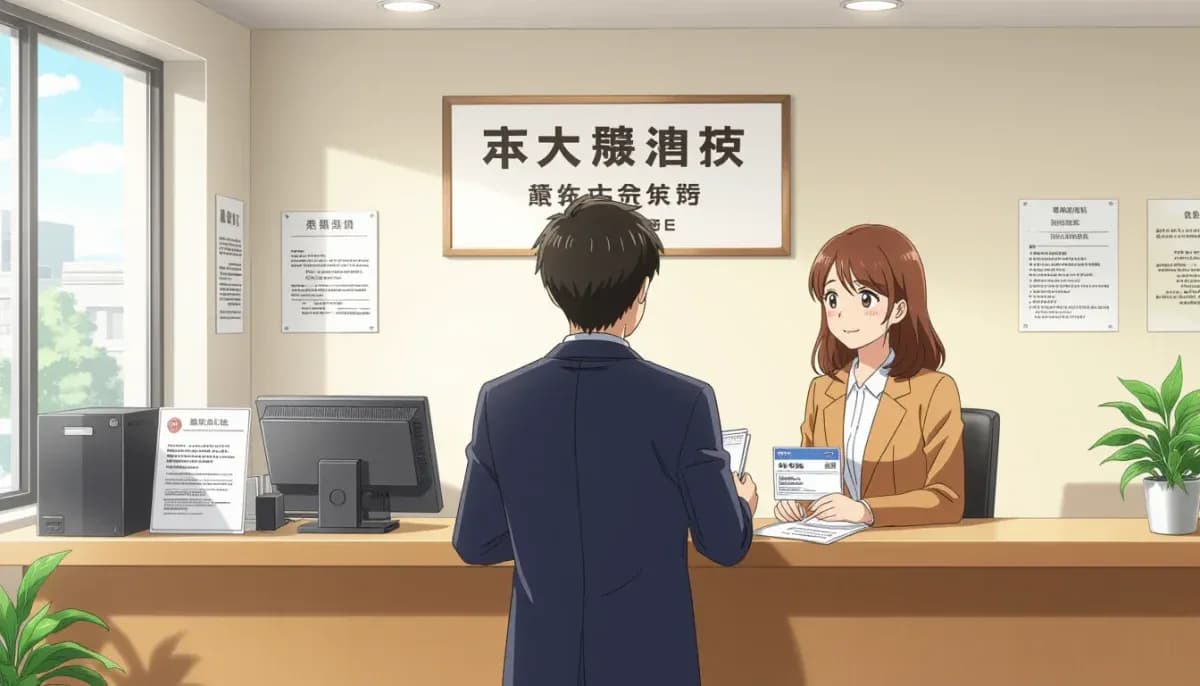
Step-by-step guide to registering your address at city hall in Japan as a foreigner. Learn the 14-day deadline, required documents, My Number process, and tips for a smooth registration.
Registering at City Hall After Moving to Japan
Moving to Japan is an exciting milestone, but one of the very first things you need to do after arriving is register your address at your local city hall (shiyakusho) or ward office (kuyakusho). This step is not optional — it is a legal requirement that unlocks everything from opening a bank account to enrolling in health insurance. In this guide, we walk you through the entire city hall registration process, what documents you need, and how to avoid common pitfalls that trip up many foreigners.
Why City Hall Registration Matters
Under Japanese law, every resident — including foreign nationals staying longer than 90 days — must register their residential address with their local municipal office. This is part of the Basic Resident Registration System (jumin kihon daicho), which was extended to foreign residents in July 2012.
Registration is not just bureaucratic paperwork. It directly affects your ability to:
- Open a bank account at any Japanese financial institution
- Enroll in the National Health Insurance system (kokumin kenko hoken)
- Receive your My Number (individual identification number)
- Sign rental contracts and utility agreements
- Apply for a driver's license
- Enroll children in public schools
Without proper registration, you will face significant obstacles in nearly every aspect of daily life in Japan. For a broader overview of the paperwork involved in settling into Japan, see the Japanese paperwork navigation guide at Living in Nihon.
The 14-Day Deadline You Cannot Miss
The most critical fact about city hall registration is the 14-day rule. You must register your address within 14 days of establishing a residence. If you just arrived in Japan, the clock starts ticking from your move-in date — not your arrival at the airport.
Missing this deadline carries real consequences:
| Violation | Potential Penalty |
|---|---|
| Late registration (after 14 days) | Fine up to 50,000 yen |
| Prolonged failure to register | Fine up to 200,000 yen |
| No registration for 90+ days | Possible visa revocation and deportation |
If you have already missed the deadline, do not panic. Go to city hall as soon as possible and submit a "Statement of Reasons for Delay" (chien riyusho) explaining your situation honestly. Common acceptable reasons include waiting for your apartment keys or dealing with health issues. The earlier you address it, the less likely you are to face severe penalties. For more detailed guidance on the moving-in notification process and deadlines, check this comprehensive guide at Japan Life Start.
Documents You Need to Bring
The documents you need depend on whether you are a new arrival or moving between cities within Japan.
New Arrivals from Overseas
| Document | Details |
|---|---|
| Passport | With your entry stamp or landing permission sticker |
| Residence Card (zairyu card) | Issued at the airport for most visa types |
| Flight ticket stub | Only if your passport was not stamped |
| Rental contract or proof of address | Helpful but not always required |
Moving Between Cities Within Japan
| Document | Details |
|---|---|
| Moving-Out Certificate (tenshutsu todoke) | Obtained from your previous city hall |
| Residence Card | Your current valid card |
| My Number Card or notification | If you already have one |
Moving Within the Same City
If you are moving within the same municipality, you only need to submit an address change notification (tenkyо todoke). You do not need a moving-out certificate in this case.
For help understanding the broader process of moving to Japan as a foreigner, our complete guide covers everything from visas to finding your first apartment.
Step-by-Step Registration Process
Here is exactly what happens when you visit city hall to register:
1. Find Your Local Office
Your local city hall or ward office is determined by your residential address. In larger cities like Tokyo, you will go to your ward office (kuyakusho) rather than the main city hall. You can find your office by searching your city or ward name plus "city hall" or "kuyakusho" online.
2. Arrive and Get a Number
Most municipal offices use a ticket number system. Look for the section handling resident registration (jumin toroku) or foreigner services. Take a number and wait to be called. Some larger offices have multilingual staff or information desks that can guide you. Office hours are typically Monday through Friday, 8:30 AM to 5:15 PM. Some offices open on select Saturdays, but this varies by municipality.
3. Fill Out the Moving-In Notification
You will need to complete a Moving-In Notification form (tennyu todoke). This form asks for your name, date of birth, nationality, new address, previous address, and household composition. Many offices provide forms in English or have staff who can help you fill it out.
4. Submit Your Documents
Hand over your completed form along with your passport and residence card. The staff will verify your information and process the registration.
5. Get Your Residence Card Updated
After processing, the staff will print your new address on the back of your residence card. This is your proof of registered address and is essential for many subsequent procedures.
6. Collect Your My Number Notification
For new arrivals, your My Number (individual number) notification card will be mailed to your registered address within 2 to 3 weeks. You can then apply for a physical My Number Card through your smartphone, by mail, PC, or at a photo booth. The card itself takes about one month to arrive after application.
The entire process typically takes 1 to 2 hours depending on how crowded the office is. Plan accordingly and bring something to read while you wait. For practical tips about navigating daily life after registration, see our guide on daily life in Japan for foreigners.
Getting Your Juuminhyo (Certificate of Residence)
While you are at city hall, it is highly recommended to request a juuminhyo — your official certificate of residence. This document costs approximately 300 yen and you will need it for:
- Your employer's paperwork
- Opening a bank account (see our banking guide for foreigners)
- Signing a mobile phone contract
- Various insurance and tax procedures
Request multiple copies if possible, as different organizations will need originals. A useful tip: ask the staff to include your My Number on the juuminhyo if your employer requires it, but get copies without the My Number for other uses since it is sensitive information.
If you plan to open a bank account, registering a katakana alias in your certificate of residence's remarks column can help smooth the process, as many Japanese banks require your name in katakana. For complete details on managing your finances as a foreigner, see our banking and finance guide.
Special Situations and Common Questions
Registering Without a Permanent Address
If you are staying at a temporary address like a hotel or guest house, you can still register. However, you should update your registration once you move to a permanent address. Some municipalities may require a letter from your accommodation provider.
Moving Out of Japan
When leaving Japan permanently, you must submit a Moving-Out Notification (tenshutsu todoke) at your city hall before departing. This is important for properly closing your pension, health insurance, and tax accounts.
Family Registration
If you are moving with family members, you will need additional documents including marriage certificates and birth certificates with official Japanese translations. Each family member needs their own residence card and passport. For more on family life in Japan, see our guide on raising children in Japan.
What If You Do Not Speak Japanese?
Many city halls in major cities have multilingual support, especially in areas with large foreign populations. However, smaller municipalities may not. Consider bringing a Japanese-speaking friend, using a translation app, or contacting your city hall in advance to ask about interpretation services. You can also find comprehensive housing and living guidance at For Work in Japan.
Upcoming Changes: The Specific Residence Card (2026)
Starting June 14, 2026, Japan will introduce a new Specific Residence Card that combines the functions of both the residence card and My Number Card into a single document. This is optional but offers significant convenience — particularly eliminating the need for dual office visits during visa renewals.
If you are arriving in Japan around this date, check with immigration at the airport about whether you are eligible for the combined card. This change reflects Japan's growing commitment to streamlining bureaucratic processes for its nearly 4 million foreign residents. For more information about Japan's visa and immigration system, see our comprehensive guide.
Tips for a Smooth City Hall Visit
- Go early in the morning — offices are least crowded right when they open at 8:30 AM
- Avoid month-end and start-of-month periods — these are peak times for municipal offices
- Bring photocopies of all documents — some offices require copies in addition to originals
- Have your address written in Japanese — bring your rental contract or a note with your full address in kanji
- Check if your office accepts online reservations — some larger offices allow you to book time slots
- Bring cash — for the juuminhyo fee and any other certificates you might need
- Ask about other services — while at city hall, inquire about health insurance enrollment, garbage disposal rules, and community information
For more insights on managing career transitions and work-related procedures in Japan, you can also explore resources at Ittenshoku which covers various aspects of professional life in Japan.
Frequently Asked Questions
Can I register on the same day I arrive in Japan? No. You need an actual residential address first. Hotel addresses are only for temporary registration. Wait until you have secured an apartment or sharehouse.
Do I need to bring my landlord to city hall? No. Your rental contract or a copy of it is sufficient to prove your address. Your landlord does not need to be present.
What happens to my registration if I change visa status? Your resident registration remains valid even if your visa status changes. However, you should update your residence card at immigration when your visa status changes, and then update city hall if any information has changed.
Can someone else register on my behalf? In most cases, yes, with a power of attorney (inin-jo) and copies of your documents. However, the person registering must bring their own ID as well.
How do I get a registered address changed on my tax documents? Your tax records are automatically updated when you change your registered address at city hall. However, you should also notify your employer separately.
Registering at city hall is one of the first and most important steps in building your life in Japan. While the process might seem intimidating at first, it is straightforward once you know what to bring and what to expect. Take care of it within your first two weeks, and you will have the foundation for everything else — from healthcare to banking to finding work — that comes next.

Originally from Vietnam, living in Japan for 16+ years. Graduated from Nagoya University, with 11 years of professional experience at Japanese and international companies. Sharing information about living in Japan for foreigners.
View Profile →Related Articles
Buying vs Shipping Furniture When Moving to Japan
Should you ship furniture to Japan or buy new? Compare costs, timelines, and options including Nitori, IKEA, recycle shops, and rental services for foreigners moving to Japan.
Read more →
How to Find a Guarantor in Japan as a Foreigner
Complete guide to finding a guarantor (hoshonin) in Japan as a foreigner. Compare guarantor companies like GTN, learn costs, required documents, and alternatives like UR housing and shared houses.
Read more →
Japan Move-In Costs Explained for Foreigners
Understand every move-in cost when renting an apartment in Japan. Breakdown of security deposit, key money, agent fees, and proven strategies to save money as a foreigner.
Read more →
Essential Documents You Need Before Moving to Japan
Complete checklist of essential documents you need before moving to Japan including visa paperwork, COE, financial documents, medical records, and post-arrival registration requirements.
Read more →
Best Cities in Japan for Foreign Residents
Compare the best cities in Japan for foreign residents including Tokyo, Osaka, Fukuoka, Yokohama, Kyoto, and Sapporo. Cost of living, jobs, and lifestyle comparison for expats.
Read more →
How Much Does It Cost to Move to Japan
Complete cost breakdown for moving to Japan as a foreigner. Covers visa fees, flights, shipping, housing deposits, monthly expenses, and money-saving tips with real numbers in yen and USD.
Read more →