
Complete Guide to Moving Out of a Japanese Apartment

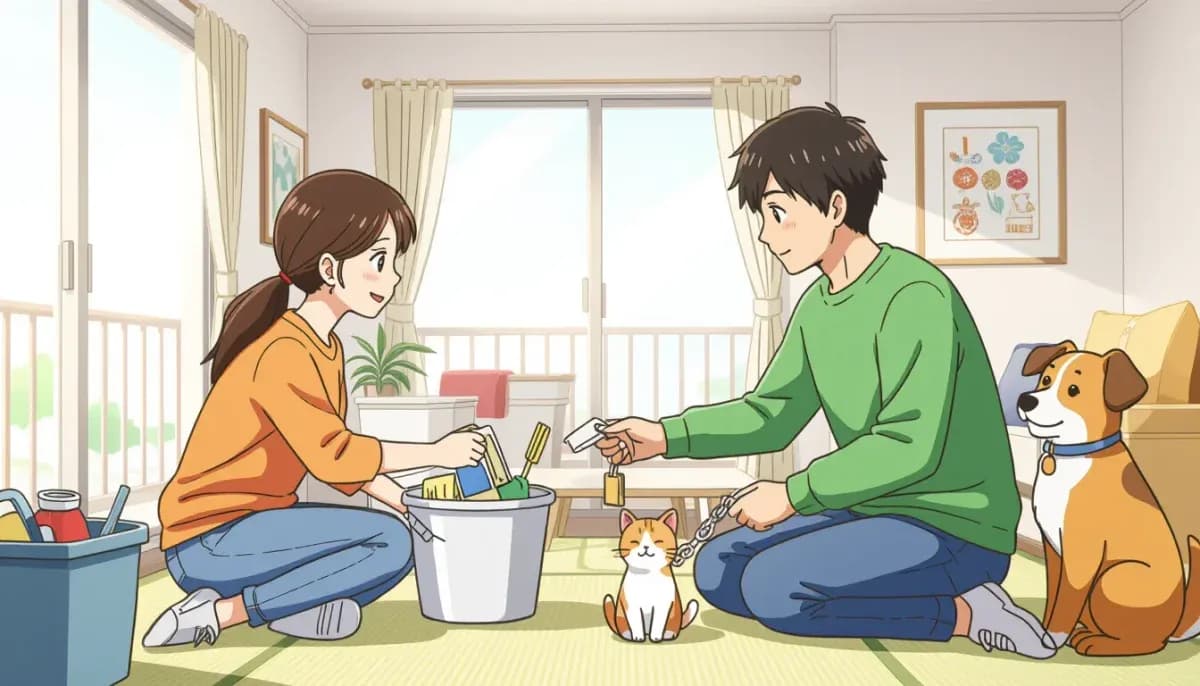
Step-by-step guide to moving out of a Japanese apartment as a foreigner. Learn about notice periods, security deposits, restoration fees, cleaning tips, and how to protect your deposit refund.
Complete Guide to Moving Out of a Japanese Apartment
Moving out of a Japanese apartment is a surprisingly involved process that catches many foreigners off guard. From giving proper notice to navigating the move-out inspection, there are specific steps and cultural expectations that differ significantly from what you may be used to back home. This guide walks you through every stage so you can leave smoothly, protect your security deposit, and avoid costly mistakes.
Understanding the Move-Out Timeline
The first thing to know is that Japanese rental contracts typically require at least one month's written notice before you can move out. Some contracts require two months, so check your lease agreement carefully. Failing to give proper notice can mean paying an extra month's rent even after you have already left.
Here is a general timeline to follow:
| Timeframe | Action |
|---|---|
| 2 months before | Review lease terms, confirm notice period |
| 1-2 months before | Submit written notice to landlord or management company |
| 3-4 weeks before | Schedule move-out inspection, arrange moving company |
| 2-3 weeks before | Cancel or transfer utilities (gas, water, electricity, internet) |
| 1-2 weeks before | Begin deep cleaning, start address change procedures |
| Moving day | Final cleaning, inspection, key handover |
| 1-2 months after | Receive security deposit settlement |
Your notice should be submitted in writing. Many management companies have a specific form called a taikyodoke (退去届) that you need to fill out and submit. Keep a copy for your records.
How to Give Proper Notice
Contact your management company or landlord directly to request the move-out procedure. In most cases, you will need to:
- Call or visit the management company to inform them of your intention to move
- Submit the official move-out form (退去届) by the required deadline
- Confirm the move-out inspection date — this is usually scheduled for the same day you hand over the keys
- Return all keys, including spares, mailbox keys, and any access cards
If you are breaking your lease early, be aware that some contracts include an early termination fee (usually one to two months' rent). This is separate from any deposit deductions. For a deeper look at housing contracts and what to expect, check our complete guide.
Canceling Utilities and Services
You need to contact each utility provider individually to schedule disconnection. Here is what to cancel:
- Electricity — Call the power company listed on your bill or use their website
- Gas — Schedule a final meter reading with the gas company; someone may need to be present
- Water — Contact your local waterworks bureau
- Internet — Give notice per your contract (some ISPs require one to two months' notice)
- NHK — If you have been paying the NHK broadcasting fee, notify them of your cancellation
Plan the disconnection dates carefully. You want utilities running through your last cleaning day but not longer. Most providers will send a final bill to your new address or allow online payment.
For more about managing daily life logistics in Japan, we have a comprehensive guide covering all essential services.
The Move-Out Inspection: What to Expect
The move-out inspection (立会い / tachiai) is one of the most important steps. During this inspection, the landlord or management company representative walks through the apartment with you to assess its condition.
What they check:
- Wall damage (holes, stains, scuff marks)
- Floor condition (scratches, dents, stains)
- Kitchen cleanliness (grease buildup, sink condition)
- Bathroom and toilet condition (mold, water stains)
- Appliance condition (if provided with the apartment)
- Tatami and fusuma condition (if applicable)
Tips for the inspection:
- Bring your move-in photos and the original condition checklist if you kept one
- Take a video of the entire inspection as documentation
- Ask questions about any damage claim — do not sign anything you do not understand
- Request an itemized written estimate of any deductions before agreeing
The inspection results directly affect how much of your security deposit you get back. If you documented the apartment's condition thoroughly when you moved in, you will be in a much stronger position. Learn more about how to avoid move-out restoration disputes for detailed prevention strategies.
Understanding Restoration Fees and Deposit Deductions
Japanese rental law distinguishes between normal wear and tear (which the landlord must cover) and tenant-caused damage (which you pay for). The Ministry of Land, Infrastructure, Transport, and Tourism publishes official guidelines on this, available in multiple languages.
Landlord pays for:
- Faded wallpaper from sunlight
- Small nail holes from hanging pictures
- Furniture indentation marks on carpet or flooring
- General aging of equipment and fixtures
Tenant pays for:
- Cigarette tar stains on walls or ceilings
- Pet scratches or odor damage
- Mold caused by poor ventilation habits
- Large holes in walls
- Unauthorized modifications
Here is a breakdown of common restoration costs:
| Item | Typical Cost | Notes |
|---|---|---|
| Wallpaper replacement | ¥1,000–1,500 per sqm | Tenant liability reaches zero after 6 years |
| Floor repair | ¥10,000–30,000 per area | Partial repair only |
| Tatami replacement | ¥4,000–8,000 per mat | ¥2,000–5,000 for surface only |
| Professional cleaning | ¥25,000–80,000 | Size-dependent; often ¥1,000–2,000 per sqm |
| Lock replacement | ¥10,000–25,000 | Only if keys are lost |
An important rule to remember: restoration costs depreciate at roughly 16% per year from the time of installation. This means if wallpaper was new when you moved in and you lived there for four years, your liability is only about 36% of the replacement cost, not 100%.
Your security deposit is typically returned within one to two months after the inspection. If you believe the deductions are unfair, you can dispute them through the consumer hotline at 188 or pursue a small claims case for amounts under ¥600,000. For an overview of your legal rights as a foreigner in Japan, see our detailed guide.
Deep Cleaning Your Apartment Before Move-Out
Thorough cleaning can save you tens of thousands of yen in cleaning fee deductions. According to Plaza Homes, professional cleaning fees typically run ¥1,000–2,000 per square meter plus tax. While a professional cleaning fee is almost always charged regardless, visible dirt and damage will result in additional costs.
Kitchen:
- Degrease the range hood, stovetop, and surrounding walls
- Clean inside the oven and microwave if provided
- Scrub the sink and drain thoroughly
- Wipe down all cabinet surfaces
Bathroom and toilet:
- Remove all mold from tile grout, walls, and ceiling
- Descale faucets and showerhead
- Clean the exhaust fan
- Scrub the toilet inside and out, including behind the tank
Living areas:
- Fill small nail holes with repair putty (available at 100-yen shops for ¥100–500)
- Wipe down all walls with a damp cloth
- Clean windows and window tracks
- Vacuum and mop all floors
Balcony:
- Remove all items
- Sweep and wash the floor
- Clean drain areas
Critical rule: There must be absolutely no trash left in the apartment or the building's garbage collection area by your move-out date. If collection day falls after your move-out, you must dispose of everything beforehand or face additional disposal charges.
For tips on dealing with shopping for cleaning supplies and finding the right products, check our shopping guide.
Government Paperwork and Address Changes
Moving in Japan requires several administrative steps at your local city or ward office.
If moving within the same city:
- Submit a tenkyo todoke (転居届 / Notification of Address Change) within 14 days
- Bring your residence card, My Number card, and health insurance card
If moving to a different city:
- Visit your current city office and submit a tenshutsu todoke (転出届 / Notification of Moving Out) to receive a tenshutsu shomeisho (moving-out certificate)
- Within 14 days of arriving at your new address, visit the new city office and submit a tennyu todoke (転入届 / Notification of Moving In) with your certificate
Other address changes to complete:
- Bank accounts — Update your registered address at each bank
- Workplace — Notify HR and update your commuting route if needed
- Driver's license — Update at your local police station
- Post office — Submit a tensou todoke (転送届 / Mail Forwarding Request); your mail will be forwarded for one year
- Immigration — If your visa status requires it, report your new address
Understanding Japanese bureaucracy and paperwork can be challenging, but our guide breaks it down step by step.
Tips for Foreigners: Avoiding Common Mistakes
Foreign residents often face unique challenges during the move-out process. Here are the most common pitfalls and how to avoid them:
1. Not documenting move-in condition Take time-stamped photos and videos of every room when you first move in. Include close-ups of any existing damage. Share these with your management company in writing.
2. Ignoring maintenance during your tenancy Regular upkeep prevents costly charges. Run the bathroom exhaust fan after every shower, clean kitchen grease weekly, wipe condensation from windows immediately, and use felt pads under furniture legs.
3. Language barriers during inspection If your Japanese is limited, bring a friend who speaks Japanese or request that the management company provide an English-speaking representative. You can also contact your local international association for support resources.
4. Leaving Japan without completing the process If you are leaving Japan permanently, you still need to complete the move-out inspection and receive the deposit settlement. Tokyo Cheapo has a thorough leaving Japan checklist that covers this scenario. If you cannot be present, designate a trusted representative with a power of attorney.
5. Not knowing your rights Landlords cannot charge you for normal wear and tear. The Ministry of Land guidelines are published in 14 languages. If you feel you are being overcharged, do not hesitate to escalate through the consumer protection hotline or free legal aid services.
Choosing a Moving Company
If you have furniture and belongings to transport, hiring a Japanese moving company is the most efficient option. Tokyo Room Finder offers a helpful checklist for this process. Popular choices include Art Moving Center (アート引越センター), Sakai Moving Center (サカイ引越センター), and Nittsu (日本通運).
Cost estimates for a single person moving within the same city:
- Off-season (May–January): ¥30,000–60,000
- Peak season (February–April): ¥50,000–100,000+
Tips for saving money:
- Get quotes from at least three companies
- Choose a weekday for lower rates
- Reduce the volume of items — dispose of large furniture through your city's oversized garbage collection service (粗大ごみ)
- Some companies offer discounts if you book online
For managing your finances during the move, including transferring final utility payments and handling the deposit refund, our banking guide has you covered.
What Happens After You Move Out
After the inspection and key handover, the management company will prepare a settlement statement (精算書 / seisansho) detailing any deductions from your security deposit. This usually arrives within two to four weeks.
Review the statement carefully:
- Compare each item against your move-in documentation
- Check that depreciation has been properly applied
- Verify the cleaning fee matches your contract terms
- Ensure you are not being charged for pre-existing damage
If you disagree with any charges, respond in writing with your evidence (photos, the original condition checklist, and relevant sections of the Ministry of Land guidelines). Most disputes can be resolved through negotiation, but if needed, you can escalate to:
- Consumer hotline: Call 188 for free advice
- Legal Aid Japan: Free legal consultations available
- Local international centers: Many offer housing dispute support
- Small claims court: For disputes under ¥600,000
The remaining deposit balance is typically returned to your designated bank account within one to two months. Make sure your bank account remains active until you receive the refund. For further reading on managing costs in Japan, our cost of living guide provides a full breakdown.
Frequently Asked Questions
Q: Can I get my key money back when I move out? No. Key money (礼金 / reikin) is a non-refundable payment to the landlord. Only the security deposit (敷金 / shikikin) is partially refundable.
Q: What if I have pets? Leases that allow pets often require an additional deposit of one month's rent, which is typically fully deducted at move-out to cover odor removal and deep cleaning. Budget accordingly.
Q: Do I need to repaint the walls? Generally no, unless you caused unusual damage. Normal pin holes and minor scuffs from daily living are the landlord's responsibility.
Q: What about tatami rooms? Tatami surface replacement is often the tenant's responsibility regardless of wear, as many contracts include this as a special clause. Check your lease carefully.
Moving out of a Japanese apartment does not have to be stressful if you prepare properly. Start early, document everything, clean thoroughly, and know your rights. With the right approach, you can protect your deposit and leave on good terms with your landlord.

Originally from Vietnam, living in Japan for 16+ years. Graduated from Nagoya University, with 11 years of professional experience at Japanese and international companies. Sharing information about living in Japan for foreigners.
View Profile →Related Articles
Tokyo Apartment Hunting Tips for Foreigners
Complete guide to finding an apartment in Tokyo as a foreigner. Learn about rental costs, required documents, guarantor system, best neighborhoods, and negotiation strategies for expats.
Read more →
Short Term Housing Options in Japan for Foreigners
Discover the best short term housing options in Japan for foreigners, including monthly apartments, share houses, serviced apartments, and vacation rentals with costs and tips.
Read more →
Furnished vs Unfurnished Apartments in Japan
Compare furnished and unfurnished apartments in Japan with detailed cost breakdowns, pros and cons, and practical tips for foreigners choosing the right rental option.
Read more →
Monthly Apartment Costs in Japan Fully Explained
Complete breakdown of monthly apartment costs in Japan including rent by city, utilities, internet, management fees, and budget-saving tips for foreign residents.
Read more →
How to Get a Guarantor Company in Japan
Complete guide to getting a guarantor company (hoshō kaisha) in Japan as a foreigner. Learn about types, costs, application process, required documents, and tips for approval.
Read more →
UR Housing in Japan Complete Guide for Foreigners
Everything foreigners need to know about UR housing in Japan, including eligibility requirements, costs, application process, apartment types, and practical tips for a smooth move-in.
Read more →