
Furnished vs Unfurnished Apartments in Japan

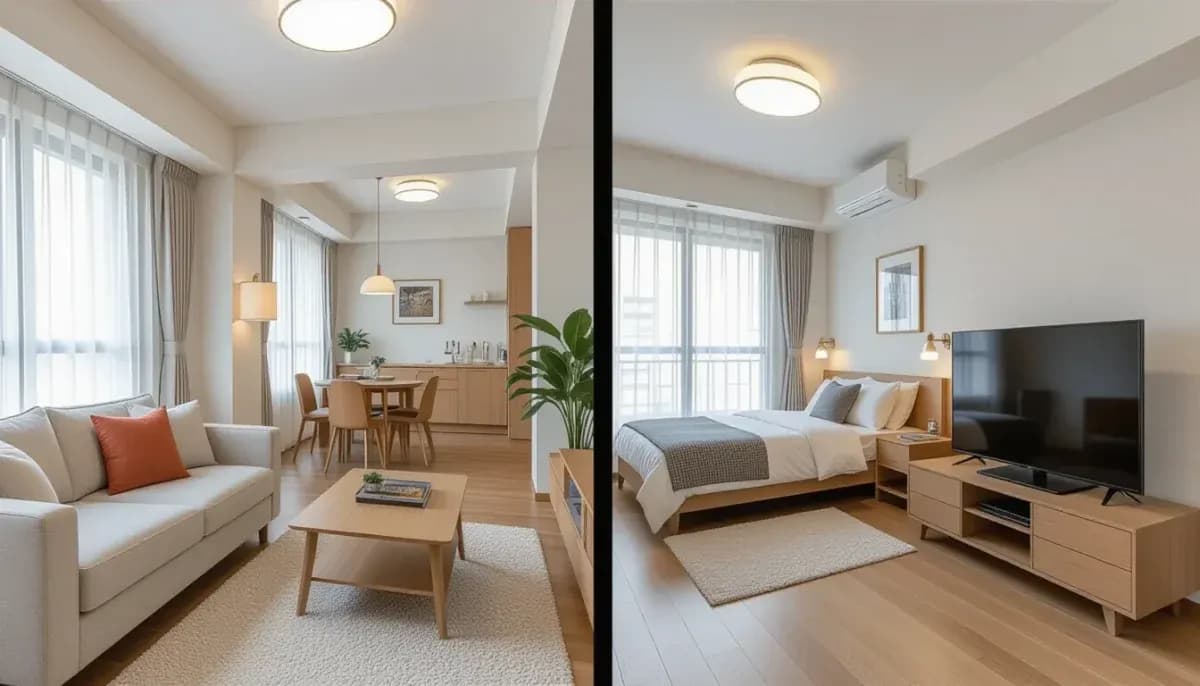
Compare furnished and unfurnished apartments in Japan with detailed cost breakdowns, pros and cons, and practical tips for foreigners choosing the right rental option.
Furnished vs Unfurnished Apartments in Japan: Which Is Right for You?
Moving to Japan is an exciting adventure, but one of the biggest decisions you'll face is choosing between a furnished and an unfurnished apartment. This choice affects your budget, your lifestyle, and how quickly you can settle into your new life. Whether you're a short-term expat, a language student, or planning to build a long-term life in Japan, understanding the differences between furnished and unfurnished rentals will help you make the smartest decision for your situation.
In this guide, we break down the costs, pros and cons, and practical considerations so you can confidently choose the right option. For a broader overview of the housing search process, check out our complete guide to finding housing in Japan.
What Counts as "Furnished" and "Unfurnished" in Japan?
In Japan, the definition of "furnished" and "unfurnished" differs significantly from what many Western countries consider standard. Understanding these differences is crucial before you start your apartment hunt.
Unfurnished apartments in Japan are truly bare. You get four walls, a floor, a bathroom, and a kitchen area — and often nothing else. Many unfurnished units don't even come with ceiling lights, curtain rods, or a stove. Air conditioning units may or may not be included depending on the landlord. This surprises many foreigners who expect at least basic fixtures.
Furnished apartments (家具付き物件 / kagu-tsuki bukken) typically include the essentials needed to move in and start living immediately:
- Bed or futon
- Refrigerator
- Washing machine
- Microwave
- Air conditioner
- Table and chairs
- Basic storage furniture (shelving or closet units)
Some higher-end furnished rentals also include a TV, Wi-Fi router, cookware, dishes, and even linens. However, the quality and completeness of furnishings vary widely between providers. Make sure to get a full inventory list before signing any lease contract.
Cost Comparison: Furnished vs Unfurnished Apartments
The financial difference between furnished and unfurnished apartments is one of the most important factors in your decision. Here's a detailed breakdown of how costs compare across different apartment types and locations.
| Cost Category | Furnished Apartment | Unfurnished Apartment |
|---|---|---|
| Monthly Rent (1K, Central Tokyo) | ¥100,000 - ¥200,000 | ¥70,000 - ¥130,000 |
| Monthly Rent (1LDK, Central Tokyo) | ¥150,000 - ¥250,000 | ¥120,000 - ¥180,000 |
| Monthly Rent (2LDK, Central Tokyo) | ¥250,000 - ¥350,000+ | ¥180,000 - ¥280,000 |
| Key Money | Often none | 1-2 months' rent |
| Security Deposit | 0-1 month | 1-2 months' rent |
| Guarantor Requirement | Often not required | Usually required |
| Initial Furniture Cost | ¥0 | ¥250,000 - ¥500,000+ |
| Move-Out Disposal Fees | ¥0 | ¥10,000 - ¥50,000+ |
| Typical Lease Length | Month-to-month or 3-6 months | 2-year contract |
Furnished apartments carry a monthly premium of roughly 20-30% compared to equivalent unfurnished units. A studio (1K) that rents for ¥80,000 unfurnished might cost ¥100,000-¥110,000 furnished. While this seems like a lot, the math changes when you factor in upfront costs.
For a complete breakdown of all the fees involved, see our guide on Japan move-in costs explained. You can also learn more about monthly apartment costs in Japan to plan your budget properly.
When Furnished Apartments Make Sense
Furnished apartments are the clear winner in several common scenarios. Here's when you should seriously consider going furnished.
Short-term stays (under 18 months): If your assignment, studies, or travel plans keep you in Japan for less than a year and a half, furnished apartments almost always save money. The 20-30% monthly premium is far less than the ¥250,000-¥400,000 you'd spend furnishing a place from scratch — furniture you'd then need to dispose of or sell when leaving.
First-time arrivals: When you're brand new to Japan, furnished housing lets you focus on settling in — learning the trains, finding a grocery store, setting up your bank account — without the stress of furniture shopping in an unfamiliar country. You can always move to an unfurnished apartment later once you know the city. Check out our first week in Japan survival guide for tips on getting oriented.
No guarantor available: Many furnished apartments and monthly mansions don't require a Japanese guarantor, which is one of the biggest hurdles foreigners face. If you don't have connections in Japan, this alone can make furnished housing the only viable option. Learn about how to find a guarantor in Japan or guarantor companies for alternatives.
Digital nomads and remote workers: Japan's growing digital nomad visa program is bringing more location-independent workers. Furnished monthly apartments are perfect for this lifestyle, offering flexibility without commitment.
For more flexible housing options, also consider reading about short-term housing options in Japan.
When Unfurnished Apartments Are the Better Choice
Unfurnished apartments become the financially smarter and more comfortable option in other situations.
Long-term residents (2+ years): Once you cross the 18-24 month threshold, the cumulative monthly premium of furnished apartments exceeds what you'd spend buying your own furniture. For example, paying an extra ¥30,000/month for 24 months equals ¥720,000 — far more than the ¥300,000-¥400,000 needed to furnish a 1LDK from scratch.
Families: If you're moving to Japan with your family, unfurnished apartments give you the space and flexibility to create a comfortable home. Furnished units rarely accommodate family needs well, and the furniture provided is often basic, single-person oriented.
People who want control over their space: In a furnished apartment, you typically cannot remove, replace, or significantly rearrange the provided furniture. If you have preferences about mattress firmness, desk height, or kitchen equipment, unfurnished gives you full control. Understanding Japanese apartment layouts will help you plan your furniture purchases.
Budget-conscious residents: While the upfront cost is higher, long-term unfurnished renters save significantly. You can furnish cheaply through second-hand shops like Hard Off, Mercari, or IKEA Japan, and you keep everything when you move between apartments. Read our comparison of buying vs shipping furniture for cost-saving strategies.
Where to Find Furnished Apartments in Japan
Furnished apartments are concentrated in major cities — Tokyo, Osaka, Kyoto, and Nagoya — particularly in neighborhoods popular with expats. Outside these areas, options are much more limited. For comprehensive listings, visit Living in Nihon's housing guide and For Work in Japan's housing infrastructure guide.
Here are the main channels for finding furnished apartments:
Monthly mansion companies: Companies like Leopalace21, OakHouse, and Sakura House specialize in furnished short-to-medium term housing. These are often the easiest option for foreigners because they handle guarantor issues and offer English-language support.
Online platforms: GaijinPot Apartments, Real Estate Japan, and Apartment Japan all list furnished properties. You can filter specifically for furnished units on most of these platforms. See our full list of apartment hunting websites in Japan.
Real estate agents: Some foreigner-friendly real estate agents can help you find furnished properties, though they're less common in standard agency listings. If you're hunting in the capital, our Tokyo apartment hunting tips will give you an edge.
Share houses: If you're open to communal living, share houses are always furnished and include utilities in the rent. They're the most affordable furnished option and a great way to meet people.
UR Housing: Government-run UR apartments are unfurnished but require no key money, no guarantor, and no renewal fees — making them an excellent middle-ground for foreigners who want to furnish their own place without the typical rental barriers.
For additional career and lifestyle resources related to settling in Japan, check out Ittenshoku for IT career transition guidance.
The Hidden Costs Most People Miss
Beyond the obvious rent difference, several hidden costs can tip the scales between furnished and unfurnished options. Being aware of these helps you make a truly informed decision.
Furniture disposal fees (sodai gomi): When you leave an unfurnished apartment, you must dispose of all your furniture. In Japan, large item disposal requires scheduling a municipal pickup and paying fees — typically ¥200-¥2,000 per item. A full apartment cleanout can cost ¥10,000-¥50,000 or more. This is a non-issue with furnished apartments.
Repair responsibility: In many furnished apartments, furniture is classified as "lent" rather than part of the building's facilities. This means if your washing machine breaks down, you might be responsible for repair costs. Clarify this before signing your lease.
Renewal fees: Standard unfurnished apartments charge renewal fees (koshinryo) of 1-2 months' rent every two years. Many furnished apartments with shorter lease terms avoid this, but some do charge monthly administrative fees instead.
Utility bundling: Some furnished apartments include utilities, internet, and building maintenance in the rent. This simplifies budgeting but may cost more than arranging these independently. Compare the total monthly cost, not just the base rent. Our guide to cost of living in Japan provides helpful benchmarks.
Moving costs: Furnished apartments drastically reduce moving expenses since you only need to transport personal belongings. Moving a full apartment's worth of furniture in Japan can cost ¥30,000-¥100,000+ depending on distance and volume.
Practical Tips for Making Your Decision
Here are actionable steps to help you decide and get the best deal on whichever option you choose.
Calculate your break-even point. Take the monthly rent difference between furnished and unfurnished options you're considering. Divide the estimated cost of furnishing (¥250,000-¥400,000 for a 1LDK) by that monthly difference. That's roughly how many months it takes for unfurnished to become cheaper. For most people, it's 12-18 months.
Negotiate furnished apartment inventories. If you want a furnished apartment but don't need everything included, ask if the rent can be reduced for a partial furnishing package. Some providers are flexible.
Consider furniture rental services. Companies like CLAS and subsclife let you rent furniture monthly. This gives you the comfort of choosing your own furniture with the flexibility of not owning it — a middle ground between furnished and unfurnished.
Check the condition of provided furniture. Before signing a furnished apartment lease, inspect the furniture in person or request detailed photos. Everything is secondhand, and quality varies enormously. Document any existing damage to avoid disputes during your move-out process.
Read reviews from other foreigners. Sites like Tokyo Portfolio and E-Housing have detailed comparisons and reviews that can help you evaluate specific properties and providers.
Frequently Asked Questions
Can I add my own furniture to a furnished apartment? Usually, yes — but you cannot remove or store the existing furniture. You'll need space for both the provided items and anything you add. Check with your landlord about any restrictions.
Are furnished apartments available outside Tokyo? Yes, but options are much more limited. Osaka, Kyoto, Nagoya, and Fukuoka have reasonable selections. In smaller cities, share houses may be your only furnished option.
Do furnished apartments require a guarantor? Most furnished apartment providers and monthly mansion companies don't require a traditional guarantor. Some use guarantor companies instead, typically charging half to one month's rent as a fee.
What happens if I damage furniture in a furnished apartment? You'll typically be charged for repair or replacement costs. This is deducted from your security deposit. Document everything upon move-in and report damage immediately.
Is it cheaper to buy secondhand furniture for an unfurnished apartment? Absolutely. Using apps like Mercari, visiting Hard Off / Off House stores, or checking Jimoty (a free classifieds site) can reduce your furnishing costs to ¥50,000-¥150,000. Many departing foreigners sell entire apartment sets at steep discounts through Facebook groups like "Sayonara Sale."
Final Verdict: Which Should You Choose?
The decision comes down to three factors: how long you'll stay, your budget flexibility, and how much you value convenience versus control.
Choose furnished if you're staying under 18 months, want a hassle-free setup, don't have a guarantor, or are new to Japan and want to simplify your transition.
Choose unfurnished if you're planning to stay 2+ years, want to personalize your space, are moving with family, or want to save money over the long term.
Whatever you choose, the most important thing is to research thoroughly and understand all the costs involved before signing your lease. Use our complete housing guide as your starting point, and check GaijinPot for current rent data in your target area.
Good luck with your apartment search in Japan!

Originally from Vietnam, living in Japan for 16+ years. Graduated from Nagoya University, with 11 years of professional experience at Japanese and international companies. Sharing information about living in Japan for foreigners.
View Profile →Related Articles
Tokyo Apartment Hunting Tips for Foreigners
Complete guide to finding an apartment in Tokyo as a foreigner. Learn about rental costs, required documents, guarantor system, best neighborhoods, and negotiation strategies for expats.
Read more →
Short Term Housing Options in Japan for Foreigners
Discover the best short term housing options in Japan for foreigners, including monthly apartments, share houses, serviced apartments, and vacation rentals with costs and tips.
Read more →
Complete Guide to Moving Out of a Japanese Apartment
Step-by-step guide to moving out of a Japanese apartment as a foreigner. Learn about notice periods, security deposits, restoration fees, cleaning tips, and how to protect your deposit refund.
Read more →
Monthly Apartment Costs in Japan Fully Explained
Complete breakdown of monthly apartment costs in Japan including rent by city, utilities, internet, management fees, and budget-saving tips for foreign residents.
Read more →
How to Get a Guarantor Company in Japan
Complete guide to getting a guarantor company (hoshō kaisha) in Japan as a foreigner. Learn about types, costs, application process, required documents, and tips for approval.
Read more →
UR Housing in Japan Complete Guide for Foreigners
Everything foreigners need to know about UR housing in Japan, including eligibility requirements, costs, application process, apartment types, and practical tips for a smooth move-in.
Read more →