
Tokyo Apartment Hunting Tips for Foreigners

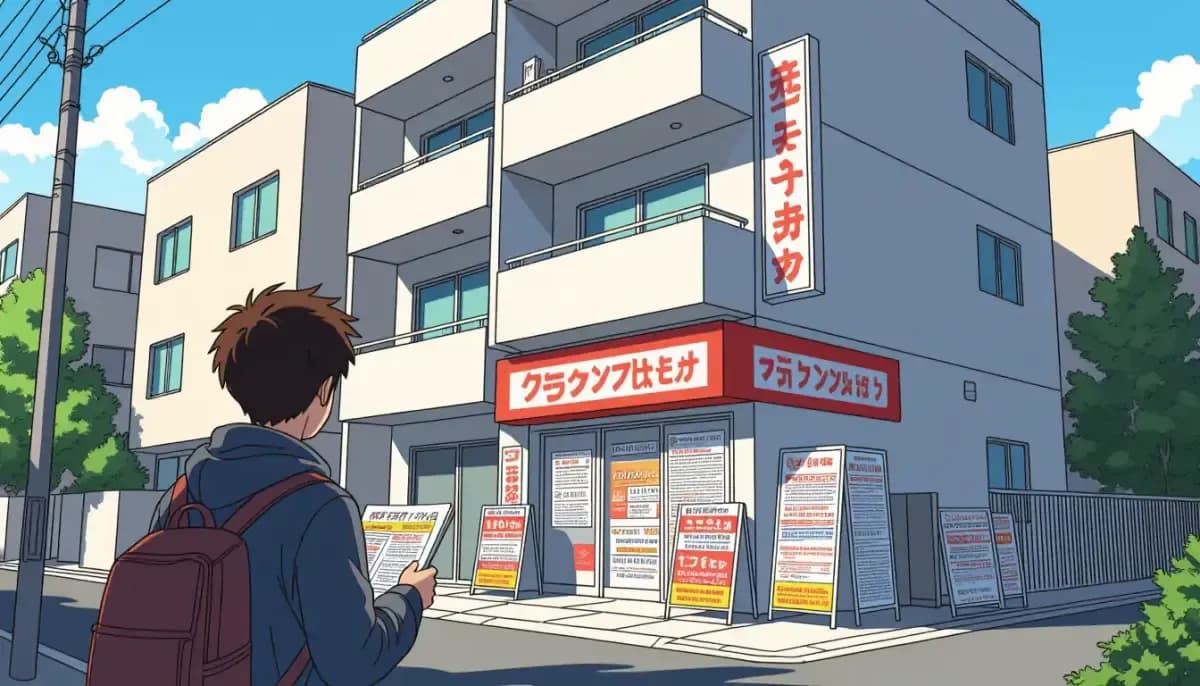
Complete guide to finding an apartment in Tokyo as a foreigner. Learn about rental costs, required documents, guarantor system, best neighborhoods, and negotiation strategies for expats.
Tokyo Apartment Hunting Tips for Foreigners
Finding an apartment in Tokyo as a foreigner can feel overwhelming. Between language barriers, unfamiliar rental customs, and the notorious upfront costs, many expats struggle to navigate Japan's unique housing market. The good news is that with the right preparation and knowledge, you can secure a great apartment that fits your budget and lifestyle. This guide covers everything you need to know about apartment hunting in Tokyo, from understanding costs and required documents to choosing the best neighborhoods and negotiating fees.
Understanding Tokyo's Rental Market
Tokyo is home to over 663,000 foreign residents as of 2023, and that number continues to grow. The rental market in Tokyo's 23 wards has seen strong growth, with rents rising approximately 6.7% year-over-year — the strongest increase since the post-2019 recovery period. The average rent for a single-person apartment sits around ¥69,202 per month, while family-sized units average ¥92,875.
Nearly half of all dwellings in Tokyo (48.9%) are rented rather than owned, making it a renter-friendly city in terms of available stock. However, the challenge for foreigners lies in accessibility: only an estimated 10-20% of Japanese real estate companies actively rent to foreign tenants. Understanding these market dynamics is essential before you begin your search.
For a broader overview of housing options across Japan, check out our complete guide to finding housing in Japan.
Types of Apartments in Tokyo
Before you start searching, familiarize yourself with the common apartment types and Japanese real estate terminology:
| Term | Meaning | Typical Features |
|---|---|---|
| Apaato (アパート) | Standard apartment | Wood or light steel frame, 2 stories, lower rent |
| Manshon (マンション) | Condominium unit | Reinforced concrete, 3+ stories, better soundproofing |
| 1R (One Room) | Studio | Single room with kitchen area, 15-20 sqm |
| 1K | One room + kitchen | Separate kitchen space, 18-25 sqm |
| 1DK | One room + dining kitchen | Larger kitchen/dining area, 25-30 sqm |
| 1LDK | One room + living/dining/kitchen | Separate living space, 30-40 sqm |
| 2LDK | Two rooms + living/dining/kitchen | Family-sized, 40-60 sqm |
When choosing between an apaato and a manshon, consider that buildings made from wood or light steel are known for poor sound insulation, while reinforced concrete (RC) construction significantly reduces noise transmission. If you value quiet living, a manshon is usually worth the extra cost.
Also pay attention to building age. Structures built before 1981 may not meet current earthquake safety standards, as Japan's building codes were significantly updated that year. Buildings from 10-20 years ago often offer the best value — modern enough for safety and comfort, but without the premium pricing of brand-new construction.
The True Cost of Renting in Tokyo
One of the biggest surprises for foreigners is the upfront cost of renting an apartment in Japan. Initial move-in costs typically total 4 to 6 times your monthly rent. Here is a breakdown of what to expect:
| Fee | Amount | Refundable? |
|---|---|---|
| Shikikin (Security Deposit) | 1-2 months' rent | Mostly yes (minus cleaning) |
| Reikin (Key Money) | 0-2 months' rent | No |
| Agency Fee | 0.5-1 month's rent + tax | No |
| Guarantor Company Fee | 0.5-1 month's rent | No |
| Fire Insurance | ¥15,000-20,000/year | No |
| Lock Change Fee | ¥15,000-25,000 | No |
| Cleaning Fee | ¥30,000-50,000 | No |
| First Month's Rent | 1 month | N/A |
For example, if you rent an apartment at ¥80,000 per month, your total move-in cost could range from ¥320,000 to ¥480,000 (roughly $2,100-$3,200 USD). Key money (reikin) is a uniquely Japanese custom — a non-refundable "gift" to the landlord that many foreigners find frustrating but is still common in Tokyo.
To manage your finances effectively during this process, review our guide to banking and finance in Japan for tips on setting up accounts and transferring money.
One important exception: UR (Urban Renaissance Agency) apartments charge no key money, no agency fees, and no guarantor fees, making them significantly cheaper upfront. The tradeoff is that UR properties tend to be older and located slightly farther from central stations.
Required Documents and the Guarantor System
Applying for an apartment in Japan requires several documents. As a foreigner, you should prepare:
- Residence Card (zairyu card)
- Passport
- Proof of income (employment certificate, pay stubs, or tax certificate)
- Proof of enrollment (for students)
- Emergency contact information (preferably someone in Japan)
- Hanko or inkan (personal seal — some agencies accept signatures instead)
The guarantor (hoshounin) requirement is often the biggest hurdle for foreigners. Most landlords require either a Japanese guarantor with stable income and good credit, or a contract with a guarantor company (hoshougaisha). Many employers and universities will serve as your guarantor for free. If not, guarantor companies charge approximately ¥30,000-50,000 upfront plus an ongoing fee of 0.5-1% of monthly rent.
Make sure your visa status is in order before starting your apartment search, as landlords will check your visa type and remaining period of stay.
Best Neighborhoods for Foreigners in Tokyo
Choosing the right neighborhood depends on your budget, commute needs, and lifestyle preferences. Here are some popular areas for foreign residents:
| Area | Average 1K Rent | Best For | Train Access |
|---|---|---|---|
| Shinjuku | ¥85,000-110,000 | Nightlife, convenience | JR, Metro, Odakyu |
| Shibuya | ¥90,000-120,000 | Young professionals | JR, Metro, Tokyu |
| Nakano | ¥70,000-85,000 | Budget + central access | JR Chuo Line |
| Koenji/Asagaya | ¥65,000-80,000 | Bohemian, affordable | JR Chuo Line |
| Kichijoji | ¥75,000-90,000 | Families, green space | JR Chuo, Keio Inokashira |
| Ikebukuro | ¥70,000-90,000 | Budget, Chinese community | JR, Metro, Seibu, Tobu |
| Setagaya | ¥75,000-95,000 | Quiet residential, families | Tokyu, Odakyu, Keio |
| Edogawa/Adachi | ¥55,000-70,000 | Budget-friendly | Metro, private lines |
Living farther from major stations saves a surprising amount of money. Even a 10-minute walk from the station instead of 5 minutes can reduce rent by ¥10,000-20,000 per month. Consider choosing a convenient train line over a specific neighborhood if budget is your primary concern.
For detailed information on getting around the city, see our transportation guide for Japan. To understand how rent fits into your overall expenses, check our cost of living guide.
How to Find Foreigner-Friendly Apartments
Not all real estate agencies or landlords accept foreign tenants, so knowing where to look is critical. Here are your best options:
Online Property Search Sites:
- SUUMO (suumo.jp) — Japan's largest property listing site
- HOME'S (homes.co.jp) — Extensive listings with English filters
- Chintai (chintai.net) — Good search filters for apartment features
- At Home (athome.co.jp) — Wide coverage across Japan
Foreigner-Focused Services:
- GaijinPot Apartments — English-language listings specifically for foreigners
- Real Estate Japan — Bilingual platform with foreigner-friendly properties
- Plaza Homes — Premium service for expats
Social Housing Options:
- UR Housing — Government-managed apartments with no discrimination, no key money, and no guarantor required
For comprehensive housing strategies, Living in Nihon's housing guide offers detailed walkthroughs of the entire process. You can also find practical living setup information at For Work in Japan's housing infrastructure guide.
When working with real estate agents, always ask upfront if they handle foreign tenants. This saves time for both parties. Bringing a Japanese-speaking friend to viewings can also help significantly, even if the agent speaks some English.
Timing Your Apartment Search
The timing of your apartment search can significantly impact your options and costs:
Peak Season (January-March): This is when most Japanese people move for new jobs and school years starting in April. Competition is fierce, prices are higher, and landlords have little incentive to negotiate. However, you will find the most available listings during this period.
Off-Peak (April-August): After the spring rush, demand drops considerably. This is the best time to negotiate on key money, rent, and other fees. Landlords with vacant units are more willing to accept foreign tenants during these months.
Secondary Peak (September-October): A smaller wave of moves for company transfers and the second semester. Moderate competition.
Best Strategy: Start searching 4-6 weeks before your desired move-in date. Properties in Japan move fast — a listing today could be taken tomorrow. When you find something you like, be prepared to apply immediately.
If you are planning your move to Japan, coordinate your apartment search with your arrival timeline carefully.
Viewing Tips and Red Flags
When visiting potential apartments, pay attention to these critical details:
What to Check:
- Water pressure in kitchen and bathroom
- Phone signal strength throughout the apartment
- Natural sunlight — south-facing rooms get the most light
- Noise levels from neighbors, trains, and traffic
- Storage space (closets in Japanese apartments tend to be small)
- Distance to nearest convenience store and supermarket
- Garbage disposal rules and collection schedule
Red Flags to Watch For:
- Musty smell (possible mold issues, common in older Tokyo apartments)
- Stained walls or ceiling (water damage or previous flooding)
- Extremely low rent compared to area average (possible noise or pest issues)
- No intercom or auto-lock system (security concern)
- Agent pressuring you to decide immediately
Understanding Japanese culture and etiquette will also help you during the viewing process and when interacting with landlords.
Negotiation Strategies That Work
While rent itself is rarely negotiable in Tokyo, there are several fees you can try to reduce:
Most Negotiable:
- Key money (reikin) — ask if it can be reduced or waived entirely
- Free rent period — request the first month free, especially during off-peak
- Cleaning fee — sometimes waived or reduced for longer contracts
Sometimes Negotiable:
- Agency fee — some agencies offer half-month fee campaigns
- Renewal fee — negotiate at contract renewal time (typically every 2 years)
Rarely Negotiable:
- Monthly rent (especially in popular areas)
- Security deposit
- Insurance fees
The best negotiation leverage comes from timing (off-peak months), property vacancy duration (if it has been empty for months), and your stability as a tenant (long-term visa, stable employer). According to rental experts, "negotiate on the extra fees, not on the rent itself" for the best results.
For those planning to work while living in Tokyo, our guide to working in Japan covers employment-related housing support that some companies offer. Career changers in the IT field may also find useful job market insights at Ittenshoku, as securing stable employment strengthens your rental application significantly.
Moving In: What to Expect
Once your application is approved and you have signed the contract, prepare for move-in day:
Apartments in Japan are unfurnished. This means no furniture, no appliances, no light fixtures, and no curtains. You will need to purchase or rent everything from scratch. Budget ¥100,000-200,000 for basic furnishing of a one-room apartment.
Essential first purchases:
- Curtains (measure windows before buying)
- Lighting fixtures
- Washing machine
- Refrigerator
- Futon or bed
- Cooking essentials
Utility Setup:
- Electricity: Contact the provider listed in your welcome packet
- Gas: Schedule an in-person activation visit (required by law)
- Water: Usually activated by turning on the tap
- Internet: Apply through your provider of choice (takes 2-4 weeks)
For detailed advice on setting up your daily life, refer to our daily life guide for foreigners in Japan. Shopping for furniture and household goods is covered in our shopping guide.
Conclusion
Apartment hunting in Tokyo as a foreigner requires patience, preparation, and a solid understanding of the local rental market. Start by setting a realistic budget that accounts for the high initial costs, gather your documents early, and secure a guarantor or guarantor company before you begin viewing properties. Use both Japanese and foreigner-focused property sites to maximize your options, and time your search strategically to get the best deals.
Remember that while the process may seem daunting at first, thousands of foreigners successfully find apartments in Tokyo every year. With the tips in this guide, you will be well-equipped to navigate the system and find a place to call home in one of the world's most exciting cities. For additional guidance on the broader picture, explore Tokyo Cheapo's rental guide and Plaza Homes' foreigner renting guide for step-by-step walkthroughs.

Originally from Vietnam, living in Japan for 16+ years. Graduated from Nagoya University, with 11 years of professional experience at Japanese and international companies. Sharing information about living in Japan for foreigners.
View Profile →Related Articles
Short Term Housing Options in Japan for Foreigners
Discover the best short term housing options in Japan for foreigners, including monthly apartments, share houses, serviced apartments, and vacation rentals with costs and tips.
Read more →
Furnished vs Unfurnished Apartments in Japan
Compare furnished and unfurnished apartments in Japan with detailed cost breakdowns, pros and cons, and practical tips for foreigners choosing the right rental option.
Read more →
Complete Guide to Moving Out of a Japanese Apartment
Step-by-step guide to moving out of a Japanese apartment as a foreigner. Learn about notice periods, security deposits, restoration fees, cleaning tips, and how to protect your deposit refund.
Read more →
Monthly Apartment Costs in Japan Fully Explained
Complete breakdown of monthly apartment costs in Japan including rent by city, utilities, internet, management fees, and budget-saving tips for foreign residents.
Read more →
How to Get a Guarantor Company in Japan
Complete guide to getting a guarantor company (hoshō kaisha) in Japan as a foreigner. Learn about types, costs, application process, required documents, and tips for approval.
Read more →
UR Housing in Japan Complete Guide for Foreigners
Everything foreigners need to know about UR housing in Japan, including eligibility requirements, costs, application process, apartment types, and practical tips for a smooth move-in.
Read more →