
Garbage Sorting Rules in Japan Explained Simply

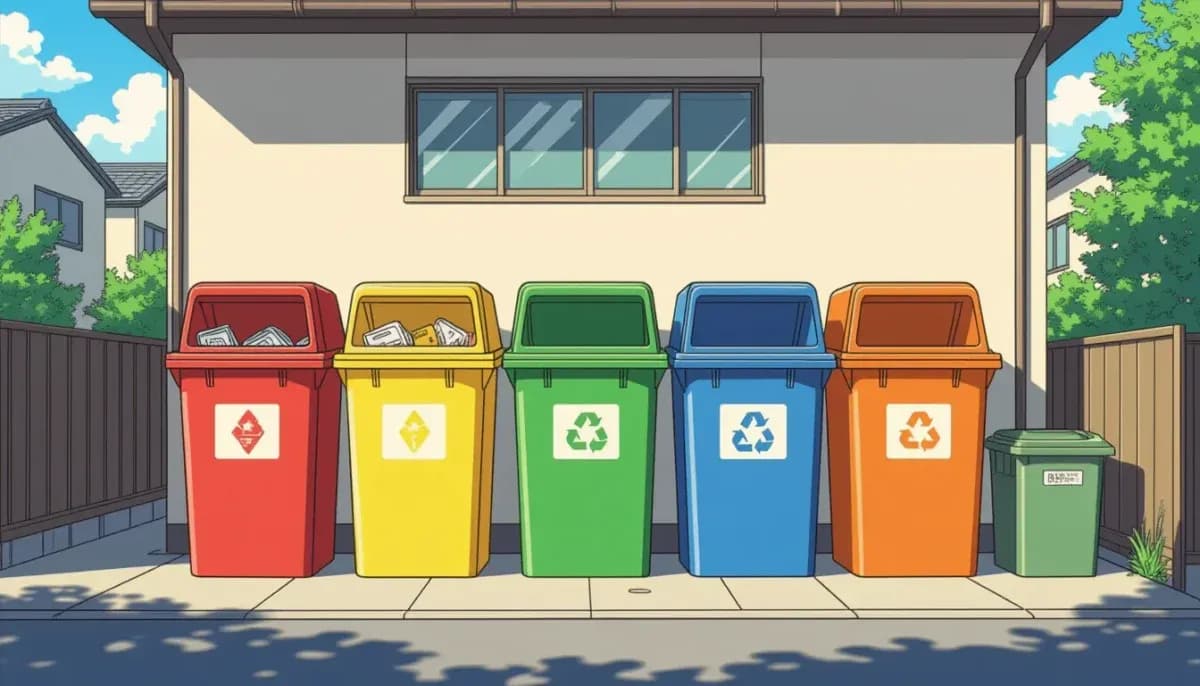
Learn Japan's garbage sorting rules simply and clearly. Burnable, non-burnable, recyclable, oversized — a complete guide for foreigners on how to sort trash in Japan.
Garbage Sorting Rules in Japan Explained Simply
Moving to Japan is exciting — but one of the first challenges many foreigners face is figuring out the garbage system. Japan takes trash sorting very seriously, and the rules can feel overwhelming at first. Don't worry: once you understand the basics, it becomes second nature. This guide explains Japan's garbage sorting rules simply and clearly, so you can avoid fines, keep the peace with your neighbors, and do your part for the environment.
!Japanese garbage sorting bins with color-coded labels in an apartment building
Why Japan Has Such Strict Garbage Rules
Japan is a small, densely populated island nation with limited landfill space. Because of this, waste management has been a priority for decades. The Japanese government encourages incineration and recycling to minimize landfill use — incineration handles close to 75% of municipal solid waste, while strict sorting helps maximize the recyclable portion.
The system works because residents follow the rules. Garbage that is improperly sorted simply won't be collected, and repeated violations can attract social pressure from neighbors or even warnings from your landlord. On the positive side, Japan's efforts have made cities remarkably clean and have pushed per capita waste generation down from around 958 grams per day in 2013 to about 880 grams per day in 2022.
Understanding these rules is also a key part of daily life in Japan for foreigners. If you're new to the country, getting familiar with trash sorting early will save you a lot of headaches.
The 4 Main Garbage Categories in Japan
Japan's garbage system divides waste into four primary categories. The exact rules vary by municipality, but these categories apply almost everywhere:
| Category | Japanese | Examples | Typical Bag |
|---|---|---|---|
| Burnable (Combustible) | 燃えるごみ (moeru gomi) | Food scraps, paper, clothing, wood | Clear/semi-transparent |
| Non-Burnable | 燃えないゴミ (moenai gomi) | Metal items, glass, ceramics | Clear/semi-transparent |
| Recyclable (Resource Waste) | 資源ごみ (shigen gomi) | PET bottles, cans, glass bottles, cardboard | Clear or sorted loose |
| Oversized (Large Garbage) | 粗大ごみ (sodai gomi) | Furniture, large appliances | Requires pre-payment |
Burnable Garbage (燃えるごみ)
Burnable garbage is the most common type and is collected two or three times per week in most areas. It includes:
- Kitchen waste: food scraps, fruit peels, tea leaves, coffee grounds, shells
- Paper: tissues, paper towels, non-recyclable paper packaging, wax-coated paper
- Textiles: clothing, shoes, bags (check if your area recycles these separately)
- Wood: small branches, chopsticks, toothpicks
- Other: rubber gloves, diapers, styrofoam with food residue
Tip: In summer, it helps to place food scraps in a separate sealed bag first to reduce odors and keep pests away.
Non-Burnable Garbage (燃えないゴミ)
Non-burnable garbage is collected less frequently — often just once or twice per month. It includes items that cannot be incinerated safely:
- Metal items (pots, pans, cutlery, small tools)
- Glass (broken glass, mirrors — wrap in paper and label as "dangerous/危険")
- Ceramics and pottery
- Batteries and lightbulbs (often collected separately as hazardous waste)
- Small electronics that don't qualify as "large garbage"
Always wrap sharp or dangerous items carefully and mark them clearly.
Recyclable / Resource Waste (資源ごみ)
Recyclable items are sorted and collected weekly or bi-weekly. Common subcategories include:
- PET bottles (ペットボトル): Remove lids and labels, rinse clean
- Aluminum and steel cans: Rinse and crush if possible
- Glass bottles: Rinse; some areas separate by color (clear, brown, other)
- Cardboard: Flatten and tie with string
- Newspapers and magazines: Bundle with string; keep dry
Important: Lids and labels from PET bottles often go in a different category (usually plastic recyclables or burnable). Check your local rules.
Oversized Garbage (粗大ごみ)
Large items like furniture, bicycles, and mattresses are categorized as sodai gomi. You cannot simply leave these at the regular collection point. Instead:
- Contact your city or ward office to schedule a pickup
- Purchase a sticker (粗大ごみシール) at a convenience store — prices vary by item
- Attach the sticker to the item and leave it out on the scheduled date
For major home appliances — air conditioners, TVs, refrigerators, and washing machines — a separate recycling law applies. These require paid disposal through a certified retailer or appliance shop. Fees typically range from 1,000 to 6,000 yen depending on the item.
Plastic Garbage: A Special Case
Plastic deserves its own section because the rules vary so much by location. Two main systems exist:
Plastic Containers and Packaging (プラスチック製容器包装): Many municipalities collect plastic packaging (containers with the plastics recycling symbol ♻️) as a separate recyclable category. Rinse items clean before disposal. If an item is too dirty to clean, it goes in burnable garbage.
General Plastics: Some cities treat all plastics as burnable. Others sort further. Always check your local guide.
This complexity is one reason foreigners find the system confusing. The best approach: get your ward or city's official garbage guide and refer to it whenever you're unsure.
Collection Schedules and Timing Rules
!Garbage collection calendar and designated trash station in Japan
Timing is just as important as sorting. Japan's garbage rules are strict about when and how you put out your trash:
- Put out trash on the correct day only — usually by 8:00 AM, before the collection truck comes
- Never put trash out the night before — this attracts crows, cats, and other animals that tear open bags and scatter garbage
- Use the designated collection point — this is usually a shared spot for your building or neighborhood, often covered with a net to keep animals out
- Use the correct bag — in Tokyo's 23 wards, any clear or semi-transparent bag up to 45 liters is acceptable; in most other cities, you must buy official city-branded bags from convenience stores (typically 80–800 yen per pack)
Missing collection day? Keep the garbage indoors until the next scheduled pickup. Never leave it at the collection point on the wrong day.
How Plastic Bags and Designated Bags Work
The bag system varies by region:
| Area | Bag Requirement |
|---|---|
| Tokyo 23 Wards | Any clear/semi-transparent bag |
| Most other cities | Official city-branded bags required |
| Some rural areas | Up to 30+ separate categories |
You can buy designated bags (指定ごみ袋) at supermarkets and convenience stores. They come in different sizes and are color-coded by category in some municipalities.
What Happens If You Break the Rules
Japan enforces garbage rules through social pressure and practical consequences:
- Violation sticker: If your bag is sorted incorrectly or placed out at the wrong time, garbage collectors will leave it with a yellow or red violation sticker attached. It won't be collected.
- Neighborhood pressure: In many neighborhoods, residents take turns monitoring the garbage collection point. Being called out by a neighbor or building manager for improper sorting can be embarrassing.
- Landlord warnings: Repeated violations can lead to formal warnings from your apartment building's management or landlord — and in rare cases, lease issues.
The system relies on community cooperation. Following the rules is a sign of respect for your neighbors and your community.
Apps and Resources to Help Foreigners
Navigating Japan's garbage system is much easier with the right tools:
- Your city/ward's garbage guide: Most municipalities offer multilingual pamphlets in English, Chinese, Korean, and other languages. Pick one up at your ward office when you register your address.
- Garbage sorting apps: Apps like Sanaru and many city-specific apps let you search for items, view collection calendars, and set reminders for pickup days.
- Convenience store staff: In a pinch, convenience store staff can often help you find the right designated bags for your area.
For a broader overview of the waste management landscape, Living in Nihon's garbage separation guide is a helpful resource. If you're also navigating work life as a foreigner, For Work in Japan's living infrastructure guide covers related topics on settling in.
Regional Differences: Tokyo vs. Other Cities
One of the most confusing things about Japan's garbage system is that the rules differ between cities — sometimes dramatically. Here's how Tokyo compares to the rest of Japan:
| Feature | Tokyo 23 Wards | Other Cities/Towns |
|---|---|---|
| Bag requirement | Any clear bag | Official city bags required |
| Number of categories | ~5 | Up to 27+ in some towns |
| Plastic handling | Separate category | Varies widely |
| Collection frequency | Burnable: 2–3x/week | Varies by area |
| Large item disposal | Schedule via ward office | Schedule via city office |
The town of Osaki in Kagoshima Prefecture is famous for its extreme sorting — 27 categories — and has achieved an 83.4% recycling rate as a result. This is a remarkable example of what's possible when communities commit fully to waste reduction.
Tips for Foreigners Just Getting Started
Here are the most practical tips for foreigners new to Japan's garbage system:
- Get the local guide immediately — When you register at your ward office, ask for the garbage sorting pamphlet in English.
- Start a "sort-as-you-go" habit — Have separate bins in your kitchen for burnable, plastic, and recyclables. It saves time on collection day.
- Rinse recyclables right away — A quick rinse after use is much easier than cleaning a pile of sticky containers later.
- Know your sodai gomi rules before buying furniture — If you're buying large items, understand how you'll eventually dispose of them.
- Check your collection calendar — Post it somewhere visible. Missing collection day for burnable waste in summer is very unpleasant.
- When in doubt, put it in burnable — This isn't perfect, but it's better than contaminating a recyclable batch.
- Ask your neighbors or building manager — They'll appreciate that you're making an effort, and they know the local rules well.
For more context on building a sustainable lifestyle in Japan, see our guide on Japan's recycling system for foreigners and our overview of sustainable living in Japan.
You might also find it useful to explore the cost of living in Japan as you plan your household budget — designated garbage bags and sodai gomi fees are small but real expenses to factor in. And for more on navigating Japanese bureaucracy, check out our guide to Japanese paperwork and bureaucracy.
For further reading, the Japan Travel Guide MATCHA has an excellent English-language overview at matcha-jp.com, and GaijinPot's trash guide at blog.gaijinpot.com is also well worth bookmarking. For IT professionals relocating to Japan who want career resources alongside their settling-in guides, Ittenshoku covers Japan's IT job market in depth. E-Housing's detailed breakdown of Tokyo's recycling rules is especially useful for those living in the capital.
Summary
Japan's garbage sorting rules can seem complicated at first, but they follow a logical system once you understand the categories. The key points to remember:
- Separate waste into burnable, non-burnable, recyclable, and oversized
- Put garbage out on the right day, by 8:00 AM, at the correct spot
- Use the right bag for your municipality
- Rinse recyclables before disposal
- Schedule and pay for large items separately
- Get your ward's multilingual garbage guide as soon as you move in
Following these rules keeps your neighborhood clean, avoids conflict with neighbors, and is a fundamental part of living respectfully in Japan. It also connects to something larger — Japan's ongoing effort to manage waste responsibly in a country where space is precious and community matters deeply.

Originally from Vietnam, living in Japan for 16+ years. Graduated from Nagoya University, with 11 years of professional experience at Japanese and international companies. Sharing information about living in Japan for foreigners.
View Profile →Related Articles
Japan Secondhand Reuse and Upcycle Culture Guide
Complete guide to Japan's secondhand and upcycle culture. Discover recycle shops, flea markets, online platforms like Mercari, mottainai philosophy, and tips for foreigners living in Japan.
Read more →
Water Conservation Tips for Living in Japan
Learn practical water conservation tips for living in Japan. Discover Japanese bathing culture, smart toilet technology, bath water recycling for laundry, and how to reduce your water bill as a foreigner in Japan.
Read more →
Sustainable and Eco Friendly Housing in Japan
Complete guide to sustainable and eco-friendly housing in Japan for foreigners. Learn about ZEH homes, green certifications, government subsidies, and practical tips for renting or buying an eco-friendly home.
Read more →
Community Clean Up Events and Volunteering in Japan
Learn how to join community clean-up events and volunteering activities in Japan as a foreigner. Discover organizations, cultural etiquette, useful phrases, and tips to integrate into Japanese community life.
Read more →
Japan Environmental Regulations Affecting Daily Life
A complete guide to Japan's environmental regulations affecting daily life — garbage sorting, recycling laws, noise rules, and public cleanliness standards for foreign residents.
Read more →
Where to Buy Organic Food in Japan
Complete guide to buying organic food in Japan for foreigners and expats. Learn about JAS certification, best organic stores in Tokyo, delivery services, farmer's markets, and money-saving tips.
Read more →