
Japan Recycling System Complete Guide for Foreigners

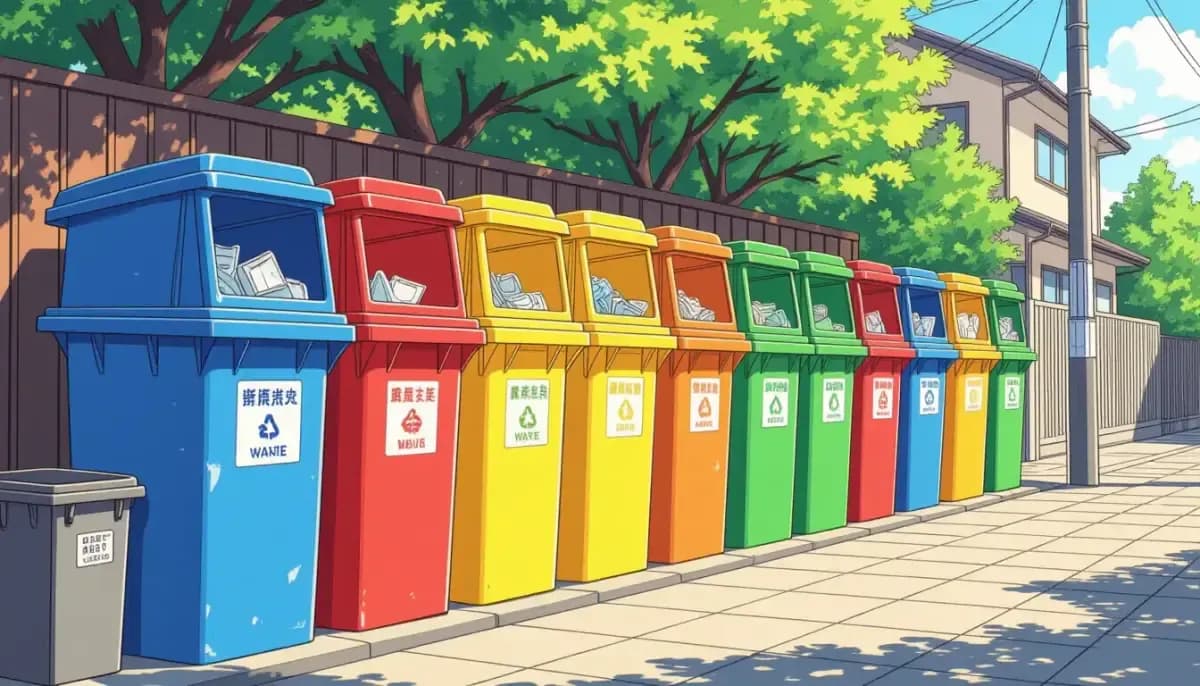
Complete guide to Japan's recycling system for foreigners. Learn the 5 garbage categories, collection schedules, bag rules, sodai gomi disposal, and apps to manage waste sorting in Japan.
Japan Recycling System Complete Guide for Foreigners
Moving to Japan means adapting to one of the most meticulous waste management systems in the world. Japan's recycling and garbage disposal system can feel overwhelming at first—there are multiple categories, strict collection schedules, and neighborhood-specific rules. But once you understand the logic behind it, the system becomes second nature. This guide walks you through everything you need to know about Japan's recycling system as a foreign resident.
!Japan recycling bins with color-coded categories at a neighborhood collection point

Why Japan Takes Recycling So Seriously
Japan's approach to waste is driven by necessity. The country is small, mountainous, and densely populated, leaving very limited space for landfills. Experts warn that at current rates, Japan's remaining landfill capacity could be exhausted within 20 years. As a result, the government has enacted strict waste management laws and built a culture of personal responsibility around garbage disposal.
Japan incinerates approximately 75% of its municipal waste, which significantly reduces volume. However, incineration alone is not sustainable, which is why the separation and recycling of materials like PET bottles, cans, glass, and cardboard is so important. The country's plastic recycling rate stands at around 87%, though much of this is thermal recycling (burning plastic to generate energy) rather than true material recycling.
For foreigners, understanding and following the rules is not just a matter of courtesy—violations can result in your trash being left uncollected, warnings from your landlord, and friction with neighbors. Japan's community-oriented culture means that proper garbage disposal is a shared social responsibility.
For a broader look at daily life rules in Japan, see the Complete Guide to Daily Life in Japan for Foreigners.
The 5 Main Garbage Categories in Japan
Japan divides household waste into five main categories. While the exact rules vary by municipality, these categories apply broadly across the country:
| Category | Japanese | Examples | Collection Frequency |
|---|---|---|---|
| Burnable Waste | 燃えるごみ (moeru gomi) | Food scraps, paper, clothing, small wood items, diapers | 2–3 times per week |
| Non-Burnable Waste | 燃えないごみ (moenai gomi) | Metal, glass, ceramics, small appliances, batteries | 1–2 times per month |
| Plastic/Recyclables | プラスチックごみ | Plastic containers, packaging, Styrofoam trays | Once per week |
| Resource Waste | 資源ごみ (shigen gomi) | PET bottles, cans, glass bottles, newspapers, cardboard | Once per week |
| Large-Sized Waste | 粗大ごみ (sodai gomi) | Furniture, bicycles, mattresses, large appliances | By appointment only |
Burnable Waste (燃えるごみ)
Burnable waste is the most frequently collected category, typically picked up two to three times per week. This category includes kitchen food scraps, used paper and tissues, worn clothing, small branches, and diapers. In some municipalities—particularly outside of Tokyo—small plastics are also included in burnable waste rather than sorted separately. Always verify with your local city office which rules apply to your area.
Non-Burnable Waste (燃えないごみ)
Non-burnable waste includes items that cannot be incinerated: broken ceramics, mirrors, glass items (such as drinking glasses and light bulbs), metal pots and pans, batteries, and small electronic devices. This category is collected infrequently—usually once or twice per month. Sharp objects like broken glass must be wrapped safely and labeled "危険" (kiken, meaning "danger") before disposal.
Plastic/Recyclable Waste (プラスチックごみ)
In most major cities, plastic packaging, containers, and Styrofoam trays are separated from general burnable waste and collected for recycling. Before placing items in this category, you must rinse them to remove food residue. Dirty plastics will be rejected.
Resource Waste (資源ごみ)
This category covers PET plastic bottles, aluminum and steel cans, glass bottles, newspapers, and cardboard. These items are collected for material recycling. Key rules:
- Remove caps from PET bottles (caps go into plastic waste)
- Rinse all bottles and cans
- Flatten cardboard boxes and tie with string
- Sort glass by color if required in your municipality (clear, brown, other)
Large-Sized Waste (粗大ごみ)
Furniture, mattresses, bicycles, and large items cannot go in regular collection. You must contact your city's sodai gomi center in advance to schedule a pickup. You'll need to purchase a disposal sticker (typically ¥300–¥2,000 depending on item size) from a convenience store or post office, attach it to the item, and place it outside on the scheduled collection morning.
Note: Under Japan's Home Appliance Recycling Law, televisions, air conditioners, refrigerators, and washing machines are NOT eligible for regular sodai gomi disposal. You must contact a licensed recycler or the appliance retailer to arrange proper disposal, which involves a fee.
Key Rules Every Foreigner Must Know
Timing Is Everything
One of the most important rules: never put your garbage out the night before collection day. It attracts crows and cats that scatter the trash, creating a mess and annoying your neighbors. Place garbage at the collection point by 8:00 AM on the designated collection morning only.
Collection days vary by neighborhood and by waste type. When you move in, check with your building manager or city office for your specific schedule. Many cities also offer multilingual garbage calendars.
Use the Correct Bags
In most areas, you must use transparent or semi-translucent garbage bags so that collectors can verify the contents. In some cities (such as Kyoto and Nagoya), you are required to purchase specially designated paid garbage bags sold at supermarkets and convenience stores. Using the wrong bag type may result in your trash being left behind with a violation sticker.
In Tokyo's 23 wards, any transparent bag is accepted—you do not need to buy special city bags.
Rinse Before Recycling
All recyclable containers—PET bottles, cans, glass bottles, and plastic packaging—must be rinsed clean before disposal. Food residue contaminates the recycling stream and can cause your entire bag to be rejected.
For more specific guidance, see our detailed guide on Garbage Sorting Rules in Japan Explained Simply.
!Person carefully rinsing plastic bottles before placing them in recycling bin in Japan

Regional Variations: Why Your City's Rules May Differ
Japan does not have a single national garbage sorting standard. Each municipality sets its own rules, and the differences can be significant. For example:
- In some areas, small plastics go into burnable waste; in others, they are sorted separately
- Some cities require sorting glass by color; others do not
- Designated paid bags are mandatory in some cities but not in Tokyo's 23 wards
- Collection days and frequencies vary by neighborhood
When you first move to a new city or ward, visit the city office (市役所, shiyakusho) or ward office (区役所, kuyakusho) to pick up a multilingual garbage guide. Most major cities offer guides in English, Chinese, and Korean. You can also download your municipality's official garbage app for automated reminders and item-search functionality.
For more on how Japan's environmental rules affect daily life, read Japan Environmental Regulations Affecting Daily Life.
How to Dispose of Large and Special Items
Sodai Gomi (Large-Sized Waste)
To dispose of large items:
- Call your city's sodai gomi contact number or use the online booking system
- Tell them what items you want to dispose of
- They will assign a pickup date and tell you the fee
- Purchase the disposal sticker from a convenience store
- Write your name/address on the sticker, attach it to the item
- Place the item at the collection point on the morning of pickup
Home Appliances (電気製品)
Under the Home Appliance Recycling Law (家電リサイクル法), the following must be disposed of through licensed channels:
- Air conditioners
- Televisions
- Refrigerators and freezers
- Washing machines and dryers
Contact the retailer where you purchased the item, or a licensed home appliance recycling company. Disposal fees apply (typically ¥1,000–¥5,000 depending on the appliance).
Hazardous Waste
Items like fluorescent light bulbs, paint, and propane gas canisters require special handling. Spray cans must be fully emptied before disposal (puncture the can or use it completely). Many municipalities have designated drop-off points for hazardous materials.
Useful Apps and Resources
Most Japanese municipalities now offer free smartphone apps for garbage management. These apps allow you to:
- Search for how to dispose of specific items
- Receive push notifications on collection days
- View your area's collection calendar
- Get information in multiple languages
Popular examples include:
- Gommi – available in multiple languages
- City-specific apps (search for your city name + ごみアプリ)
- Sanaru (Nagoya) – multilingual support
For English-language guidance on living in Japan, Living in Nihon's garbage separation guide provides a helpful overview of living rules for foreign residents. You can also find useful daily life resources at For Work in Japan's housing and life infrastructure guide, and career-focused resources for foreigners at Ittenshoku.
For additional guidance written for expats, Expats Guide Japan's garbage section and E-Housing's 2025 garbage separation guide are excellent references. MATCHA's guide How to Sort Trash in Japan is also well-illustrated and beginner-friendly.
Consequences of Improper Disposal
Japan relies primarily on social norms rather than heavy fines to enforce garbage rules, but violations have real consequences:
- Uncollected trash: Collectors will leave improperly sorted garbage behind and attach a violation sticker explaining the problem
- Neighborhood pressure: Local residents take turns managing the neighborhood collection point; violations create social friction
- Landlord warnings: Persistent violations may result in warnings from your building manager or landlord
- Lease termination: In extreme cases, chronic non-compliance can be grounds for lease termination
The key is to learn your local rules when you first move in and follow them consistently.
Connecting to Japan's Wider Sustainability Culture
Proper recycling is just one aspect of sustainable living in Japan. The country has a rich culture of resourcefulness and environmental consciousness. Explore these related topics to deepen your sustainable lifestyle:
- Zero Waste Living Tips for Residents in Japan – comprehensive strategies to minimize waste
- How to Reduce Food Waste Living in Japan – practical tips on using food efficiently
- Japan Secondhand Reuse and Upcycle Culture Guide – shopping at recycle shops and flea markets
- Best Eco Friendly Products Available in Japan – sustainable product choices for daily life
Summary
Japan's recycling system is detailed and location-specific, but the core principles are straightforward: sort carefully, rinse containers, and follow your neighborhood's collection schedule. As a foreign resident, taking the time to learn and follow these rules demonstrates respect for your community and helps you integrate more smoothly into Japanese daily life.
Start by visiting your local city office for a multilingual garbage guide, downloading your municipality's garbage app, and asking your landlord or building manager about your specific collection days. Once you establish the habit, proper recycling in Japan becomes a seamless part of daily life—and a genuine contribution to one of the world's most dedicated environmental efforts.

Originally from Vietnam, living in Japan for 16+ years. Graduated from Nagoya University, with 11 years of professional experience at Japanese and international companies. Sharing information about living in Japan for foreigners.
View Profile →Related Articles
Japan Secondhand Reuse and Upcycle Culture Guide
Complete guide to Japan's secondhand and upcycle culture. Discover recycle shops, flea markets, online platforms like Mercari, mottainai philosophy, and tips for foreigners living in Japan.
Read more →
Water Conservation Tips for Living in Japan
Learn practical water conservation tips for living in Japan. Discover Japanese bathing culture, smart toilet technology, bath water recycling for laundry, and how to reduce your water bill as a foreigner in Japan.
Read more →
Sustainable and Eco Friendly Housing in Japan
Complete guide to sustainable and eco-friendly housing in Japan for foreigners. Learn about ZEH homes, green certifications, government subsidies, and practical tips for renting or buying an eco-friendly home.
Read more →
Community Clean Up Events and Volunteering in Japan
Learn how to join community clean-up events and volunteering activities in Japan as a foreigner. Discover organizations, cultural etiquette, useful phrases, and tips to integrate into Japanese community life.
Read more →
Japan Environmental Regulations Affecting Daily Life
A complete guide to Japan's environmental regulations affecting daily life — garbage sorting, recycling laws, noise rules, and public cleanliness standards for foreign residents.
Read more →
Where to Buy Organic Food in Japan
Complete guide to buying organic food in Japan for foreigners and expats. Learn about JAS certification, best organic stores in Tokyo, delivery services, farmer's markets, and money-saving tips.
Read more →