
Environmental Benefits of Public Transport in Japan

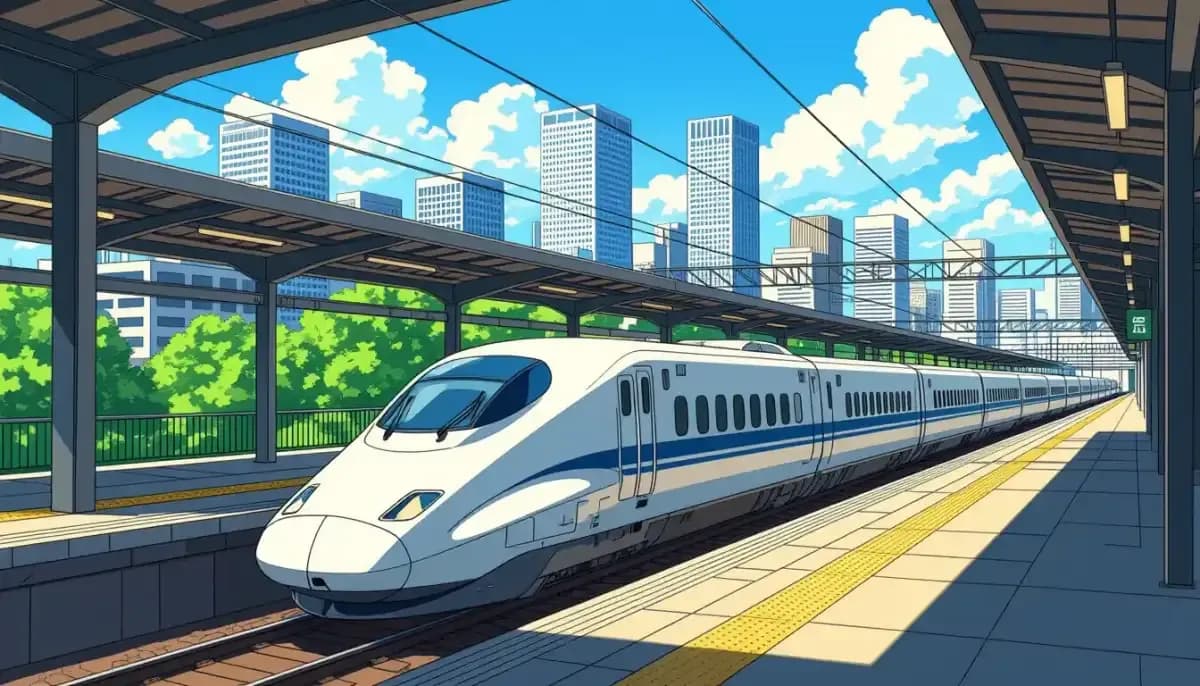
Discover how Japan's public transport system — trains, Shinkansen, and buses — delivers massive environmental benefits. Learn CO2 stats, sustainability data, and tips for eco-friendly living in Japan as a foreigner.
Environmental Benefits of Public Transport in Japan
Japan's public transportation network is not just a marvel of engineering and punctuality — it is one of the most environmentally efficient transport systems on the planet. For foreigners living in Japan, choosing trains and buses over private cars is one of the most impactful everyday decisions you can make for the environment. Whether you are commuting to work in Tokyo or traveling across the country by Shinkansen, Japan's public transport system offers a dramatically lower carbon footprint than virtually any alternative.
This guide explores the environmental benefits of Japan's public transportation, backed by real data, and explains why relying on trains and buses is not just convenient — it is a meaningful contribution to a greener planet.
!Japan bullet train Shinkansen speeding through green countryside

How Japan's Railways Stack Up Against Cars and Planes
The numbers tell a compelling story. Rail travel in Japan emits just 20 grams of CO₂ per passenger-kilometer — roughly 16% of the emissions produced by privately owned cars traveling the same distance. Put simply, taking the train generates 72–84% less CO₂ per person compared to other major passenger transport modes.
The contrast with air travel is even more dramatic. The iconic Tokaido Shinkansen (N700 "Nozomi") traveling between Tokyo and Osaka uses approximately one-eighth the energy per seat compared to a comparable Boeing 777 aircraft, while releasing only one-twelfth of the CO₂ emissions. For the millions of foreigners who might otherwise book a domestic flight, switching to Shinkansen is one of the single biggest environmental choices available.
| Transport Mode | CO₂ Emissions (g/passenger-km) | Relative to Train |
|---|---|---|
| Train (rail) | 20 | 1x (baseline) |
| Bus | ~71 | ~3.6x more |
| Airplane | ~100 | ~5x more |
| Private car | ~130 | ~6.5x more |
| Shinkansen | ~15 | Even lower |
These figures make clear that Japan's rail network is not just fast and reliable — it is the greenest way to travel in the country.
Japan's Rail Network: An Environmental Powerhouse
Japan's railways carry an extraordinary share of national passenger traffic. Railways account for approximately 29% of all passenger transport in Japan, yet they produce only 7% of the transport sector's CO₂ emissions. This efficiency ratio — handling a disproportionately large share of travel while generating a small share of emissions — is what makes Japan's train system a global model for sustainable mobility.
In Tokyo alone, over 37 million daily passenger trips occur via rail. This staggering volume of ridership replaces an equivalent number of car trips that would otherwise clog roads, pollute the air, and produce millions of tonnes of additional CO₂ each year. The density of Japan's urban rail networks means that high mobility is achievable without proportionally high emissions.
Japan's transportation sector emissions have been declining annually since 2001 and are now at approximately 70% of their peak levels. This long-term decline reflects both improvements in rail efficiency and the continued preference of Japan's population for public transit over private vehicles.
The Shinkansen's Green Credentials
The Shinkansen, Japan's legendary bullet train, deserves special mention as an environmental success story. Operating at speeds exceeding 300 km/h, the Shinkansen connects Japan's major cities with remarkable energy efficiency. The entire network is fully electrified, meaning it can be powered by whatever energy source feeds the grid — including an increasing proportion of renewable energy.
JR Central, operator of the Tokaido Shinkansen, actively publishes environmental performance data comparing its service to cars and planes. For the Tokyo-Osaka corridor (approximately 515 km), taking the Shinkansen instead of flying saves roughly 80-90% of the CO₂ emissions per passenger. For a foreigner in Japan considering whether to fly or take the train, the environmental case for Shinkansen is overwhelming.
The JR Group has committed to its "Zero Carbon Challenge 2050" — an ambitious pledge to achieve net-zero CO₂ emissions across all rail operations by 2050. This includes transitioning to renewable energy sources, improving regenerative braking systems, and reducing energy consumption per train-kilometer.
For more information on using Japan's transport system as a foreigner, see our guide on transportation in Japan for foreigners.
!Modern Japan train station interior with commuters and eco-friendly design

Beyond Carbon: Other Environmental Benefits of Public Transit
The environmental benefits of Japan's public transport extend well beyond CO₂ reduction. Using trains and buses instead of cars delivers multiple co-benefits for urban environments and ecosystems.
Air Quality Improvements
Vehicle exhaust is a major source of nitrogen oxides (NOx) and fine particulate matter (PM2.5). Japan's high modal share of public transit — especially in major cities — significantly reduces road traffic density compared to what it would be if residents drove. Japan's air quality has improved markedly in recent decades, and reduced vehicle emissions are a key factor.
As of recent data, Japan's overall air quality is classified as "Good" by international standards, a significant improvement from earlier decades when industrial and vehicle pollution was more severe.
Noise Pollution Reduction
Fewer cars on roads means lower levels of traffic noise in residential areas. Japan's rail system is designed to minimize noise impact: Shinkansen lines use sound barriers, and urban trains run on dedicated tracks that are separated from pedestrian and road traffic. Trains, despite their speed, generate significantly less diffuse urban noise than the equivalent car traffic they replace.
Land Use Efficiency
A train carrying 1,000 passengers requires far less physical infrastructure and urban space than 500-800 individual cars carrying the same number of people. Japan's dense urban rail networks enable cities to achieve world-class mobility without the land consumption associated with car-dependent urban sprawl. Less land devoted to roads and parking means more space for parks, housing, and natural areas.
Reduced Fuel Dependency
Japan imports nearly all of its fossil fuels. Every passenger who takes the train instead of driving reduces demand for imported petroleum. As Japan's electricity grid incorporates more renewable energy, rail becomes progressively cleaner, while gasoline-powered cars remain locked into fossil fuel dependency.
How Living in Japan Supports an Eco-Friendly Lifestyle
For many foreigners, moving to Japan comes as a pleasant surprise: a car is often simply unnecessary. Japan's urban areas are designed around train stations, with shops, restaurants, services, and housing concentrated within walking distance of stations. This transit-oriented development model naturally encourages public transport use and reduces car dependency.
If you live in Tokyo, Osaka, Nagoya, Fukuoka, or any of Japan's major cities, you can comfortably go car-free. Japan's IC card system (Suica, ICOCA, Pasmo) makes riding trains and buses seamless — tap in, tap out, and your fare is deducted automatically. There is no need to purchase tickets for individual rides or carry cash.
For foreigners comparing the cost and environmental impact of car ownership versus public transit, the math is clear. Car ownership in Japan involves purchasing costs, mandatory insurance (jibaiseki hoken and nin-i hoken), parking fees (which can exceed ¥30,000/month in central Tokyo), road tax, and shaken (vehicle inspection) costs every two years. Public transit, by contrast, offers competitive monthly passes and the freedom from maintenance worries.
For more on managing finances as a foreigner in Japan, see our guides on cost of living in Japan and banking and finance in Japan.
Living in Nihon's complete transportation guide is an excellent resource for foreigners navigating Japan's transport options, covering trains, buses, IC cards, and practical daily commuting advice.
Japan's Long-Term Commitment to Sustainable Transport
Japan has set ambitious national environmental targets: carbon neutrality by 2050 and a 46% reduction in greenhouse gas emissions by 2030 (compared to 2013 levels). Public transportation is central to achieving these goals.
Research from Japan's Railway Economics Research Institute (RIETI) found that the expansion of Japan's railway network over the past 30 years contributed a reduction of 97.44 to 110.73 million metric tons of carbon emissions. This figure represents the cumulative effect of millions of daily choices to take the train rather than drive.
The Tokyo Metropolitan Government is also investing in zero-emission buses, with plans to electrify its entire bus fleet. Combined with ongoing improvements in rail electrification and renewable energy procurement, Japan's public transport system is on a clear trajectory toward even greater environmental performance.
For context on Japan's broader sustainability goals, the World Economic Forum's analysis of Japan's railway sustainability provides excellent background reading.
For foreign workers looking to understand how commuting and infrastructure fit into life in Japan, For Work in Japan's housing and living guide is a practical resource covering the essentials of setting up your life as a foreign professional.
Practical Tips for Eco-Conscious Transport in Japan
If you want to maximize your environmental benefits while living in Japan, here are some practical approaches:
Choose train over plane for domestic travel. For any journey under 600-700 km, Shinkansen is almost always faster door-to-door than flying and dramatically cleaner. Tokyo to Osaka (2.5 hours by Shinkansen) is the classic example.
Use IC cards for seamless travel. A Suica or ICOCA card works across nearly all train, subway, and bus networks in Japan, making car-free living genuinely convenient.
Walk and cycle for short distances. Japan's cities are extremely walkable, and cycling infrastructure has improved significantly. Combining cycling with train commutes (some stations have dedicated bicycle parking) is both eco-friendly and affordable.
Take highway buses for long intercity travel when Shinkansen is too expensive. Highway buses emit more than Shinkansen but still significantly less than flying or driving alone.
Avoid rental cars in cities. If you need a car for a rural trip or moving heavy items, time-limited car rentals or car-sharing services (like Times Car) are more efficient than ownership. But for city living, public transport is almost always the greener and more practical choice.
The Bigger Picture: Why It Matters
Transportation accounts for 17.4% of Japan's total CO₂ emissions. Every foreigner who lives in Japan car-free — riding trains, cycling, and walking — contributes to reducing that figure. Multiply one person's choices across the millions of foreign residents and hundreds of millions of annual tourists who ride Japan's trains, and the cumulative environmental impact becomes significant.
Japan's rail system is frequently cited by urban planners and climate researchers as a model for the rest of the world. The combination of high ridership, low emissions per passenger, continued investment in electrification and renewable energy, and a cultural norm around public transit makes Japan's system genuinely exceptional.
For a deeper analysis of Japan's decarbonization strategy for transport, the National Bureau of Asian Research has published comprehensive research, and Planet Forward's coverage of Japan's trains and climate offers accessible and compelling analysis.
Living in Japan and using its public transport is not just practical — it is one of the most concrete ways a resident can align daily choices with environmental values. The numbers support it, the infrastructure enables it, and Japan's ongoing investments ensure it will only get greener over time.
For more on how to integrate into Japanese daily life sustainably, explore our guides on daily life in Japan and Japanese culture and etiquette. For IT professionals building careers in Japan, Ittenshoku offers resources on job opportunities and career transitions in the Japanese tech sector.

Originally from Vietnam, living in Japan for 16+ years. Graduated from Nagoya University, with 11 years of professional experience at Japanese and international companies. Sharing information about living in Japan for foreigners.
View Profile →Related Articles

Japan Secondhand Reuse and Upcycle Culture Guide
Complete guide to Japan's secondhand and upcycle culture. Discover recycle shops, flea markets, online platforms like Mercari, mottainai philosophy, and tips for foreigners living in Japan.
Read more →
Water Conservation Tips for Living in Japan
Learn practical water conservation tips for living in Japan. Discover Japanese bathing culture, smart toilet technology, bath water recycling for laundry, and how to reduce your water bill as a foreigner in Japan.
Read more →
Sustainable and Eco Friendly Housing in Japan
Complete guide to sustainable and eco-friendly housing in Japan for foreigners. Learn about ZEH homes, green certifications, government subsidies, and practical tips for renting or buying an eco-friendly home.
Read more →
Community Clean Up Events and Volunteering in Japan
Learn how to join community clean-up events and volunteering activities in Japan as a foreigner. Discover organizations, cultural etiquette, useful phrases, and tips to integrate into Japanese community life.
Read more →
Japan Environmental Regulations Affecting Daily Life
A complete guide to Japan's environmental regulations affecting daily life — garbage sorting, recycling laws, noise rules, and public cleanliness standards for foreign residents.
Read more →
Where to Buy Organic Food in Japan
Complete guide to buying organic food in Japan for foreigners and expats. Learn about JAS certification, best organic stores in Tokyo, delivery services, farmer's markets, and money-saving tips.
Read more →