The Complete Guide to Retirement in Japan for Foreigners
Retiring in Japan is a dream for many foreigners. The country offers world-class healthcare, exceptional public safety, delicious food, rich cultural experiences, and a high quality of life. Whether you envision strolling through bamboo groves, soaking in natural hot springs, or living in a bustling city with every modern convenience, Japan can make it happen. But retiring here as a foreigner takes careful planning — especially around visas, finances, healthcare, and housing.
This complete guide covers everything you need to know to retire in Japan as a foreigner, from visa pathways and pension options to monthly budgets and the best places to live.
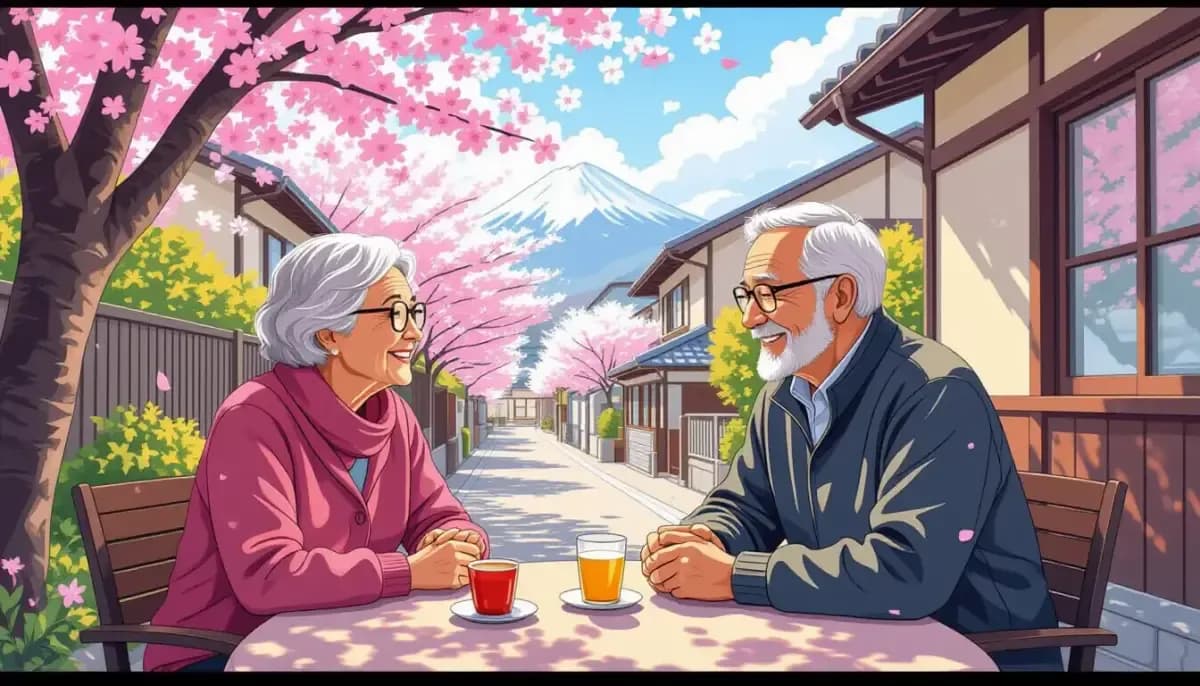
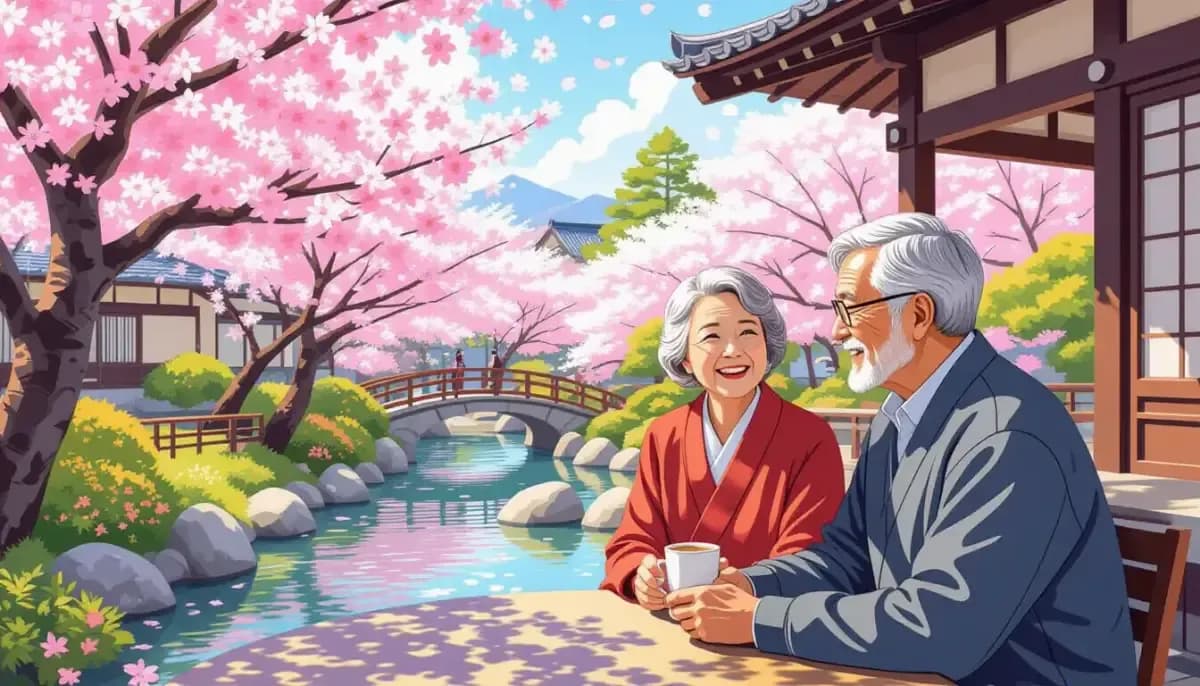
!Elderly couple enjoying a serene Japanese garden with cherry blossoms
Does Japan Have a Retirement Visa?
One of the most common questions foreigners ask is: does Japan have a retirement visa? The short answer is no — Japan does not currently offer a dedicated retirement visa like some other countries do. However, that does not mean retiring here is impossible. Thousands of foreign nationals successfully retire in Japan every year by qualifying under alternative visa categories.
The main visa pathways for retirees are:
- Spouse Visa (配偶者ビザ): If you are married to a Japanese citizen or a permanent resident, this is often the easiest route. The spouse visa allows long-term residency with virtually no income requirements tied specifically to retirement.
- Long-Term Resident Visa (定住者ビザ): Issued on a case-by-case basis, this visa may be available to people of Japanese descent or those with special circumstances. It grants broad rights to live and work.
- Permanent Residency (永住権): The gold standard for long-term stability. After 10 years of legal residence (potentially shortened to 3 or even 1 year through the Highly Skilled Professional points system), you can apply for permanent residency. This allows you to remain in Japan indefinitely with no work restrictions.
- Highly Skilled Professional Visa (高度専門職ビザ): For semi-active retirees who can demonstrate skills in business, research, or other fields. Scoring high on the government's points system can dramatically accelerate the path to permanent residency.
- Business Manager Visa: Some retirees establish a small business or invest in a Japanese company to maintain a valid visa.
Key takeaway: Plan your visa strategy early. If you are not yet married to a Japanese national and do not have permanent residency, securing one of these statuses well before retirement is essential.
For a detailed breakdown of Japan's visa system, see our guide: The Complete Guide to Japan Visa and Immigration.
Understanding the Japan Pension System for Foreigners
Japan has a two-tier pension system, and as a long-term foreign resident, you are likely participating in it whether you know it or not.
National Pension (国民年金)
All residents aged 20 to 59 — regardless of nationality — are required to enroll in the National Pension system. As of 2025, the monthly premium is approximately ¥16,980. To receive any pension benefit, you must have contributed for a minimum of 10 years (this was reduced from 25 years in 2017). For the full benefit of approximately ¥831,700 per year, you need 40 years of contributions.
Employee Pension (厚生年金)
If you worked for a Japanese company, you were automatically enrolled in the Employee Pension scheme, which is layered on top of the National Pension. Employer and employee split the roughly 18% of salary contribution evenly.
Lump-Sum Withdrawal
If you contributed to Japan's pension system for 6 months or more but are leaving the country without claiming benefits, you can apply for a lump-sum withdrawal within 2 years of departing Japan. This is a one-time payment that reimburses a portion of your contributions. Note that a 20.42% withholding tax applies.
Social Security Totalization Agreements
Japan maintains social security agreements with 23 countries, including the United States, United Kingdom, Canada, Germany, France, Australia, South Korea, and Brazil. These agreements prevent double contributions and allow pension periods from both countries to be combined when determining eligibility. If you worked in Japan for 5 years and need 10 years to qualify for the Japanese pension, your home country's contribution years may count toward meeting the threshold.
For more detail on Japan's social security and pension system, see: Tax, Social Insurance & Pension Guide for Foreigners.
Healthcare in Japan for Retirees
Japan is consistently ranked among the world's best healthcare systems, making it an appealing destination for retirees. Here is what you need to know:
National Health Insurance (国民健康保険)
All residents, including foreign nationals, are required to enroll in the National Health Insurance (NHI) system. Once enrolled, NHI covers 70% of your medical costs — you pay just 30% out of pocket. Premiums typically range from ¥18,000 to ¥45,000 per month for retirees, depending on your income level and location.
Senior Healthcare Benefits
Japan provides significant additional benefits as you age:
- Ages 70–74: Co-payment drops to just 20% of medical costs
- Age 75 and older: You transition to the Late-Stage Medical Care for the Elderly system (後期高齢者医療制度), which reduces your co-payment to just 10% (or 20–30% for higher earners)
- Long-term care insurance (介護保険): Available from age 40. By the time you need services, your personal contribution is typically only 10–20% of care costs
Healthcare Costs Comparison
| Coverage Type | Age Group | Out-of-Pocket % |
|---|
| Standard NHI | Under 70 | 30% |
| Reduced Senior Rate | 70–74 | 20% |
| Elderly Medical System | 75+ | 10% |
| Long-Term Care | All ages enrolled | 10–20% |
For deeper information on Japan's healthcare system, visit our guide: The Complete Guide to Healthcare in Japan for Foreigners.
You can also find resources on enrolling in Japanese healthcare at Living in Nihon's retirement and aging guide.
Monthly Budget: How Much Does It Cost to Retire in Japan?
Retirement costs in Japan vary dramatically by location and lifestyle. Here is a realistic breakdown:
Monthly Budget by Location and Lifestyle
| Category | Tokyo | Mid-Size City (Osaka, Fukuoka) | Rural Area |
|---|
| Housing (rent) | ¥80,000–150,000 | ¥50,000–90,000 | ¥20,000–50,000 |
| Food & Groceries | ¥50,000–80,000 | ¥40,000–60,000 | ¥30,000–50,000 |
| Utilities | ¥15,000–25,000 | ¥12,000–20,000 | ¥10,000–18,000 |
| Transportation | ¥15,000–30,000 | ¥10,000–20,000 | ¥5,000–15,000 |
| Healthcare (NHI) | ¥18,000–45,000 | ¥15,000–35,000 | ¥12,000–30,000 |
| Entertainment/Leisure | ¥20,000–50,000 | ¥15,000–35,000 | ¥10,000–25,000 |
| Total (Single) | ¥198,000–380,000 | ¥142,000–260,000 | ¥87,000–188,000 |
Benchmarks from Research
- A couple household needs approximately ¥280,000 per month for basic expenses, or ¥430,000 for a comfortable lifestyle
- A single person needs approximately ¥160,000 per month for basic expenses, or ¥310,000 for comfortable living
- Additional foreign-specific costs: return flights home (¥100,000–200,000/year), visa fees, translation services
For context, the average US Social Security payout of around $1,780/month can support a comfortable lifestyle in rural Japan but may be tight in Tokyo. A combined household income or pension of $3,000–$3,500/month (approximately ¥450,000–525,000) allows comfortable retirement anywhere in Japan.
Explore our full guide on costs: The Complete Guide to Cost of Living in Japan.
Housing Options for Retirees in Japan
!Traditional Japanese countryside home with rice fields
Finding housing as a foreign retiree can be challenging, but there are several excellent options:
Renting
Most foreign retirees rent, at least initially. Monthly rental costs range from ¥50,000 for a rural apartment to ¥150,000+ for a city apartment. Some landlords are reluctant to rent to foreigners, but services like UR Housing (government-managed apartments with no guarantor required) and foreign-friendly real estate agencies make the process easier.
Akiya (Empty Homes) Program
One of Japan's most exciting opportunities for foreign retirees is the akiya (空き家) program. With over 8 million empty homes across Japan — and the number rising as the population declines — many rural municipalities now actively promote these abandoned properties to foreigners. Prices can be as low as ¥1,000,000–5,000,000 ($6,600–33,000 USD), or even free in some cases, with some local governments offering renovation subsidies.
Senior Housing and Care Facilities
Japan has an extensive network of senior living options:
- Elderly-targeted apartment complexes: Monthly rent ¥100,000–300,000, with light support services
- Serviced senior homes (サービス付き高齢者向け住宅): On-site staff and basic nursing support; ¥150,000–400,000/month
- Special nursing homes (特別養護老人ホーム): Full nursing care; ¥150,000–500,000+/month
Read our housing guide for more details: The Complete Guide to Finding Housing in Japan.
Taxes for Foreign Retirees in Japan
Japan's tax system can be complex for foreign retirees, especially those receiving pensions from their home country.
Residency Status
If you stay in Japan for more than 183 days in a calendar year, you are considered a tax resident and are subject to Japanese income tax on your worldwide income. This includes foreign pensions, investment income, and any other sources.
Income Tax
Japan has a progressive income tax system with rates from 5% to 45%, plus a flat 10% local inhabitant tax. Pension income (including foreign pensions) is generally taxed as miscellaneous income.
Tax Treaties
Japan has income tax treaties with many countries that prevent double taxation on pensions. For example, US Social Security benefits paid to Japanese residents are taxed only in the US, not Japan, under the US-Japan Tax Treaty. Always consult a tax professional familiar with both countries' tax laws.
Filing Requirements
Foreign retirees must file an annual Japanese tax return if their income exceeds certain thresholds. For US citizens specifically, you must also continue filing US federal returns regardless of where you live.
For comprehensive tax guidance, see: The Complete Guide to Taxes in Japan for Foreigners.
Additional reading: Retiring in Japan: Visas, Healthcare, Taxes, & More.
Best Places to Retire in Japan
Japan offers a wide variety of retirement destinations, from cosmopolitan cities to tranquil countryside towns. Here are some top options for foreign retirees:
Tokyo
Japan's capital offers world-class healthcare, international community, diverse dining, and unmatched convenience. However, it is the most expensive option, and the pace of life can be intense. Best for retirees who want urban amenities and don't mind the cost.
Kyoto
The cultural heart of Japan. Kyoto offers a slower pace than Tokyo, stunning temples and gardens, excellent food, and a growing international community. Housing is more affordable than Tokyo, though still more expensive than smaller cities.
Fukuoka
Consistently rated one of Japan's most livable cities. Fukuoka has an international airport with direct flights to many Asian cities, a warm climate, relatively low living costs, a thriving food culture, and a growing expat community.
Nagano
For nature lovers, Nagano offers mountain scenery, hot springs (onsen), clean air, and a relaxed lifestyle. The region gained international attention from the 1998 Winter Olympics. Housing costs are low, and akiya properties are plentiful.
Okinawa
Japan's southernmost prefecture offers a tropical climate, beaches, and some of the highest life expectancy rates in the world. The Okinawan lifestyle ("hara hachi bu" — eating until 80% full) is globally celebrated for longevity. It also has a significant US military presence, making English services more accessible.
Practical Tips for Retiring Successfully in Japan
- Learn basic Japanese: Even survival-level Japanese dramatically improves your daily experience and relationships with neighbors
- Build community early: Japan's society can feel closed to newcomers. Join local volunteer groups, sports clubs, or international associations to build meaningful connections
- Get your finances in order before arriving: Transferring large sums internationally after establishing residency can trigger complex tax situations. Consult a financial advisor with Japan expertise
- Apply for permanent residency as early as possible: This removes visa renewal stress and is typically required before purchasing property in some situations
- Explore the akiya program: If you are open to rural life, abandoned homes offer remarkable value and often come with generous local support programs
- Understand the healthcare enrollment timeline: You must enroll in NHI within 14 days of establishing residence. Missing this window can create problems
- Plan for pet relocation 6+ months in advance: Japan has strict quarantine requirements, especially for dogs and cats
For more on adapting to life in Japan, see our guide: The Complete Guide to Daily Life in Japan for Foreigners. If you are considering working part-time or in IT during retirement, explore career resources at Ittenshoku.
Additional resources: How to Retire in Japan As A Foreigner — MailMate and the comprehensive Retire in Japan Guide at Japan Dev.
Conclusion
Retiring in Japan as a foreigner is absolutely achievable with the right preparation. The key steps are: secure the right visa or residency status well in advance, understand the pension system and whether your home country has a social security agreement with Japan, prepare a realistic monthly budget based on your preferred location, and enroll in the National Health Insurance system upon arrival.
Japan rewards retirees with extraordinary safety, superb healthcare, rich culture, and a quality of life that is hard to match anywhere in the world. The planning investment is worth it.
Start your preparation early, connect with expat communities already living in Japan, and take advantage of the resources available — including the many guides on this site — to make your Japanese retirement dream a reality.