The Complete Guide to Real Estate Investment in Japan for Foreigners
Japan's real estate market has become one of the most attractive investment destinations in Asia, and the good news is that foreigners enjoy the same property ownership rights as Japanese citizens. Whether you're an expat living in Japan or an international investor looking for stable returns, this guide covers everything you need to know about buying and investing in Japanese real estate.
!Real estate investor reviewing Japan property documents with Tokyo skyline
Can Foreigners Buy Property in Japan?
The short answer is yes — and with remarkably few restrictions. Japan has no foreign ownership quotas, no additional taxes for non-residents, and no requirement to hold a visa or residency status to purchase property. Whether you're American, Australian, European, or from anywhere else, you have the legal right to purchase land, condominiums, detached houses, and apartment buildings.
This sets Japan apart from many other Asian markets. Thailand, for example, restricts foreign land ownership, and Vietnam requires long-term lease arrangements. Japan's open approach has attracted significant foreign capital, with foreign investors accounting for 27% of nationwide transactions in 2024, up from 21% five years earlier.
One important regulatory note: if you're a non-resident, you may be required to report your property purchase to Japan's Ministry of Finance through the Bank of Japan under the Foreign Exchange and Foreign Trade Act (FEFTA). This notification must be submitted within 20 days of signing the purchase contract.
For more on navigating Japanese financial regulations as a foreigner, see our Complete Guide to Banking and Finance in Japan.
Why Japan Real Estate Is Attractive in 2026
Several factors make Japan an appealing destination for real estate investment:
Weak Yen: The yen's sustained weakness against major currencies has made Japanese properties significantly cheaper for international buyers. A Tokyo apartment that cost the equivalent of $300,000 USD a decade ago may now cost $220,000 or less in dollar terms.
Strong Rental Demand: Japan's urban centers — particularly Tokyo and Osaka — have extremely tight rental markets. Tokyo's 23 wards maintain a 96.6% occupancy rate, meaning vacancies are extremely rare for well-located properties.
No Foreign Ownership Premium: Unlike many countries, Japan doesn't charge extra taxes or impose higher purchase prices on foreign buyers.
Foreign Investment Surge: Total foreign investment in Japanese real estate hit $10.2 billion in 2024, representing a 45% surge in the first half of the year alone.
Transparent Legal System: Japan has a well-established property law framework, reliable land registration, and professional real estate agents licensed under national law.
For context on overall costs of living and financial planning in Japan, check our Complete Guide to Cost of Living in Japan.
Best Cities for Real Estate Investment
Location is everything in Japan. Here's a breakdown of the major investment markets:
| City | Average Rental Yield | Entry Price (1BR Condo) | Key Advantage |
|---|
| Tokyo (Central) | 3.5–4.5% | ¥30–60M | Lowest vacancy, highest appreciation |
| Tokyo (Suburban) | 4.5–5.5% | ¥15–30M | Better yield, good transport links |
| Osaka | 5–10% | ¥8–20M | ~50% of Tokyo prices, strong tourism |
| Fukuoka | 4.72% | ¥8–15M | Growing tech hub, young population |
| Sapporo | 5.56% | ¥6–12M | Affordable, ski tourism boost |
| Niseko/Hakuba | 6–10% | ¥20–80M | Ski resort demand, 30% land price surge |
Tokyo remains the flagship market, offering unparalleled liquidity and the lowest vacancy risk. However, Osaka has emerged as a strong alternative, with properties typically priced at around 50% of Tokyo equivalents while delivering yields of 5–10%. The upcoming 2025 Osaka-Kansai Expo continues to boost infrastructure investment in the region.
Fukuoka is increasingly popular among younger foreign investors due to its startup ecosystem and government-backed "Fukuoka City National Strategic Special Zone," which provides business incentives.
For those willing to accept higher risk, Niseko in Hokkaido has seen land prices surge by 30% in recent years, driven by high-end ski resort demand and international tourism.
Types of Property to Invest In
Condominium Units (Manshon)
The most popular entry point for foreign investors. Condo units in Japan can start from ¥10 million (~$67,000 USD) in secondary cities. The building is managed by a homeowners association (kanri kumiai), so maintenance responsibilities are minimal.
New condominiums come with a 10-year structural warranty. Older units, while cheaper, may require renovation.
Detached Houses (Ikkodate)
Detached homes offer more space and land ownership, but come with more maintenance responsibility. In rural areas, you can find extremely cheap properties — sometimes under ¥1 million — though renovation costs can be substantial.
Akiya (Abandoned Homes)
Japan has an estimated 8 million vacant homes (akiya), and some can be purchased for as little as $10,000–$100,000. However, renovation costs typically run 2–3x the purchase price, and rural akiya suffer from declining land values and poor liquidity. Approach with caution.
Whole Buildings (Ikkanto)
Purchasing an entire apartment building provides full control over management and renovation decisions. Entry costs start in the hundreds of millions of yen, but yields can be higher than individual condo units.
Real Estate Investment Trusts (J-REITs)
For those who want exposure to Japanese property without the complexity of direct ownership, J-REITs (Japan Real Estate Investment Trusts) trade on the Tokyo Stock Exchange and offer dividends from commercial and residential properties.
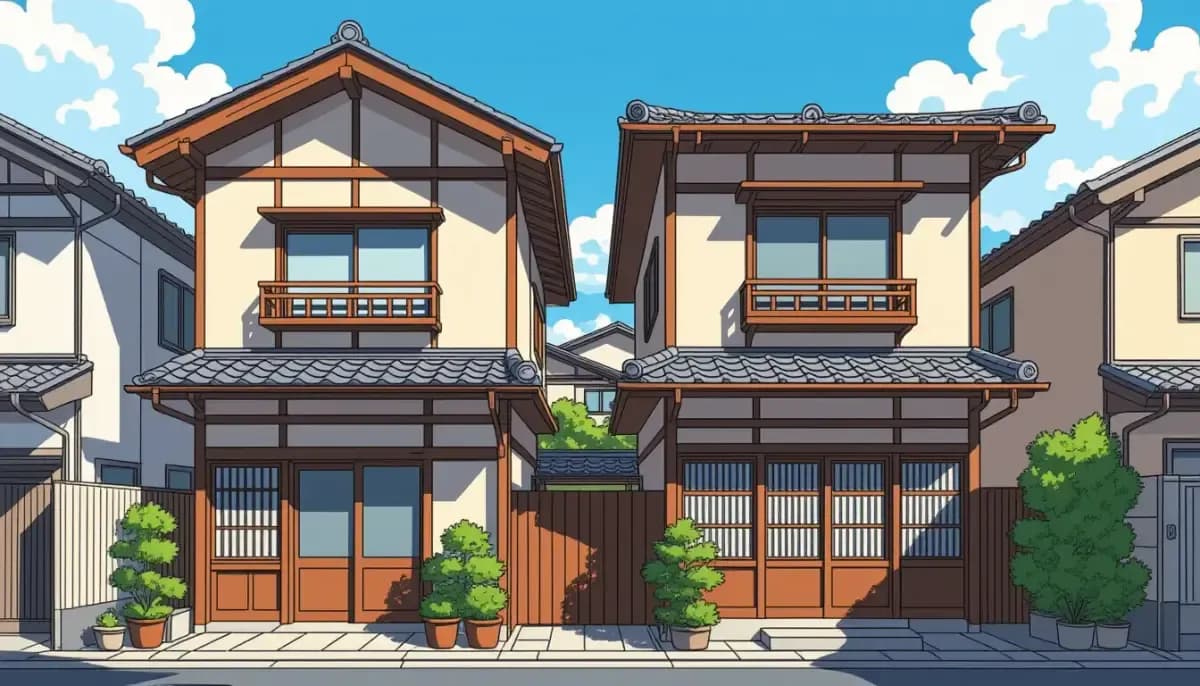
!Japan property types comparison showing condominium and traditional house
The Buying Process: Step by Step
Purchasing property in Japan as a foreigner involves several steps. Budget 4–6 months from initial search to final registration.
Step 1: Property Search Work with a licensed real estate agent (fudosanya). Many agencies in Tokyo and Osaka have English-speaking staff. Online portals like SUUMO, AtHome, and LIFULL HOME'S list the majority of available properties.
Step 2: Property Viewing & Offer After viewing, if you wish to proceed, submit a purchase offer. Your agent will negotiate terms with the seller.
Step 3: Explanation of Important Matters (Jyuyo Jiko Setsumeisho) Before signing, a licensed real estate agent must verbally explain all important details about the property, including legal restrictions, existing liens, zoning, and known defects. This is a mandatory legal step.
Step 4: Purchase Contract Sign the purchase contract and pay an earnest deposit, typically 5–10% of the purchase price. At this stage, backing out means forfeiting your deposit. If the seller backs out, they must return double your deposit.
Step 5: Financing Arrangements If taking a loan, finalize your mortgage approval. Cash buyers can proceed directly to settlement.
Step 6: Final Settlement Settlement is handled by a judicial scrivener (shihoshoshi), who manages the transfer of title and registers ownership at the Legal Affairs Bureau. The buyer pays the remaining balance; keys are handed over and title is transferred.
For guidance on visa requirements and residency status, see our Complete Guide to Japan Visa and Immigration.
Financing Options for Foreigners
Securing a mortgage in Japan as a foreigner is possible but requires meeting stricter criteria than Japanese nationals.
Banks That Lend to Foreigners
- SMBC Trust Bank PRESTIA: Provides services in English and offers mortgages to non-permanent residents
- Tokyo Star Bank: Known for flexibility with foreign borrowers
- Shinsei Bank: Offers mortgage products to non-permanent residents
Typical Mortgage Requirements
- Permanent residents: Access to most bank products at standard rates
- Non-permanent residents without PR: Typically requires 3+ years employment in Japan, Japanese spouse or PR partner, and a 30%+ down payment
- Non-residents living abroad: Most Japanese banks will not lend; cash purchase or offshore financing required
As of early 2026, variable mortgage rates are approximately 0.7–1.0% and 10-year fixed rates are around 2.2%.
For more financial planning resources, visit For Work in Japan's housing guide and the detailed Buying Property & Mortgage Guide on Living in Nihon.
Taxes and Ongoing Costs
At Purchase
| Tax/Fee | Rate |
|---|
| Real Estate Acquisition Tax | 1.5% (land), 3–4% (building) |
| Registration Tax | 2% |
| Agent Commission | 3% + ¥60,000 + 10% consumption tax |
| Judicial Scrivener Fee | ¥100,000–150,000 |
| Stamp Duty | ¥10,000–480,000 (price-dependent) |
Total budget: 8–10% of purchase price for transaction costs.
Annual Holding Costs
- Fixed Asset Tax (Kotei Shisan Zei): 1.4% of assessed value
- Urban Planning Tax (Toshi Keikaku Zei): 0.3% of assessed value (urban areas only)
- Condo Management Fee: ¥10,000–50,000/month depending on building
- Property Management Fee (if hiring a manager): 5–10% of monthly rent
Capital Gains Tax
- Properties held 5 years or less: taxed at approximately 39% (short-term)
- Properties held more than 5 years: taxed at approximately 20% (long-term)
- Non-resident sellers face a 10.21% withholding tax on gross sale proceeds, which is credited against your final capital gains tax liability
Non-resident property owners must appoint a tax representative in Japan to handle filing and compliance.
For comprehensive tax guidance, see our Complete Guide to Taxes in Japan for Foreigners.
Managing Your Property as a Foreign Investor
If you're not living in Japan, you'll need a property management company (kanri gaisha) to handle tenant screening, rent collection, maintenance, and legal compliance.
Property management fees typically run 5–10% of monthly rent, with some companies charging additional fees for tenant finding and vacancy periods.
Short-term rental (Airbnb-style) is regulated under Japan's Minpaku Law. Hosts need a registration number and can only rent properties for a maximum of 180 days per year unless operating under a licensed hotel/inn category.
For information on daily life logistics for property owners visiting Japan, see our Complete Guide to Daily Life in Japan.
Key Risks to Consider
Demographic Decline: Japan's population is shrinking, which could reduce demand for properties outside major urban centers over time. Stick to Tokyo, Osaka, Fukuoka, or other major cities to mitigate this risk.
Earthquake Risk: Japan sits on the Pacific Ring of Fire. Modern buildings (post-1981) must comply with strict seismic standards, but older buildings may be more vulnerable. Always check the earthquake resistance certification (taishin seinou) before purchasing.
Rising Construction Costs: Labor shortages and material costs are pushing construction prices higher, making renovation projects more expensive than in past years.
Currency Risk: While the weak yen is currently an advantage for foreign buyers, currency movements could reduce returns when converting rental income or sale proceeds back to your home currency.
Rural Illiquidity: Properties in rural areas or akiya can be very difficult to sell, sometimes for years. If you need liquidity, stick to major urban markets.
For additional context on working and living in Japan as a foreigner, see the IT転職 (IT Career Change) guide at Ittenshoku, the Housing Japan investment guide, and the Nippon Tradings Japan Real Estate Investment Guide for a comprehensive 2026 market overview.
Getting Started: Your Action Plan
- Define your goals: Are you seeking rental income, capital appreciation, or a personal residence? Different strategies suit different markets.
- Set your budget: Remember to include 8–10% transaction costs beyond the purchase price.
- Research locations: Visit potential investment areas personally before committing.
- Find an English-speaking agent: Look for agents with international investor experience.
- Consult a tax advisor: Japan's tax rules for non-residents are complex; get professional advice before purchasing.
- Check visa/residency status: Your residency affects mortgage access and ongoing compliance requirements.
- Review the property's management history: For condos, check the management plan and reserve fund balance.
Japan's real estate market offers genuine opportunities for foreign investors — stable yields, legal transparency, and growing international demand. With careful research and the right professional support, it can be a rewarding addition to any investment portfolio.
For more on settling into life in Japan, explore our Complete Guide to Moving to Japan as a Foreigner.