
Japan Property Taxes Explained for Foreign Owners

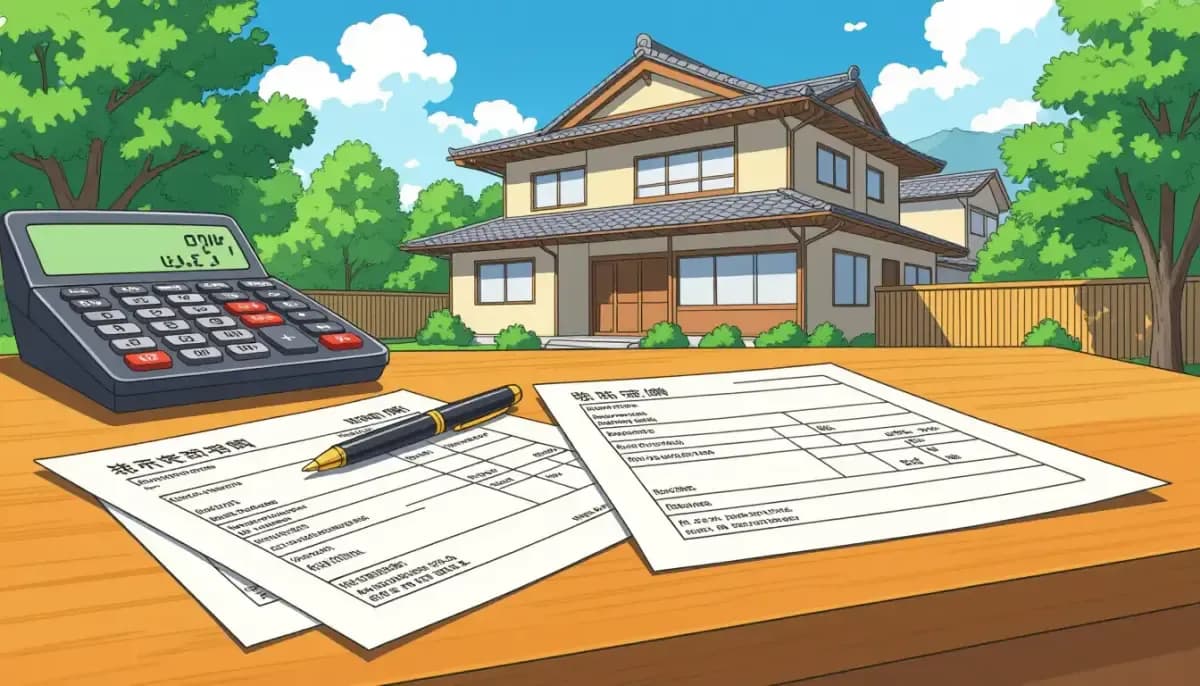
Complete guide to Japan property taxes for foreigners: fixed asset tax, acquisition tax, capital gains, rental income, and how non-residents pay taxes. Essential reading for foreign property owners.
Japan Property Taxes Explained for Foreign Owners
Owning property in Japan as a foreigner is entirely legal and can be a rewarding investment—but understanding the Japanese tax system is essential to avoid costly surprises. Whether you are a resident expat or an overseas investor, Japan's property tax obligations apply equally to you. This comprehensive guide explains every tax you will encounter as a foreign property owner in Japan, how to pay them, and how to stay compliant even if you live abroad.
For a broader understanding of Japan's financial landscape, see our guide on banking and finance in Japan and the complete guide to taxes in Japan for foreigners.
Overview: What Taxes Do Foreign Property Owners Pay in Japan?
Japan imposes several layers of property-related taxes on all owners regardless of nationality or residency. These fall into three main categories: taxes paid when buying, taxes paid annually while owning, and taxes paid when selling.
The good news is that there are no special penalty rates for foreign owners—you are taxed identically to Japanese citizens. The challenge, however, is administrative: as a non-resident, you must navigate a system designed primarily for people living in Japan.
Here is a snapshot of the key taxes you will encounter:
| Tax | When | Rate |
|---|---|---|
| Real Estate Acquisition Tax | One-time on purchase | 3% of assessed value (residential) |
| Registration & License Tax | On purchase/registration | 0.4%–2% of assessed value |
| Stamp Duty | On signing contracts | ¥200–¥600,000 (by contract value) |
| Consumption Tax | On new building purchases | 10% on building only (not land) |
| Fixed Asset Tax | Annually | 1.4% of assessed value |
| City Planning Tax | Annually (urban areas) | 0.3% of assessed value |
| Capital Gains Tax (long-term) | On sale (held 5+ years) | 20.315% |
| Capital Gains Tax (short-term) | On sale (held ≤5 years) | 39.63% |
Fixed Asset Tax: The Main Annual Property Tax in Japan
The most significant ongoing cost for property owners in Japan is the Fixed Asset Tax (固定資産税, koteishisanzei). This tax is levied annually on both land and buildings as of January 1 each year.
Standard rate: 1.4% of the assessed value of the property. In urban planning areas—which includes most of Tokyo, Osaka, and other major cities—an additional City Planning Tax (都市計画税, *toshikeikakuzei*) of 0.3% is added, bringing the effective rate to 1.7%.
How Assessed Value Works
The key distinction for property owners is that the assessed value used for tax purposes is not the market price or the price you paid. Local governments conduct their own valuations—known as the fixed asset ledger value—which are typically 50–70% lower than purchase prices. In premium markets like Niseko, assessed values can be as much as 50% lower than what you paid.
These assessments are reviewed and recalculated every three years. The most recent review cycle will occur in 2027.
Small Residential Land Reductions
Japan offers significant tax reductions for residential land:
- Land up to 200 m²: Taxable value reduced to 1/6 of assessed value for Fixed Asset Tax
- Land over 200 m²: Taxable value reduced to 1/3 of assessed value
This means that for a typical urban apartment or small house, your actual tax burden on the land portion can be dramatically lower than the headline rate suggests.
Payment Schedule
Tax bills arrive from your municipality in April (sometimes May) each year. You have four quarterly payment deadlines. A typical Sapporo payment schedule looks like:
- First payment: April 17–May 1
- Second payment: July 18–31
- Third payment: September 19–October 2
- Fourth payment: December 18–January 4
You can choose to pay the full year's amount before the first deadline to simplify administration—a common approach for overseas owners.
For more context on managing finances as a foreigner in Japan, visit Living in Nihon for practical guides on Japanese daily life and finances.
Taxes Paid When Buying Property in Japan
Real Estate Acquisition Tax
When you purchase property in Japan, you will receive a bill from the prefectural government (not the municipality) within 3–6 months of the acquisition. This is the Real Estate Acquisition Tax (不動産取得税, fudosantokuzei).
- Standard rate: 4% of assessed value
- Reduced rate for residential properties: 3% (currently in effect until March 31, 2027)
Note that this tax is based on the government's assessed value, not the purchase price you negotiated.
Registration and License Tax
When registering ownership of property at the Legal Affairs Bureau, you pay the Registration and License Tax (登録免許税, tōrokuménkyozei):
- Land: 1.5% of assessed value (reduced from 2%)
- Residential buildings: 0.1%–0.3% of assessed value (reduced rates valid until March 31, 2027)
- Non-residential buildings: 0.4% of assessed value
A judicial scrivener (司法書士, shihoshoshi) handles this process on your behalf—this is a mandatory professional service that typically costs several hundred thousand yen.
Stamp Duty
Stamp duty is applied to property purchase contracts and mortgage agreements. The amount depends on the contract value:
| Contract Value | Stamp Duty |
|---|---|
| ¥1M–¥5M | ¥1,000 |
| ¥5M–¥10M | ¥5,000 |
| ¥10M–¥50M | ¥10,000 |
| ¥50M–¥100M | ¥30,000 |
| Over ¥100M | ¥60,000–¥600,000 |
Consumption Tax
If you purchase a new building (not land), you pay consumption tax at 10% on the building portion only. Land is always exempt from consumption tax. If you buy a resale property, consumption tax typically does not apply.
For more detail on the overall cost of buying property in Japan, see our cost of living in Japan guide and our complete guide to finding housing in Japan.
How Non-Resident Foreign Owners Pay Property Taxes
This is where Japan's property tax system becomes challenging for overseas investors. International wire transfers are not accepted for property tax payments. Japan's municipal tax system was designed for domestic payers.
Accepted payment methods include:
- Cash at local convenience stores (with the payment slip)
- In-person at bank counters
- Automatic bank debit (requires a Japanese bank account)
- Online credit card payment (only some municipalities allow this)
Appointing a Tax Agent (Nōzei Kanrinin)
Non-resident property owners are legally required to appoint a Tax Agent (納税管理人, nōzeikanrinin) who is a resident of Japan. This person or entity:
- Receives your tax bills
- Makes payments on your behalf
- Handles correspondence with the tax office
- Can represent you in administrative matters
No formal certification is required for a tax agent—any adult legally residing in Japan can serve in this role. You must notify the local tax office of your tax agent's appointment using a designated form.
Who can be your tax agent?
- A trusted friend or family member living in Japan
- Your property management company
- A tax accountant (税理士, zeirishi)
- A specialized expatriate financial services company
For guidance on financial management for foreigners in Japan, For Work in Japan offers resources on managing finances and working in Japan.
Late Payment Penalties
Failing to pay on time carries financial consequences:
- Within 30 days overdue: 2.4% penalty (pro-rated daily)
- Beyond 30 days overdue: 8.7% penalty (pro-rated daily)
- Penalties under ¥1,000 are waived
Persistent non-payment can eventually lead to liens against your property, so it is critical to have a reliable payment arrangement in place before you leave Japan or make an overseas investment.
Capital Gains Tax When Selling Japanese Property
If you sell your Japanese property for a profit, you will owe capital gains tax to Japan's National Tax Agency (国税庁). The rate depends on how long you held the property:
| Holding Period | Tax Rate |
|---|---|
| 5 years or less (short-term) | 39.63% (income tax 30% + resident tax 9% + special income surtax 0.63%) |
| More than 5 years (long-term) | 20.315% (income tax 15% + resident tax 5% + special income surtax 0.315%) |
Important note: The 5-year threshold is calculated as of January 1 of the year of sale, not the actual holding period from purchase to sale. If you purchased in December 2020 and sell in February 2026, you would be taxed at the long-term rate because January 1, 2026 falls more than 5 years after purchase.
Non-Resident Withholding Tax
For non-residents selling Japanese property, 10.21% withholding tax is applied at the time of sale. This is typically deducted by the buyer from the purchase price. When you file your Japanese tax return (between February 16 and March 15 the following year), the withheld amount is credited against your final tax liability.
Primary Residence Exemption
Japanese residents who sell their primary residence may qualify for a 30 million yen (¥30,000,000) capital gains deduction, potentially eliminating tax obligations entirely on a qualifying sale. This exemption has strict conditions and is generally not available to non-resident foreign owners.
For context on overall tax obligations in Japan, see our complete guide to taxes in Japan for foreigners.
Rental Income Tax for Foreign Property Owners
If you rent out your Japanese property, the income is taxable in Japan regardless of where you live:
- Residents in Japan: Rental income is added to your total income and taxed at progressive rates from 5% to 45%, plus a 10% resident tax
- Non-residents outside Japan: A 20.42% withholding tax applies to gross rental income
- Exception: If you rent to an individual tenant for their personal use (not business), the withholding requirement may not apply to that tenant
Non-resident landlords should file an annual Japanese tax return to potentially recover over-withheld amounts and claim allowable deductions (depreciation, management fees, etc.). Working with a Japanese tax accountant is strongly recommended.
For more information on working and earning income in Japan, visit Ittenshoku for resources on Japan's employment and financial landscape.
Practical Tips for Foreign Property Owners
Before You Buy
- Research assessed values: Ask the agent or seller for the current fixed asset ledger value (固定資産評価証明書) to calculate your expected annual taxes
- Budget for acquisition costs: Plan for roughly 6–10% of the purchase price in taxes and fees at settlement
- Identify your tax agent: Have a plan for tax representation before you complete the purchase
While You Own
- Set up automatic payments: Open a Japanese bank account and authorize automatic debit for tax payments
- Keep records: Maintain copies of all tax bills and receipts for future capital gains calculations
- Track renovations: Renovation costs can be deducted from capital gains when you sell—keep all receipts
When You Sell
- Time your sale strategically: Selling after 5 years dramatically reduces capital gains tax (from ~40% to ~20%)
- File a tax return: Non-residents should file a Japanese return to reconcile withheld taxes
- Use a judicial scrivener: Required for deregistering ownership properly
For more on navigating Japanese bureaucracy as a foreigner, our moving to Japan guide and daily life guide offer practical insights.
Summary: Key Numbers to Remember
| Item | Rate/Amount |
|---|---|
| Fixed Asset Tax | 1.4% of assessed value/year |
| City Planning Tax | 0.3% of assessed value/year (urban) |
| Acquisition Tax (residential) | 3% of assessed value (one-time) |
| Capital Gains Tax (long-term) | 20.315% |
| Capital Gains Tax (short-term) | 39.63% |
| Non-resident rental withholding | 20.42% |
| Small residential land reduction | 1/6 of assessed value (≤200 m²) |
| Late payment penalty | 2.4%–8.7% per annum |
Understanding Japan's property tax system is complex, but with the right professional support—a tax agent, a property manager, and ideally a Japanese tax accountant—it is entirely manageable. The fundamental principle is that Japan treats foreign property owners the same as Japanese ones, which means access to the same rules, the same reductions, and the same obligations. Plan ahead, appoint reliable representatives, and your Japanese property investment can remain both rewarding and compliant.
For more comprehensive property tax information, see Housing Japan's 2025 property tax guide and the Japan property tax guide at MailMate.
For further reading on property ownership and investment in Japan, see our resources on finding housing in Japan, banking and finance, and daily life in Japan.

Originally from Vietnam, living in Japan for 16+ years. Graduated from Nagoya University, with 11 years of professional experience at Japanese and international companies. Sharing information about living in Japan for foreigners.
View Profile →Related Articles
Japan Real Estate Scams to Watch Out For
Learn how to spot and avoid Japan real estate scams. From fake listings and key money fraud to unlicensed agents — protect yourself with our complete guide for foreigners renting or buying in Japan.
Read more →
Airbnb and Minpaku Investment in Japan Legal Guide
A complete guide to Airbnb and minpaku investment in Japan for foreigners. Learn about licensing types, registration steps, regional restrictions, investment returns, and legal requirements under Japan's Private Lodging Business Act.
Read more →
Japan Property Buying Process Step by Step Explained
Complete step-by-step guide to buying property in Japan as a foreigner. Covers the 7 stages from property search to ownership transfer, costs, timelines, and legal requirements.
Read more →
Japan Condo Mansion vs House Which to Buy
Comparing Japan mansion (condo) vs detached house for foreign buyers. Full breakdown of costs, monthly fees, value retention, earthquake safety, mortgages, and which option fits your lifestyle.
Read more →
Best Areas to Buy Property in Japan for Investment
Discover the best areas to buy property in Japan for investment. Compare Tokyo, Osaka, Fukuoka, Kyoto and more with rental yields, price trends, and tips for foreign investors.
Read more →
Rental Income Tax in Japan for Foreign Property Owners
Complete guide to rental income tax in Japan for foreigners. Learn about the 20.42% withholding tax for non-residents, deductible expenses, tax agent requirements, and how to file your Japanese tax return.
Read more →