
Japan Condo Mansion vs House Which to Buy

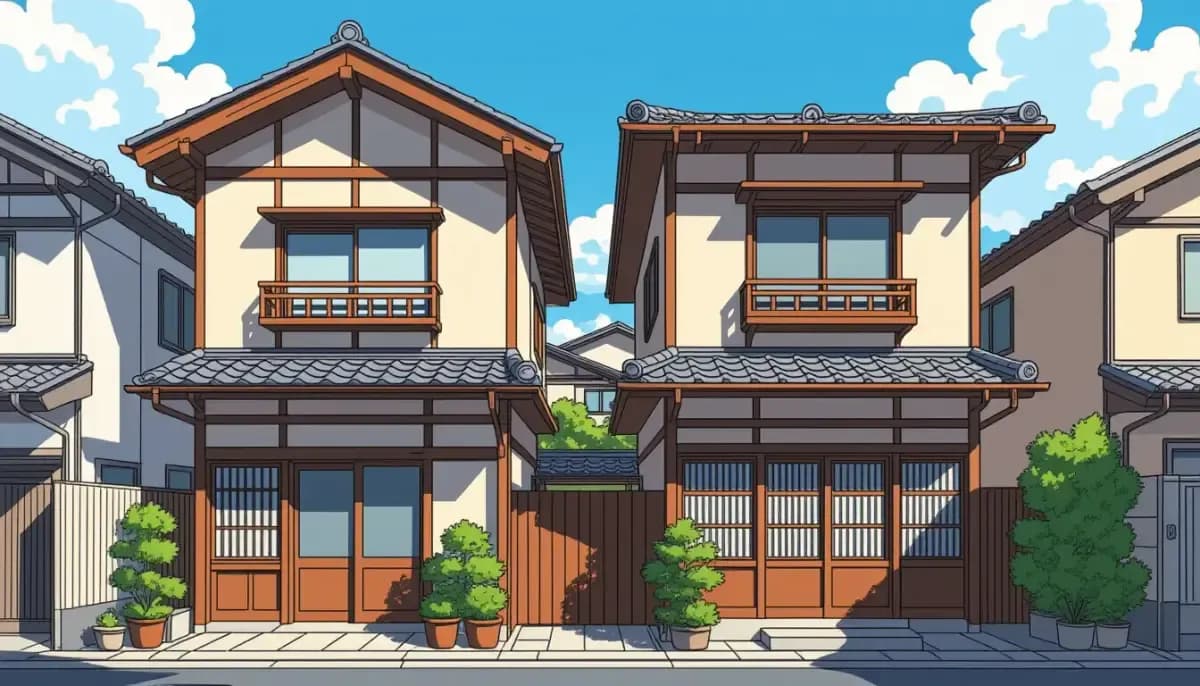
Comparing Japan mansion (condo) vs detached house for foreign buyers. Full breakdown of costs, monthly fees, value retention, earthquake safety, mortgages, and which option fits your lifestyle.
Japan Condo (Mansion) vs House: Which Should You Buy?
If you're a foreigner planning to put down roots in Japan, one of the biggest decisions you'll face is choosing between a mansion (マンション) — what Japanese call a condominium — and a detached house (一戸建て). Both have real advantages and distinct drawbacks, and the right choice depends heavily on your lifestyle, budget, and how long you plan to stay.
This guide breaks down everything you need to know: terminology, costs, lifestyle tradeoffs, resale value, and which option fits different types of buyers.
Understanding Japanese Real Estate Terminology
Before comparing, it's essential to get the terminology right — because it trips up nearly every foreigner.
In Japan, "mansion" (マンション) does NOT mean luxury home. It refers to a reinforced concrete (RC) or steel-frame condominium building, typically mid-rise or high-rise. When Japanese people say "mansion," they mean what Westerners call a condo or apartment unit in a quality building.
An "apartment" (アパート) in Japan usually means a small, 2-3 story wood-frame or light-steel building — generally cheaper and older construction.
A "house" (一戸建て / ikkodate) is a standalone detached home, typically including the land it sits on.
Understanding this distinction is crucial: when comparing "mansion vs house," you're comparing a reinforced concrete condo unit against a detached single-family home.
For a broader overview of housing options when you first arrive, see our guide on finding housing in Japan.
Key Differences at a Glance
| Feature | Mansion (Condo) | Detached House |
|---|---|---|
| Structure | Reinforced concrete (RC) | Mostly wood-frame |
| Land ownership | Fractional share | Full ownership |
| Monthly fees | ¥15,000–¥50,000+ (management + repair fund) | None (but self-maintain) |
| Privacy | Shared walls, neighbors above/below | Full privacy |
| Renovation freedom | Restricted by management rules | Full freedom (within zoning) |
| Earthquake resistance | Generally stronger (RC) | Varies by age and build |
| Value depreciation | Slower in urban areas | Buildings depreciate faster |
| Resale liquidity | Easier to sell in cities | Can be slower in suburbs |
| Typical location | Urban centers | Suburban/rural areas |
| Security | Building security, intercoms | Depends on setup |
Cost Comparison: What You'll Actually Pay
Purchase Price
In Tokyo, new mansion (condo) prices have been rising sharply — up roughly 13% year-on-year in 2024-2025. A new 70m² condo in central Tokyo commonly runs ¥60–¥100 million or more. A comparable detached house in the suburbs might be ¥30–¥60 million, but with a longer commute.
Outside major cities, prices drop significantly. Rural akiya (abandoned homes) can be purchased for ¥1–¥5 million, though renovation costs are separate.
Upfront Buying Costs
All property purchases in Japan come with transaction costs totaling roughly 10% of the purchase price:
| Cost Item | Amount |
|---|---|
| Brokerage fee | 3% of price + ¥60,000 + tax |
| Registration tax | ~2% of assessed value |
| Property acquisition tax | 3–4% of assessed value |
| Stamp duty | ¥10,000–¥60,000 |
| Attorney/notary fees | ¥100,000–¥150,000 |
| Fire insurance | ¥50,000–¥200,000 |
Ongoing Monthly Costs
This is where mansions and houses differ significantly:
Mansion owners pay:
- Management fees (kanrihi): typically ¥15,000–¥30,000/month
- Repair reserve fund (shuzenhi): ¥8,000–¥20,000/month
- Parking (if separate): ¥10,000–¥30,000/month
- Tokyo average combined management + repair fees: ¥28,748/month (2025, up from ¥22,395 in 2010)
House owners pay:
- No management fees
- Self-funded repairs (budget roughly 0.5–1% of property value annually)
- Higher fire insurance premiums
- Annual property tax on larger land area
Over 20 years, condo management and repair fund contributions can add up to ¥7–¥12 million — a significant hidden cost many buyers overlook. For a detailed breakdown of repair reserve fund fees, Real Estate Japan's guide to condo costs is worth reading.
For more on managing finances as a foreigner in Japan, see our banking and finance guide.
Lifestyle Tradeoffs
Choose a Mansion (Condo) If:
- You want central city living — most mansions are well-located near train stations
- You prefer managed maintenance — the management company handles common areas, building repairs, and security
- You value easy resale — well-located condos in Tokyo and Osaka sell faster
- You don't need outdoor space — a balcony may suffice
- Security matters — intercoms, locked lobbies, and sometimes concierge service
- You're okay with restrictions — renovations require management approval; you can't knock down structural walls
Choose a Detached House If:
- Privacy is essential — no neighbors above, below, or sharing walls
- You want renovation freedom — redesign the interior as you like (within zoning laws)
- You have or plan to have children — a garden and more space make a significant difference
- You're planning to stay 10+ years — the land component retains value long-term
- You want to customize — from solar panels to a garden office, houses offer far more flexibility
- You dislike monthly fees — no management fees, though repairs are your responsibility
Property Value and Resale Considerations
Japan's approach to property value is fundamentally different from Western markets:
Buildings depreciate rapidly in Japan. A wooden house may reach near-zero building value after 20–30 years. What you're really buying (and what retains value) is the land. This is why location matters even more in Japan than elsewhere.
Mansions (condos) depreciate more slowly, especially in urban cores. The communal nature means the building is maintained through the repair reserve fund. Tokyo condos have outperformed the broader market in recent years.
Used houses can drop 20–30% in value in just a few years after purchase, particularly if located in areas with declining populations. Outside major cities, selling can be very difficult.
Rule of thumb: If you want value retention, a well-located urban mansion generally holds up better than a suburban detached house. Aonissin's analysis of house vs apartment for expats provides a detailed financial breakdown for long-term planning.
For insights on the overall cost of living in Japan, check our cost of living guide.
Earthquake Safety and Building Standards
Japan is one of the most seismically active countries on earth. Building safety matters enormously.
The 1981 building code update (shinsei-taishin) significantly strengthened earthquake resistance requirements. Properties built after 1981 meet far stronger seismic standards than older buildings. Always check the construction year.
Reinforced concrete mansions generally perform better in earthquakes than older wooden houses. The mass and rigidity of RC construction reduces lateral movement. Many modern mansions also have seismic isolation systems.
Wooden houses can perform well if built to modern codes, but older wooden structures are vulnerable. If buying a used house, a structural inspection is essential.
Before buying any property, check municipal hazard maps (ハザードマップ) for flood, landslide, and liquefaction risk in your target area. For safety preparedness, our safety and emergency guide has useful resources.
Mortgages for Foreigners: What to Expect
Financing is one of the bigger hurdles for foreign buyers in Japan.
With permanent residency (PR): You'll generally access the same mortgage products as Japanese nationals. Current rates: approximately 0.7% variable or 1.9% fixed for 35 years — exceptionally low by global standards.
Without PR: Options are more limited. You'll typically need:
- 30%+ down payment
- 3+ years of stable employment in Japan
- Sometimes a Japanese spouse or guarantor
- Income documentation in Japanese
Some regional banks and credit unions are more flexible than major banks. A bilingual mortgage broker can significantly improve your chances.
For more on visa status and residency, see our Japan visa and immigration guide.
Legal Process for Foreign Buyers
Japan has no legal restrictions on foreign property ownership — you can own both land and buildings with the same rights as Japanese citizens. This is notably different from many Asian countries.
The purchase process typically takes 4–6 months:
- Property search and viewings
- Loan pre-approval
- Signing of purchase contract
- Final mortgage approval
- Closing and registration
Important: Within 20 days of signing the purchase agreement, foreign buyers must file a notification with the Bank of Japan under the Foreign Exchange and Foreign Trade Act. This is a formality, not an approval process — but skipping it can cause problems.
For detailed guidance on the property purchase process, Living in Nihon's property buying guide covers mortgages and legal requirements for foreigners thoroughly.
Which Should You Choose? A Decision Framework
The answer depends on your specific situation:
| Your Situation | Recommended Choice |
|---|---|
| Central city living, 5–10 year horizon | Mansion (condo) |
| Family with kids, long-term stay (10+ years) | Detached house |
| Value retention priority in Tokyo/Osaka | Mansion in good location |
| Renovation and customization important | Detached house |
| Limited maintenance time/ability | Mansion |
| Tight monthly budget (avoid fees) | Detached house |
| Investment/rental income focus | Depends on location — consult a specialist |
| Uncertain about staying in Japan | Neither — consider renting |
For housing infrastructure and practical living tips tailored to foreigners, ForWork in Japan's housing guide is an excellent resource.
Final Thoughts
There's no universally right answer between a mansion and a house in Japan. What matters is matching your choice to your actual lifestyle, financial situation, and how long you plan to stay.
- Mansions suit urban dwellers who want convenience, managed maintenance, and relatively stable urban-core value — but come with ongoing fees and restrictions.
- Houses suit families, long-term residents, and those who want space, privacy, and complete control — but require you to manage your own maintenance and accept higher depreciation risk in many areas.
For IT professionals considering a career move to Japan alongside their property purchase decision, Ittenshoku offers guidance on working life in Japan that can help you plan your long-term finances.
Take time to research thoroughly, get a bilingual real estate agent, and check the hazard maps for any property you're serious about. Japan's real estate market can be rewarding for foreign buyers who go in well-prepared.
For a comprehensive overview of settling in Japan as a foreigner, our complete guide to moving to Japan is a great starting point.

Originally from Vietnam, living in Japan for 16+ years. Graduated from Nagoya University, with 11 years of professional experience at Japanese and international companies. Sharing information about living in Japan for foreigners.
View Profile →Related Articles
Japan Real Estate Scams to Watch Out For
Learn how to spot and avoid Japan real estate scams. From fake listings and key money fraud to unlicensed agents — protect yourself with our complete guide for foreigners renting or buying in Japan.
Read more →
Airbnb and Minpaku Investment in Japan Legal Guide
A complete guide to Airbnb and minpaku investment in Japan for foreigners. Learn about licensing types, registration steps, regional restrictions, investment returns, and legal requirements under Japan's Private Lodging Business Act.
Read more →
Japan Property Buying Process Step by Step Explained
Complete step-by-step guide to buying property in Japan as a foreigner. Covers the 7 stages from property search to ownership transfer, costs, timelines, and legal requirements.
Read more →
Best Areas to Buy Property in Japan for Investment
Discover the best areas to buy property in Japan for investment. Compare Tokyo, Osaka, Fukuoka, Kyoto and more with rental yields, price trends, and tips for foreign investors.
Read more →
Rental Income Tax in Japan for Foreign Property Owners
Complete guide to rental income tax in Japan for foreigners. Learn about the 20.42% withholding tax for non-residents, deductible expenses, tax agent requirements, and how to file your Japanese tax return.
Read more →
Property Management in Japan Guide for Foreign Owners
Everything foreign owners need to know about property management in Japan: management fees, bilingual companies, tax obligations, legal requirements, and tips for managing rental property from overseas.
Read more →