
Japan Property Buying Process Step by Step Explained

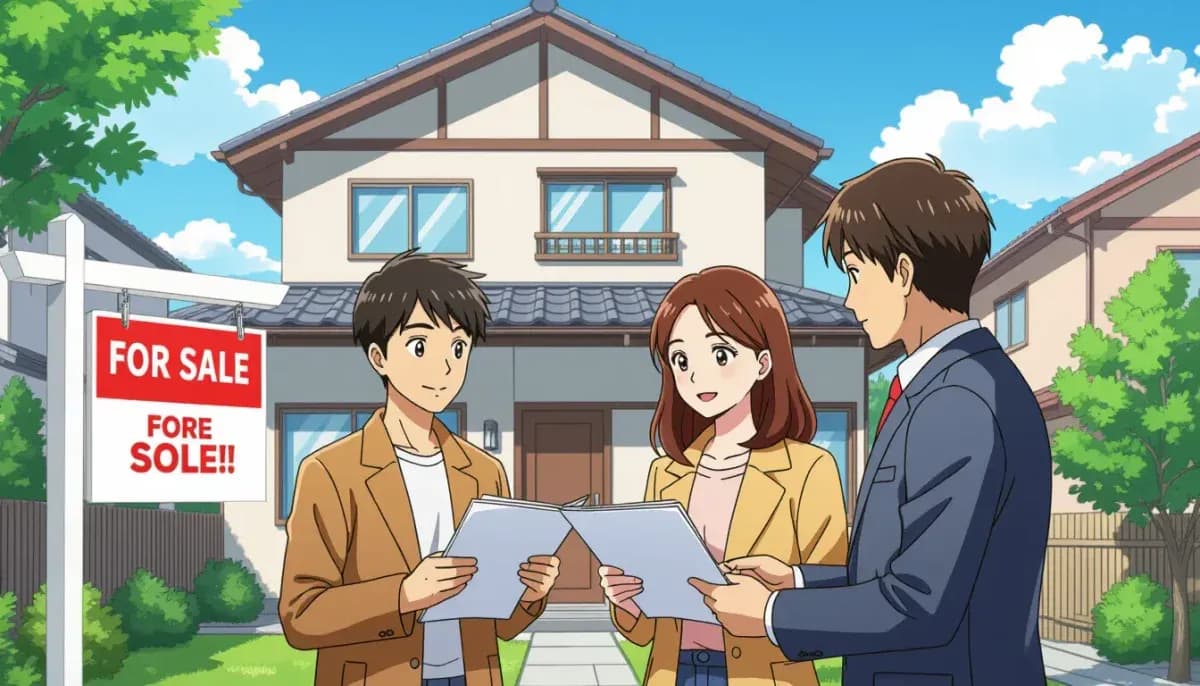
Complete step-by-step guide to buying property in Japan as a foreigner. Covers the 7 stages from property search to ownership transfer, costs, timelines, and legal requirements.
Japan Property Buying Process Step by Step Explained
Buying property in Japan as a foreigner is more straightforward than many people assume. Japan imposes no nationality-based restrictions on property ownership—foreign nationals can purchase land and buildings with the same legal rights as Japanese citizens. What makes the process complex is navigating the documentation requirements, understanding the costs involved, and working through a system where most contracts and legal disclosures are conducted in Japanese.
This guide breaks down the entire Japan property buying process step by step, from your first property search to receiving the keys. Whether you are a resident expat planning to put down roots or an overseas investor eyeing Japan's stable real estate market, understanding each stage will help you avoid costly mistakes and close your purchase with confidence.
!Foreigners reviewing property documents with a Japanese real estate agent
Step 1: Define Your Budget and Financing Strategy
Before browsing listings, establish a clear budget that accounts for more than just the purchase price. When buying property in Japan, expect to pay an additional 8–12% of the purchase price in fees, taxes, and closing costs. Overseas buyers who need to convert foreign currency may face an even higher effective cost due to exchange rate markups.
Key one-time purchase costs:
| Cost Item | Estimated Rate |
|---|---|
| Real estate agent commission | 3% of price + ¥60,000 + 10% consumption tax |
| Registration tax (buildings) | 0.1–2% of assessed value |
| Registration tax (land) | 1.5–2% of assessed value |
| Real estate acquisition tax | 3–4% of assessed value |
| Stamp duty | ¥10,000–¥200,000 depending on price |
| Judicial scrivener fees | ¥100,000–¥300,000 |
| Home inspection fee | ¥50,000–¥100,000 |
| Annual property tax (ongoing) | 1.4% of assessed value |
| City planning tax (ongoing) | 0.3% of assessed value (urban zones) |
If you plan to use a mortgage, your financing options depend heavily on your residency status. Permanent residents and those with Japanese spouses access standard bank loans at current variable rates of around 0.7% or fixed 35-year rates of approximately 1.9%. Without permanent residency, you generally need to meet one of these conditions: be married to a Japanese national or permanent resident, have at least three years of continuous employment in Japan, make a down payment of 30% or more, or demonstrate a stable and sufficient income.
Cash buyers have a significant advantage in Japan: faster timelines (4–6 weeks vs 2–3 months for mortgages), stronger negotiating positions, and simpler documentation requirements. If you are purchasing from overseas using foreign currency, budget an additional 2–4% for international wire transfer and currency conversion costs.
For more on mortgage options, see our dedicated guide: Getting a Mortgage in Japan as a Foreign Resident.
Step 2: Search for Properties and Engage an Agent
Japan's property market is accessible through several online portals. The largest Japanese-language platforms are SUUMO (over 8 million listings) and HOME'S (over 5 million listings). For English-language searches, platforms such as Real Estate Japan (realestate.co.jp) and Housing Japan aggregate listings with bilingual support.
However, a significant portion of Japan's best-value properties—particularly in secondary cities and rural areas—are only listed with local real estate agencies and may never appear on major portals. This makes partnering with a local agent essential for comprehensive market coverage.
What to look for in a real estate agent:
- Licensed under Japan's Real Estate Transaction Act (宅地建物取引業)
- Experience working with foreign buyers
- Bilingual staff or access to interpreters
- Clear explanation of the Jūyō Jikō Setsumeisho (重要事項説明書)—the legally required property disclosure
The agent's commission is fixed by law at no more than 3% of the purchase price plus ¥60,000, plus consumption tax. This is paid by the buyer—you cannot negotiate it down, but you should compare agents on service quality and language support.
For guidance on finding the right professional, see: Foreigner Friendly Real Estate Agents in Japan and Real Estate Agent Fees and Costs in Japan Explained.
Step 3: Property Viewing, Offer, and Letter of Intent
Once you find a property of interest, schedule a viewing. In Japan, it is common to view multiple properties before making an offer, and there is no obligation to the agent until you sign documents.
Before making an offer, check:
- Building registration (登記簿謄本) to verify ownership and any mortgages or liens
- Urban planning zone designation—this affects how the property can be used and rebuilt
- Building age and earthquake resistance standard (pre-1981 buildings may not meet the 1981 New Earthquake Resistance Standards)
- Flood risk, landslide risk, and other hazard map data (publicly available from municipal offices)
When you decide to proceed, you submit a Letter of Intent (買付申込書). This is not legally binding in most cases, but it signals serious intent to the seller. Negotiations on price typically happen at this stage and can take one to four weeks. Successful price reductions of 3–10% are common, particularly on older properties that have been listed for several months.
Step 4: Receive the Property Disclosure (Jūyō Jikō Setsumeisho)
Before signing any purchase contract, Japanese law requires the real estate agent to provide and orally explain the Jūyō Jikō Setsumeisho (重要事項説明書)—a detailed disclosure document covering:
- Legal status of the land and building
- Zoning and land use restrictions
- Infrastructure connections (water, sewage, gas)
- Any known defects, repair history, or legal issues
- Payment structure and financing conditions
- Rules for condominium buildings (管理規約)
As of 2022, this explanation can be conducted online via video call (IT重説), which has made the process more accessible for remote and overseas buyers. However, you must still understand or have a certified translation of the contents before signing.
This is the most legally critical step in the entire process. Read the document carefully—or have a bilingual legal professional review it—before proceeding.
!Japan property purchase documents and contracts laid out on a table
Step 5: Sign the Purchase Agreement and Pay the Deposit
Once you accept the terms, you sign the Purchase and Sale Agreement (売買契約書). At this point, you pay the earnest money deposit (手付金), typically 5–10% of the purchase price.
Key points about the deposit:
- If the buyer cancels after signing, the deposit is forfeited
- If the seller cancels, they must return double the deposit amount
- The contract specifies any contingency clauses (e.g., financing contingency if you are applying for a mortgage)
The contract is notarized with an inkan (registered seal) or, for foreign buyers who may not have one, with a signature and passport verification. The judicial scrivener (司法書士) who will handle the title registration is typically engaged at or before this stage.
For mortgage buyers, your application will be formally submitted at this point and final approval typically takes 2–4 weeks.
Step 6: Final Settlement and Ownership Transfer
The final settlement takes place at the buyer's bank and is managed by the judicial scrivener. At settlement:
- The remaining purchase balance (purchase price minus deposit) is transferred to the seller
- The judicial scrivener files the ownership registration with the Legal Affairs Bureau (法務局)
- All keys, property documentation, and relevant certificates are handed over
The entire settlement is usually completed in a single day. Ownership is officially transferred upon registration, which takes 1–2 weeks to be reflected in the public registry, though you take possession the same day.
As a foreign buyer, additional requirements at settlement include:
- Valid passport for identity verification
- If residing abroad: notarized affidavit confirming your address and signature
- If using international funds: pre-arranged wire transfer to arrive at least 3 business days before settlement date
Within 20 days of completing the purchase, you must file a report with the Bank of Japan (日本銀行) under the Foreign Exchange and Foreign Trade Act. Failure to comply carries penalties. Your judicial scrivener or real estate agent can assist with this filing.
Step 7: Post-Purchase Obligations and Ongoing Management
Congratulations—you now own property in Japan. But the process does not end at settlement. There are several important ongoing obligations:
Tax obligations for foreign owners:
- Fixed Asset Tax (固定資産税): 1.4% of assessed value annually, billed in April
- City Planning Tax (都市計画税): 0.3% annually in urban planning zones
- Non-resident owners must appoint a tax representative (納税管理人) to receive tax notices and handle payments on your behalf
Property maintenance:
- Buildings in Japan depreciate quickly—wooden structures lose assessed value over about 22 years, reinforced concrete over 47 years
- Condominium (マンション) owners pay monthly management fees (管理費) and building repair reserve funds (修繕積立金), which increase with building age
Rental management (if applicable): If you plan to rent out the property, consider hiring a property management company. This is especially important for non-resident owners. Rental income is taxable in Japan and must be reported annually. For details, see our guide: Rental Income Tax in Japan for Foreign Property Owners.
For investors looking at the broader market context, our Japan Real Estate Market Overview for Foreign Investors provides useful background data on price trends and regional dynamics.
Complete Purchase Timeline Summary
| Stage | Typical Duration |
|---|---|
| Property search | 1–3 months |
| Viewing and offer negotiation | 1–4 weeks |
| Property disclosure review | 1–3 days |
| Mortgage application (if applicable) | 4–6 weeks |
| Contract signing and deposit | 1 day |
| Final settlement and key handover | 1 day |
| Total (cash purchase) | 4–8 weeks |
| Total (with mortgage) | 3–6 months |
Common Mistakes to Avoid
1. Skipping the building inspection Japan has no mandatory pre-purchase inspection requirement. Many buyers skip this step to save ¥50,000–¥100,000, only to discover structural issues, water damage, or asbestos after purchase. Always commission an independent home inspection.
2. Not verifying earthquake resistance standards Properties built before June 1981 may not meet Japan's current seismic standards. Verify the building's compliance certificate (耐震基準適合証明書) before purchasing—this also affects mortgage eligibility and certain tax deductions.
3. Underestimating closing costs Budget for 10–12% of the purchase price in closing costs, not the 5% often cited in simplified guides. Foreign buyers who need currency conversion should add another 2–4%.
4. Ignoring land use zoning Japan has 13 urban planning zone categories that govern what can be built, the maximum floor area ratio, and permitted uses. A property in a Category 1 Low-Rise Residential Zone (第一種低層住居専用地域) cannot have commercial tenants, for example.
5. Not appointing a tax representative If you are a non-resident owner, failing to appoint a Japanese tax representative before leaving Japan can result in fines and complications when selling the property later.
For a broader understanding of what to watch out for, read: Japan Real Estate Scams to Watch Out For.
External Resources
For comprehensive coverage of the full property purchase and mortgage process, Living in Nihon's property buying guide is an excellent reference for foreign residents navigating the Japanese system.
If you are considering Japan as part of a broader career and life relocation, For Work in Japan's housing infrastructure guide covers the practical aspects of establishing your life in Japan alongside employment.
For IT professionals considering career moves to Japan, Ittenshoku offers guidance on transitioning into Japan's IT sector, where housing allowances and relocation support are common employer benefits.
Additional detailed breakdowns of purchase costs and taxes are available from Plaza Homes and Housing Japan's property tax guide.
Conclusion
The Japan property buying process follows a clear 7-step sequence: budget preparation, property search, offer and negotiation, disclosure review, contract signing, final settlement, and post-purchase management. While the system is transparent and legally well-structured, the language barrier, documentation requirements for foreign buyers, and the need to budget for 10–12% in closing costs make professional guidance essential.
Partnering with an experienced bilingual real estate agent and a qualified judicial scrivener significantly reduces risk and helps ensure your transaction closes smoothly. Japan's property market continues to offer strong value—particularly compared to other major Asian cities—and the legal framework genuinely treats foreign buyers equally. With the right preparation, owning property in Japan is an achievable and rewarding goal.
For the full investment context, explore: The Complete Guide to Real Estate Investment in Japan.

Originally from Vietnam, living in Japan for 16+ years. Graduated from Nagoya University, with 11 years of professional experience at Japanese and international companies. Sharing information about living in Japan for foreigners.
View Profile →Related Articles
Japan Real Estate Scams to Watch Out For
Learn how to spot and avoid Japan real estate scams. From fake listings and key money fraud to unlicensed agents — protect yourself with our complete guide for foreigners renting or buying in Japan.
Read more →
Airbnb and Minpaku Investment in Japan Legal Guide
A complete guide to Airbnb and minpaku investment in Japan for foreigners. Learn about licensing types, registration steps, regional restrictions, investment returns, and legal requirements under Japan's Private Lodging Business Act.
Read more →
Japan Condo Mansion vs House Which to Buy
Comparing Japan mansion (condo) vs detached house for foreign buyers. Full breakdown of costs, monthly fees, value retention, earthquake safety, mortgages, and which option fits your lifestyle.
Read more →
Best Areas to Buy Property in Japan for Investment
Discover the best areas to buy property in Japan for investment. Compare Tokyo, Osaka, Fukuoka, Kyoto and more with rental yields, price trends, and tips for foreign investors.
Read more →
Rental Income Tax in Japan for Foreign Property Owners
Complete guide to rental income tax in Japan for foreigners. Learn about the 20.42% withholding tax for non-residents, deductible expenses, tax agent requirements, and how to file your Japanese tax return.
Read more →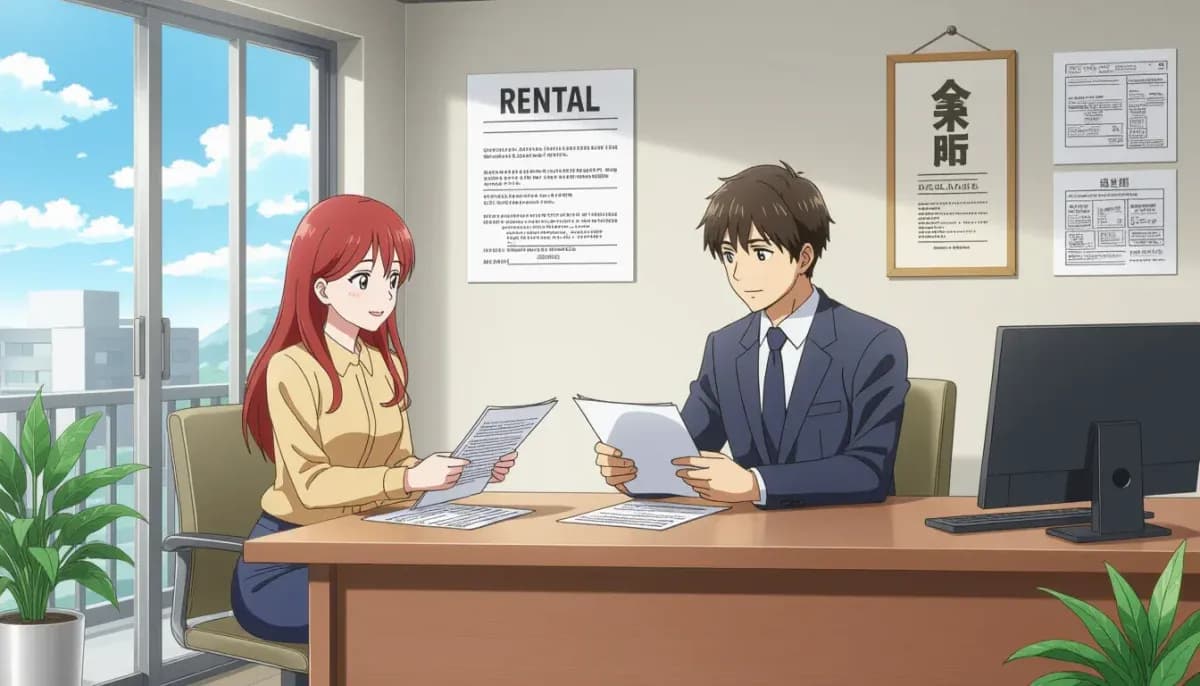
Property Management in Japan Guide for Foreign Owners
Everything foreign owners need to know about property management in Japan: management fees, bilingual companies, tax obligations, legal requirements, and tips for managing rental property from overseas.
Read more →