
Japanese Public School System Guide for Foreign Families

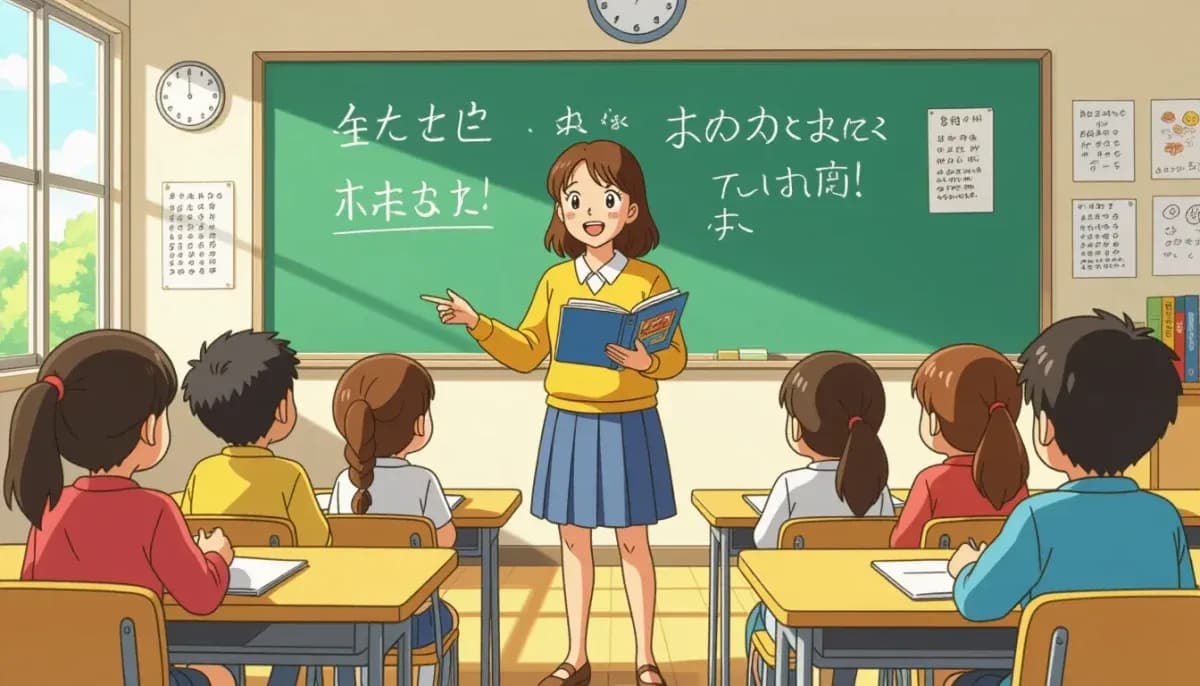
Complete guide to enrolling your children in Japanese public schools as a foreign family. Covers enrollment steps, costs, language support, school culture, and tips for a smooth transition.
Japanese Public School System Guide for Foreign Families
Moving to Japan with children brings exciting opportunities — and a few challenges. The Japanese public school system is one of the best in the world, consistently ranking among top PISA performers, and it is fully open to foreign children. This guide walks you through everything you need to know: how the system works, how to enroll your child, what to expect on day one, and how to help your child thrive.
Whether you are relocating for work, following a spouse, or making Japan your long-term home, understanding the public school system early will save you stress and help your children settle in faster.
How the Japanese School System Works
Japan follows a 6-3-3 structure for compulsory education:
| Level | Years | Ages | Tuition |
|---|---|---|---|
| Elementary School (小学校) | 6 years | 6–12 | Free |
| Junior High School (中学校) | 3 years | 12–15 | Free |
| High School (高校) | 3 years | 15–18 | Varies |
| University (大学) | 4 years | 18+ | Paid |
Compulsory education covers the first 9 years — elementary and junior high school. High school is not compulsory but around 98% of Japanese students attend. For foreign children, the law does not require enrollment, but public schools must accept any foreign child whose parents request it.
The academic year begins in April and ends in March. This is very different from the September start that most Western countries follow. If your child transfers mid-year from abroad, they will likely join a class already in progress, which can feel disorienting at first.
There are three school terms:
- First term: April to July
- Summer vacation: Late July to late August
- Second term: September to December
- Winter vacation: Late December to early January
- Third term: January to March
Who Can Enroll in Japanese Public Schools?
Any child residing in Japan with a valid residence status can enroll in a public school — regardless of nationality. As of the most recent data, 114,853 foreign students are enrolled in Japanese public schools, a 23% year-over-year increase. This number continues to grow as Japan's foreign resident population expands.
Foreign children do not need to pass a Japanese language test to enroll. There are no academic entrance requirements for elementary or junior high school. The only real prerequisite is that your family is registered at the local municipal office (residence registration).
Important notes:
- Even undocumented children or those with irregular visa statuses may be permitted to attend in many municipalities
- Children on short-term tourist visas cannot enroll — you need a long-term resident visa (such as a Dependent visa if one parent holds a work visa)
- Saitama Prefecture and some other areas offer specialized entrance exams and programs for foreign students at the high school level
For a broader overview of raising children in Japan as a foreigner, see our guide on raising children in Japan.
Step-by-Step: How to Enroll Your Child
The enrollment process varies slightly by municipality but generally follows these steps:
Step 1: Complete Residence Registration Before enrolling your child in school, your entire family must be registered at your local city hall or ward office (区役所/市役所). Bring your passports, residence cards (在留カード), and your lease agreement or utility bill as proof of address.
Step 2: Visit the Board of Education After registering your address, visit the local Board of Education (教育委員会). This office is usually located within city hall. Inform them that you wish to enroll your child in a public school.
Step 3: Submit the Enrollment Application You will fill out a Foreign Student Enrollment Application (外国人就学申請書). The office will assign your child to the nearest appropriate school based on your address.
Step 4: Contact the Assigned School The Board of Education will typically issue an enrollment permit letter. Take this to the assigned school and arrange an enrollment meeting. Some schools will ask for:
- Proof of vaccinations (vaccination records from your home country)
- Previous school records or transcripts (helpful but not always required)
- Passport and residence card
Step 5: Prepare for the First Day Most schools will provide a list of supplies and items to purchase — stationery, physical education uniform (体操着), and sometimes specific bags or hats. Public schools in Japan often have detailed requirements for uniforms and equipment.
For help navigating daily life logistics in Japan, our daily life guide for foreigners covers many related topics.
!Foreign children in Japanese classroom with supportive teacher
Costs of Japanese Public School
One of the biggest advantages of public school over international school is cost. Here is a breakdown of typical expenses:
| Expense | Approximate Cost |
|---|---|
| Tuition | ¥0 (free) |
| Textbooks | ¥0 (free) |
| School lunch (給食) | ~¥4,000–5,000/month |
| School supplies | ¥5,000–15,000/year |
| Randoseru (backpack, elementary) | ¥30,000–70,000 (one-time) |
| Sports equipment / uniform | ¥5,000–20,000 |
| School trip (修学旅行) | ¥30,000–80,000 (once per school level) |
| PTA fee | ¥3,000–10,000/year |
Compared to international schools which can cost ¥2–3 million per year, public school is dramatically more affordable. The main ongoing cost is the school lunch program, which is mandatory and provided to all students.
Families experiencing financial hardship can apply for 就学援助 (educational assistance) at the municipal office, which can cover lunch fees, school supplies, and excursion costs for low-income households.
Japanese Language Support for Foreign Children
This is the biggest concern for most foreign families — and rightly so. All classes are taught in Japanese. There is no English-medium instruction at public school.
However, younger children adapt remarkably quickly. Most children under age 10 become conversational within 6–12 months through natural immersion. Academic Japanese (the language needed for exams and written work) takes longer — typically 3–5 years to fully develop.
Currently, approximately 70,000 foreign students require dedicated Japanese language support at public schools. The Ministry of Education (MEXT) has introduced several support measures:
- Pullout classes: Students leave their main class for dedicated Japanese language instruction
- Support teachers: Some schools have JSL (Japanese as a Second Language) teachers on staff
- Multilingual materials: Major cities publish school guides in Portuguese, Chinese, English, Filipino, Vietnamese, and Spanish
- Mother-tongue interpreters: Available in some municipalities, especially in areas with large foreign communities
Geographic variation is significant. Large cities like Tokyo, Osaka, and Nagoya have robust support systems. Smaller towns and rural areas may offer minimal or no dedicated language support. When choosing where to live in Japan, research the language support offerings at your local school if you have school-age children.
For more help with Japanese language learning, see our guide to learning Japanese as a foreigner.
For additional resources on education in Japan, Living in Nihon's complete guide to raising children and education in Japan provides detailed information including childcare options and financial support.
School Culture and What to Expect
Japanese schools have a distinct culture that may surprise newcomers. Understanding these customs helps your child adapt more smoothly.
Cleaning duties (掃除): Students clean their own classrooms and hallways every day. There are no janitors during school hours. This is considered an important part of character education.
Lunch routine: Students eat lunch in their classroom with their teacher. They serve each other and eat together. Kyushoku (school lunch) is a social activity, not just a meal break.
Club activities (部活動): From junior high onward, students are expected to join a club — sports clubs (baseball, soccer, volleyball) or cultural clubs (music, art, drama). These are taken very seriously and often run until late afternoon or on weekends.
Randoseru: Elementary school children in Japan carry a specific rigid backpack called a randoseru. While not legally required, it is essentially universal. Buying one is a significant purchase and often a gift from grandparents in Japanese families.
School communication: Much of the school communication — newsletters, permission slips, event announcements — will be in Japanese. This can be overwhelming early on. Translation apps like Google Translate's camera function are invaluable. Some schools are beginning to use multilingual communication platforms.
Parent involvement: PTA (parent-teacher association) participation is expected. There are regular school events, sports days (運動会), cultural festivals (文化祭), and parent-teacher conferences. Even if your Japanese is limited, showing effort to participate is appreciated.
!Japanese elementary school students doing outdoor activities together
Public School vs. International School: Which Is Right for Your Family?
Many foreign families wrestle with this decision. Here is a quick comparison to help:
| Factor | Public School | International School |
|---|---|---|
| Cost | Free (+ small fees) | ¥1.5–3 million/year |
| Language of instruction | Japanese | English / bilingual |
| Japanese acquisition | Fast and natural | Slower |
| International curriculum | No | Yes (IB, AP, etc.) |
| Expat community | Limited | Strong |
| Long-term Japan integration | Excellent | Limited |
| University pathways | Japanese universities | International + Japanese |
| Cultural immersion | Deep | Moderate |
The right choice depends on how long you plan to stay in Japan and your priorities for your child's future. Families staying 3+ years often find that public school provides better long-term integration and a significant cost advantage. Shorter-term residents or those prioritizing international university pathways often choose international school.
For a detailed cost comparison, see our cost of living guide for Japan.
For Work in Japan's education guide also provides useful comparisons between public and private school options for foreign families.
Common Challenges and How to Handle Them
Language barrier on day one: Arrange an interpreter if possible for the initial school meeting. Many municipalities can provide one through the Board of Education. On your child's first days, send a simple card in Japanese introducing your child and noting any health issues or dietary restrictions. Teachers genuinely want to help.
School bullying (ijime): Japan takes bullying seriously and schools have formal procedures for reporting and addressing it. If your child is experiencing problems, contact the homeroom teacher (担任) directly. You have the right to request school administration involvement.
Dietary restrictions: School lunch menus are set in advance and generally cannot be customized. If your child has serious allergies or religious dietary restrictions, discuss this with the school immediately. Some accommodations can be made, but options are limited. Families with strict dietary needs sometimes opt to send a packed lunch (obento) instead.
Grade placement: Foreign children are generally placed in the grade corresponding to their age, regardless of academic level. This can feel overwhelming if Japanese academic standards differ from what your child experienced before.
Missing out on support: If your local school does not have a JSL teacher, you can request one through the Board of Education. MEXT data shows that about 41.5% of foreign students need language support, but staffing gaps mean not all students receive it.
For more on navigating Japanese healthcare and support systems, see our healthcare guide for foreigners in Japan.
Additional practical information can be found at E-Housing's public school guide for foreign students and the Japan Today report on foreign children's educational support needs.
For IT professionals relocating to Japan, Ittenshoku's career guides can help you understand the job market and plan your family's move effectively.
Conclusion
The Japanese public school system is genuinely welcoming to foreign children, and thousands of international families navigate it successfully every year. Yes, there is a language hurdle — but children are extraordinary language learners, especially young ones. The cultural immersion your child gains from a Japanese public school education is invaluable and can set them apart for life.
Start by completing your residence registration, then contact your local Board of Education. Ask specifically what language support services are available at your assigned school. Join parent groups of other foreign families in your area — their experience and advice will be your best resource.
Japan's public schools are not just an affordable option — for families committed to long-term life in Japan, they are often the best option.
For more on building your life in Japan, explore our complete guide on working in Japan as a foreigner and our overview of finding housing in Japan.

Originally from Vietnam, living in Japan for 16+ years. Graduated from Nagoya University, with 11 years of professional experience at Japanese and international companies. Sharing information about living in Japan for foreigners.
View Profile →Related Articles
Summer Activities and Programs for Kids in Japan
Complete guide to summer activities and programs for kids in Japan. Discover English camps, traditional festivals, water sports, theme parks, and indoor activities for expat families.
Read more →
Special Needs Education in Japan for Foreign Families
A complete guide to special needs education in Japan for foreign families. Learn about school types, support levels, enrollment process, international school options, and key resources for expat parents.
Read more →
Is Homeschooling Legal in Japan Guide for Foreigners
Is homeschooling legal in Japan for foreigners? Learn about the legal gray area, steps to homeschool your child, curriculum options, and support organizations for expat families in Japan.
Read more →
Japanese Education System Explained for Foreign Parents
A complete guide to Japan's education system for foreign parents. Learn about school types, enrollment steps, costs, language support, and tips for raising bilingual children in Japan.
Read more →
Dealing with Bullying Ijime in Japanese Schools
Learn how to recognize, report, and respond to ijime (bullying) in Japanese schools. A practical guide for foreign and expat parents in Japan, with key statistics and action steps.
Read more →
After School Activities and Juku in Japan for Kids
Complete guide to after-school activities (naraigoto) and juku cram schools in Japan for expat families. Learn about costs, enrollment, popular activities, and tips for foreign children.
Read more →