
Daycare Hoikuen Application Guide for Foreign Parents

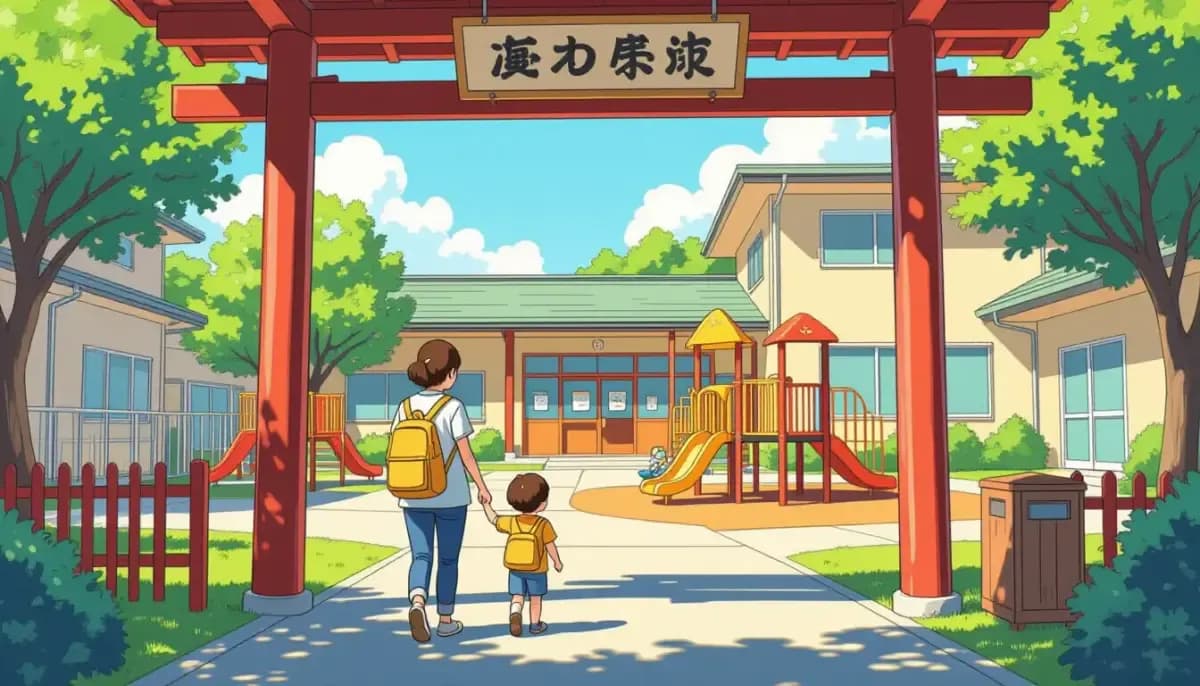
Step-by-step guide to applying for hoikuen (licensed daycare) in Japan as a foreign parent. Learn about the point system, required documents, costs, and tips to maximize your chances of enrollment.
Daycare Hoikuen Application Guide for Foreign Parents in Japan
Navigating Japan's childcare system as a foreign parent can feel overwhelming — dense paperwork in Japanese, competitive point-based admission, and unfamiliar bureaucratic processes. But here's the good news: hoikuen (認可保育園), Japan's licensed daycare system, is open to all residents regardless of nationality. This guide walks you through everything you need to know about the hoikuen daycare application process in Japan, from eligibility to enrollment day.
For a broader overview of raising children in Japan, see our Complete Guide to Raising Children in Japan.
What Is Hoikuen and Who Can Apply?
Hoikuen (保育園) are government-licensed childcare facilities designed for working parents. Unlike yōchien (kindergarten), which focuses on early education, hoikuen prioritizes childcare for children whose parents have a demonstrable "need" — primarily employment, but also education, illness, or job-seeking.
Key eligibility requirements:
- At least one parent must need childcare due to work, school, illness, or caregiving responsibilities
- Typically, both parents must work or study at least 64 hours per month
- The child must be a registered resident (jūminhyō) of the municipality
Foreign residents are fully eligible to apply. Your nationality does not affect your chances — only your point score matters. This includes holders of work visas, spousal visas, permanent residency, and long-term resident status.
| Childcare Need Category | Examples |
|---|---|
| Employment | Full-time, part-time, freelance, self-employed |
| Job-seeking | Actively searching for work (usually limited to 3 months) |
| Education | University, vocational school, Japanese language school |
| Illness/disability | Medical condition requiring childcare support |
| Caregiving | Caring for another family member |
| Pregnancy/postpartum | Standard waiting period after birth |
Understanding the Point System (指数)
Japan's licensed hoikuen spots are allocated through a point-based ranking system managed by each municipal ward office. Higher points = higher priority on the waiting list.
Points are calculated based on household circumstances. Here's how the system typically works in most wards:
| Situation | Base Points |
|---|---|
| Both parents working 160+ hours/month | 100 points (each) |
| Both parents working 120 hours/month | 90 points (each) |
| Minimum 64 hours/month (part-time) | 70 points (each) |
| Single parent (full-time) | 100 + 20 bonus points |
| One parent on parental leave | Lower base score |
Additional factors that affect your score:
- Siblings already enrolled in the same hoikuen: +bonus points
- Living with grandparents who can provide childcare: -points
- Receiving welfare/low-income certification: +bonus points
- Already on the waiting list: +1–2 bonus points per month in some wards
In competitive Tokyo 23 Wards, families typically need 200–240 combined points to secure placement at popular facilities. Always call your ward office to calculate your exact score before applying.
For more on managing finances while raising children in Japan, see our Complete Guide to Banking and Finance in Japan.
Application Timeline: When to Apply
The main enrollment cycle in Japan follows the April school year start, which means applications are submitted months in advance. Here is the typical calendar:
| Period | What Happens |
|---|---|
| September–October | Ward offices release application guides and forms |
| October–December | Application submission period (main cycle) |
| January–February | Results announced; acceptance letters sent |
| March | Enrollment procedures, facility visits |
| April 1 | New school year begins |
Mid-year (monthly) applications are also accepted for families who move or need childcare outside the April cycle. These are usually submitted by the 10th of the previous month, though availability is much more limited.
Pro tip: Visit your ward office as early as September to pick up application materials and ask about the timeline. Many wards now offer multilingual consultation services.
Required Documents for Hoikuen Application
Gathering the right documents is critical. Missing even one can delay or disqualify your application. The following list covers the core documents required in most municipalities — always confirm with your specific ward, as requirements vary.
Standard documents needed:
- Application for Childcare Enrollment (保育所入所申込書) — obtained from ward office
- Childcare Need Certification Form (子どものための教育・保育給付認定申請書)
- Employment certificate (就労証明書) — completed by your employer (one per working parent)
- Residence certificate (住民票) — child and parents registered at same address
- MyNumber cards or notification letters — for child and both parents
- Child's health certificate (児童健康状態調査票) — sometimes from your pediatrician
- Income tax or resident tax documents — used to calculate fees for ages 0–2
- Residence Card (在留カード) — front and back copies (foreign parents)
- Passport copies — for foreign parents/guardians
If your employer's paperwork is in a foreign language, you may need a Japanese translation. Some ward offices accept English documents directly — confirm this in advance.
For help understanding Japan's residence registration system, see our Complete Guide to Daily Life in Japan.
Hoikuen Costs: What Foreign Families Pay
One of the biggest surprises for many foreign parents is how affordable licensed hoikuen can be — sometimes even completely free.
Ages 3–5: Free Education Policy
Since October 2019, Japan has made tuition at licensed hoikuen, yōchien, and nintei kodomo-en completely free for all children aged 3–5, regardless of nationality or household income. This applies to the base childcare fee. Parents may still pay for:
- School meals (usually ¥3,000–¥6,000/month)
- Extended hour fees (延長保育)
- Activity or supply fees
Ages 0–2: Income-Based Fees
For children under 3, fees are calculated based on your resident tax payment (住民税), which reflects your household income from the previous year.
| Income Level | Approximate Monthly Fee (0–2 years) |
|---|---|
| Resident tax exempt | ¥0 (free) |
| Low income | ¥3,000–¥20,000/month |
| Middle income | ¥20,000–¥50,000/month |
| Higher income | ¥50,000–¥60,000/month |
Tokyo update (from September 2025): The Tokyo Metropolitan Government expanded its childcare subsidy to make licensed daycare free for all children aged 0–2 (first child), removing the remaining income-based fees for this age group. This is a Tokyo-specific policy and may not apply in other prefectures.
For a full breakdown of living costs in Japan, see our Complete Guide to Cost of Living in Japan.
How to Apply: Step-by-Step Process
Here's a practical walkthrough of the hoikuen application process for foreign parents:
Step 1: Register your child's residence (住民票) As soon as your child is born or you move to Japan, register at the municipal ward office. Your child must be on the residence registry to apply.
Step 2: Visit your ward office early Go to the ward's childcare section (子育て支援課 or similar) to pick up application packets, understand the point system, and calculate your score. Many wards now have multilingual staff or can arrange an interpreter.
Step 3: Research hoikuen options Compile a list of licensed hoikuen in your area. Many wards publish an online map. You can list multiple preferences (often up to 10) on a single application — list as many as you're willing to attend.
Step 4: Gather and prepare all documents Use the checklist above. Get your employer to fill out the employment certificate (就労証明書) in Japanese. If your employer is overseas or the paperwork is in English, ask the ward office how to handle this.
Step 5: Submit your application by the deadline Submit all documents to your ward office within the designated application window (usually October–December for April enrollment).
Step 6: Wait for results Results are typically announced in January–February. If accepted, you'll receive a letter with enrollment procedures. If rejected or waitlisted, you'll be notified and your application may carry over to subsequent months.
Step 7: Complete enrollment procedures Attend orientation sessions, submit additional health forms, purchase required supplies (indoor shoes, nap mat, etc.), and meet the staff.
For guidance on navigating Japan's healthcare system for your child, see our Complete Guide to Healthcare in Japan.
Tips for Maximizing Your Chances
Competition for hoikuen spots — especially in urban areas — can be fierce. Here's how to improve your odds:
1. Apply to as many facilities as possible List the maximum number of choices on your application. Being open to hoikuen slightly farther from home significantly increases your chances.
2. Both parents should be fully employed Two parents working 160+ hours per month generally yields the highest point scores for dual-parent households.
3. Apply for your first child early Once one child is enrolled in a hoikuen, siblings often receive priority points, making it easier to enroll future children in the same facility.
4. Use temporary daycare while waiting Many wards have ichiji azukari (一時預かり) — short-term, drop-in childcare. This can bridge the gap while you wait for a permanent spot.
5. Consider unlicensed options (認可外保育所) Unlicensed nurseries have their own enrollment procedures and are often easier to get into. They cost more (no government subsidy) but provide childcare while you wait for a licensed spot.
6. Learn basic Japanese childcare vocabulary Knowing terms like 保育園 (hoikuen), 入園 (nyūen/enrollment), 就労証明書 (employment certificate), and 待機児童 (taikiji/waitlisted child) will help you communicate with ward staff.
For language learning resources, see our Complete Guide to Learning Japanese.
Language Support and Multilingual Resources
Language barriers are one of the biggest challenges for foreign parents in Japan's childcare system. Here's how to navigate them:
- Ward office multilingual services: Many wards in major cities offer interpretation by appointment or phone interpretation services. Tokyo Metropolitan Government's TOMODACHI support line covers multiple languages.
- NPO support groups: Organizations like the Japan International Friendship and Welfare Foundation provide multilingual support for foreign families.
- Google Translate: Useful for scanning application forms, though always double-check critical fields with a bilingual friend or professional.
- Expat community groups: Facebook groups like "Mamas & Papas in Japan" or region-specific groups (Tokyo, Osaka, Nagoya) often have real-time advice from parents who have been through the process.
- Official multilingual guides: Some ward offices publish English or multilingual guides to the hoikuen application process — always check your ward's website or ask at the counter.
For additional resources on settling in Japan, the team at Living in Nihon provides comprehensive guides to childcare and education for foreigners in Japan. For Work in Japan is another helpful resource for foreign residents navigating working life in Japan, including balancing work and childcare responsibilities. Job-change resources at Ittenshoku can help parents find more family-friendly employment that qualifies for higher hoikuen point scores.
What to Expect After Enrollment
Once your child is enrolled, the transition period is an important time. Here's what to expect:
Narashi hoiku (慣らし保育) — Settling-in period Almost all hoikuen implement a 1–2 week settling-in period where your child gradually increases their time at the facility. This usually starts at 1–2 hours per day and builds up to a full day. Plan your work schedule accordingly.
Daily routines Hoikuen follow structured daily schedules with meals, nap times, outdoor play, and activities. Most provide lunch and a snack (included in meal fees). You'll typically pack only a small morning snack or nothing at all.
Communication with staff Teachers write daily reports (連絡帳 / renrakuchō) — a small notebook where staff record your child's meals, naps, and activities. You write notes back. This is usually in Japanese, so a translation app is helpful.
Health rules Japanese hoikuen have strict rules about illness. If your child has a fever above 37.5°C, they typically cannot attend. You'll need to have backup childcare arrangements for sick days.
For more on building a life in Japan as a foreign resident, explore our Complete Guide to Daily Life in Japan for Foreigners and our Complete Guide to Making Friends and Social Life in Japan.
Quick Reference: Hoikuen Application Checklist
| Task | Status |
|---|---|
| Register child's residence (住民票) | ☐ |
| Visit ward office for application packet | ☐ |
| Calculate your point score | ☐ |
| Research hoikuen options (up to 10 choices) | ☐ |
| Get employment certificate from employer | ☐ |
| Prepare residence card and passport copies | ☐ |
| Gather MyNumber cards for all family members | ☐ |
| Obtain child health certificate | ☐ |
| Submit application by deadline | ☐ |
| Wait for results (January–February) | ☐ |
| Complete enrollment procedures if accepted | ☐ |
Applying for hoikuen as a foreign parent in Japan requires patience and preparation — but thousands of international families successfully navigate this process every year. Start early, gather your documents carefully, and don't hesitate to ask your ward office for help. Japan's public childcare system, once you're in, is excellent — affordable, structured, and focused on your child's wellbeing.
For more resources about expat life in Japan, check out E-Housing's comprehensive daycare guide and Real Life Japan's guide for foreign residents.

Originally from Vietnam, living in Japan for 16+ years. Graduated from Nagoya University, with 11 years of professional experience at Japanese and international companies. Sharing information about living in Japan for foreigners.
View Profile →Related Articles

Summer Activities and Programs for Kids in Japan
Complete guide to summer activities and programs for kids in Japan. Discover English camps, traditional festivals, water sports, theme parks, and indoor activities for expat families.
Read more →
Special Needs Education in Japan for Foreign Families
A complete guide to special needs education in Japan for foreign families. Learn about school types, support levels, enrollment process, international school options, and key resources for expat parents.
Read more →
Is Homeschooling Legal in Japan Guide for Foreigners
Is homeschooling legal in Japan for foreigners? Learn about the legal gray area, steps to homeschool your child, curriculum options, and support organizations for expat families in Japan.
Read more →
Japanese Education System Explained for Foreign Parents
A complete guide to Japan's education system for foreign parents. Learn about school types, enrollment steps, costs, language support, and tips for raising bilingual children in Japan.
Read more →
Dealing with Bullying Ijime in Japanese Schools
Learn how to recognize, report, and respond to ijime (bullying) in Japanese schools. A practical guide for foreign and expat parents in Japan, with key statistics and action steps.
Read more →
After School Activities and Juku in Japan for Kids
Complete guide to after-school activities (naraigoto) and juku cram schools in Japan for expat families. Learn about costs, enrollment, popular activities, and tips for foreign children.
Read more →