
Obon Festival in Japan Complete Guide for Foreigners

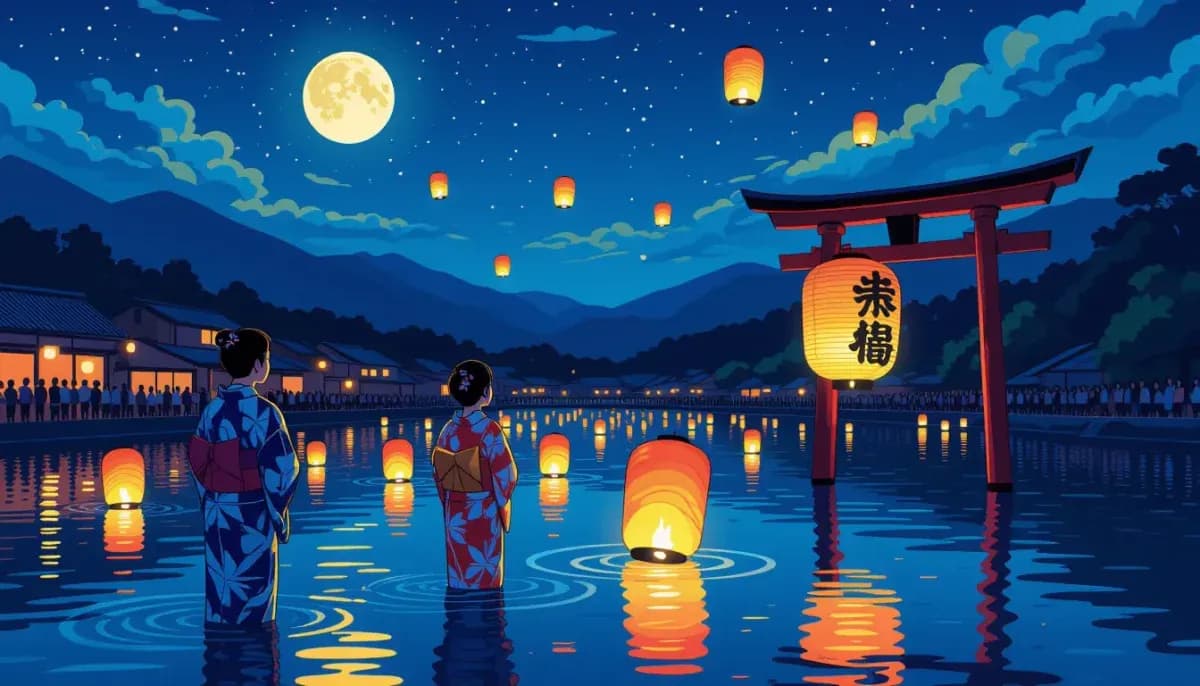
Everything foreigners need to know about Japan's Obon festival — dates, traditions, Bon Odori dancing, famous festivals, travel tips, and etiquette for expats and visitors.
Obon Festival in Japan: Complete Guide for Foreigners
Japan's Obon festival is one of the most profound and visually stunning cultural events you can experience as a foreigner living in or visiting Japan. Held each August across most of the country, Obon is a Buddhist tradition that honors the spirits of deceased ancestors, believed to return to the living world for a brief visit. Over centuries, this solemn remembrance has blossomed into a celebration that combines lantern lighting, community dancing, grave visits, and spectacular farewell ceremonies. Whether you're curious about the spiritual significance, want to join a Bon Odori dance, or simply need to plan around the busy holiday period, this guide covers everything you need to know about Obon in Japan.
What Is Obon? The History and Meaning Behind the Festival
Obon has been celebrated in Japan for more than 500 years, originating from a Buddhist story about a monk named Maudgalyayana (known in Japan as Mokuren), a disciple of the Buddha. According to legend, he used his supernatural powers to look upon his deceased mother and discovered she had fallen into the Realm of Hungry Ghosts. Buddha instructed him to make offerings to monks who had completed their summer retreat on the fifteenth day of the seventh month, which released her from suffering. His subsequent joy and gratitude became the basis for the communal dances that define Obon today.
The festival is a fusion of ancient Japanese animism — the belief that ancestral spirits continue to watch over the living — and Buddhist customs of honoring the dead. Over time, what began as a solemn ritual evolved into a family reunion holiday where people return to their hometowns, clean ancestral graves, make offerings at home altars, and participate in community dances and lantern ceremonies.
For foreigners in Japan, Obon offers a rare and meaningful window into the spiritual heart of Japanese culture. Unlike many events that are increasingly commercialized, Obon retains genuine religious and emotional significance for most Japanese families.
When Is Obon Celebrated? Dates and Regional Variations
One of the most confusing aspects of Obon for newcomers is that it is not celebrated on the same dates everywhere in Japan. When Japan transitioned from the lunar calendar to the Gregorian calendar in the Meiji era, different regions adopted different approaches, resulting in three distinct Obon periods.
| Obon Period | Dates | Regions |
|---|---|---|
| Shichigatsu Bon (July Obon) | July 13-16 | Tokyo, parts of Tohoku and Hokuriku |
| Hachigatsu Bon (August Obon) | August 13-16 | Most of Japan — the most common |
| Kyu Bon (Old Calendar Obon) | Varies by lunar calendar | Okinawa, some southern islands |
For most people living in Japan, August 13-16 is the main Obon period. This is the time when domestic travel surges, businesses close, and communities gather for festivals. In Tokyo, however, many neighborhoods celebrate in mid-July, so you may encounter Bon Odori events earlier in the summer.
If you live in Okinawa, be aware that the timing can shift significantly each year depending on the lunar calendar. Check local community boards or city office announcements for exact dates.
For a broader look at Japan's annual festivals and seasonal traditions, see our Complete Guide to Japanese Festivals and Traditions.
Key Obon Traditions: What Happens During the Festival
Obon is structured around a sequence of rituals that unfold over three to four days, each with specific spiritual meaning.
Mukaebi: Welcoming the Spirits (August 13)
The first evening of Obon is marked by lighting small welcome fires called mukaebi at the entrance of homes. These fires, along with paper lanterns, serve as beacons to guide ancestral spirits back from the afterlife. Families also visit family graves during this period, cleaning the headstones and leaving offerings of flowers, incense, food, and water.
Inside the home, the butsudan (family Buddhist altar) is decorated with fresh flowers, seasonal fruits, and symbolic offerings. Among the most distinctive are the spirit mounts: a cucumber carved to resemble a horse (for the spirit to ride home quickly) and an eggplant shaped like a cow (for the spirit to leave slowly, savoring the time with family).
Bon Odori: The Community Dance
Bon Odori is perhaps the most accessible and joyful part of Obon for foreigners. These communal dances are held at local parks, temple grounds, and community centers across Japan during Obon. Participants — many dressed in colorful yukata — dance in a large circle around a raised wooden platform (yagura) where musicians and singers perform traditional folk songs.
The dances vary by region, but they share a repetitive, rhythmic style designed so that anyone can join in without knowing the steps in advance. Follow the lead dancers on the yagura platform — their arm motions often mimic farming, fishing, or rowing activities tied to local history. Keep your movements small and synchronized rather than exaggerated.
Foreigners are warmly welcomed at Bon Odori events. You do not need an invitation or prior dance knowledge. Simply arrive at a local event, find a spot in the circle, watch for a few rounds, and then join when you feel comfortable.
Ohakamairi: Visiting the Graves
Family grave visits are a central obligation of Obon. Families travel — sometimes long distances — to clean and decorate the graves of their ancestors. They offer flowers, incense, water, and food, then pray and spend quiet time at the gravesite. If you live with or near a Japanese family during Obon, you may be invited to participate in this tradition, which is a significant honor.
Okuri-bi and Toro Nagashi: Sending the Spirits Home (August 16)
The final day of Obon involves farewell ceremonies to send the ancestral spirits back to their world. Families light farewell fires (okuri-bi) at home entrances, mirroring the welcoming fires of the first day.
The most visually spectacular ceremony is Toro Nagashi, where hundreds or thousands of paper lanterns are set afloat on rivers, lakes, or the sea. The gentle glow of floating lanterns drifting on dark water is one of the most iconic and moving images in all of Japanese culture. Toro Nagashi events are open to the public and are held across Japan, with notable ceremonies in Kyoto (on the Kamo River), Hiroshima (connected to the August 6 memorial), and many coastal and riverside towns.
For more on navigating Japanese cultural etiquette during events like these, our Complete Guide to Japanese Culture and Etiquette is an essential resource.
Famous Obon Festivals Across Japan
While neighborhood Bon Odori events are held everywhere, several Obon festivals are famous nationwide and worth traveling to if you have the chance.
| Festival | Location | Dates | Highlights |
|---|---|---|---|
| Awa Odori | Tokushima City, Shikoku | August 12-15 | Japan's largest Obon dance, 400+ years old |
| Gujo Odori | Gujo Hachiman, Gifu | 30+ nights in summer | All-night dancing during peak Obon |
| Daimonji Gozan Okuribi | Kyoto | August 16 | Five giant bonfires lit on mountain slopes |
| Toro Nagashi (Hiroshima) | Hiroshima City | August 6 | Lantern release on the Motoyasu River |
| Nishi-Monzen Bon Odori | Tokyo | Mid-July | Tokyo's Obon celebrations |
Awa Odori in Tokushima is the undisputed king of Obon festivals. Over 400 years old, it draws around 1.3 million visitors each year. Thousands of dancers in traditional straw hats move through the city streets in organized groups called ren, performing synchronized dances to the driving rhythm of taiko drums, shamisen, and flutes. Spectators' areas (non-ticketed) are free; grandstand seating requires tickets purchased well in advance.
Gujo Odori in Gifu Prefecture runs over 30 nights through summer, peaking during Obon when the dances continue literally all night until dawn — an experience unlike any other. Locals and tourists dance side by side in traditional wooden sandals on historic stone-paved streets.
Daimonji Gozan Okuribi in Kyoto is one of the most visually dramatic events in all of Japan. On the evening of August 16, five huge bonfires are lit on the mountains surrounding Kyoto, forming the characters and symbols that send the spirits back to the afterlife. The most famous is the enormous "大" (Dai, meaning "large") character on Daimonjiyama. Viewing spots fill up hours early, so arrive early and bring drinks.
Learn more about planning travel within Japan in our Complete Guide to Transportation in Japan.
Practical Guide: What to Expect as a Foreigner During Obon
Crowds, Travel, and Booking
Obon is one of Japan's three major travel seasons, alongside New Year and Golden Week. The sheer volume of domestic travelers — millions of people returning to their hometowns — means that transportation, accommodation, and tourist sites become extraordinarily crowded.
For the August Obon, peak outbound travel is typically on the Sunday before August 13, while peak return travel clusters around August 15-16. Shinkansen, domestic flights, and highways are all heavily congested. If you need to travel during this period:
- Book shinkansen and flights at least 2-3 months in advance
- Expect significant surcharges on accommodation (prices can double or triple)
- Plan on longer travel times than usual due to congestion
- Consider traveling on the actual festival days (August 13-15) rather than the peak departure/return days, as locals have mostly reached their destinations by then
For tips on everyday transportation in Japan, see our Complete Guide to Transportation in Japan.
Business Hours During Obon
Chain stores, convenience stores (konbini), and major shopping malls typically remain open throughout Obon. However, small and medium businesses — restaurants, specialty shops, family-run services, dental clinics, and even some local government offices — may close from August 13-15. Plan essential errands before the holiday window. If you need medical care, confirm your clinic's hours in advance. For banking and ATM access during holidays, see our Complete Guide to Banking and Finance in Japan.
Etiquette at Obon Events
As with all religious and community events in Japan, mindful behavior goes a long way:
- At graves and temples: Keep your voice low, avoid flash photography unless clearly permitted, and do not interfere with family rituals you were not invited to join.
- At Bon Odori: Join the dance if you wish — you are genuinely welcome — but keep movements respectful and synchronized rather than drawing attention to yourself as a spectacle.
- Wearing yukata: Joining Bon Odori in a yukata is encouraged. Many festivals and rental shops offer yukata rentals (typically ¥3,000-¥5,000 with help dressing included). Ask staff to help tie the obi (sash) correctly.
- Food and offerings: If invited to a family home during Obon, you may encounter vegetarian meals, as many families eat no meat or fish during the festival period as a religious observance.
Obon Food and What to Eat
Beyond the offerings on the butsudan, Obon festivals offer wonderful street food. Yatai (food stalls) set up around festival grounds sell takoyaki (octopus balls), yakitori (grilled chicken skewers), kakigori (shaved ice), taiyaki (fish-shaped sweet cakes), and cold drinks. Eating street food at a festival is part of the experience and very much encouraged.
For a deeper understanding of Japanese food culture, see our Complete Guide to Japanese Food and Cooking.
Where to Experience Obon as a Foreigner
You don't need to travel to a famous festival to experience Obon. Almost every neighborhood in Japan holds its own Bon Odori event, usually at a local park or elementary school grounds. Look for:
- Posters at convenience stores and community notice boards in mid-July and early August
- City hall (shiyakusho) event calendars
- Community center bulletin boards
- Neighborhood association (chōnaikai) announcements
Attending a local neighborhood event is often more authentic and intimate than attending a large, tourist-oriented festival. You'll see families in yukata, children playing games at yatai stalls, elderly residents dancing with quiet dignity, and the whole community participating together. As a foreigner, you may get some curious glances, but you will almost certainly be welcomed warmly.
For guidance on building connections with your local community in Japan, our Complete Guide to Making Friends and Social Life in Japan has practical advice.
Further Resources for Foreigners in Japan
Understanding Japanese cultural events like Obon is part of building a meaningful life in Japan. Here are some additional resources that expats and long-term residents find valuable:
- Living in Nihon: Japanese Seasons and Traditions Guide — A comprehensive overview of Japan's seasonal events and customs
- For Work in Japan: Cultural Organizations and Religious Communities — Understanding religious and cultural life as a resident
- Ittenshoku: Japan Career and Life Resources — Resources for foreigners navigating life and work in Japan
- Japan Guide: Obon — Detailed information on Obon dates, traditions, and events nationwide
- Japan Highlights: Obon Festival Complete Guide — Dates, activities, and what to do during Obon
Summary: Quick Reference for Obon
| Topic | Key Information |
|---|---|
| Main Dates | August 13-16 (most of Japan) / Mid-July (Tokyo) |
| Duration | 3-4 days |
| Purpose | Honor returning ancestral spirits |
| Key Activity | Bon Odori community dance, grave visits, lantern ceremonies |
| Famous Festivals | Awa Odori (Tokushima), Gujo Odori (Gifu), Daimonji (Kyoto) |
| Travel Impact | One of Japan's busiest travel periods — book early |
| Business Closures | August 13-15: many small businesses closed |
| Dress | Yukata encouraged at Bon Odori events |
| Foreigner Participation | Very welcome at public Bon Odori and Toro Nagashi events |
| Ticket Required? | Neighborhood events free; major festivals may have ticketed areas |
Obon is not just a festival — it is a profound expression of how Japanese culture maintains its connection to the past while celebrating life in the present. As a foreigner in Japan, witnessing and participating in Obon is one of the most moving and memorable cultural experiences available to you. Embrace it with respect, curiosity, and a willingness to join in, and you will come away with a much deeper understanding of what makes Japan uniquely Japan.

Originally from Vietnam, living in Japan for 16+ years. Graduated from Nagoya University, with 11 years of professional experience at Japanese and international companies. Sharing information about living in Japan for foreigners.
View Profile →Related Articles
Japanese National Holidays Calendar and Guide
Complete guide to Japan's 16 national holidays including Golden Week, Silver Week, and New Year. Essential calendar and practical tips for foreigners living in Japan.
Read more →
Japanese Gift Giving Seasons Ochugen and Oseibo Guide
Learn everything about Japanese gift giving seasons ochugen and oseibo. Timing, etiquette, gift ideas, and practical tips for foreigners living and working in Japan.
Read more →
Shichi Go San Children Festival Explained for Foreign Parents
Everything foreign parents need to know about Japan's Shichi-Go-San festival: which ages celebrate, kimono rental costs, shrine visits, chitose-ame candy, and participation tips.
Read more →
Setsubun Bean Throwing Festival Guide
Complete guide to Setsubun, Japan's February bean-throwing festival. Learn about mamemaki, eho-maki, where to watch public events, and how foreigners can participate in this beloved tradition.
Read more →
Japanese Seasonal Foods Calendar and Guide
Discover Japan's seasonal food calendar month by month. Learn about shun (旬), what to eat each season, cultural food traditions, and practical tips for expats living in Japan.
Read more →
Tanabata Star Festival in Japan Explained
Everything you need to know about Tanabata — Japan's Star Festival. Discover the legend of Orihime and Hikoboshi, how to write tanzaku wishes, the best festivals to attend (Sendai, Hiratsuka), and practical tips for foreigners joining the celebration.
Read more →