
Setsubun Bean Throwing Festival Guide

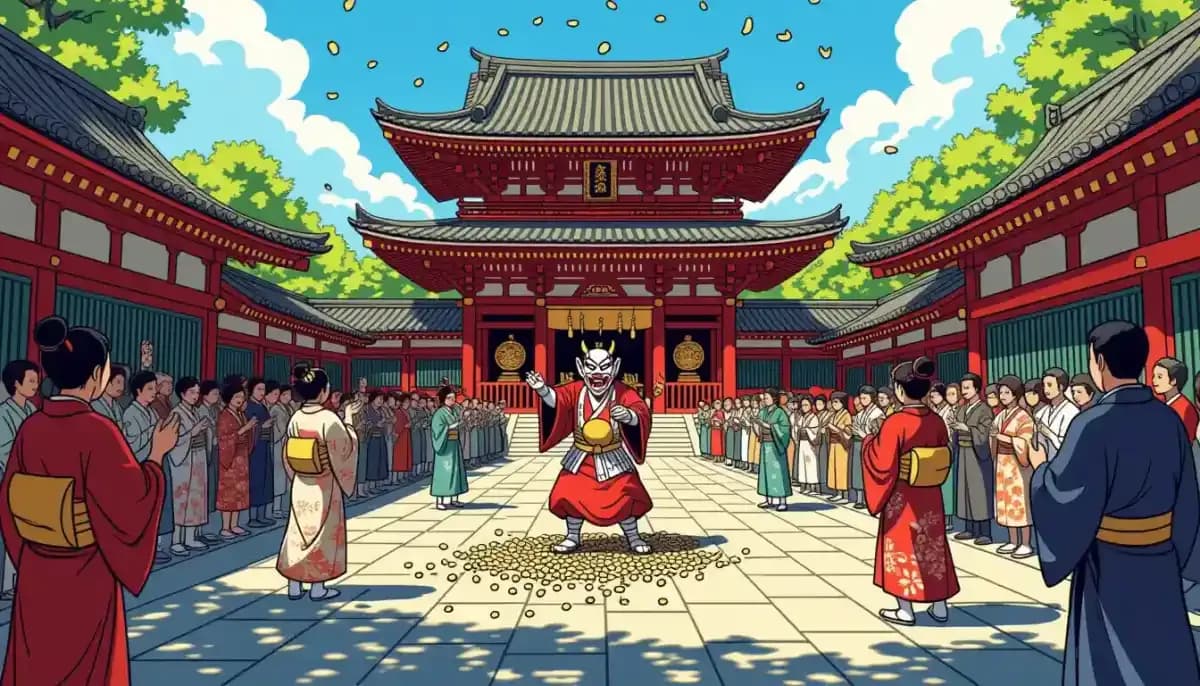
Complete guide to Setsubun, Japan's February bean-throwing festival. Learn about mamemaki, eho-maki, where to watch public events, and how foreigners can participate in this beloved tradition.
Setsubun Bean Throwing Festival Guide: Everything Foreigners Need to Know
Every February, Japan transforms into a nation of bean-throwers. At temples packed with thousands of visitors, at family dinner tables, and even at office parties, people across the country fling roasted soybeans while shouting ancient chants to drive away demons. This is Setsubun — one of Japan's most beloved and participatory seasonal festivals, and one of the easiest for foreigners to join in on.
Whether you are a long-term resident or a visitor lucky enough to be in Japan in early February, this guide covers everything you need to know about Setsubun, from its ancient origins to where to experience the best events and how to celebrate at home.
!Setsubun bean throwing festival ceremony at Japanese temple with worshippers and oni demon masks

What Is Setsubun? Origins and Meaning
Setsubun (節分) literally means "seasonal division" — the day that divides one season from the next. Historically, there were four setsubun each year marking each seasonal transition, but over time the spring setsubun became by far the most important, celebrated the day before Risshun (立春), the traditional first day of spring.
In modern Japan, Setsubun almost always falls on February 3rd, though calendar variations occasionally shift it to February 2nd or 4th. For 2026, Setsubun falls on February 3rd.
The festival's roots stretch back over a thousand years. A Chinese ritual called Tsuina (追儺) was introduced to Japan in 706 AD during the reign of Emperor Monmu. Originally performed only at the imperial court as an elaborate ceremony to expel demons before the new year, the practice gradually spread to temples, shrines, and eventually ordinary households. By the Edo period (1603–1868), bean-throwing had become a nationwide custom enjoyed by people of all social classes, helped along by popular kabuki actors performing mamemaki publicly.
Today, Setsubun is not an official national holiday, but it is one of the most widely observed traditional events on the Japanese calendar.
The Main Tradition: Mamemaki (Bean Throwing)
The centerpiece of Setsubun is mamemaki (豆まき), literally "bean scattering." The ritual involves throwing roasted soybeans — called fuku-mame (福豆) or lucky beans — to drive away evil spirits and invite good fortune into the home.
How to Do Mamemaki at Home
The traditional method is simple and fun:
- Prepare roasted soybeans — these are sold at supermarkets and convenience stores in Setsubun sets starting in late January
- Put on (or find someone to wear) an oni mask — traditionally the oldest male in the household dressed as the demon
- Throw beans while chanting — "Oni wa soto! Fuku wa uchi!" (鬼は外!福は内!) meaning "Demons out! Fortune in!"
- Throw beans from your doorway outward to expel bad luck, then toss some inside to invite good fortune
- Eat your age in beans — plus one extra for luck in the coming year. A 30-year-old would eat 31 beans.
Foreigners living in Japan can easily join this tradition. Many apartment dwellers simply stand at their front door and toss a handful of beans out into the hallway — your neighbors will understand completely.
Where to Watch Public Mamemaki Events
The most spectacular Setsubun experiences happen at temples and shrines, where priests, celebrities, sumo wrestlers, and local dignitaries throw beans into enormous crowds. Some highlight events:
Sensoji Temple, Asakusa (Tokyo)
- One of Tokyo's most famous Setsubun events
- Mamemaki sessions at 12:00 PM and 2:00 PM on February 3rd
- Free admission
- Features the Dance of the Seven Lucky Gods performance
- Expect large crowds — arrive early for a good spot
Naritasan Shinshoji Temple (Chiba)
- Among Japan's largest Setsubun events, drawing up to 40,000 visitors
- Famous sumo wrestlers and kabuki actors participate as bean throwers
- Approximately 860 kg of beans are thrown to the crowd
- Located about an hour from central Tokyo by train
Yoshida Shrine, Kyoto
- One of the oldest and most traditional Setsubun ceremonies in Japan
- Held over multiple days with nighttime torch-lit rituals
- Features the famous Oni Yarai ritual dating back to the Heian period
Tsūtenkaku, Osaka
- Setsubun events at Osaka's famous tower
- Combines the traditional with modern entertainment
Eho-maki: The Lucky Direction Sushi Roll
Alongside mamemaki, eating eho-maki (恵方巻き) has become one of the most popular Setsubun traditions nationwide.
Eho-maki is a thick, uncut makizushi (rolled sushi) containing seven fillings that represent the Seven Lucky Gods of Japanese mythology. The rules for eating it are specific:
- Face the year's lucky direction as determined by the zodiac sign of that year — for 2026, the lucky direction is South-Southeast (南南東 slightly South)
- Eat the entire roll without cutting it — cutting symbolizes cutting off good luck
- Eat in complete silence — speaking breaks the spell and prevents wishes from coming true
- Make a wish while eating — hold the roll in both hands and focus on your wish
This tradition originated in the Osaka region but has spread nationwide, largely due to marketing campaigns by convenience store chains like 7-Eleven in the 1980s and 1990s. Today, eho-maki is sold everywhere from sushi restaurants to family mart convenience stores throughout the country.
Foreigners often find this tradition both amusing and surprisingly moving. Sitting in silence at a dinner table while everyone stares straight ahead eating giant sushi rolls is genuinely memorable.

Hiiragi Iwashi: The Demon-Repelling Decoration
One of the lesser-known Setsubun traditions is hiiragi iwashi (柊鰯) — a decoration made from a sardine head skewered on a sprig of holly and placed at the entrance of a home or building.
The logic is elegant: demons are repelled by both the sharp spiny leaves of the holly bush and the strong smell of grilled sardine. Together, they form an effective supernatural barrier. Seeing these decorations hanging at doorways across Japan in early February is one of those small cultural details that makes living here feel genuinely different and fascinating.
While this tradition is less commonly observed in modern urban apartments than it once was, you can still spot hiiragi iwashi at traditional homes, some restaurants, and at temples during Setsubun events. Some families still maintain the practice, and traditional home goods stores sell the decoration kits.
Setsubun Dates and Planning Your Visit
| Year | Setsubun Date | Lucky Direction for Eho-maki |
|---|---|---|
| 2024 | February 3 | East-Northeast |
| 2025 | February 2 | West-Southwest |
| 2026 | February 3 | South-Southeast |
| 2027 | February 3 | North-Northwest |
| 2028 | February 3 | South-Southeast |
| 2029 | February 2 | East-Northeast |
Setsubun is not a national holiday, so transportation and accommodation remain at normal prices — a significant advantage for travelers. However, popular temple events can draw enormous crowds, so plan to arrive early if attending a major mamemaki ceremony.
Early February is mid-winter in most of Japan. Dress warmly for outdoor temple events, especially in the morning. Sensoji and similar venues will be cold but festive.
How Foreigners Can Participate in Setsubun
One of the great things about Setsubun is how inclusive and accessible it is. Unlike some Japanese ceremonies that require specific knowledge or invitation, mamemaki actively welcomes participation.
At Public Events
Simply showing up at a temple or shrine on February 3rd is enough. Join the crowd, learn the chant, and scramble to catch the lucky beans thrown from elevated stages. If you catch beans in little packets, you can keep them as omamori-style lucky charms or eat them for good fortune. Many events also distribute lucky bags (fukubukuro) with small prizes.
At Home
Supermarkets (especially Aeon, Ito-Yokado, and similar chains) and convenience stores stock Setsubun kits from mid-January onward. These typically include:
- A bag of roasted soybeans
- An oni mask for the designated demon
- Sometimes a lucky bean scatter tray
Hosting a Setsubun gathering with Japanese friends or colleagues is a wonderful way to experience the tradition authentically. Japanese people are generally delighted to explain the customs to curious foreigners.
At School or Work
Setsubun events frequently happen at Japanese kindergartens and elementary schools, where teachers dress as oni to be chased by bean-throwing children. If you work in Japan or have children in Japanese schools, there is a good chance a Setsubun event will be organized for you. For more on navigating Japanese school culture, see our guide on raising children in Japan.
Setsubun Food Beyond Eho-maki
While eho-maki is the headlining food, Setsubun has inspired a wider seasonal food culture in Japan:
Roasted soybeans (fukumame) — the essential mamemaki ingredient, also eaten as a crunchy snack throughout the season
Iwashi (sardines) — grilled sardines are eaten for Setsubun in some regions, connecting to the hiiragi iwashi protective tradition
Setsubun sweets — wagashi shops create seasonal confections shaped like oni or decorated with spring motifs
Convenience store specials — 7-Eleven, FamilyMart, Lawson, and others offer extensive Setsubun menus including multiple varieties of eho-maki, often requiring advance reservation for popular options
For a deeper look at Japanese seasonal food culture, our Japanese food and cooking guide covers how to navigate Japan's rich culinary traditions as a foreigner.
Setsubun and Japanese Cultural Life
Understanding Setsubun gives you a window into something important about Japanese culture: the deep connection between seasonal change and community ritual. Japan's traditional calendar marks time differently than the Western calendar — seasons arrive not just meteorologically but ceremonially, with specific foods, decorations, and practices marking each transition.
Participating in Setsubun, even in a small way, helps foreigners feel the rhythm of Japanese life in a way that no amount of reading can replicate. Throwing beans out your apartment door in the cold February air while half-heartedly chanting "Oni wa soto!" is simultaneously silly and deeply meaningful.
For more on navigating Japanese cultural traditions and etiquette, see our comprehensive guide to Japanese culture and etiquette for foreigners. If you are interested in attending other seasonal festivals, our Japanese festivals and traditions guide covers the full calendar of major events throughout the year.
Practical Tips for Setsubun
Buying supplies: Setsubun kits appear in supermarkets around January 20th and sell out quickly. Buy your fukumame and oni masks early.
Temple crowds: Major mamemaki events at Sensoji or Naritasan can draw tens of thousands. If you want a spot near the front, arrive 30-60 minutes before the ceremony starts.
Eating beans by age: There is no pressure to eat all your beans at once. Roasted soybeans are genuinely delicious as snacks and can be enjoyed over several days.
Eho-maki etiquette: At convenience stores, eho-maki often requires advance ordering in the weeks before February 3rd. Walk-in availability varies by store.
For families with children: Setsubun is one of the most child-friendly Japanese festivals. Children love chasing parents in oni masks, and the bean-eating tradition is easy to explain to kids of any age.
For broader guidance on building a fulfilling daily life in Japan as a foreigner, the daily life in Japan guide has practical advice on participating in community events and seasonal traditions.
Further Resources
- Japan Guide: Setsubun — comprehensive festival overview
- Live Japan: Setsubun Guide — event listings and visitor tips
- Living in Nihon — life in Japan guides for foreigners
- For Work in Japan — working and living in Japan resources
- Ittenshoku — Japan relocation and lifestyle guides
Setsubun is proof that some of the best experiences in Japan cost nothing and require no special preparation — just show up, learn two words of a chant, and throw some beans.

Originally from Vietnam, living in Japan for 16+ years. Graduated from Nagoya University, with 11 years of professional experience at Japanese and international companies. Sharing information about living in Japan for foreigners.
View Profile →Related Articles
Japanese National Holidays Calendar and Guide
Complete guide to Japan's 16 national holidays including Golden Week, Silver Week, and New Year. Essential calendar and practical tips for foreigners living in Japan.
Read more →
Japanese Gift Giving Seasons Ochugen and Oseibo Guide
Learn everything about Japanese gift giving seasons ochugen and oseibo. Timing, etiquette, gift ideas, and practical tips for foreigners living and working in Japan.
Read more →
Shichi Go San Children Festival Explained for Foreign Parents
Everything foreign parents need to know about Japan's Shichi-Go-San festival: which ages celebrate, kimono rental costs, shrine visits, chitose-ame candy, and participation tips.
Read more →
Japanese Seasonal Foods Calendar and Guide
Discover Japan's seasonal food calendar month by month. Learn about shun (旬), what to eat each season, cultural food traditions, and practical tips for expats living in Japan.
Read more →
Tanabata Star Festival in Japan Explained
Everything you need to know about Tanabata — Japan's Star Festival. Discover the legend of Orihime and Hikoboshi, how to write tanzaku wishes, the best festivals to attend (Sendai, Hiratsuka), and practical tips for foreigners joining the celebration.
Read more →
Halloween in Japan How It Has Become a Major Event
Halloween in Japan has grown from a single theme park event in 2000 into a nationwide cosplay and celebration phenomenon. Learn about the history, top events, and tips for foreigners participating in Japanese Halloween.
Read more →