
Japanese Gift Giving Seasons Ochugen and Oseibo Guide

Learn everything about Japanese gift giving seasons ochugen and oseibo. Timing, etiquette, gift ideas, and practical tips for foreigners living and working in Japan.
Japanese Gift Giving Seasons: The Complete Guide to Ochugen and Oseibo
Japan has a deeply rooted culture of gift giving that goes far beyond casual present-swapping. Two seasonal gift-giving occasions — Ochugen (お中元) in summer and Oseibo (お歳暮) at year-end — form the backbone of Japanese gift culture. Whether you are an expat living in Japan, working in a Japanese company, or simply trying to navigate social obligations, understanding these traditions is essential. This guide covers everything you need to know about ochugen and oseibo: their history, timing, etiquette, gift ideas, and practical tips for foreigners.
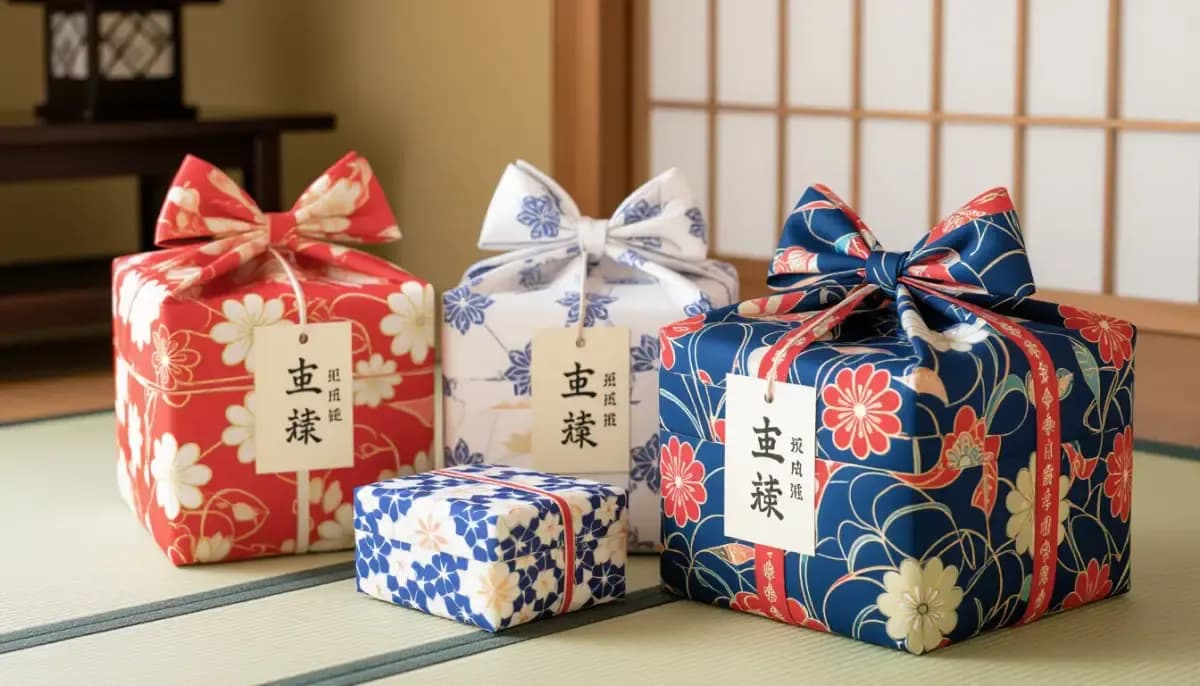
!Japanese seasonal gift boxes with furoshiki wrapping arranged for ochugen and oseibo seasons

What Are Ochugen and Oseibo?
Ochugen and oseibo are Japan's two major seasonal gift-giving traditions, both rooted in the concept of expressing gratitude to people who have supported you throughout the year. The word ochugen (御中元) combines the honorific o with chugen, referring to the mid-year period. Oseibo (御歳暮) comes from o (honorific) and seibo, meaning "end of year."
While Western gift giving tends to be celebratory — birthdays, holidays, achievements — Japanese gift giving is fundamentally about obligation and gratitude. You give gifts to acknowledge the care and support of bosses, teachers, doctors, mentors, and relatives. Both traditions are taken seriously in both personal and professional contexts.
The Japanese gift market reflects this importance: in 2024, Japan's overall gift market was valued at approximately 11 trillion yen, and the oseibo market alone was worth 865 billion yen in 2022. Gift giving is a multi-billion yen industry, with department stores dedicating entire floors and catalogs to seasonal selections.
For foreigners in Japan, understanding these customs prevents awkward social situations and helps build stronger relationships. If your Japanese colleagues or neighbors participate in these traditions, knowing how to respond gracefully can significantly improve your integration into Japanese society.
Ochugen: The Summer Gift Season
Ochugen falls during the summer months and has its roots in both Chinese Taoist traditions and Buddhist customs. In ancient China, July 15 on the lunar calendar was Chugen, a day to celebrate safe passage through the first half of the year and honor ancestors. This concept merged with Japan's Obon festival (お盆), the Buddhist holiday when the spirits of ancestors return to the family home.
Timing: Ochugen gifts are typically given from late June to July 15 in the Kanto region (Tokyo and eastern Japan). In the Kansai region (Osaka, Kyoto, western Japan), timing shifts slightly to align with the local Obon observance in August.
Purpose: Ochugen expresses gratitude for the first half of the year and wishes the recipient good health through the hot summer months. It is also a chance to check in with people you may not see regularly.
Typical gifts for ochugen include:
- Seasonal fruits (especially melons, which are highly prized)
- Cold beverages, beer, and soft drinks
- Ice cream and sorbet sets
- Jelly snacks and cold confections
- Somen noodles (cold summer noodles)
- High-quality teas and fruit juices
The emphasis on cooling and refreshing items reflects the summer heat and the original spirit of checking on the wellbeing of those important to you.
For more about Japanese summer traditions and festivals that overlap with ochugen season, see our guide on Japanese Festivals and Traditions.
Oseibo: The Year-End Gift Season
Oseibo is the more significant of the two gift-giving seasons. It occurs at the end of the year and serves as a way to express gratitude for everything the recipient has done over the entire year. It also carries a sense of closure — sending gifts to people who have supported you as you close one chapter and prepare for the next.
Timing: In eastern Japan (Kanto), oseibo season runs from late November to around December 20. In western Japan (Kansai), it traditionally runs from December 13 to December 20, though modern practice extends this window.
Purpose: Oseibo is a year-end thank you, reflecting on the full year of support and care. It carries more weight than ochugen and is generally expected from people with longer-standing relationships.
Typical gifts for oseibo include:
- Premium teas (matcha, sencha)
- Specialty Japanese sweets and confections
- High-end seafood (salmon, crab, sea bream)
- Wagyu beef and other premium meats
- Fine sake and premium beverages
- Cooking essentials like high-quality soy sauce, sesame oil, and noodles
- Department store gift sets
!Traditional Japanese oseibo gift sets displayed in department store with elegant packaging

Who Should You Give Gifts To?
Both ochugen and oseibo are given to people to whom you feel a sense of obligation or gratitude. The Japanese concept of on (恩) — the debt of gratitude you owe to others — underpins these traditions. Recipients typically include:
| Relationship | Typical Occasion | Notes |
|---|---|---|
| Boss / Supervisor | Both seasons | Common in Japanese workplaces |
| Teacher / Instructor | Both seasons | Any teacher, past or present |
| Family doctor / Dentist | Oseibo especially | As thanks for ongoing care |
| Matchmaker (仲人, nakodo) | Both seasons | Especially first few years after marriage |
| Parents / In-laws | Both seasons | Strengthens family bonds |
| Close relatives | Especially oseibo | Aunts, uncles, grandparents |
| Mentor / Senpai | Both seasons | In workplace or academic context |
Expat Note: If you work in a Japanese company, you will likely receive oseibo gifts from business partners, clients, and vendors. You are also expected to send gifts to important clients and partners. Many Japanese companies have policies about gift giving — check with HR or your Japanese colleagues for guidance.
Gift Etiquette and Rules to Follow
Japanese gift giving is governed by a set of unspoken rules. Violating them can cause embarrassment or even offense. Here are the most important guidelines:
Presentation matters enormously. The way a gift is wrapped is nearly as important as the gift itself. Department stores offer professional gift wrapping (熨斗, noshi) with specific labels for ochugen and oseibo. Always use the appropriate noshi wrapping for seasonal gifts.
Use humble language. When presenting a gift in person, say tsumaranai mono desuga (つまらないものですが), meaning "this is just a small thing, but..." This humility is culturally expected and shows good manners even when the gift is valuable.
Present gifts with both hands. Whether receiving or giving, use both hands. This shows respect and is a fundamental aspect of Japanese courtesy.
Avoid taboo gifts:
- Cutlery and scissors — they symbolize "cutting" the relationship
- Handkerchiefs — associated with funerals
- Items in quantities of 4 (shi, sounds like death) or 9 (ku, sounds like suffering)
- Cash or gift cards to superiors — generally considered inappropriate
Do not open gifts immediately. Unlike in Western cultures, it is polite to not open gifts in front of the giver. Opening a gift immediately can imply you are more interested in the contents than in the relationship.
For more Japanese etiquette that applies to daily life and relationships, see our guide on Japanese Culture and Etiquette.
Budget Guidelines for Ochugen and Oseibo
How much should you spend? The typical budget range for these seasonal gifts is 3,000 to 5,000 yen for most recipients. For closer relationships or more senior figures, you might spend up to 10,000 yen or more. Here is a general breakdown:
| Relationship Closeness | Suggested Budget |
|---|---|
| Casual acquaintance / general colleague | 2,000–3,000 yen |
| Boss or important colleague | 3,000–5,000 yen |
| Close mentor or senior figure | 5,000–10,000 yen |
| Very close family or lifelong mentor | 10,000 yen+ |
Avoid spending too little (it looks cheap and disrespectful) or too much (it can cause the recipient to feel obligated to match the value in future gifts). Striking the right balance demonstrates that you understand the spirit of the tradition.
Where to Buy Ochugen and Oseibo Gifts
Japan makes it relatively easy to participate in these traditions. Here are the best places to find appropriate gifts:
Department stores (デパート): The gold standard for seasonal gifts. Department stores like Isetan, Takashimaya, Mitsukoshi, and Sogo dedicate entire floors to curated ochugen and oseibo gift sets. Staff are trained to help you choose appropriate gifts and provide proper wrapping. They also offer delivery services so you do not have to carry gifts yourself.
Convenience stores: In recent years, major chains like 7-Eleven and Family Mart have introduced seasonal gift catalog ordering, especially for oseibo. Quality is good and prices are reasonable.
Online shopping: Amazon Japan, Rakuten, and specialty food retailers offer extensive gift sets with delivery services. Many sites allow you to order gifts directly to the recipient's home with proper packaging included.
Supermarkets: High-end supermarkets like Queen's Isetan and Seijo Ishii stock seasonal gift sets, though selection is more limited than department stores.
For guidance on finding the best products and shopping in Japan, see our Shopping in Japan Guide.
Is Ochugen and Oseibo Changing?
Like many traditions, these gift-giving seasons are evolving. A survey found that nearly 75% of people in their 20s and 30s say they do not plan to send ochugen gifts, reflecting a shift among younger generations who feel these obligations are burdensome or overly formal.
However, in business contexts, oseibo especially remains strong. Many companies have formalized these exchanges as part of relationship management. The traditions are also adapting — digital gift cards, subscription boxes, and experience-based gifts are growing in popularity alongside traditional food baskets.
For expats, there is no strict obligation to participate unless you are embedded in a Japanese workplace or community. However, understanding the tradition and participating when appropriate is a powerful way to show respect and build lasting relationships.
Practical Tips for Foreigners Participating in Ochugen and Oseibo
If you decide to participate in these traditions, here are practical steps to make the process smooth:
- Start at a department store. Visit the seasonal gift section (usually well-signed as お中元 or お歳暮 fairs) and ask a staff member for help. They speak to customers of all backgrounds and can assist you in English or with pictures.
- Use the delivery service. You do not have to hand-deliver gifts. Having the department store ship directly to the recipient is completely normal and convenient.
- Include a brief note. A simple thank-you note inside adds a personal touch. You can write it in English if your relationship is casual enough — most Japanese people appreciate the effort regardless.
- Observe what your colleagues do. If you work in a Japanese company, watch what your Japanese colleagues do and follow their lead. This is the safest way to calibrate appropriate spending and recipient lists.
- Do not feel obligated if you are not embedded in Japanese networks. If you live here as a foreigner with mostly international friends and colleagues, participating may feel forced. Choose relationships where the gesture will be meaningful.
For more guidance on navigating Japanese workplace culture, including gift-giving norms, visit For Work in Japan's Business Culture Guide.
How Ochugen and Oseibo Compare to Similar Traditions
Japan is not alone in having seasonal gift-giving customs, but the formality and structure of ochugen and oseibo are uniquely Japanese. Here is a brief comparison:
| Tradition | Country | Season | Primary Purpose |
|---|---|---|---|
| Ochugen | Japan | Summer (July) | Mid-year gratitude |
| Oseibo | Japan | Winter (December) | Year-end gratitude |
| Chuseok | Korea | Autumn (harvest) | Ancestor respect, family |
| Spring Festival | China | Lunar New Year | Good luck, family |
| Christmas gifts | Western cultures | December | Celebration, joy |
The Japanese tradition is unique in that it centers on obligation and gratitude rather than celebration, and it is directed outward toward mentors and seniors rather than inward toward family and friends.
For more on how Japan's traditions fit into its broader cultural calendar, read our guide on Living in Japan's Daily Life.
Key Resources for Further Reading
- Japan Guide: Gift Giving in Japan
- Ochugen explained at Musubi Kiln
- Oseibo tradition at Musubi Kiln
- Living in Nihon: Japanese Seasons and Traditions
Japan's ochugen and oseibo traditions can feel overwhelming at first, but they are ultimately expressions of a beautiful cultural value: the acknowledgment of gratitude and the maintenance of meaningful relationships. Even as younger generations shift away from these customs, understanding them gives you deeper insight into Japanese society and the relationships that make life in Japan so rewarding.

Originally from Vietnam, living in Japan for 16+ years. Graduated from Nagoya University, with 11 years of professional experience at Japanese and international companies. Sharing information about living in Japan for foreigners.
View Profile →Related Articles

Japanese National Holidays Calendar and Guide
Complete guide to Japan's 16 national holidays including Golden Week, Silver Week, and New Year. Essential calendar and practical tips for foreigners living in Japan.
Read more →
Shichi Go San Children Festival Explained for Foreign Parents
Everything foreign parents need to know about Japan's Shichi-Go-San festival: which ages celebrate, kimono rental costs, shrine visits, chitose-ame candy, and participation tips.
Read more →
Setsubun Bean Throwing Festival Guide
Complete guide to Setsubun, Japan's February bean-throwing festival. Learn about mamemaki, eho-maki, where to watch public events, and how foreigners can participate in this beloved tradition.
Read more →
Japanese Seasonal Foods Calendar and Guide
Discover Japan's seasonal food calendar month by month. Learn about shun (旬), what to eat each season, cultural food traditions, and practical tips for expats living in Japan.
Read more →
Tanabata Star Festival in Japan Explained
Everything you need to know about Tanabata — Japan's Star Festival. Discover the legend of Orihime and Hikoboshi, how to write tanzaku wishes, the best festivals to attend (Sendai, Hiratsuka), and practical tips for foreigners joining the celebration.
Read more →
Halloween in Japan How It Has Become a Major Event
Halloween in Japan has grown from a single theme park event in 2000 into a nationwide cosplay and celebration phenomenon. Learn about the history, top events, and tips for foreigners participating in Japanese Halloween.
Read more →