
Japan Parking Rules Costs and Tips for Drivers

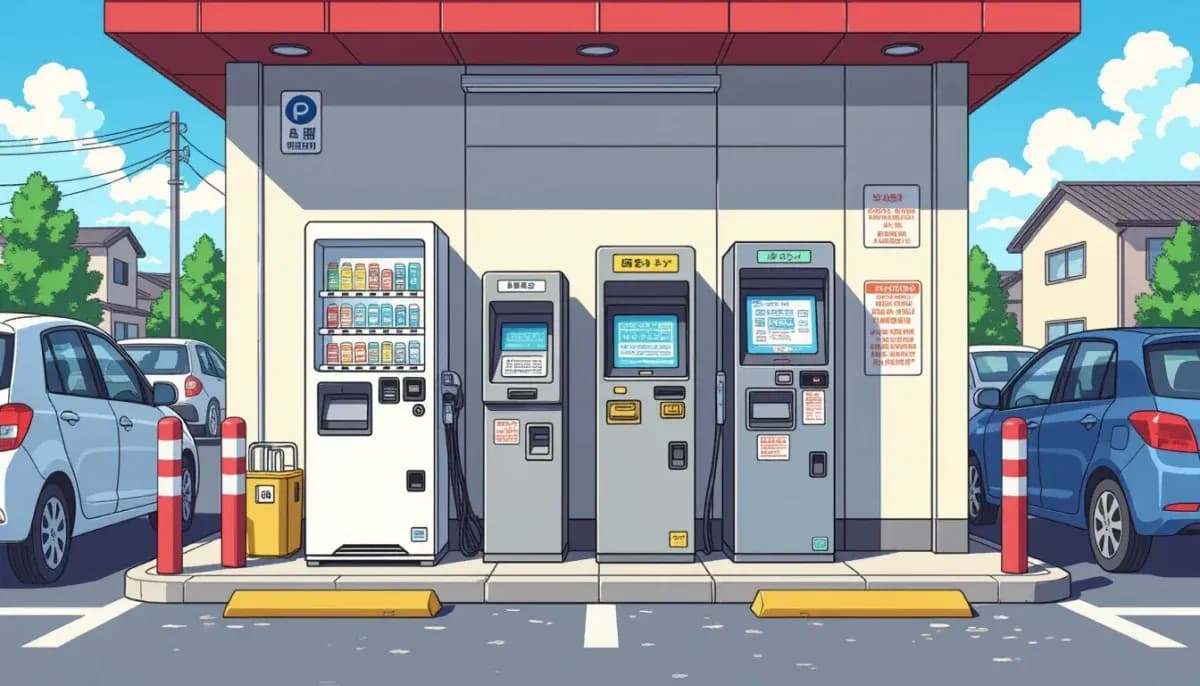
Complete guide to parking in Japan for foreigners and expats. Learn how coin parking works, what things cost (¥100–¥500 per 30 min), parking rules, fines up to ¥18,000, and tips to avoid violations.
Japan Parking Rules, Costs, and Tips for Drivers
Driving in Japan is a rewarding experience, but navigating the country's parking system can be confusing for newcomers. Whether you are a long-term resident, a newly arrived expat, or a tourist renting a car, understanding Japan's parking rules, costs, and etiquette is essential to avoid fines and make the most of your time on the road.
Japan has one of the most regulated and organized parking systems in Asia. From automated coin parking lots with wheel locks to monthly contracts for residents, the options are diverse — but so are the rules. This guide covers everything you need to know about parking in Japan, including how to use coin parking, what it costs, what the signs mean, and how to stay on the right side of the law.
For a broader understanding of getting around Japan, check out our Complete Guide to Transportation in Japan and our Complete Guide to Driving in Japan for Foreigners.
Types of Parking in Japan
Japan offers several different types of parking depending on your needs, location, and budget.
Coin Parking (時間貸し駐車場)
Coin parking, called jikan gashi chūshajō (時間貸し駐車場), is the most common parking option in Japanese cities. These small lots are found on nearly every block in urban areas and operate 24 hours a day, 7 days a week.
Here is how a standard coin parking lot works:
- Drive into an open space — the space number is marked on the ground.
- A metal plate (called a "flap") rises from the ground under your car, locking it in place.
- When ready to leave, go to the payment machine, enter your space number, and pay the displayed amount.
- The flap lowers and you can drive away.
Most coin parking machines accept cash, credit cards, IC transit cards (like Suica and PASMO), and increasingly mobile payments like PayPay and LINE Pay. Always check the payment options available before leaving your car.
Monthly Contract Parking (月極駐車場)
For residents who own a vehicle, monthly contract parking (tsukigime chūshajō, 月極駐車場) is the standard long-term solution. These are private parking spaces you rent for a fixed monthly fee. In most urban areas of Japan, having a dedicated monthly parking space is legally required to register a vehicle.
Commercial Facility Parking
Shopping centers, supermarkets, and large stores in Japan often offer free or discounted parking with purchase validation. Typically, 1 to 3 hours of free parking is offered, with purchase validation available at the service counter. These lots are usually automated and use ticket systems at entry and exit gates.
Automated Tower Parking (自動立体駐車場)
In densely packed urban neighborhoods where space is scarce, you will find automated mechanical parking towers. You drive onto a platform, and the system automatically moves your car to an available slot inside the tower. When returning, insert your ticket and the system retrieves your vehicle. Always fold in your side mirrors before entering these facilities.
Japan Parking Costs: What to Expect
Parking costs in Japan vary enormously between urban centers and rural areas. The table below summarizes typical costs by location and parking type.
| Location | Coin Parking (per 15-30 min) | Monthly Contract |
|---|---|---|
| Tokyo (central) | ¥200–¥500 | ¥30,000–¥80,000 |
| Tokyo (suburban) | ¥100–¥300 | ¥15,000–¥30,000 |
| Osaka (central) | ¥100–¥400 | ¥15,000–¥50,000 |
| Nagoya / Sapporo | ¥100–¥300 | ¥10,000–¥30,000 |
| Rural areas | ¥50–¥100 | ¥3,000–¥10,000 |
Daily caps: Many coin parking lots offer a maximum daily fee (usually 500–1,500 yen), which is helpful for all-day visits.
Night rates: Many lots offer discounted overnight rates (typically from 8 PM to 8 AM), which can save significant money compared to daytime rates.
For more information on managing living costs in Japan, see our Complete Guide to the Cost of Living in Japan.
Japan Parking Rules and Regulations
Japan's parking regulations are strictly enforced, and ignorance of the rules is not accepted as a defense. Here is what every driver must know.
No-Parking Zones
In Japan, parking is only permitted where it is expressly allowed. As a general principle, street parking is prohibited unless there is a designated parking area. Specifically, you cannot park:
- Within 5 meters of an intersection
- Within 10 meters of a pedestrian crossing or railroad crossing
- Near bus stops or taxi stands
- In front of fire hydrants or emergency access points
- On narrow streets or roads with double yellow lines
Parking Signs
Japanese parking signs can be confusing at first. Here is a quick reference:
- 駐車禁止 (chūsha kinshi): No parking at any time (round sign, blue background, red circle with red X)
- 駐停車禁止: No parking or stopping at any time
- P (blue sign): Designated parking area
- 時間帯駐車禁止: No parking during specific hours (usually shown with time periods)
Always look for time-based restrictions on signs, as many streets allow parking during certain hours but not others.
Proof of Parking Certificate (車庫証明)
One of the most important — and often surprising — rules for foreigners buying a car in Japan is the shako shomeisho (車庫証明), or proof of parking certificate. In nearly all urban areas including Tokyo, Osaka, Nagoya, and Sapporo, you cannot register a new vehicle without first proving that you have a designated off-street parking space.
To obtain this certificate, you must:
- Secure a parking contract (either own a space or sign a monthly contract agreement)
- Apply at your local police station with the required documents
- Pay a small processing fee (approximately 2,500–3,000 yen)
- Receive the certificate within a few days
This certificate must be submitted when registering the vehicle at the transport bureau. For more guidance on Japanese bureaucracy and paperwork, visit our Complete Guide to Japanese Bureaucracy for Foreigners.
Illegal Parking Fines and Penalties
Japan has strict enforcement of parking violations, carried out by both police officers and trained civilian parking enforcement officers (kotsū yudōin). Enforcement is frequent in urban areas, and even short-term illegal parking can result in a fine.
Parking fine amounts:
- Parking in a no-parking zone: ¥15,000
- Parking in a no-stopping zone: ¥18,000
- Obstructing traffic: Additional penalties may apply
If you receive a blue ticket (violation notice), you must:
- Report to the indicated police station within a specified period
- Complete the required paperwork
- Pay the fine at a designated bank or post office within 7 days
- Provide proof of payment to your rental car company if applicable
If you are towing-zone violator: Your vehicle may be towed and impounded. Impound fees add ¥30,000 or more on top of the parking fine, and you must collect your vehicle from the impound lot in person.
For rental car drivers: Failing to pay a parking fine before returning a rental car will result in the rental company charging you an "Illegal Parking Processing Fee" (usually ¥25,000–¥30,000) and potentially flagging your account, which may prevent you from renting cars in Japan in the future.
You can find more information on legal matters as a foreigner in Japan in our Complete Guide to Legal Rights for Foreigners in Japan.
Tips for Using Coin Parking in Japan
If you have never used a Japanese coin parking lot before, here are some practical tips to make the experience smooth:
1. Read the fee board carefully. Fee structures can be complex, with different rates for different time periods. Look for the maximum daily fee (最大料金) to understand the cap.
2. Note your space number. Before walking away from your car, make a mental note or photo of the parking space number. You will need this at the payment machine.
3. Keep small change handy. While many modern machines accept cards, older coin parking lots may only take coins. Always carry some ¥100 and ¥500 coins as backup.
4. Use parking finder apps. Apps like NAVITIME, Times Parking, and Google Maps can help you locate nearby parking and compare prices before you arrive at your destination.
5. Look for daily rate caps. If you plan to park for an extended period, look for lots advertising a maximum fee (最大料金). In busy city areas, this can save you from a large bill.
6. Reverse into spaces. Standard driving etiquette in Japan requires reversing into parking spaces and driving forward to exit. This is expected in all types of parking — both coin lots and regular spaces.
For more tips on navigating daily life in Japan, see our Complete Guide to Daily Life in Japan.
Useful Resources for Parking in Japan
To make your parking experience in Japan easier, here are some helpful external resources:
- Living in Nihon – Transportation Guide: A comprehensive resource on transportation options for foreigners living in Japan, covering trains, buses, and driving.
- For Work in Japan – Living in Japan Guide: Practical tips on housing and infrastructure for foreigners living and working in Japan.
- Ittenshoku: Resources for foreigners navigating life and work in Japan.
- Refer Japan – Parking in Japan: Detailed breakdown of parking types, costs, and rules across Japan.
- Genkicars – Ultimate Guide to Car Parking in Japan: Cost comparisons by city and practical tips for using different parking systems.
- Plaza Homes – Parking in Japan: Detailed guide to parking regulations and how to use various parking facilities.
Summary
Parking in Japan is well-organized but requires some preparation, especially for newcomers. The key takeaways are:
- Coin parking is widely available in urban areas, operating 24/7 with rates from ¥100–¥500 per 15–30 minutes.
- Monthly parking contracts are necessary for vehicle registration in most cities.
- The shako shomeisho (proof of parking certificate) is required to register a vehicle in most urban areas.
- Illegal parking fines range from ¥15,000 to ¥18,000, with towing fees adding significant additional costs.
- Always reverse into parking spaces — this is standard practice across Japan.
- Use parking apps like NAVITIME to find the best rates near your destination.
With a little preparation and awareness of the rules, parking in Japan becomes much less stressful. Take the time to read signs, check apps, and understand the coin parking system, and you will have a smooth driving experience across this incredible country.

Originally from Vietnam, living in Japan for 16+ years. Graduated from Nagoya University, with 11 years of professional experience at Japanese and international companies. Sharing information about living in Japan for foreigners.
View Profile →Related Articles
Best Cars for Foreigners Living in Japan
Discover the best cars for foreigners living in Japan, from kei cars like the Honda N-Box to electric options. Complete guide to buying, costs, and requirements for expats.
Read more →
Car Maintenance and Repair in Japan Guide
A complete guide to car maintenance and repair in Japan for foreigners. Learn about shaken inspections, costs, finding mechanics, seasonal care, and JAF membership.
Read more →
Getting a Motorcycle License in Japan as a Foreigner
Step-by-step guide for foreigners getting a motorcycle license in Japan. Learn about license types, driving camps, license conversion, costs, and requirements for expats.
Read more →
Japan Highway and Toll System Complete Guide
Everything foreigners need to know about Japan's highway toll system: ETC cards, toll rates, discounts, expressway passes, speed limits, and practical driving tips for expats and visitors.
Read more →
How to Sell a Car in Japan Complete Guide
Step-by-step guide to selling your car in Japan as a foreigner. Covers required documents, 4 selling methods, shaken tips, tax refunds, and how to get the best price.
Read more →
Renting a Car in Japan as a Foreign Driver
Everything foreigners need to know about renting a car in Japan: IDP requirements, which countries can drive, major rental companies, costs, road rules, and tips for first-time drivers.
Read more →