
Renting a Car in Japan as a Foreign Driver

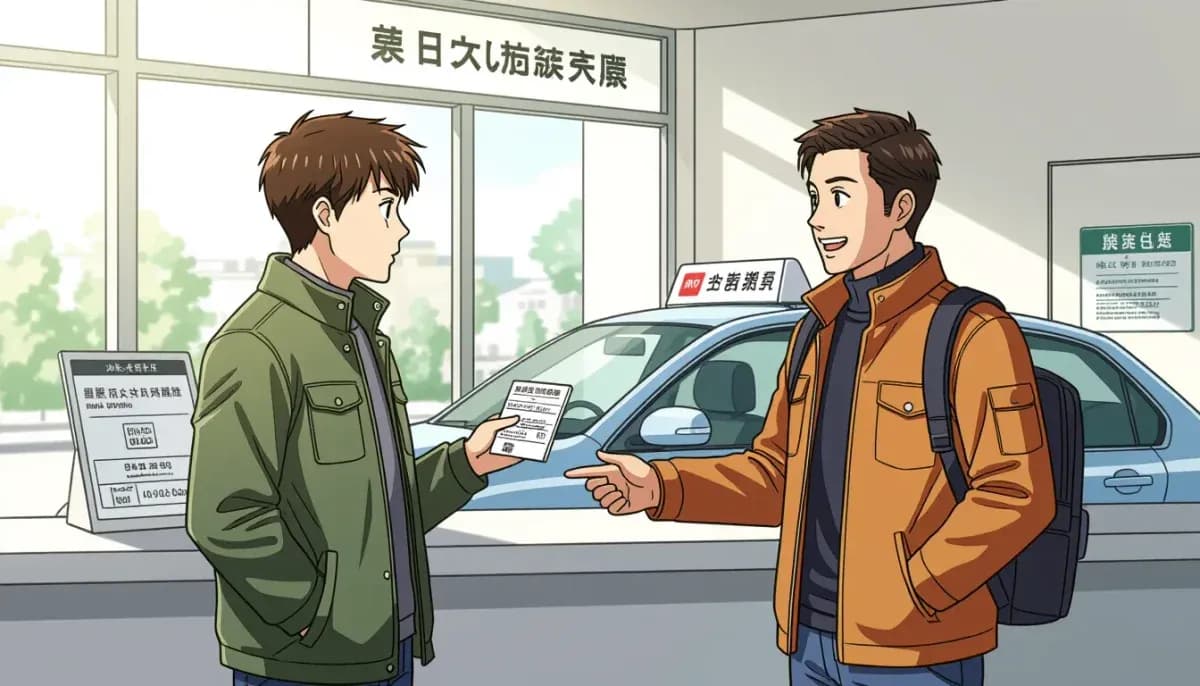
Everything foreigners need to know about renting a car in Japan: IDP requirements, which countries can drive, major rental companies, costs, road rules, and tips for first-time drivers.
Renting a Car in Japan as a Foreign Driver: The Complete Guide
Japan's public transportation network is world-class, but there are times when renting a car simply makes more sense — exploring rural ryokan towns, navigating Hokkaido's wide-open roads, or reaching coastal areas that trains don't serve. As a foreigner in Japan, you absolutely can rent a car, but there are a few legal requirements and practical nuances you need to know before you pull up to the counter. This guide covers everything from which driving permits are accepted to how to handle toll roads and narrow mountain passes.
!Foreigner at a Japanese car rental counter with international driving permit and passport

Who Can Legally Drive in Japan as a Foreigner?
Before you even think about booking a car, you need to confirm you're legally allowed to drive in Japan. The rules depend on where you're from and how long you've been in the country.
Short-term visitors (tourists, business travelers): You can drive in Japan using an International Driving Permit (IDP) together with your home country license. Critically, Japan only recognizes IDPs issued under the 1949 Geneva Convention on Road Traffic — permits issued solely under the 1968 Vienna Convention are not valid, even if your country is a signatory to both.
Long-term residents: If you're living in Japan, you can use your IDP for a maximum of one year from your entry date (as stamped in your passport). After that, you must convert to a Japanese driver's license to continue driving legally.
Countries with special arrangements: Belgium, France, Germany, Monaco, Switzerland, and Taiwan do not issue Geneva Convention (1949) IDPs. Drivers from these countries can instead present their home license along with an official Japanese translation — not just any translation, but one officially certified (typically through the Japan Automobile Federation/JAF). This alternative is also valid for up to one year.
Countries that CANNOT use an IDP in Japan: Drivers from Pakistan, Mexico, China, and several other non-signatory nations cannot legally drive in Japan with their foreign license. These individuals must obtain a Japanese driver's license directly.
| Country Group | Document Required | Validity |
|---|---|---|
| Most countries (USA, UK, Australia, Canada, etc.) | IDP (1949 Geneva) + home license | 1 year from entry |
| Belgium, France, Germany, Monaco, Switzerland, Taiwan | Official Japanese translation + home license | 1 year from entry |
| Pakistan, China, Mexico, etc. | Japanese driver's license required | N/A |
| Long-term residents (1+ year) | Japanese driver's license required | Ongoing |
How to Get an International Driving Permit Before Coming to Japan
If your country issues Geneva Convention (1949) IDPs, you need to obtain one before you leave home — Japan does not issue or renew IDPs for foreign nationals. The process is usually simple:
- United States: Apply through AAA (American Automobile Association) or National Auto Club. Costs around $20, takes 1–5 business days.
- United Kingdom: Apply through the Post Office or AA (Automobile Association). Costs £5.50.
- Australia: Apply through NRMA, RACV, or your state's motoring club. Costs around AUD $49.
- Canada: Apply through CAA (Canadian Automobile Association). Costs around CAD $25.
Bring both your IDP and your original home country license — rental companies will check both, and technically the IDP alone is not sufficient. Keep them together at all times while driving.
Choosing the Right Car Rental Company in Japan
Japan has several major rental car chains, most of which have English-language booking platforms and some English-speaking staff at major locations (airports, Shinjuku, etc.).
| Company | English Website | Airport Locations | Notes |
|---|---|---|---|
| Toyota Rent a Car | Yes | Nationwide | Most locations; reliable |
| Nippon Rentacar | Yes | Nationwide | Competitive pricing |
| Orix Rentacar | Yes | Nationwide | Good for longer rentals |
| Times Car Rental | Yes | Nationwide | Former Mazda Rentacar |
| Nissan Rentacar | Yes | Nationwide | Newer vehicle fleet |
| Ekiren (JR) | Yes | Major stations | Convenient at JR hubs |
Third-party booking platforms like ToCoo! Travel and Rentalcars.com let you compare prices across multiple providers in English, often with better rates when booked in advance.
Typical daily rental rates (2025):
- Kei cars / mini compacts: ¥5,000–¥7,500/day
- Compact cars: ¥7,500–¥10,000/day
- Mid-sized sedans: ¥10,000–¥15,000/day
- Full-sized / SUVs: ¥15,000–¥25,000/day
- Minivans: ¥20,000–¥30,000/day
Prices generally include unlimited mileage and a mandatory minimum insurance fee (around ¥1,000/day). Additional coverage options are available at the counter.
For more on getting around Japan in general, see our Complete Guide to Transportation in Japan.
The Rental Process: What to Expect at the Counter
Picking up your rental car in Japan is straightforward if you're prepared. Here's what to bring and what to expect:
Documents to bring:
- Your passport
- Your International Driving Permit (or certified translation if applicable)
- Your home country driver's license
- Credit card (required for security deposit — cash-only usually isn't accepted)
At the counter: The staff will photocopy your IDP and passport. They'll explain insurance options and ask if you want an ETC card (for automatic toll payment on expressways — more on this below). You'll be taken to your vehicle for a walk-around inspection — carefully note any pre-existing dents or scratches and make sure the staff records them. Take photos with your phone as additional proof.
Navigation systems: Most rental cars include a built-in GPS. At major locations, you can usually request a car with an English-language GPS, though availability isn't guaranteed. Alternatively, Japan's road signs on major highways are well-signed in English and romaji. For rural driving, downloading offline maps on Google Maps or Maps.me before you go is a smart backup.
For more information on managing your finances while abroad, check our Complete Guide to Banking and Finance in Japan.
!Map of Japan showing popular driving routes for foreigners

Driving Rules and Road Etiquette in Japan
Japan drives on the left side of the road, with the steering wheel on the right side of the car. If you're from North America, Australia already drives this way; for Americans or Canadians, this requires adjustment, especially for turns.
Key rules to know:
- No right turns on red — unlike in the USA, turning at red lights is prohibited unless there's a specific sign permitting it
- Speed limits: 60 km/h on regular roads, 40 km/h in urban areas, 100 km/h on most expressways
- Zero tolerance for drunk driving — the legal blood alcohol limit is 0.03%, far stricter than many countries. Penalties are severe
- No mobile phones while driving — hands-free is required; holding a phone results in heavy fines
- Seatbelts mandatory for all passengers; car seats required for children under 6
- Passing lanes on expressways are strictly on the right — stay left unless overtaking
Parking: In cities, parking is expensive and often managed by automated systems. Most garages use a mechanical lift system — not drive-in. Look for blue "P" signs. Some restaurants and shops offer free parking, particularly outside major cities. In rural areas, parking is usually free and abundant.
Toll roads: Japan's expressway network is extensive but toll-based. If you have an ETC card (available at rental counters for a small daily fee), you can pass through automatic ETC gates (purple sign). Without an ETC card, use cash at manned gates (green sign). Highway passes like the Hokkaido Expressway Pass (HEP) or Kyushu Expressway Pass (KEP) offer unlimited expressway access for foreign tourists at a flat rate — great value for road trips.
You can find more tips on life as a foreigner in Japan at Living in Nihon, which covers transportation options comprehensively.
Best Regions to Rent a Car in Japan
Not all of Japan is best explored by car — Tokyo's subway system is faster and cheaper than driving. But there are regions where renting a car transforms your experience:
Hokkaido: Japan's northernmost island was made for road trips. Wide open roads, national parks like Daisetsuzan and Shiretoko, lavender fields in Furano, and dramatic coastlines. Distances between attractions are large, making a car essential for most itineraries.
Okinawa: The main island has a monorail, but the outer islands (Miyakojima, Ishigaki, Iriomote) are tiny and best explored by car or scooter. Renting on Okinawa is extremely popular with both domestic and international tourists.
Kyushu: Hot spring towns like Beppu and Yufuin, plus rural areas of Kumamoto and Miyazaki, are much more accessible by car. The Aso caldera drive is one of Japan's most scenic routes.
Tohoku (Northern Honshu): Off the beaten path, Tohoku's rural landscapes — Dewa Sanzan temples, Oirase Gorge, Matsushima — are easier to explore with a car than relying on infrequent local buses.
What to avoid driving in: Tokyo, Osaka, Kyoto city centers — public transit wins every time. Parking fees alone can exceed your transit budget.
For guidance on living and exploring Japan more broadly, For Work in Japan has resources covering life as a foreign resident across different regions.
Long-Term Residents: Converting Your Foreign License to a Japanese License
If you're staying in Japan for more than a year, you'll need to convert your foreign driver's license to a Japanese one. The process varies significantly depending on your country of origin:
Easy conversion (direct written test or no test): Countries with reciprocal agreements — including Australia, Canada, France, Germany, New Zealand, Switzerland, the UK, and others — can convert with a relatively simple process: documents, vision test, and sometimes a short written test in Japanese.
Harder conversion (practical driving test required): Drivers from the USA, China, Brazil, and many other countries must take a practical driving test at the licensing center (運転免許センター). This test is notoriously strict and many foreign drivers fail multiple times before passing.
General documents needed for license conversion:
- Foreign driver's license (original + official translation)
- Passport with entry/exit stamps
- Residence card (zairyu card)
- Completed application form
- Fee payment (varies by prefecture)
For more on the broader process of building a life in Japan as a foreigner, see our Complete Guide to Moving to Japan.
IT転職・Ittenshoku is a useful resource for those planning long-term stays, particularly around career transitions that might affect your visa status and residency.
Practical Tips for First-Time Drivers in Japan
Even experienced drivers abroad can find Japan's roads surprising. A few things worth knowing before you get behind the wheel:
- Rent smaller than you think you need — Japanese roads and parking lots are narrower than you're used to. A compact or kei car is much easier to maneuver, especially in rural areas
- Fill up before returning — rental agreements require a full tank on return. Keep your gas receipt as proof
- Gas station help — many stations are full-service; staff will pump your gas and take payment. Simply say "mantan" (満タン) for "fill it up"
- Rest areas (道の駅 / Michi-no-Eki) — Japan's roadside rest areas are excellent. Many have local food, souvenirs, free parking, and clean restrooms. They appear frequently on expressways and rural highways
- Emergency numbers — Police: 110, Ambulance/Fire: 119, JAF (roadside assistance): 0570-00-8139. JAF also assists non-members for a fee
- Driving after alcohol, even a little — zero tolerance is truly zero. Designated driver culture is strong in Japan; even being a passenger in a car driven by a drunk person can result in penalties for you
For more practical insights into daily life and resources in Japan, see our Complete Guide to Daily Life in Japan.
You can also read an excellent detailed guide on driving rules and renting in Japan from NICONICO Rent a Car, which covers tourist-specific advice, and Japan Guide's Car Rental overview for comparison of rental companies and costs.
Summary: Is Renting a Car in Japan Right for You?
Renting a car in Japan as a foreigner is absolutely feasible, and for the right destinations, it opens up experiences that no train or bus can match. The key is preparation: get your IDP before you leave home, understand which documents you'll need at the counter, and choose your rental region wisely.
Renting a car makes sense if:
- You're exploring Hokkaido, Okinawa's outer islands, rural Kyushu, or Tohoku
- You're traveling with family or a group (cost-per-person drops significantly)
- You want to reach hot springs, forests, or coastlines off the rail network
Skip the car if:
- You're spending most of your time in Tokyo, Osaka, or Kyoto's city centers
- You're a first-time visitor still getting oriented
- You're not comfortable driving on the left
With the right preparation, Japan's roads — especially outside the major cities — are well-maintained, clearly signed, and genuinely enjoyable to drive.

Originally from Vietnam, living in Japan for 16+ years. Graduated from Nagoya University, with 11 years of professional experience at Japanese and international companies. Sharing information about living in Japan for foreigners.
View Profile →Related Articles
Best Cars for Foreigners Living in Japan
Discover the best cars for foreigners living in Japan, from kei cars like the Honda N-Box to electric options. Complete guide to buying, costs, and requirements for expats.
Read more →
Car Maintenance and Repair in Japan Guide
A complete guide to car maintenance and repair in Japan for foreigners. Learn about shaken inspections, costs, finding mechanics, seasonal care, and JAF membership.
Read more →
Getting a Motorcycle License in Japan as a Foreigner
Step-by-step guide for foreigners getting a motorcycle license in Japan. Learn about license types, driving camps, license conversion, costs, and requirements for expats.
Read more →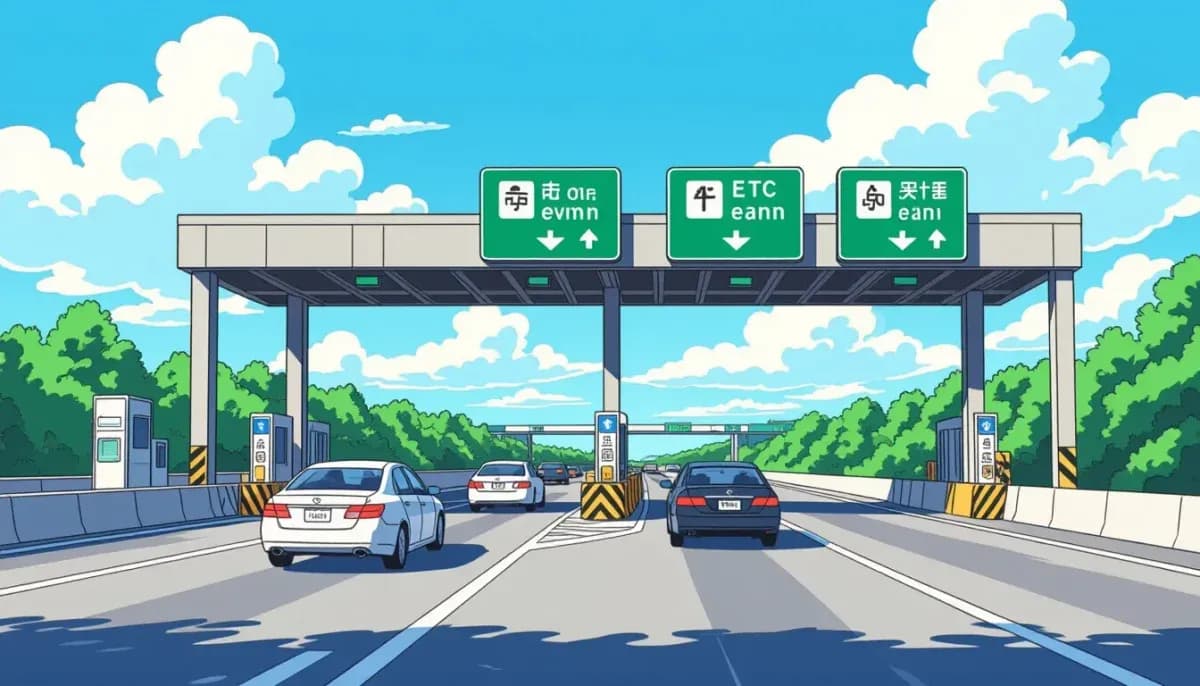
Japan Highway and Toll System Complete Guide
Everything foreigners need to know about Japan's highway toll system: ETC cards, toll rates, discounts, expressway passes, speed limits, and practical driving tips for expats and visitors.
Read more →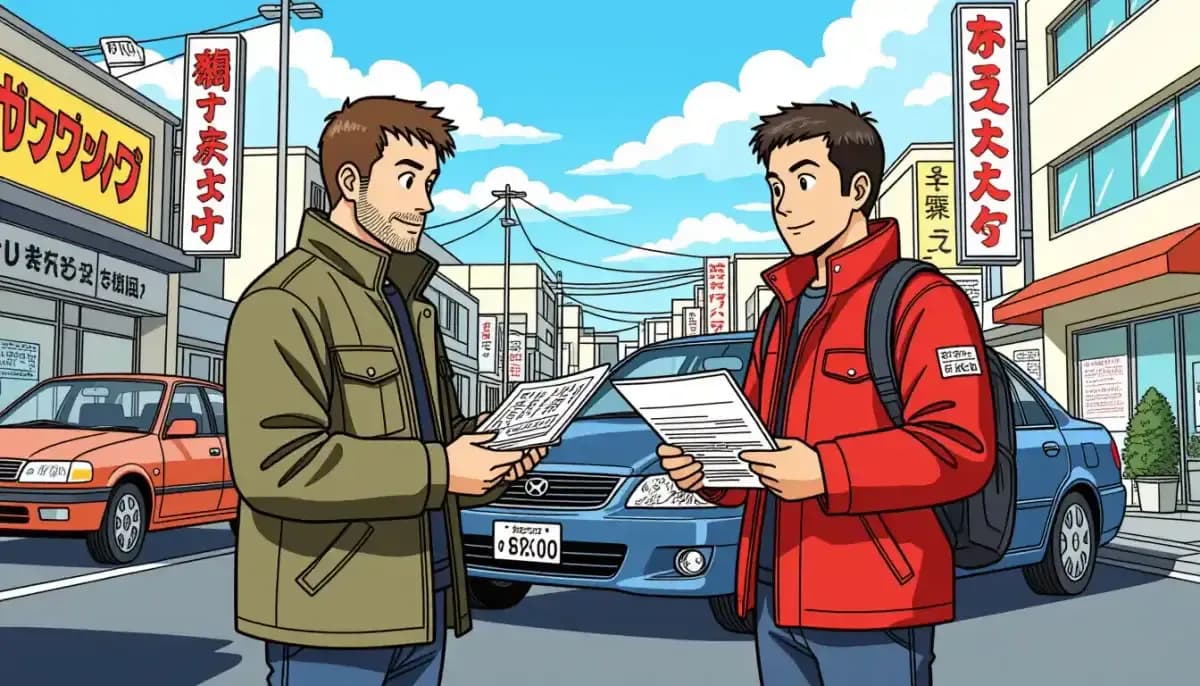
How to Sell a Car in Japan Complete Guide
Step-by-step guide to selling your car in Japan as a foreigner. Covers required documents, 4 selling methods, shaken tips, tax refunds, and how to get the best price.
Read more →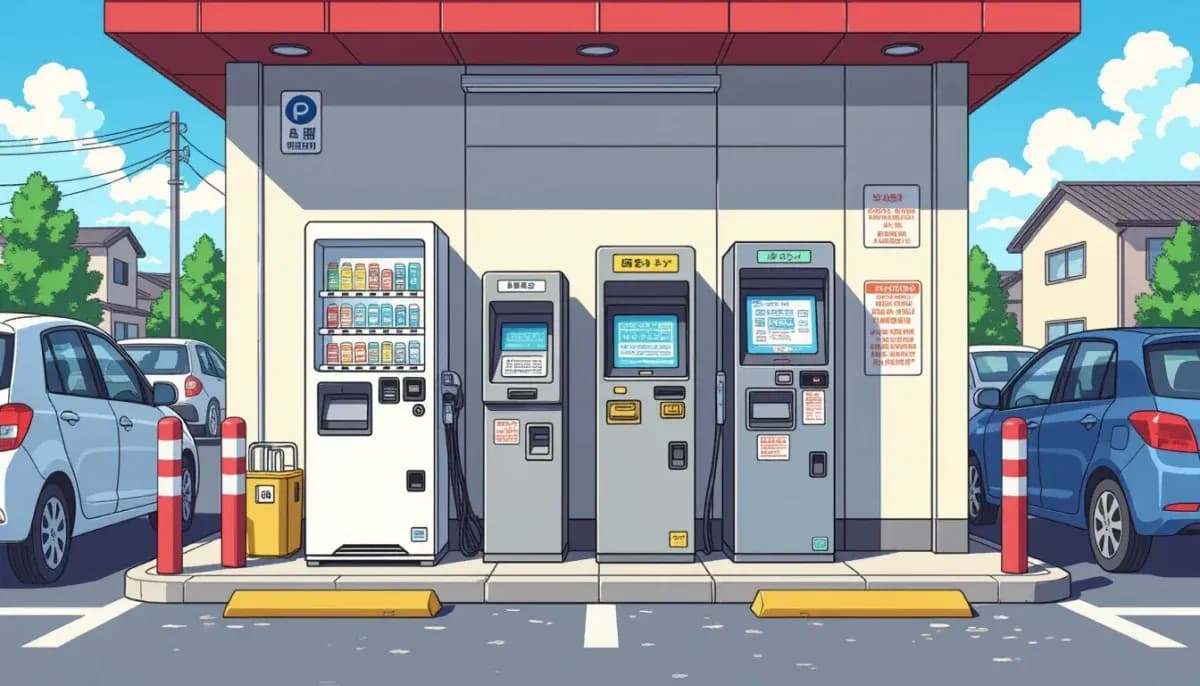
Japan Parking Rules Costs and Tips for Drivers
Complete guide to parking in Japan for foreigners and expats. Learn how coin parking works, what things cost (¥100–¥500 per 30 min), parking rules, fines up to ¥18,000, and tips to avoid violations.
Read more →