
Japan Highway and Toll System Complete Guide

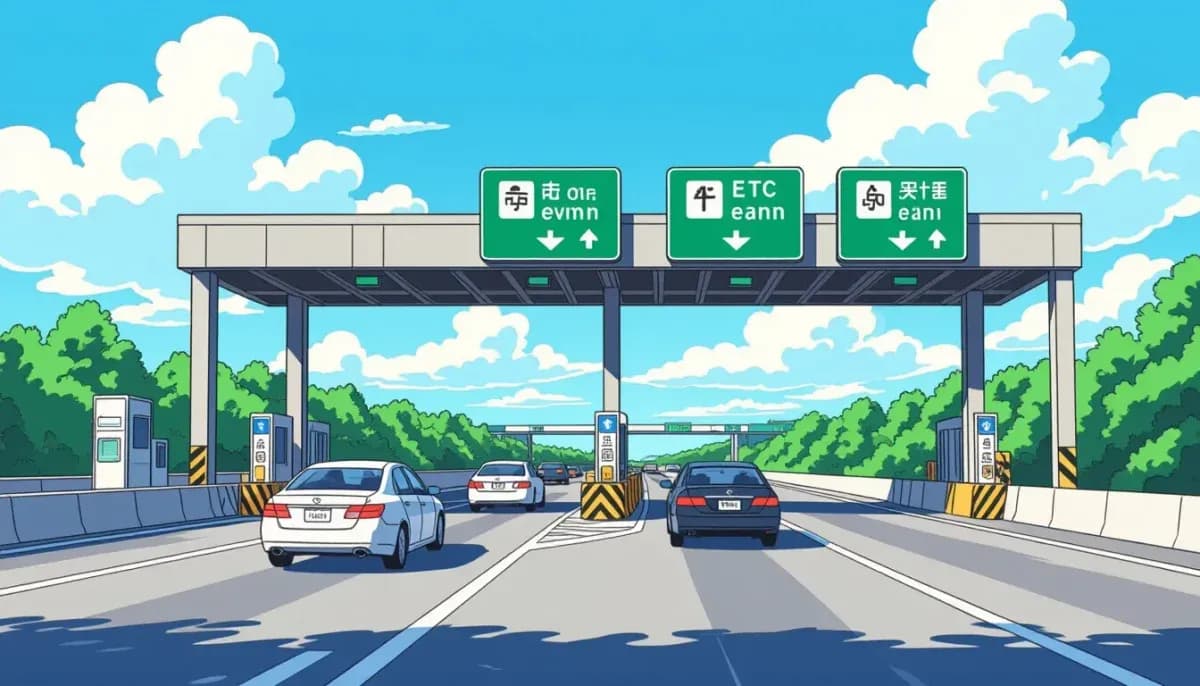
Everything foreigners need to know about Japan's highway toll system: ETC cards, toll rates, discounts, expressway passes, speed limits, and practical driving tips for expats and visitors.
Japan Highway and Toll System Complete Guide for Foreigners
Japan's expressway network is one of the most well-maintained and extensive in the world, stretching over 9,000 kilometers across the main islands. For foreigners living in or visiting Japan, understanding the highway and toll system is essential for road trips, weekend getaways, and navigating between major cities. This guide covers everything you need to know — from how tolls are calculated to ETC cards, discounts, and practical driving tips.
How Japan's Toll Road System Works
Japan's expressways (高速道路, kōsoku dōro) are almost entirely toll-based. When you enter an expressway, you typically pick up a ticket at the entry gate and pay upon exiting. The total toll is calculated based on the distance traveled.
Toll Rate Breakdown:
- Base entry fee: ¥150
- Regular sections: approximately ¥24.6 per km
- Metropolitan areas (Tokyo, Osaka): approximately ¥29.52 per km
- Long tunnels: approximately ¥39.36 per km
- Consumption tax (10%) is added to all amounts
Toll amounts are rounded to the nearest ¥50. A typical trip from Tokyo to Osaka via the Tomei/Meishin Expressway costs approximately ¥12,000 one way, while shorter trips like Tokyo to Kawaguchiko run around ¥3,000, and Osaka to Kyoto around ¥1,500.
Vehicle classification also affects pricing — kei cars (軽自動車) and motorcycles pay approximately 20% less than standard passenger vehicles.
ETC: Japan's Electronic Toll Collection System
The most important thing to understand about Japan's highways is the ETC system (Electronic Toll Collection / ETCカード). ETC has become the dominant payment method and offers significant advantages over cash payment.
How ETC Works
ETC uses a wireless IC card inserted into an in-vehicle device (車載器, shaisaki) mounted on your dashboard. As you approach a toll gate, look for purple-colored ETC lanes (as opposed to green general lanes). Slow your vehicle to approximately 20 km/h as you pass through — the barrier will open automatically after the charge is processed. An LED display shows the amount charged.
If an ETC gate malfunctions or your card is not read correctly, do not panic — you can approach a manual barrier instead and pay with cash.
ETC Discounts
One of the biggest benefits of ETC is access to substantial discounts that are not available to cash-paying drivers:
| Discount Type | Amount | Conditions |
|---|---|---|
| Late Night Discount | 30% off | Midnight to 4:00 AM on designated roads |
| Holiday Discount | 30% off | Weekends and national holidays (light/regular vehicles) |
| Long Distance (100-200 km) | 25% off | Continuous travel on the same highway |
| Long Distance (200 km+) | 30% off | Continuous travel on the same highway |
Note: Holiday discounts do NOT apply in the Tokyo Metropolitan Area or Okinawa.
For a long trip like Tokyo to Osaka, using ETC with appropriate discounts can save ¥2,000–¥3,000 per journey compared to cash payment.
Getting an ETC Card as a Foreigner
Option 1: Rental Car ETC Card (For Tourists and Short-Term Visitors)
The easiest option for foreign visitors is to request an ETC card when booking a rental car. Most major rental companies (Toyota Rent-a-Car, Nissan Rent-a-Car, Times Car, etc.) offer ETC cards for a flat fee of approximately ¥330 per rental. Tolls are automatically tracked and added to your final bill when you return the car — no deposit required.
Simply select "ETC card needed" when making your reservation online, or request one at the counter during pickup.
Option 2: Applying for Your Own ETC Card (For Residents)
If you live in Japan and own a car, getting your own ETC card is highly recommended. You can apply through major credit card companies, including:
- Aeon Card: Annual fee waived
- JCB: Annual fee from ¥0 to ¥1,257 depending on card type
- Amex: ETC card available to cardholders
You will also need to purchase an ETC reader device (車載器) for your car, available at car electronics shops like Autobacs or Yellow Hat for around ¥5,000–¥15,000. The device must be officially registered with your ETC card.
Option 3: Expressway Passes for Foreign Visitors
Japan offers regional expressway passes exclusively for foreign passport holders. These passes provide unlimited access to designated expressways within a specific region for a fixed number of days. You must present a non-Japanese passport when purchasing.
Current regional passes include:
- Hokkaido Expressway Pass – unlimited use in Hokkaido
- Tohoku Expressway Pass – unlimited use in the Tohoku region
- Kyushu Expressway Pass – unlimited use in Kyushu
- San'in/Setouchi/Shikoku Expressway Pass – regional coverage
These passes are purchased alongside rental cars at designated outlets and use the ETC card system. They are ideal for multi-day road trips in a specific region. For more information on expressway passes, see the Japan National Tourism Organization guide.
Speed Limits and Traffic Rules on Japanese Highways
Understanding traffic rules on Japanese expressways is essential for safe driving.
Speed Limits:
- Regular passenger vehicles: 100 km/h
- Large vehicles (buses, trucks): 80 km/h
- Kei cars: 100 km/h (same as regular vehicles on most roads)
- Construction zones: variable, watch for electronic signage
Electronic overhead signs adjust speed limits dynamically based on weather, accidents, and congestion. Always obey posted limits — speed cameras are common on Japanese expressways.
Key Driving Rules:
- Drive on the left side of the road (steering wheel on the right)
- Pass only on the right lane — the left lane is for slower traffic
- No stopping or parking except at designated rest areas (SA/PA)
- Use hazard lights when slowing down in traffic jams to warn vehicles behind
- Seatbelts are mandatory for all passengers
Drunk driving is treated extremely seriously in Japan. The legal blood alcohol limit is 0.03% — lower than many countries. Even passengers in a drunk-driven vehicle can face penalties.
Service Areas and Rest Stops (SA/PA)
One of the most enjoyable aspects of driving on Japanese expressways is the high quality of service areas (サービスエリア, SA) and parking areas (パーキングエリア, PA). These facilities appear roughly every 50–80 kilometers along major expressways.
Service Areas typically include:
- Free parking (for cars, motorcycles, trucks)
- Clean restrooms (often with washlets)
- Food courts and restaurants (many featuring regional specialties)
- Convenience stores (7-Eleven, Lawson, FamilyMart)
- Gift shops with local omiyage (souvenirs)
- Tourist information boards
- Free Wi-Fi in many locations
Parking Areas are smaller facilities with restrooms, vending machines, and limited food options.
On popular routes like the Tomei Expressway or Chuo Expressway, service areas are well-signposted well in advance with icons showing available facilities. Planning your journey around service area stops is recommended for long drives.
Toll Calculation and Route Planning Tools
Before a long drive, use these tools to estimate tolls and plan your route:
- NEXCO Route Search (en.driveplaza.com) – Official route planner by the expressway operator
- NEXCO Central (c-nexco.co.jp/en/navi/) – Toll and route calculator
- Google Maps – Includes expressway toll estimates in Japan when driving directions are selected
- Yahoo! カーナビ (Yahoo Car Navigation) – Japanese-language app with real-time traffic data
For a comprehensive look at all toll costs and routes, TollGuru's Japan guide provides detailed rate information and calculations.
Practical Tips for Foreigners Driving on Japanese Highways
Before You Drive:
- Get an International Driving Permit (IDP) if your country is a Geneva Convention signatory — valid for up to 1 year in Japan
- Request an ETC card with your rental car reservation
- Download an offline navigation app (Google Maps offline or Maps.me) in case of poor signal in tunnels
At the Toll Gate:
- ETC lanes are marked in purple — use these if you have an ETC card
- If paying cash, have yen ready — credit cards may also be accepted at some booths
- Take your ticket at the entry gate (intercept system) and keep it safe — you'll need it to pay at the exit
On the Road:
- Keep left unless overtaking
- Follow the colored overhead lane signs — blue/green for expressway, white for urban highways
- Use road rest areas for breaks — fatigue driving is dangerous and illegal
For comprehensive transportation guidance, check the Japan transportation guide for foreigners and the complete guide to daily life in Japan.
How Much Will Your Highway Trip Cost?
Here's a quick reference for common expressway routes in Japan:
| Route | Distance | Approximate Toll (Cash) | With ETC Discount |
|---|---|---|---|
| Tokyo → Osaka (Tomei/Meishin) | ~550 km | ¥12,000 | ¥8,400–¥10,000 |
| Tokyo → Kawaguchiko | ~100 km | ¥3,000 | ¥2,100–¥2,550 |
| Osaka → Kyoto | ~75 km | ¥1,500 | ¥1,050–¥1,275 |
| Osaka → Hiroshima | ~340 km | ¥7,500 | ¥5,250–¥6,375 |
| Fukuoka → Nagasaki | ~155 km | ¥3,500 | ¥2,450–¥2,975 |
| Sapporo → Asahikawa | ~140 km | ¥3,200 | ¥2,240–¥2,720 |
Prices are approximate and may vary by vehicle type and payment method. Use official NEXCO calculators for exact fares.
Resources and Further Reading
For foreigners new to driving in Japan, these resources provide additional guidance:
- Driving in Japan: ETC Guide – Japan Travel — Comprehensive ETC system overview
- Driving on Japan's Highways – Plaza Homes — Practical guide for Tokyo residents
- Japan Highway Fees and Savings – MATCHA — Tips for saving on expressway costs
- Japan Transportation Guide for Foreigners – Living in Nihon — Complete overview of getting around Japan
- Foreign Workers' Japan Living Guide – For Work in Japan — Resources for expats navigating daily life
- Career and Life in Japan – Ittenshoku — Practical guides for those relocating to Japan
Understanding Japan's highway and toll system takes a little preparation, but once you know how ETC works and where to find the best discounts, road trips across Japan become a genuinely enjoyable experience. Whether you're driving through the mountains of Nagano, along the Pacific coast of Shizuoka, or exploring the rural roads of Hokkaido, Japan's well-maintained expressways are a gateway to incredible destinations not easily reached by train. For more guidance on life in Japan, see our complete guide to moving to Japan.

Originally from Vietnam, living in Japan for 16+ years. Graduated from Nagoya University, with 11 years of professional experience at Japanese and international companies. Sharing information about living in Japan for foreigners.
View Profile →Related Articles
Best Cars for Foreigners Living in Japan
Discover the best cars for foreigners living in Japan, from kei cars like the Honda N-Box to electric options. Complete guide to buying, costs, and requirements for expats.
Read more →
Car Maintenance and Repair in Japan Guide
A complete guide to car maintenance and repair in Japan for foreigners. Learn about shaken inspections, costs, finding mechanics, seasonal care, and JAF membership.
Read more →
Getting a Motorcycle License in Japan as a Foreigner
Step-by-step guide for foreigners getting a motorcycle license in Japan. Learn about license types, driving camps, license conversion, costs, and requirements for expats.
Read more →
How to Sell a Car in Japan Complete Guide
Step-by-step guide to selling your car in Japan as a foreigner. Covers required documents, 4 selling methods, shaken tips, tax refunds, and how to get the best price.
Read more →
Renting a Car in Japan as a Foreign Driver
Everything foreigners need to know about renting a car in Japan: IDP requirements, which countries can drive, major rental companies, costs, road rules, and tips for first-time drivers.
Read more →
Japan Parking Rules Costs and Tips for Drivers
Complete guide to parking in Japan for foreigners and expats. Learn how coin parking works, what things cost (¥100–¥500 per 30 min), parking rules, fines up to ¥18,000, and tips to avoid violations.
Read more →