
Getting a Motorcycle License in Japan as a Foreigner

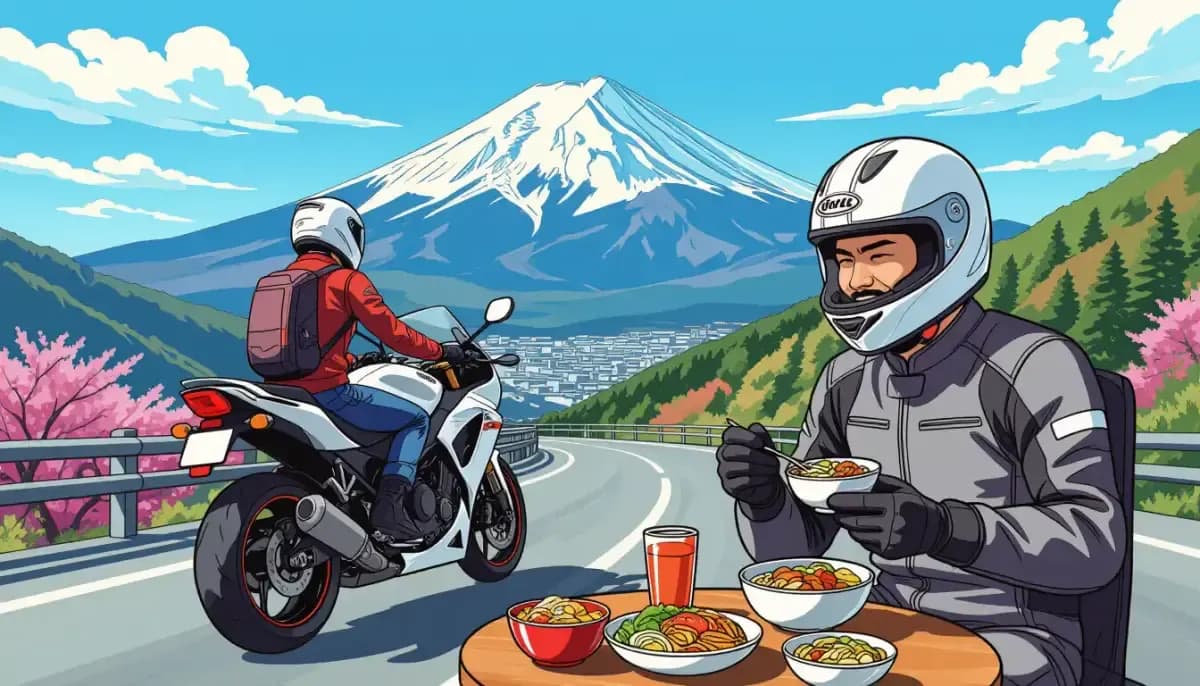
Step-by-step guide for foreigners getting a motorcycle license in Japan. Learn about license types, driving camps, license conversion, costs, and requirements for expats.
Getting a Motorcycle License in Japan as a Foreigner: The Complete Guide
Japan's road culture has a special place for motorcycles. From the narrow backstreets of Tokyo to the sweeping mountain passes of Hokkaido, riding a motorcycle in Japan is one of the most rewarding ways to explore the country. For foreigners living in Japan, getting a Japanese motorcycle license (バイク免許, baiku menkyo) opens up a whole new dimension of freedom. But the process can seem complex at first glance. This guide breaks everything down — from license types to application steps — so you know exactly what to expect.
Understanding Japan's Motorcycle License Categories
Before you start the application process, it's important to know which license you actually need. Japan organizes motorcycle licenses by engine displacement:
| License Type | Engine Size | Min. Age | Japanese Name |
|---|---|---|---|
| Moped License | Up to 50cc | 16 years | 原付免許 (Gentsuki) |
| Small Motorcycle | Up to 125cc | 16 years | 小型二輪免許 |
| Regular Motorcycle | 126cc–400cc | 18 years | 普通二輪免許 |
| Large Motorcycle | Over 400cc | 18 years | 大型二輪免許 |
Most foreigners who want to ride a standard bike for commuting or touring will aim for the Regular Motorcycle License (普通二輪免許). If you're dreaming of big touring bikes for long highway rides, you'll need the Large Motorcycle License (大型二輪免許).
Note: Two-person riding is prohibited on 50cc mopeds in Japan. Also, mopeds have a maximum speed limit of 30 km/h on public roads.
The 3 Pathways to Getting a Japanese Motorcycle License
There are three main routes to getting licensed as a foreigner in Japan. Each has its own pros, cons, costs, and time requirements.
1. Driving Camp (合宿免許 — Gasshuku Menkyo)
Best for: Foreigners who can take 1–2 weeks off work and want the fastest, most supported route.
Driving camps (合宿免許) are intensive programs that combine accommodation, meals, classroom instruction, and practical riding — all in one place. You live at the training facility for the duration of the course, which typically lasts 10–14 days for a regular motorcycle license.
The all-inclusive nature makes driving camps extremely popular among foreigners. Many facilities now offer English-language materials and instructors who can assist non-native speakers.
Costs:
- Regular Motorcycle (普通二輪): ¥110,000–¥160,000
- Large Motorcycle (大型二輪): ¥150,000–¥200,000+
- Price typically includes accommodation, meals, and all instruction fees
Pros:
- Fastest route to get licensed
- Highest pass rates — structured environment maximizes success
- All-inclusive reduces logistical stress
- Some camps cater specifically to foreign residents
Cons:
- Requires consecutive time off work
- Location may require travel (camps are often in rural areas)
- Japanese language ability recommended (N3 or higher), though some support exists
For a comprehensive overview of transportation options in Japan, see The Complete Guide to Transportation in Japan.
2. Regular Driving School (通学免許 — Tsugaku Menkyo)
Best for: Foreigners with fixed work schedules who need flexible lesson timing.
Traditional driving schools (教習所, kyōjūsho) allow you to take lessons on evenings and weekends at your own pace. You'll attend lessons over 1–3 months depending on your schedule and progress.
Costs:
- Regular Motorcycle: ¥120,000–¥180,000
- Large Motorcycle: ¥180,000–¥220,000+
What to expect:
- Enroll at a certified driving school (公認教習所)
- Complete required classroom hours (学科教習)
- Complete required practical riding lessons (技能教習)
- Pass the school's internal exams
- Take the official written test at the license center
- Receive your license
The advantage of an accredited driving school is that if you pass their internal exam, you are exempt from the practical riding test at the official license center. You only need to take the written exam.
Tip: Look for schools that advertise foreign language support (外国語対応). Some schools in major cities offer instruction in English, Chinese, Korean, and other languages.
3. Foreign License Conversion (外免切替 — Gaimenkirikaе)
Best for: Foreigners who already hold a valid motorcycle license from their home country.
If you have an existing motorcycle license from abroad, you may be able to convert it to a Japanese license without going through a full driving school. This process is called 外免切替 (gaimenkiriage, or foreign license conversion).
Requirements:
- Must have held the foreign motorcycle license for at least 3 months before entering Japan
- Must be a legal resident (valid zairyū card required)
- Must provide an official translation of your foreign license (via JAF or authorized agency)
Countries with Full Reciprocity (No Driving Test Required): Residents from the following countries can convert with just an eye exam and short interview:
- United Kingdom, Australia, New Zealand
- Germany, France, Switzerland, Belgium, Netherlands
- Ireland, Italy, Austria, Greece, Sweden, Spain, Iceland
- South Korea, Taiwan
- USA (limited to select states: Ohio, Oregon, Colorado, Virginia, Hawaii, Maryland, Washington)
Countries NOT on the Reciprocity List: Residents from countries not on the reciprocity list must pass both a written knowledge test and a practical riding test. The practical test at the license center is notoriously difficult — according to The Ninja Rider's Japan motorcycle license guide, the pass rate for motorcycle tests at official test centers is under 5% for those going in without professional preparation. Even experienced riders often fail multiple times.
Conversion Costs: ¥10,000–¥30,000 (far cheaper than driving school)
Important 2025 Update: From October 2025, Japan significantly tightened the rules. Tourists, exchange students, and short-stay visitors can no longer convert a foreign license to a Japanese one. You must be a legal, long-term resident with valid residency records.
For more on living legally in Japan, see The Complete Guide to Japan Visa and Immigration.
What Documents Do You Need?
Regardless of the pathway you choose, you'll need to gather the following:
| Document | Notes |
|---|---|
| Residence Card (在留カード) | Proves legal residency status |
| Passport | Original required, copies not accepted |
| Foreign Motorcycle License (if converting) | Original + official JAF translation |
| Health Certificate | Basic vision test; some schools handle this on-site |
| Passport Photos | Standard size; check requirements at your school/center |
| Application Fee | Varies by license type and pathway |
For Visitors Using an IDP: If you're a tourist or temporary visitor and want to ride legally, you must have a 1949 Geneva Convention International Driving Permit (IDP). Japan does NOT recognize IDPs issued under the 1968 Vienna Convention. The IDP must include Section "A" for motorcycle authorization.
Countries like France, Germany, Switzerland, Belgium, Monaco, and Taiwan cannot use IDPs in Japan at all — they must use an official JAF translation of their domestic license instead.
Step-by-Step: The Foreign License Conversion Process
For those eligible for conversion, here's how the process works:
- Get your foreign license officially translated — Use JAF (Japan Automobile Federation) or an authorized translation agency like Ziplus. Do NOT use a regular translator; the document must meet official standards.
- Gather all required documents — Residence card, passport, original foreign license, official translation, passport photos.
- Book an appointment at your local license center (運転免許センター) — These are typically located at the prefectural level. Wait times for appointments can be several weeks, so book early.
- Pass the vision/health screening — A basic eye exam at the center.
- Pass the written knowledge test — 10 questions; you need to pass with at least 7/10. Available in some prefectures in English.
- Pass the practical riding test (if required) — This test is conducted on a closed course (not public roads). Riders are assessed on very specific techniques: slow riding, figure-8 patterns, emergency stops, and the "S-curve" and "crank" obstacle courses. Practice at a local driving school beforehand is strongly recommended.
- Receive your Japanese license — If you pass everything, your license is issued on the same day.
For practical tips on daily life logistics in Japan, including navigating government offices, see The Complete Guide to Daily Life in Japan for Foreigners.
Costs at a Glance
Here's a summary comparison of all three pathways:
| Pathway | Time | Cost | Best For |
|---|---|---|---|
| Driving Camp (合宿免許) | 10–14 days | ¥110,000–¥200,000+ | Those with time off; fastest route |
| Driving School (通学免許) | 1–3 months | ¥120,000–¥220,000+ | Working foreigners; flexible schedule |
| License Conversion (外免切替) | 1 day–few weeks | ¥10,000–¥30,000 | Those with existing foreign motorcycle license |
Budget Tip: If you already have a foreign motorcycle license and your country has a reciprocity agreement with Japan, the conversion route is by far the cheapest. If you don't have prior experience or your country is not on the reciprocity list, a driving camp typically offers the best value in terms of time and pass rate.
Tips for Foreigners Getting a Motorcycle License in Japan
1. Japanese Language Matters Written tests and most instructor communication are in Japanese. Aim for at least JLPT N4-N3 level, or choose a school with foreign language support. The written test has some visual questions with diagrams that even low-level Japanese speakers can manage.
For Japanese language study resources, see The Complete Guide to Learning Japanese as a Foreigner.
2. Practice the Test Course Techniques The practical test, whether at a driving school or license center, evaluates very specific skills. Practice the slow-riding balance test (一本橋), the S-curve, the crank maneuver, and emergency stops before your exam.
3. Choose an English-Friendly School Some driving schools in Tokyo, Osaka, and other major cities specifically cater to foreign residents. Searching for "外国語対応 教習所" or "English driving school Japan" will help you find options.
4. Don't Underestimate the License Center Test If you're going the conversion route and your country is NOT on the reciprocity list, take the practical riding test seriously. The under-5% first-attempt pass rate is not a myth. Take practice lessons at a local driving school on their closed course before attempting the official test.
5. Get Proper Insurance After Licensing Once licensed, make sure to get proper motorcycle insurance (任意保険, ninihoken). Third-party liability insurance (自賠責保険, jibaiseki hoken) is mandatory for all registered vehicles in Japan, but comprehensive coverage adds important protection.
Riding Legally as a Tourist in Japan
If you're visiting Japan short-term and want to ride, your options are:
- International Driving Permit (1949 Geneva Convention) + your home country license + passport — valid for up to 1 year from the IDP's issue date, not your arrival date.
- JAF Translation (for France, Germany, Switzerland, Belgium, Monaco, Taiwan residents only) — carry this alongside your original domestic license and passport.
Check with motorcycle rental companies about their specific requirements before booking, as some have additional restrictions.
For more resources on transportation in Japan, the team at Living in Nihon covers a wide range of mobility options for foreign residents, from public transit to private vehicles.
If you're also exploring employment or career considerations while in Japan, For Work in Japan provides useful resources for foreign professionals navigating Japanese work culture and lifestyle.
For IT career changers and professionals interested in relocating to Japan, Ittenshoku offers career guidance and job market insights specific to the Japanese IT industry.
Frequently Asked Questions
Can I ride a motorcycle in Japan with only my home country license? Only if you have a valid 1949 Geneva Convention IDP and are a short-term visitor. Long-term residents must obtain a Japanese license.
How long does it take to get a Japanese motorcycle license? As fast as 10–14 days via driving camp, or 1–3 months via regular driving school. License conversion can happen in a few weeks if documents are in order.
Is the motorcycle license test in English? Some prefectures offer written tests in English. The practical riding test instructions are usually given in Japanese, though gestures and demonstrations help.
Do I need a Japanese motorcycle license to rent a motorcycle in Japan? Yes, for legal riding you need either a valid Japanese license, a 1949 Convention IDP (for visitors), or an appropriate license translation. Always verify rental company requirements in advance.
What happens if I ride without a valid license in Japan? Riding without a valid license in Japan is a serious offense with significant fines and potential criminal penalties. It can also affect your visa status as a foreign resident.
Getting your motorcycle license in Japan requires patience and preparation, but the payoff — the freedom to explore Japan's stunning countryside and urban landscapes on two wheels — is absolutely worth it. Start by identifying which pathway suits your situation, then take action. The open road awaits.
For official information, the Tokyo Metropolitan Government's multicultural guide provides details on automobile and motorcycle regulations in Japan.
For more guides on navigating life in Japan as a foreigner, explore our Complete Guide to Moving to Japan and The Complete Guide to Daily Life in Japan for Foreigners.

Originally from Vietnam, living in Japan for 16+ years. Graduated from Nagoya University, with 11 years of professional experience at Japanese and international companies. Sharing information about living in Japan for foreigners.
View Profile →Related Articles
Best Cars for Foreigners Living in Japan
Discover the best cars for foreigners living in Japan, from kei cars like the Honda N-Box to electric options. Complete guide to buying, costs, and requirements for expats.
Read more →
Car Maintenance and Repair in Japan Guide
A complete guide to car maintenance and repair in Japan for foreigners. Learn about shaken inspections, costs, finding mechanics, seasonal care, and JAF membership.
Read more →
Japan Highway and Toll System Complete Guide
Everything foreigners need to know about Japan's highway toll system: ETC cards, toll rates, discounts, expressway passes, speed limits, and practical driving tips for expats and visitors.
Read more →
How to Sell a Car in Japan Complete Guide
Step-by-step guide to selling your car in Japan as a foreigner. Covers required documents, 4 selling methods, shaken tips, tax refunds, and how to get the best price.
Read more →
Renting a Car in Japan as a Foreign Driver
Everything foreigners need to know about renting a car in Japan: IDP requirements, which countries can drive, major rental companies, costs, road rules, and tips for first-time drivers.
Read more →
Japan Parking Rules Costs and Tips for Drivers
Complete guide to parking in Japan for foreigners and expats. Learn how coin parking works, what things cost (¥100–¥500 per 30 min), parking rules, fines up to ¥18,000, and tips to avoid violations.
Read more →