
Japan Commuter Pass Teikiken How to Buy and Use

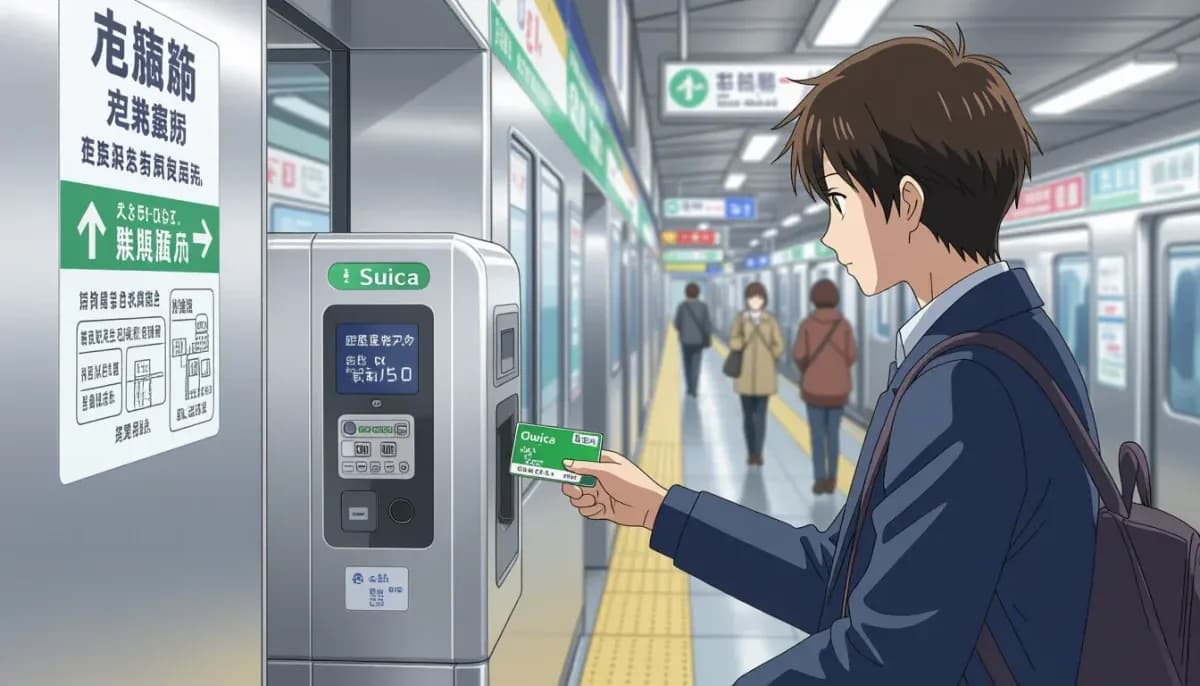
Everything foreigners need to know about Japan's commuter pass (teikiken): how to buy, cost savings, IC card types, employer reimbursement, and practical tips for daily commuters.
Japan Commuter Pass (Teikiken): The Complete Guide for Foreigners
If you're living and working in Japan, one of the smartest financial moves you can make is getting a commuter pass — known in Japanese as a teikiken (定期券). This simple pass can save you tens of thousands of yen per year while making your daily train commute effortless. Whether you're a new expat, an English teacher, or a tech worker in Tokyo, this guide will walk you through everything you need to know about buying and using your teikiken.
What Is a Teikiken (Commuter Pass)?
A teikiken is a prepaid transit pass that grants unlimited rides between two designated stations — typically your home station and your workplace station — for a fixed period. Unlike paying per ride, you tap your IC card at the gate and simply ride without any additional cost, no matter how many times you travel that route.
The pass is loaded directly onto your IC card (Suica, PASMO, ICOCA, etc.), so you carry just one card for everything: your commute, occasional detours, and even convenience store purchases.
Key features of the teikiken:
- Unlimited travel between two designated stations
- Valid for all stops along the designated route
- Usable any day including weekends and holidays
- Compatible with IC card for non-pass trips (just tap and pay difference)
- Reloadable — when your pass expires, you simply renew it
For a broader look at getting around Japan, see our Complete Guide to Transportation in Japan for Foreigners.
How Much Does a Teikiken Cost? (And How Much Can You Save?)
The cost of a teikiken depends on your specific route — the distance between your two stations and the train operator. Longer distances cost more, but the percentage savings over individual tickets remain consistent.
You can choose from three validity periods:
| Duration | Typical Savings vs. Daily Tickets | Best For |
|---|---|---|
| 1 month | ~10% savings | New residents, trial period, short contracts |
| 3 months | ~15% savings (5% over 3x monthly) | Stable work schedule, testing the route |
| 6 months | ~20–25% savings (10–15% over monthly) | Long-term residents, confirmed commute route |
Real-world example: For the Kawaguchi (Saitama) to Shimbashi (Tokyo) route:
- Paying per trip: approximately ¥12,400/month (¥620 round-trip × 20 working days)
- Monthly pass: roughly ¥9,220/month
- 6-month pass savings: approximately ¥30,140 compared to individual tickets
The longer you commit, the more you save. If you're settled into your job and commute route, the 6-month pass offers the best value.
Types of IC Cards for Your Teikiken
Your commuter pass is loaded onto a region-specific IC card. Here's an overview of the main cards used across Japan:
| IC Card | Primary Region | Operator |
|---|---|---|
| Suica | Kanto (Tokyo area) | JR East |
| PASMO | Kanto (Tokyo area) | Private railways, Tokyo Metro |
| ICOCA | Kansai (Osaka, Kyoto, Kobe) | JR West |
| PiTaPa | Kansai | Private railways |
| TOICA | Nagoya area | JR Central |
| Kitaca | Hokkaido | JR Hokkaido |
| SUGOCA | Kyushu | JR Kyushu |
Since 2013, all major IC cards are interoperable across Japan — meaning your Suica works in Osaka and your ICOCA works in Tokyo. However, your teikiken pass itself is only valid on the specific route you designated, regardless of which card you use.
Beyond commuting, IC cards work at convenience stores (7-Eleven, FamilyMart, Lawson), vending machines, taxis, and many restaurants. They're genuinely useful cards to have loaded up.
For more information on daily life in Japan, check out our Complete Guide to Daily Life in Japan for Foreigners.
How to Buy a Teikiken: Step-by-Step
Buying a commuter pass is straightforward once you know the process. You have two main options: ticket machines or service counters.
Option 1: Ticket Machine (Most Common)
Most JR and private railway stations have dedicated teikiken machines (marked with "定期券" in Japanese). Here's the process:
- Switch to English — Most machines offer an English language option (look for "English" button)
- Select "Commuter Pass" — Choose "新規" (New) for a new pass
- Enter stations — Input your starting station and destination
- Choose your route — If multiple routes exist, you'll be shown options with prices
- Select duration — Choose 1, 3, or 6 months and your start date
- Insert your IC card — Place your existing Suica or PASMO card
- Register personal info — Enter your name for loss protection (required)
- Pay — Cash or credit/debit card accepted
- Done! — The pass is loaded onto your card
Option 2: Service Counter (Recommended for Beginners)
If you're new to Japan or unsure about the machine process, head to the みどりの窓口 (Midori no Madoguchi / JR Green Window) or the station's regular service counter. Staff are accustomed to helping foreigners and will usually walk you through the entire process. You don't need Japanese language skills — just know your start station, end station, and desired duration.
Option 3: Mobile App (Since March 2025)
Since March 2025, foreigners can now purchase and renew commuter passes entirely via smartphone:
- Welcome Suica app (iOS/Android) — supports international credit cards
- Mobile PASMO app (iOS/Android) — supports international credit cards
These apps let you set up your route, pay with a foreign card, and receive notifications before your pass expires — no visit to a station required.
For information about setting up your finances in Japan, see our Complete Guide to Banking and Finance in Japan for Foreigners.
Employer Commuting Allowance: Let Your Company Pay
Here's something many new expats don't know: most Japanese companies reimburse commuting costs as part of your employment benefits.
The commuting allowance is called 通勤手当 (tsukin teate). Under Japanese labor law, companies are not legally required to pay it, but it is an extremely common benefit — especially at larger companies and corporate employers. Typical arrangements include:
- Full reimbursement of the teikiken cost (most common at large corporations)
- Reimbursement up to a monthly cap (e.g., ¥55,000/month, the tax-exempt limit for commuting expenses)
- Actual expense reimbursement vs. flat allowance (varies by company)
How to claim it: Most companies ask you to submit your commuter pass details (route, cost, duration) to HR after you've purchased it. Some pay it in advance; others reimburse after the fact. Check your employment contract or ask your HR department directly.
If your employer covers the cost, there's usually no reason NOT to get the 6-month pass — it's free money for you and costs your employer less per month than paying monthly.
Using Your Teikiken for Off-Route Travel
One of the best features of the teikiken is that your IC card remains functional for travel outside your designated route. The system works like this:
- On your route: Tap in, tap out — no charge
- Beyond your endpoint station: Tap in, tap out — you pay only the extra segment fare
- Completely different route: Tap in, tap out — you pay the full fare from your nearest station
This means your commuter pass also gives you effectively free (or discounted) travel to any station along your route. If you enjoy exploring Tokyo on weekends, a well-chosen teikiken can cover a lot of ground for free.
For more on exploring Japan's culture and getting around, visit our Complete Guide to Japanese Culture and Etiquette for Foreigners.
Special Discounts: Students and More
Student discounts: If you're enrolled at a Japanese school or university, you may qualify for the student commuter pass, which is approximately 50% cheaper than the standard adult pass. You'll need to obtain a certificate from your school and bring it to the station counter when purchasing.
Child passes: Children under 12 travel at half price. Children under 6 are free when accompanying an adult.
Tips for Foreigners Buying a Teikiken
Here are practical tips to make your teikiken experience smooth:
- Use Hyperdia or Google Maps first — Calculate your exact route and anticipated costs before visiting the station
- Check if your employer covers it — Don't buy until you know your company's commuting allowance policy
- Choose the right IC card — In Tokyo, Suica or PASMO are both fine; in Osaka, ICOCA is most common
- Register your name — This protects you if you lose your card; you can get a replacement with the balance and pass intact
- Match your start date — You can set a future start date; no need to start immediately after purchase
- Renew early — You can renew up to 14 days before expiry, and the new period starts from the day after the current pass ends (no gap in coverage)
- Keep some IC card balance — Always have some yen loaded for trips beyond your route
For a comprehensive look at managing your finances in Japan, check out our Complete Guide to Cost of Living in Japan.
Useful External Resources
For more guidance on transportation in Japan as a foreigner, these resources are highly recommended:
- Living in Nihon – Japan Transportation Guide for Foreigners — Comprehensive overview of trains, buses, and IC cards in Japan
- For Work in Japan – Working Life Guide — Practical guides for foreigners working in Japan, including commuting and workplace benefits
- Ittenshoku – IT Career and Life in Japan — Resources for IT professionals navigating work life in Japan
- Japan Web Magazine – Teikiken Guide — Detailed breakdown of commuter pass costs and purchase process
- Coto Academy – Step-by-Step Commuter Pass Guide — Visual guide to buying your first teikiken
Summary: Is a Teikiken Right for You?
If you commute to work or school by train in Japan more than about 10 times per month, a teikiken will almost certainly save you money. The math is clear, the process is straightforward, and the convenience is unmatched.
For most foreign residents working in Japan:
- Yes, get a teikiken if you commute regularly
- Get the 6-month pass if your route is stable and employer covers it
- Use the mobile app if you have a compatible smartphone and international credit card
- Ask HR first — your employer may reimburse 100% of the cost
The teikiken is one of those small Japanese life hacks that, once you have it, you'll wonder how you ever managed without it.
For more on working life in Japan, see our Complete Guide to Working in Japan as a Foreigner.

Originally from Vietnam, living in Japan for 16+ years. Graduated from Nagoya University, with 11 years of professional experience at Japanese and international companies. Sharing information about living in Japan for foreigners.
View Profile →Related Articles
Walking and Pedestrian Rules in Japan
Learn all the essential walking and pedestrian rules in Japan — from crosswalk laws and sidewalk etiquette to regional escalator customs and common mistakes foreigners make.
Read more →
Domestic Flights in Japan Budget Tips and Deals
Learn how to find cheap domestic flights in Japan. Compare LCCs like Peach and Jetstar vs JAL/ANA, discover special foreigner fares, and get insider booking tips to save big.
Read more →
Night Bus Travel in Japan Budget Guide
Complete guide to night buses in Japan for foreigners and expats. Prices, routes, booking tips, seat types, and the Japan Bus Pass explained. Save 60-70% vs Shinkansen.
Read more →
Best Transit and Navigation Apps in Japan
Discover the best transit and navigation apps for Japan. From Google Maps and Yahoo Transit to Mobile Suica and GO Taxi, master Japan's train system with the right tools.
Read more →
Buying a Bicycle in Japan Complete Guide
Everything foreigners need to know about buying, registering, and riding a bicycle in Japan — including mamachari types, costs, registration steps, insurance, and 2026 cycling law updates.
Read more →
How to Use Taxis in Japan Tips and Etiquette
Complete guide to using taxis in Japan for foreigners. Learn about automatic doors, fares by city, best apps like GO, payment methods, and essential etiquette rules.
Read more →