
Walking and Pedestrian Rules in Japan

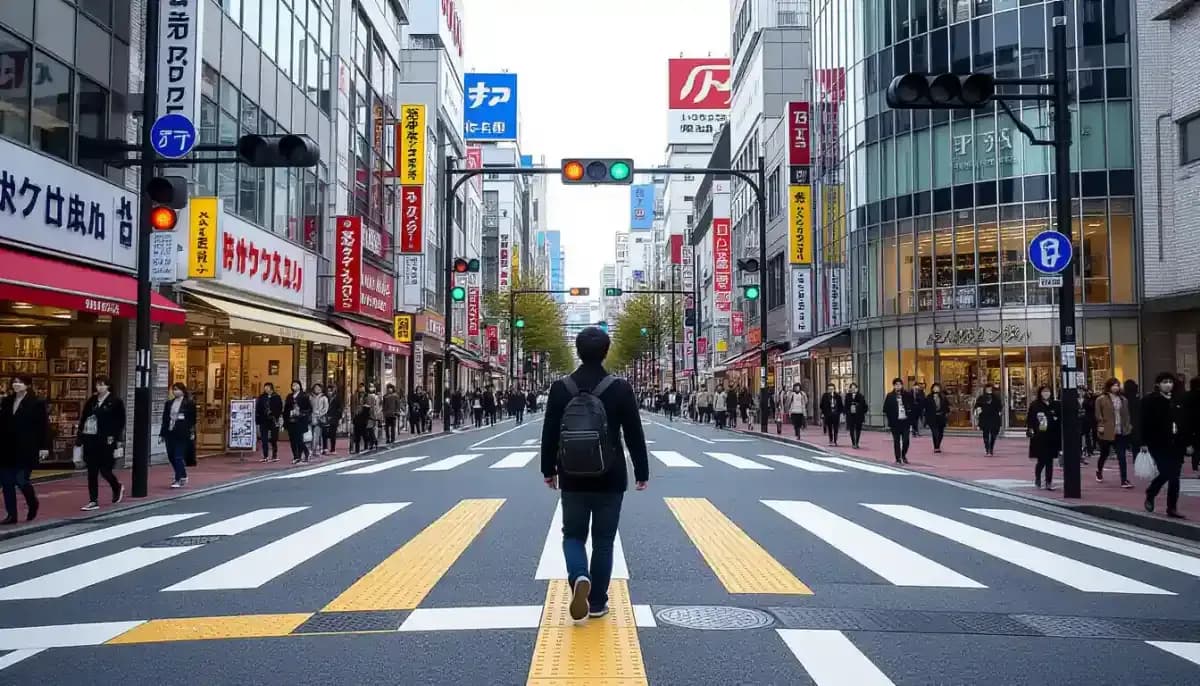
Learn all the essential walking and pedestrian rules in Japan — from crosswalk laws and sidewalk etiquette to regional escalator customs and common mistakes foreigners make.
Walking and Pedestrian Rules in Japan: A Complete Guide for Foreigners
Japan is famous for its orderly streets, punctual trains, and polite society — and nowhere is this more visible than in how people walk and navigate public spaces. If you are new to Japan or planning to live here, understanding the unwritten (and written) rules of pedestrian behavior will help you avoid awkward situations, stay safe, and show respect for those around you.
This guide covers everything you need to know about walking and pedestrian rules in Japan: legal regulations, cultural etiquette, regional differences, and practical tips for foreigners navigating Japanese sidewalks every day.
!Foreigner walking on a busy Tokyo sidewalk with pedestrian signals and yellow tactile paving blocks

The Legal Framework: Pedestrian Rights and Responsibilities in Japan
Japan's Road Traffic Act (道路交通法, Dōkō Kōtsū Hō) governs pedestrian behavior alongside vehicles. Unlike some countries where jaywalking is loosely enforced, Japan takes traffic laws seriously — for both drivers and walkers.
Key legal points for pedestrians:
- Always use crosswalks: You must cross streets at designated crosswalks or intersections. Crossing mid-block without a crosswalk is technically jaywalking and can result in a fine.
- Obey traffic signals: Ignoring a red pedestrian light can result in a fine of up to ¥50,000. Even when no cars are visible, Japanese pedestrians typically wait for the green signal.
- Pedestrian priority at crosswalks: By law, vehicles must stop when pedestrians are present at a zebra crossing. However, a survey revealed that only 30.6% of vehicles nationwide actually comply with this law — so never assume a car will stop just because you have the right of way.
- Walk on sidewalks: Use sidewalks wherever they exist. On roads without sidewalks, pedestrians walk on the right side of the road (facing oncoming traffic), while vehicles drive on the left.
Japan has made remarkable progress in traffic safety, reducing road deaths by 38.9% between 2012 and 2022. Despite this, pedestrians still account for about 36% of all road fatalities — making awareness and caution essential.
For more on living safely in Japan, see our guide on Safety and Emergency Preparedness in Japan.
Essential Walking Etiquette: Unwritten Rules That Matter
Beyond the legal code, there is a set of deeply ingrained social norms around walking in Japan. Breaking these rules won't land you in jail, but they can make you stand out as inconsiderate or culturally unaware.
Keep moving — don't block the flow
Japan's cities are dense and foot traffic can be heavy, especially around train stations and shopping areas. Stopping abruptly in the middle of a sidewalk, standing in a group that blocks the path, or lingering at escalator exits creates friction. If you need to stop, step to the side first.
Walk on the left
This isn't a strict law for pedestrians, but because cars drive on the left in Japan, pedestrians often default to keeping left too. In many busy areas, you'll find informal lane systems on wide sidewalks. Follow the flow of those around you.
No eating while walking
Eating while walking (歩き食い, aruki-gui) is considered poor manners in Japan. It's seen as sloppy, disrespectful to the food, and inconsiderate to those around you. If you buy something from a convenience store or street stall, eat it standing still near the shop or find a bench.
No smoking while walking
Many municipalities in Japan have banned smoking on public streets entirely. In areas like central Tokyo, Osaka, and Kyoto, smoking is only permitted in designated smoking areas. Walking while smoking is both culturally inappropriate and illegal in many urban zones. Violators can be fined.
Respect braille blocks
The yellow, textured paving tiles you'll see on Japanese sidewalks are called braille blocks (点字ブロック, Tenji Burokku) or tactile paving. They are installed to guide visually impaired pedestrians safely. Never stand on them, park a bicycle on them, or obstruct them in any way. This is a matter of basic civic courtesy.
Stay off your phone while crossing
"Smartphone walking" (ながら歩き, Nagara Aruki) while crossing streets or navigating station stairways is increasingly discouraged and in some municipalities outright banned. Many station platforms display signs asking pedestrians not to walk while looking at their phones.
Escalator and Stairway Etiquette: Tokyo vs. Osaka
One of the most confusing aspects of walking in Japan for newcomers is escalator etiquette — and the rules differ by region.
| Location | Stand on... | Pass on... |
|---|---|---|
| Tokyo / Kanto region | Left side | Right side |
| Osaka / Kansai region | Right side | Left side |
| Nagoya | Generally left | Right |
| Rural areas | Either side (less strict) | Varies |
This regional difference is well-known among Japanese people and is a source of friendly rivalry between Tokyo and Osaka. Many major train stations now encourage all passengers to stand on both sides during rush hours to improve efficiency, but the traditional customs still apply in most locations.
On staircases: Keep to the left in most areas, following the same principle as road traffic. Hold the handrail and avoid stopping on stairs.
For more on getting around Japan, check our Complete Guide to Transportation in Japan.
Crossing Streets Safely: What Every Foreigner Should Know
Street crossings in Japan work somewhat differently from what you might expect, especially in quieter areas.
At signalized intersections:
- Wait for the green pedestrian signal (a walking figure symbol)
- Do not cross on the flashing green — it means the light is about to turn red
- Look left first when stepping off a curb, as cars drive on the left
At non-signalized crosswalks (zebra crossings):
- You have legal right-of-way, but visually confirm that cars are slowing or stopping before crossing
- Make eye contact with drivers when possible
- Raise your hand or nod as a thank-you gesture — it's common and appreciated
At intersections without crosswalks:
- Cross only at corners, never mid-block
- Wait for a natural break in traffic
- Be especially cautious of bicycles, which often share pedestrian spaces
Bicycle awareness: Japan has millions of cyclists who often ride on sidewalks (particularly in residential areas where road cycling is difficult). Stay alert and give cyclists space. Do not walk in bicycle lanes where they are marked.
!Pedestrian crossing signals and crosswalk in Japan

Walking in Specific Situations: Stations, Crowds, and Rain
Train station navigation
Japanese train stations are some of the busiest in the world. There are generally clear rules:
- Follow directional arrows on the floor
- Keep to the left on stairways and escalators (right in Osaka)
- Let passengers exit the train before you board
- Stand in marked queuing zones on the platform
- Do not run — even if you are about to miss your train
Walking in crowds and festivals
During events, festivals, and rush hours, foot traffic can become incredibly dense. In these situations:
- Slow down and match the pace of those around you
- Avoid opening umbrellas until you have space
- Keep your bag close in front of you to reduce your footprint
- Strollers and wheelchairs should use designated accessible routes
Rainy days and umbrellas
Japan experiences frequent rain, and umbrella management is an art form. When entering shops and buildings, shake your umbrella dry before going inside and use the plastic umbrella bags provided at the entrance. Carrying an open umbrella indoors or leaving it dripping on floors is frowned upon.
Common Mistakes Foreigners Make
Many foreigners in Japan are surprised by how visible their behavior becomes in public spaces. Here are the most common walking-related mistakes — and how to avoid them.
| Mistake | Why It's a Problem | What to Do Instead |
|---|---|---|
| Crossing against the red light | Illegal, fine up to ¥50,000 | Always wait for the green pedestrian signal |
| Walking while eating | Considered rude | Stop and eat near the food stall or a bench |
| Stopping abruptly in foot traffic | Blocks the flow, causes collisions | Step to the side before stopping |
| Standing on braille blocks | Obstructs visually impaired people | Walk around them at all times |
| Ignoring regional escalator sides | Standing in the "wrong" spot | Observe locals and follow their lead |
| Walking while using phone | Dangerous and increasingly banned | Pocket the phone before walking |
| Smoking on sidewalks | Often illegal in city centers | Use only designated smoking areas |
| Walking in bicycle lanes | Can cause accidents | Stay in pedestrian zones |
For deeper insights into Japanese culture and behavioral norms, see our guide to Japanese Culture and Etiquette for Foreigners.
Walking After Dark and in Residential Areas
Japan is generally extremely safe, and walking at night is rarely a concern from a crime perspective. However, there are still things to keep in mind:
- Wear reflective clothing or bright colors at night, as some residential roads lack street lighting
- Be especially cautious of cyclists and mopeds in areas with narrow roads and no sidewalks
- Avoid walking in the middle of narrow lanes — step to the side when cars approach
- Respect quiet hours in residential neighborhoods: Many residential areas expect pedestrians to minimize noise after 10pm
If you are new to Japan and exploring unfamiliar areas after dark, using Google Maps or Apple Maps to navigate sidewalk-friendly routes is recommended.
Resources for Pedestrians in Japan
Understanding Japan's pedestrian rules is much easier when you have the right resources. These external guides offer additional detail and regional perspectives:
- Living in Nihon: Everyday Life Resources for Foreigners — General lifestyle and living guides for expats in Japan
- For Work in Japan: Life and Work Guides — Practical advice for working and living in Japan
- Ittenshoku: Japan Career and Daily Life — Career and life guidance for foreigners in Japan
- Japan Guide: Street Manners — Comprehensive guide to Japanese street etiquette
- Tofugu: Walking in Japan — Detailed guide to pedestrian culture with regional insights
- Traffic Laws for Pedestrians - RCS Education — Legal overview of pedestrian traffic regulations
For more on navigating daily life in Japan, explore our Complete Guide to Daily Life in Japan for Foreigners.
Summary: The Golden Rules of Walking in Japan
Walking in Japan is a reflection of the country's broader values: consideration for others, attention to detail, and respect for shared public spaces. As a foreigner, you won't be expected to be perfect — but making a genuine effort to follow these norms will earn you respect and make your daily life smoother.
The essential rules:
- Wait for the green pedestrian signal before crossing — always
- Use crosswalks and designated crossing points
- Keep left on sidewalks and stairs (right in Osaka on escalators)
- Do not eat, smoke, or use your phone while walking
- Never stand on yellow braille blocks
- Give way to cyclists and be alert to bikes on sidewalks
- Step aside when stopping in busy areas
- Follow the flow of foot traffic, especially in train stations
Japan's pedestrian culture may feel unfamiliar at first, but it becomes second nature quickly. The reward is a walking experience that is safe, efficient, and remarkably pleasant — even in some of the world's most crowded cities.

Originally from Vietnam, living in Japan for 16+ years. Graduated from Nagoya University, with 11 years of professional experience at Japanese and international companies. Sharing information about living in Japan for foreigners.
View Profile →Related Articles

Domestic Flights in Japan Budget Tips and Deals
Learn how to find cheap domestic flights in Japan. Compare LCCs like Peach and Jetstar vs JAL/ANA, discover special foreigner fares, and get insider booking tips to save big.
Read more →
Night Bus Travel in Japan Budget Guide
Complete guide to night buses in Japan for foreigners and expats. Prices, routes, booking tips, seat types, and the Japan Bus Pass explained. Save 60-70% vs Shinkansen.
Read more →
Best Transit and Navigation Apps in Japan
Discover the best transit and navigation apps for Japan. From Google Maps and Yahoo Transit to Mobile Suica and GO Taxi, master Japan's train system with the right tools.
Read more →
Japan Commuter Pass Teikiken How to Buy and Use
Everything foreigners need to know about Japan's commuter pass (teikiken): how to buy, cost savings, IC card types, employer reimbursement, and practical tips for daily commuters.
Read more →
Buying a Bicycle in Japan Complete Guide
Everything foreigners need to know about buying, registering, and riding a bicycle in Japan — including mamachari types, costs, registration steps, insurance, and 2026 cycling law updates.
Read more →
How to Use Taxis in Japan Tips and Etiquette
Complete guide to using taxis in Japan for foreigners. Learn about automatic doors, fares by city, best apps like GO, payment methods, and essential etiquette rules.
Read more →