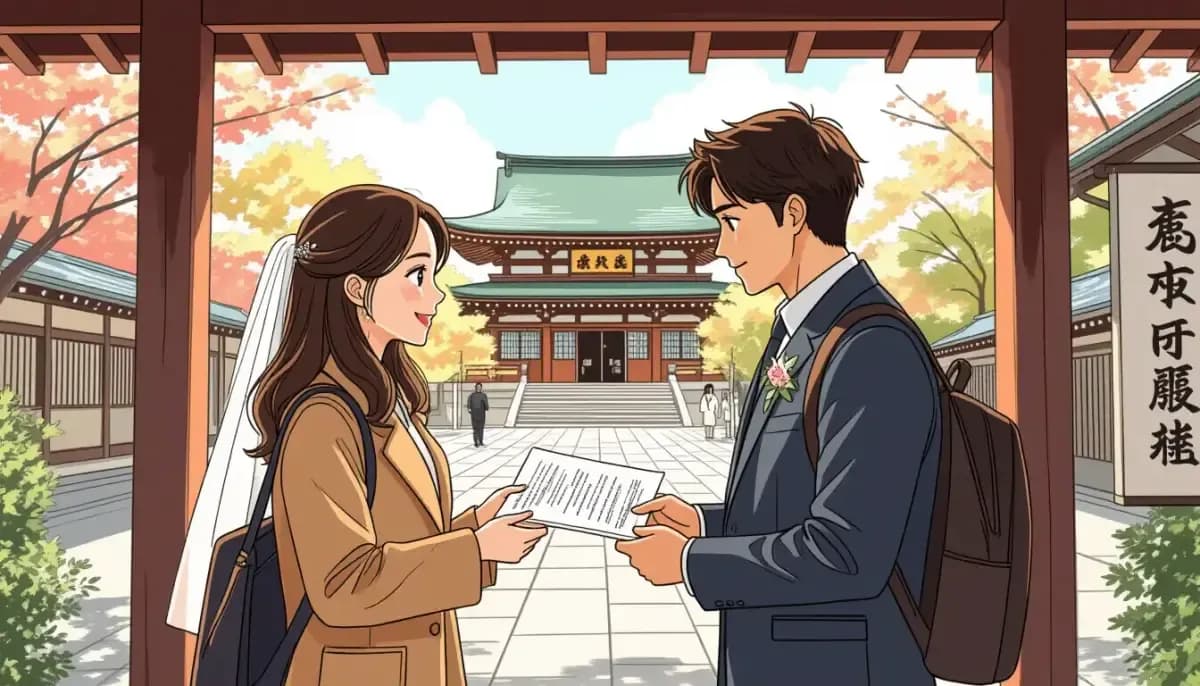
The Complete Guide to Marriage and Relationships in Japan for Foreigners
Navigating love, dating, and marriage in Japan is a unique journey—one that blends deep cultural traditions with modern realities. Whether you are falling for a Japanese partner, planning an international wedding, or simply trying to understand relationship norms as an expat, this guide covers everything you need to know. From legal marriage procedures to cultural dating customs and visa pathways for spouses, we break down the process step by step.
Japan is home to over 3.7 million foreign residents as of December 2024, and international relationships are increasingly common. Approximately 20,000 international marriages are registered each year—roughly 1 in every 30 marriages in Japan. Yet the journey from first date to happily married life is shaped by cultural layers that require understanding, patience, and open communication.
Understanding Dating Culture in Japan
Before marriage comes dating, and Japanese dating culture differs significantly from Western norms. Understanding these differences is the first step to building a meaningful relationship.
Kokuhaku: The Love Confession Tradition
In Japan, romantic relationships are rarely entered into casually. The concept of kokuhaku (告白), or "love confession," is central to how relationships begin. Rather than casually dating multiple people simultaneously, one person formally confesses their feelings and asks the other to be their exclusive partner. This creates clarity from the start.
For foreigners, this can feel refreshing or daunting depending on their background. If you want to date someone seriously, be prepared to make your intentions clear—ambiguity is generally unwelcome in Japanese romantic culture.
Group Dating (Gokon)
Gokon (合コン) are organized group dates where equal numbers of men and women meet socially, usually at a restaurant or bar. Organized by a mutual friend, they are a common way for busy professionals to meet potential partners. If a Japanese friend invites you to a gokon, it is worth accepting—it is one of the most natural ways to enter the dating scene.
Communication Styles and Expectations
Japan is a high-context culture, meaning much is communicated through implication, body language, and silence rather than direct speech. Japanese partners may express dissatisfaction or affection subtly. Learning to read these cues—and communicating openly yourself—is essential for a healthy relationship.
Research shows that communication barriers are one of the top reasons international marriages in Japan face challenges. The divorce rate for international couples in Japan is approximately 50%, compared to around 35% for domestic couples. Open and frequent communication, along with genuine cultural curiosity, significantly improves outcomes.
For deeper insight into Japanese communication and social norms, see our guide: The Complete Guide to Japanese Culture and Etiquette.
Legal Requirements to Marry in Japan
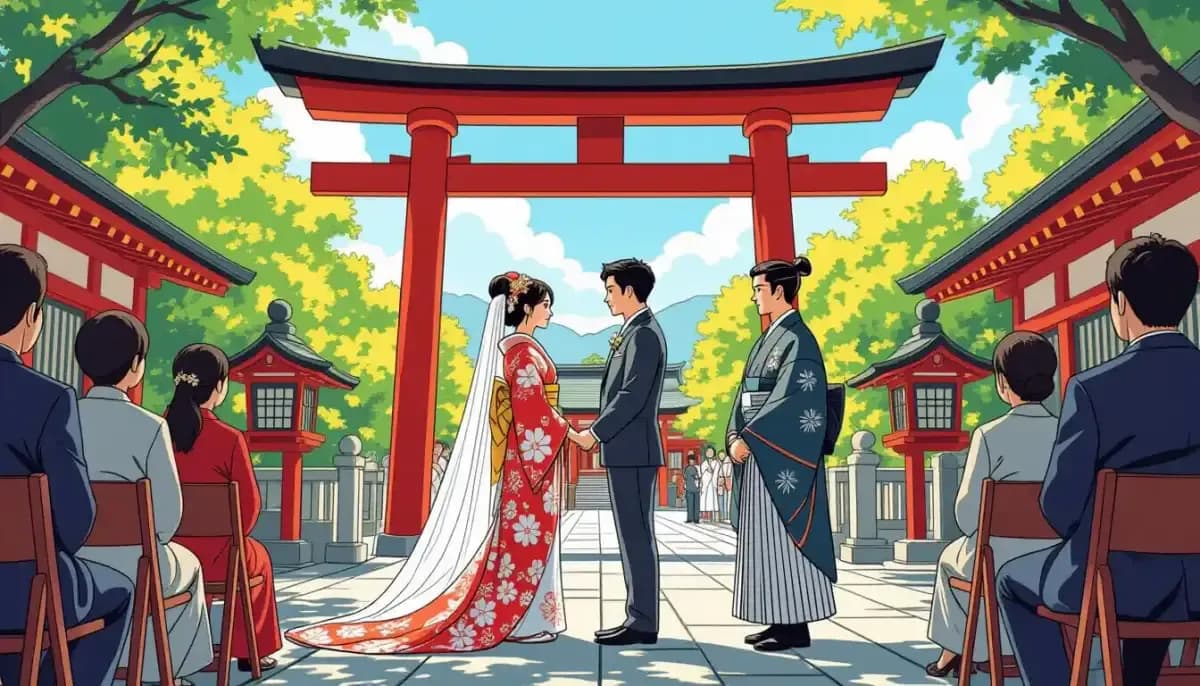
Getting legally married in Japan is a straightforward civil procedure—but it requires specific documents and proper preparation. There is no requirement for a wedding ceremony; the legal marriage happens at a government office.
Who Can Marry in Japan?
- Both parties must be at least 18 years old (the minimum age for women was raised from 16 to 18 in April 2022)
- Neither party can be currently married to another person
- Close relatives cannot marry each other
- Same-sex marriages are not legally recognized at the national level, though some municipalities offer partnership certificates
You do not need to be a Japanese resident or hold a visa to get married in Japan. Foreigners on tourist visas can legally register a marriage, though this does not extend your stay.
Required Documents for Foreign Nationals
| Document | Notes |
|---|
| Passport (original + copy) | Must be valid |
| Certificate of Legal Capacity to Marry | Obtained from your embassy/consulate in Japan; costs ~5,500 yen |
| Japanese translation of all documents | Required for all foreign-language documents |
| Marriage registration form (kon-in todoke) | Requires two adult witnesses |
| Birth certificate | May be required depending on the municipality |
| Residence card | If residing in Japan |
Important note for U.S. citizens: The U.S. Embassy no longer issues notarized affidavits of competency to marry. Instead, U.S. citizens must download a specific statement from the Embassy website to present to city offices.
Step-by-Step Marriage Registration Process
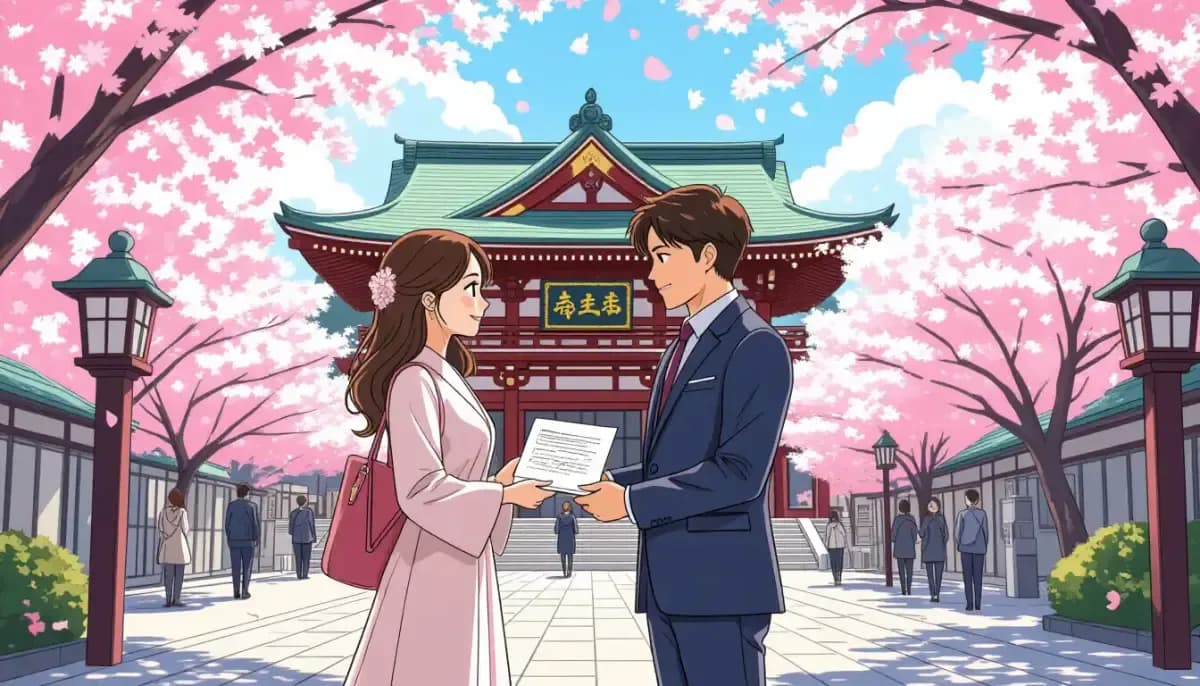
- Obtain the marriage registration form (kon-in todoke) from your local municipal office—free of charge
- Gather your documents including translations and the certificate of legal capacity to marry from your embassy
- Choose your submission date—the date you submit becomes your legal marriage date
- Submit documents at your nearest municipal office (city hall or ward office)
- Report your marriage to your home country's embassy if required by your country's laws
The process is same-day if your documents are complete. Marriage registration fees for certificates are typically 350–1,400 yen. For more on navigating Japanese bureaucracy as a foreigner, visit Living in Nihon's International Marriage & Partnership Guide.
International Marriage Statistics and Trends
Understanding the landscape of international marriage in Japan helps set realistic expectations and context for your own relationship journey.
Who Is Marrying Whom?
| Nationality | % of Foreign Spouses in International Marriages |
|---|
| China | 31.6% |
| Philippines | 24.5% |
| South Korea | 11.2% |
| Thailand | 6.6% |
| Brazil | 2.1% |
| Other | 24.0% |
Source: Nippon.com International Marriage Trends
Japan saw a peak of 44,701 international marriages in 2006, declining since then to approximately 20,000 per year. Japanese men most commonly marry women from China and the Philippines, while Japanese women are more likely to marry men from South Korea, the United States, and China—with a notable tendency toward Western partners.
Cultural Compatibility Challenges
International couples face challenges around:
- Language barriers – even if partners speak a common language, misunderstandings arise from cultural context
- Gender role expectations – traditional Japanese family structures may clash with egalitarian views held by foreign partners
- Family involvement – Japanese families often maintain close involvement in life decisions, including marriage
- Work-life balance – Japan's demanding work culture can affect relationship quality
Despite these challenges, many international couples build thriving, lasting relationships. The key is mutual respect, cultural curiosity, and clear communication. Resources like For Work in Japan's Family Life Guide offer practical guidance on navigating life as an international couple in Japan.
Applying for a Spouse Visa (Japan)
After marrying in Japan, a foreign spouse may need to change their visa status to remain legally in the country long-term. The Spouse or Child of Japanese National visa (配偶者等ビザ) is the standard route.
Spouse Visa Requirements
To qualify for a spouse visa:
- Proof of a genuine marriage (not marriage of convenience)
- Documented relationship history (photos, communication records, travel together)
- Financial stability: the sponsoring partner should earn approximately 3 million yen or more annually
- Intent to cohabitate in Japan
Application Timelines
| Situation | Processing Time |
|---|
| Applying from outside Japan | 1–3 months |
| Changing status from within Japan | 2 weeks to 1 month |
The visa is typically granted for 1–3 years and must be renewed. Immigration officers scrutinize applications carefully to verify the relationship is genuine, so gathering documentation (like joint photos and correspondence) is important.
For full details on visa categories and immigration procedures, see our guide: The Complete Guide to Japan Visa and Immigration.
Permanent Residency Through Marriage
One significant benefit of marrying a Japanese national is an accelerated path to permanent residency (PR). Under normal circumstances, permanent residency requires 10 years of continuous residence in Japan.
However, spouses of Japanese nationals qualify after:
- 3 years of genuine marriage, AND
- 1 year of continuous residence in Japan
This makes marriage one of the fastest pathways to long-term security in Japan. PR holders enjoy freedom to work in any field, no visa renewal requirements, and greater stability.
Note: PR is not granted automatically—you must apply and demonstrate that your marriage is genuine and that you have integrated into Japanese society.
Building a Life Together: Practical Considerations
Beyond the legal formalities, building a life as an international couple in Japan involves navigating everyday realities.
Finances and Banking
Managing shared finances in Japan requires both partners to understand the local banking system. Joint bank accounts are less common in Japan than in Western countries—many couples maintain separate accounts. Understanding tax deductions for spouses (the spousal deduction) can reduce your household tax burden. Learn more in our guide: The Complete Guide to Banking and Finance in Japan.
Healthcare as a Family
Both partners should be enrolled in Japan's universal health insurance system. Non-working spouses can be added as dependents under their partner's social insurance plan. Healthcare costs are typically 3% out-of-pocket for insured residents. More details are available in our Complete Guide to Healthcare in Japan for Foreigners.
Having Children in Japan
Raising children as an international family comes with its own joys and challenges—from choosing between public, private, and international schools to navigating dual nationality rules. Japan requires children with dual nationality to choose one by age 22. For a full breakdown, see our guide: The Complete Guide to Raising Children in Japan.
Surname After Marriage
In Japan, married couples are legally required to share a surname under current law (though reform is being debated). As a foreigner marrying a Japanese national:
- Your Japanese partner may take your surname, or you may take theirs
- Surname changes must be applied for within 6 months at the municipal office
- Your home country may require separate notification
Daily Life as an International Couple
Adapting to daily life in Japan together—from grocery shopping to navigating festivals and social customs—is one of the most rewarding aspects of international partnership. For an overview, see our Complete Guide to Daily Life in Japan for Foreigners.
Resources for International Couples
Building a support network is vital. Here are helpful resources:
Conclusion
Marriage and relationships in Japan offer a deeply rewarding journey for those willing to embrace both the beauty and the complexity of cross-cultural love. Understanding Japanese dating customs like kokuhaku, navigating the legal marriage registration process, securing the right visa, and building a shared life together—all of these steps require preparation, patience, and genuine curiosity.
Japan's international marriage community is growing, and resources and support networks are more accessible than ever. Whether you are just starting to date in Japan or are ready to register your marriage at city hall, this guide gives you the foundation you need to move forward with confidence.
For more on living and thriving in Japan as a foreigner, explore our other pillar guides—from finding housing to learning Japanese and understanding the tax system.